

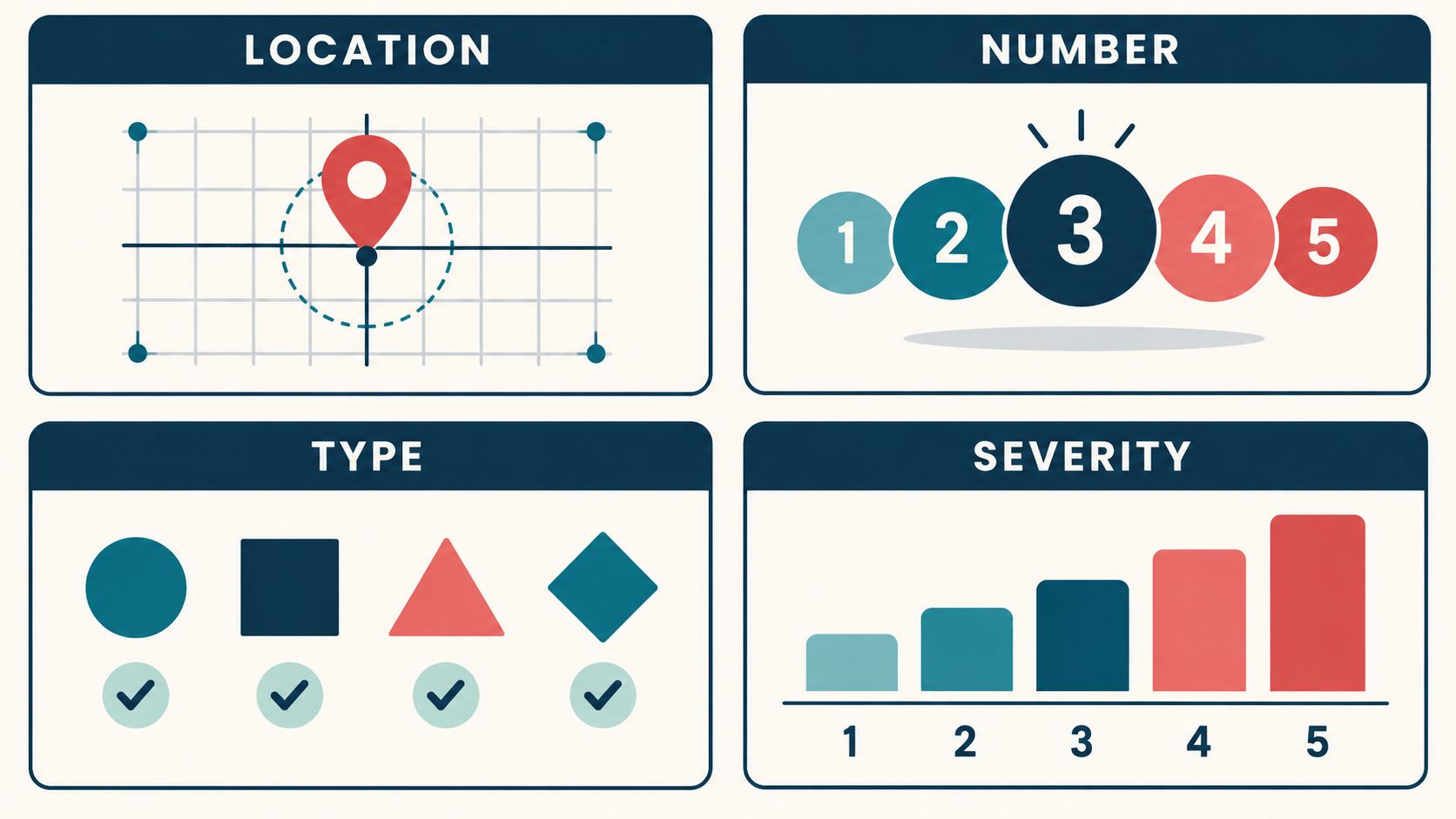
The SIT Scale ABA search usually refers to the Self-Injury Trauma (SIT) Scale, a measurement method developed to describe surface-tissue damage associated with self-injurious behavior. It organizes observations such as injury location, number, type, and severity so a trained team can document what happened and communicate about risk more precisely.
Table of Contents
- What Is the SIT Scale ABA Tool?
- What Does the SIT Scale Measure?
- How Is the SIT Scale Used in Practice?
- How Is the SIT Scale Different From Functional Analysis?
- What Are the Limits and Safeguards?
- How Should You Study the SIT Scale for the BCBA Exam?
- Frequently Asked Questions
- Sources for Further Study
- Quick Review Checklist
- Take the Free BCBA Mock Exam
The SIT Scale is not a diagnosis, a functional analysis, or a stand-alone treatment decision. It does not tell you why self-injury occurs, whether a person has a particular condition, or which intervention should be used. For a real case, injury or medical concerns require appropriately trained clinical professionals and current safety procedures. This article is a BCBA study guide to the measurement concept and its boundaries.
What Is the SIT Scale ABA Tool?
The Self-Injury Trauma Scale was described in the Journal of Applied Behavior Analysis as a way to classify and quantify surface-tissue damage caused by self-injurious behavior. The original work addressed observable injury characteristics rather than the function of the behavior. That distinction is the key to answering a BCBA question correctly.
Think of the SIT Scale as an outcome-measurement system. It describes the physical result that can be observed after self-injury, using defined categories rather than a vague statement such as “the behavior was severe.” A measurement system is useful when different trained observers can apply the definitions consistently and when the information supports a responsible clinical or research conversation.
The name can be confusing because “trauma” sounds like a psychological diagnosis. In this tool’s context, it refers to surface-tissue injury. It does not by itself measure emotional trauma, diagnose post-traumatic stress, or explain the person’s experience. Use precise language and do not infer more than the observation supports.
What Does the SIT Scale Measure?
The central domains are the features of an observed injury. The exact scoring rules and authorized form should come from the original source or an approved training system; do not invent a local scoring scale from a blog summary.
| Domain | What it describes | Study cue |
|---|---|---|
| Location | Where the observable injury occurred, using the tool’s defined body-location categories. | Location is part of the injury description; it is not a behavioral function. |
| Number | How many injuries or injury sites are recorded under the scoring rules. | Count is not the same as frequency of the behavior across sessions. |
| Type | The defined observable kind of surface-tissue damage, such as a category specified by the scale. | Use the form’s definitions rather than everyday descriptions. |
| Severity | The degree of tissue damage defined by the scoring system. | A severity score is a measurement result, not a complete risk assessment or treatment recommendation. |
Research using the SIT Scale may also derive summary indices or an estimate of current risk from the recorded features. Those calculations depend on the authorized scoring rules and the purpose of the assessment. On an exam, do not assume that every “severity” number is interchangeable with frequency, intensity, duration, or a functional assessment result.
How Is the SIT Scale Used in Practice?
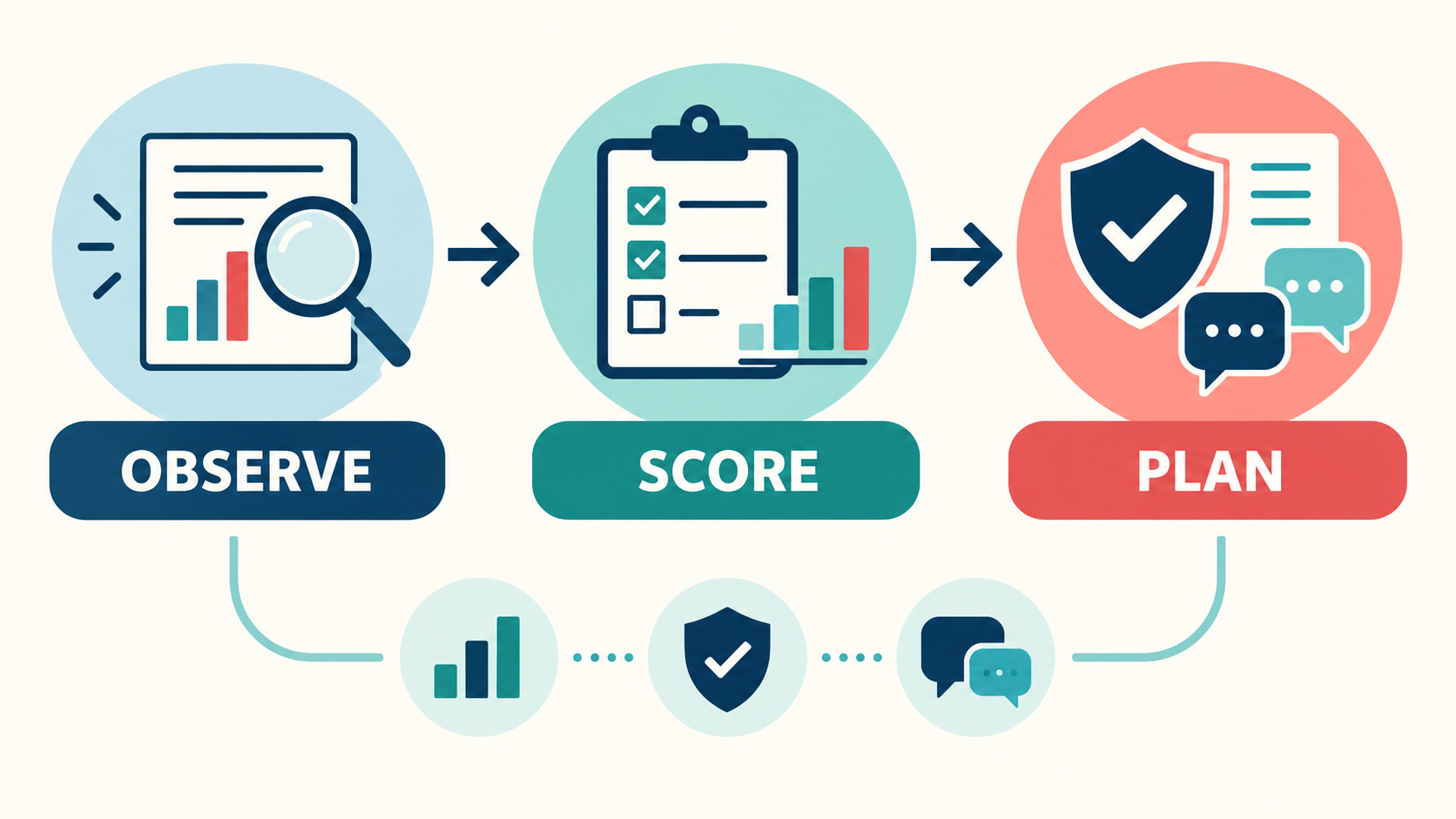
A safe high-level workflow is observe, score, and plan. The tool supports documentation; trained professionals decide how the information should be used within the larger assessment and safety system.
- Observe: Use a defined procedure and appropriate safeguards to identify the injury characteristics. Protect privacy and follow the setting’s medical, incident-reporting, and consent requirements.
- Score: Apply the authorized definitions consistently. Train observers, answer questions before scoring, and collect interobserver agreement or another reliability check when the design requires it.
- Plan: Communicate the result to the people who need it, consider immediate safety and medical follow-up, and integrate it with behavior data, functional assessment, treatment integrity, and client-centered goals.
The SIT Scale can help a team describe whether injury outcomes are changing over time or across conditions. It can also improve communication when “bad injury” means different things to different people. But a score is not a substitute for looking at the person, the context, the behavior’s pattern, and the response of the care team.
Because self-injury can involve urgent health risks, use the least risky observation and documentation process that answers the question. Never create, photograph, or inspect an injury merely to obtain a data point. Follow the current protocol of the responsible clinical setting and involve appropriately qualified medical professionals when needed.
How Is the SIT Scale Different From Functional Analysis?
This comparison is a common exam trap. The SIT Scale describes injury outcomes; a functional assessment asks what variables may be influencing behavior and what information should guide intervention.
| Question | SIT Scale | Functional assessment or analysis |
|---|---|---|
| Primary purpose | Describe observable injury characteristics and severity categories. | Identify patterns, variables, or hypotheses related to the behavior. |
| Typical data | Location, number, type, severity, and authorized summary scores. | Antecedents, behavior, consequences, context, and response patterns. |
| What it cannot establish alone | Why the behavior occurs or which treatment is effective. | A complete description of tissue damage without a separate injury measure. |
Both kinds of information can matter in a comprehensive plan. For example, a functional assessment may help the team understand whether self-injury is maintained by social or automatic variables, while injury measurement helps the team track the physical outcome and safety burden. Neither measure should be treated as a shortcut around individualized assessment, consent, competence, and risk review.
What Are the Limits and Safeguards?
- It is not a diagnosis: A SIT score cannot diagnose autism, trauma, psychiatric conditions, or a medical disorder.
- It is not a function measure: Location or severity does not tell you whether behavior is maintained by attention, escape, access, or automatic consequences.
- It is not the whole risk picture: Risk can depend on health status, timing, pattern, environment, protective factors, and professional judgment beyond a score.
- It needs trained use: Observers need definitions, practice, feedback, and a reliability plan suitable for the setting.
- It must protect dignity: Use respectful language, limit access to sensitive records, and avoid graphic content in teaching materials or public posts.
- It does not replace medical care: New, worsening, infected, or otherwise concerning injuries should be handled under the responsible medical and organizational protocol.
The current BACB overview of behavior analysis and the current professional and ethical requirements should frame how a behavior analyst uses measurement. The tool may improve precision, but precision is not permission to act outside competence or to delay needed protection.
How Should You Study the SIT Scale for the BCBA Exam?
When a question mentions the SIT Scale, look for the measurement target. The best answer will usually describe injury characteristics or the reliability and documentation of those observations. Use this quick method:
- Ask whether the stem is measuring the behavior itself, the resulting injury, or the function of the behavior.
- Match SIT Scale to location, number, type, severity, or a related injury summary—not to attention, escape, tangible access, or automatic reinforcement.
- Separate a score from a diagnosis and from a treatment recommendation.
- Choose the answer that protects privacy, uses trained observers, and follows medical and organizational safeguards.
- Remember that a functional analysis and injury measurement answer different questions and can be complementary.
The BACB Test Content Outline is the current source for certification-study scope. For additional practice applying measurement distinctions, the free BCBA mock exam can provide study scenarios; it is not official BACB content, medical advice, or a guarantee of passing.
Frequently Asked Questions
What does SIT stand for in ABA?: SIT commonly refers to the Self-Injury Trauma Scale, a measurement method for describing surface-tissue damage associated with self-injurious behavior. What does the SIT Scale measure?: It organizes observable injury characteristics such as location, number, type, and severity according to its defined scoring system. It does not measure behavioral function or provide a diagnosis by itself.
Is the SIT Scale a functional analysis?: No. The SIT Scale describes injury outcomes. A functional assessment or functional analysis addresses variables related to why behavior occurs. The two may provide different information in a broader assessment. Can a SIT score determine treatment?: No. A score can inform documentation and risk discussion, but treatment decisions require individualized assessment, competent clinical judgment, ethical safeguards, medical coordination when needed, and current applicable requirements. Should SIT Scale images show real injuries?: Not in a general BCBA study article. Use non-graphic diagrams and respectful language. Real cases should follow privacy, consent, medical, and organizational protocols rather than public-image examples.
Sources for Further Study
- The Self-Injury Trauma (SIT) Scale — original Journal of Applied Behavior Analysis article.
- Injury characteristics across functional classes of self-injurious behavior — peer-reviewed application of SIT Scale coding.
- BACB Test Content Outlines — current examination-content resource.
- BACB: About Behavior Analysis — official behavior-analysis context.
- BACB Ethics Codes — current professional and client-protection requirements.
Quick Review Checklist
Use this final checklist to turn sit scale aba into exam-ready reasoning. The goal is not to memorize a label in isolation; it is to identify the relevant evidence and explain why the best answer fits the scenario. Key ideas to review:
- State the central definition or decision point for sit scale aba in your own words.
- Identify the detail that makes sit scale aba different from its closest related ABA term.
- Separate the observable facts in a scenario from assumptions that are not supported by the facts.
- Write one example and one nonexample so you can recognize the concept in a new setting.
Exam application checks:
- Ask what the question is actually requesting before comparing the answer choices.
- Mark the antecedent, response, consequence, or other evidence that supports the selected answer.
- Look for a distractor that describes a related process but does not answer the specific question.
Final self-check:
- Explain how you would verify the interpretation with clear observations or data.
- Change one detail in the scenario and decide whether your answer should change.
- Give a one-sentence rationale that a supervisor or study partner could evaluate.
Take the Free BCBA Mock Exam
If you want a low-pressure way to check your recall, use the free practice resource below. Take the Free BCBA Mock Exam



