

Rule-governed behavior in ABA occurs when behavior is influenced by a verbal description of a contingency. The rule may be spoken, written, signed, pictured, or delivered through AAC. Responding may occur before direct contact with the outcome.
A learner may wear a helmet after hearing that helmets reduce injury, before experiencing a bicycle accident. The explanation is the rule; wearing it is behavior. Check accuracy, direct reinforcement, and conflicts with current conditions.
What Is Rule-Governed Behavior in ABA?
Rule-governed behavior is controlled in part by a verbal statement about a contingency. A rule may specify what to do, avoid, when to act, or what outcome to expect. The learner’s response to the relation is the behavior of interest.
A rule need not be accurate or beneficial to influence behavior. It may be outdated, misleading, or conditional. Identify the verbal stimulus, response, stated consequence, and actual consequences; direct contact, MOs, prompts, social reinforcement, or safety information may compete.
| Element | Question to ask | Example |
|---|---|---|
| Verbal stimulus | What rule, instruction, sign, or statement was presented? | “Press the green button to start the timer.” |
| Target behavior | What observable response occurs after the statement? | The learner presses the green button. |
| Stated contingency | What relation does the rule describe? | Pressing the button is described as producing a start signal. |
| Actual contingency | What consequence actually follows the response? | The timer starts, or it fails to start because the device is unplugged. |
| History and context | What learning history and current conditions affect rule following? | Past accurate instructions and a current need to begin the task. |
The BACB BCBA Test Content Outline, 6th edition includes distinguishing rule-governed and contingency-shaped behavior in B.18. Questions test verbal control versus direct consequence contact.
Rule-Governed Versus Contingency-Shaped Behavior
Contingency-shaped behavior changes through direct consequences. A child touches a hot surface and later avoids it; a learner repeats a button that produces music; an employee changes workflow after direct error feedback.
Rule-governed behavior can occur without direct history: a person may avoid a hot surface after hearing it can burn or select a button after reading a label. Rules and natural consequences may overlap; classify the supported controlling variables.
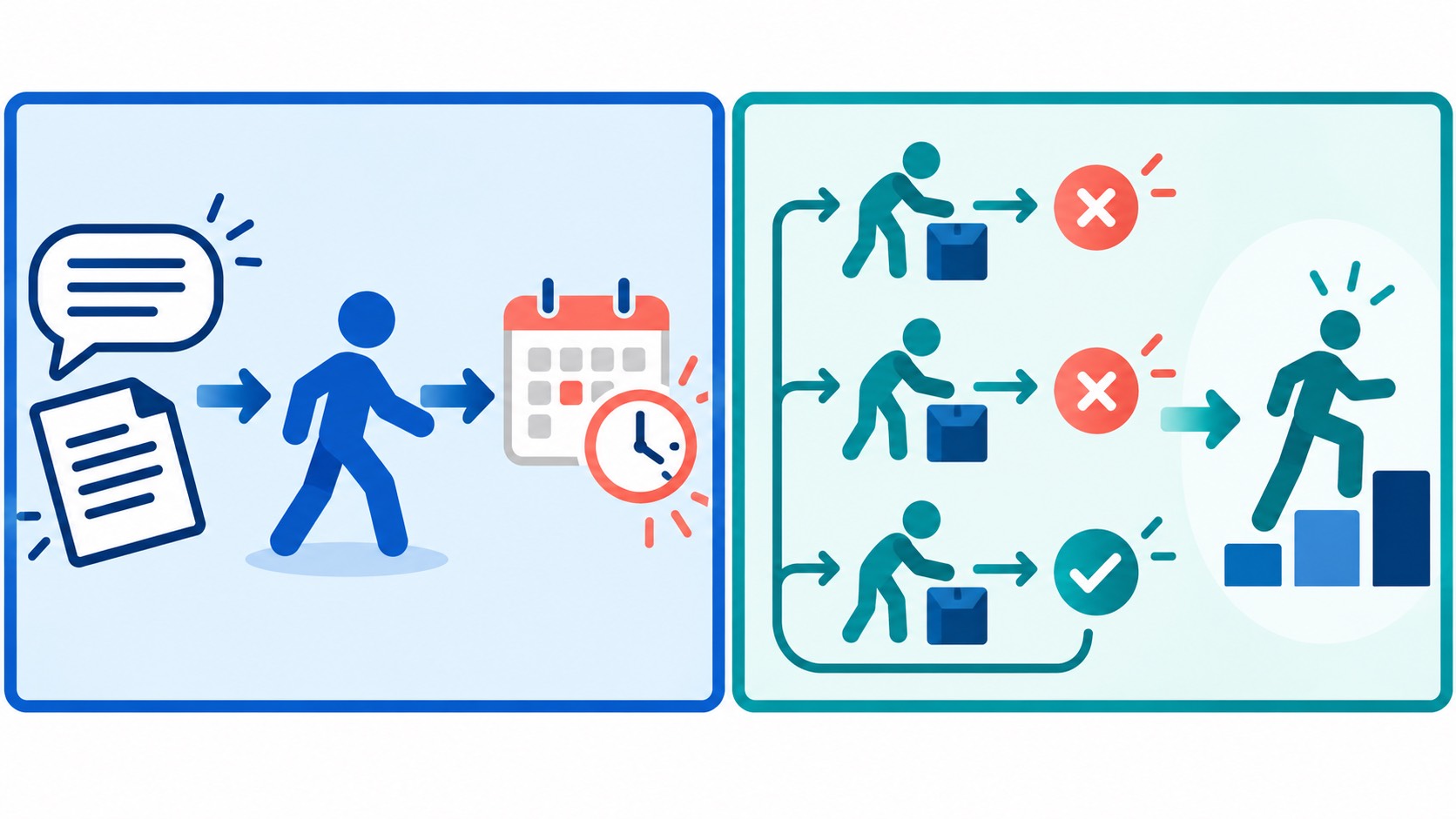
| Feature | Rule-governed behavior | Contingency-shaped behavior |
|---|---|---|
| Primary source of control | A verbal description of a contingency. | Direct contact with consequences for responding. |
| Timing | Behavior may occur before the outcome has been experienced. | Behavior changes across direct trials or natural exposure. |
| Example | Wearing a seat belt after learning the safety rule. | Continuing to use a shortcut because it repeatedly saves time. |
| Risk | The rule may be inaccurate, outdated, or too broad. | Learning may be slow, costly, unsafe, or limited to one context. |
| Assessment question | What verbal statement occasioned the response? | What consequence directly changed future responding? |
If a learner “has never experienced the outcome” but responds after hearing a description, rule control is likely. Repeated trial-and-error contact with reinforcement or punishment suggests contingency shaping. If both appear, explain their interaction.
Rules, Instructions, and Contingencies
An instruction tells someone what to do, but may not describe a complete contingency. “Put the pencil in the box” specifies an action; “then choose a game” adds an outcome relation.
Use function and context. A direction may be a prompt, instruction, rule, or part of a larger contingency depending on history. Do not classify an imperative as a rule without a behavior–consequence relation that controls responding.
| Statement type | What it communicates | Analysis caution |
|---|---|---|
| Direction | A response to emit: “Open the workbook.” | May be a prompt without describing an outcome. |
| Rule | A stated relation: “Open the workbook to find the practice items.” | Check whether the stated outcome controls later responding. |
| Promise | A consequence framed as likely: “Finish these items and you can choose music.” | Actual delivery and learner history affect rule control. |
| Warning | A consequence framed as aversive: “If you run, the activity stops.” | Do not infer punishment unless the consequence and future effect support it. |
| Visual schedule | A sequence of actions and outcomes through words or symbols. | Assess whether the learner responds to the representation or to direct contingencies. |
A rule can be visual, auditory, gestural, or augmentative. Modality does not decide classification. A location label is not necessarily a rule; “clean up, then snack” can describe one.
How Rules Acquire and Maintain Control
Rule following develops when verbal descriptions correlate with useful, reinforcing, or aversive outcomes. A safety statement may predict protection, a task rule access to an activity, or a workplace policy approval or payment.
Rule control is not permanent. Repeated failure or stronger natural contingencies may shift control to direct contact. Lengthy rules may need simplification or visual support.
| Control variable | How it can affect rule following | Assessment example |
|---|---|---|
| Rule accuracy | Accurate rules are more likely to remain useful across opportunities. | Compare the stated outcome with what actually occurs. |
| History of reliability | Consistent past outcomes increase the rule’s credibility. | Review prior trials and caregiver or teacher follow-through. |
| Response effort | A difficult response may not occur even when the rule is understood. | Compare performance when materials or steps are simplified. |
| Motivating operations | Current value of the stated outcome changes the likelihood of responding. | Observe whether choice, deprivation, or fatigue changes rule following. |
| Competing contingencies | Immediate direct consequences may compete with a delayed stated outcome. | Analyze what the learner contacts after each response. |
Pair rules with accurate outcomes and predictable follow-through. If a rule cannot be honored, update it instead of repeating an inaccurate promise. This protects trust and improves assessment.
Pliance, Tracking, and Augmentals
Some discussions distinguish rule following by supporting consequences. Pliance is supported by social consequences; tracking by correspondence with natural outcomes; augmentals alter another consequence’s value or effectiveness.
Use these terms only with evidence. Following a teacher’s rule does not show pliance or tracking by itself. Identify social approval, correction, natural outcome contact, or changed consequence value; otherwise choose the broader rule-governed label.
| Term | Study-level description | Evidence to look for |
|---|---|---|
| Rule-governed behavior | Behavior influenced by a verbal description of a contingency. | A rule is presented before behavior and the response changes. |
| Pliance | Rule following supported mainly by socially mediated consequences for compliance. | Approval, praise, correction, or social disapproval is the relevant history. |
| Tracking | Rule following supported by correspondence between the rule and natural outcomes. | The learner contacts the stated environmental consequence. |
| Augmental function | A verbal stimulus changes the value or effectiveness of another consequence or stimulus. | The statement makes an outcome more or less reinforcing or punishing. |
| Unknown function | The stem does not establish why the rule controls responding. | Do not infer a subtype from a single word or social convention. |
“Wear goggles or I will mark you down” suggests social consequences and possible pliance. “Wear goggles because they protect your eyes” describes a natural outcome and possible tracking. One learner can show both in different contexts.
Applied Examples of Rule-Governed Behavior
Applied examples should name the rule, response, and outcome. In a fire drill, a student exits after the signal and posted procedure; in a token system, a learner follows a visual rule linking task completion with tokens. Direct contingencies may also operate.
If a learner is told, “Touching the blue card earns a point,” but the point never arrives, following may decline as reliability falls. Teacher praise could still maintain responding through a social consequence.
| Situation | Possible rule-governed response | What to verify |
|---|---|---|
| Safety procedure | Put on goggles after hearing the laboratory rule. | Whether the rule, natural safety outcome, or both control responding. |
| Classroom schedule | Finish a worksheet before selecting a break activity. | Visual schedule, task reinforcement, prompts, and actual follow-through. |
| Community travel | Wait for the walk signal before crossing. | Rule history, direct pedestrian feedback, and current safety conditions. |
| Work routine | Submit a form by a stated deadline. | Whether the deadline rule predicts payment, approval, or error prevention. |
| Self-management | Set a timer because a plan says to check progress after ten minutes. | Whether the plan changes behavior and whether the check produces useful feedback. |
| Inaccurate promise | Complete a task after being promised an unavailable reward. | How reliability, trust, and competing consequences affect future responding. |
Use examples as hypotheses, not automatic classifications. Direct consequences may follow a rule-guided response; collect what initially evoked it and what maintains it.
How to Analyze a BCBA Scenario
Separate the verbal stimulus from the behavior, then compare the stated contingency with learning history: quote the rule, define the response, check direct outcome contact, and examine what changes future probability.
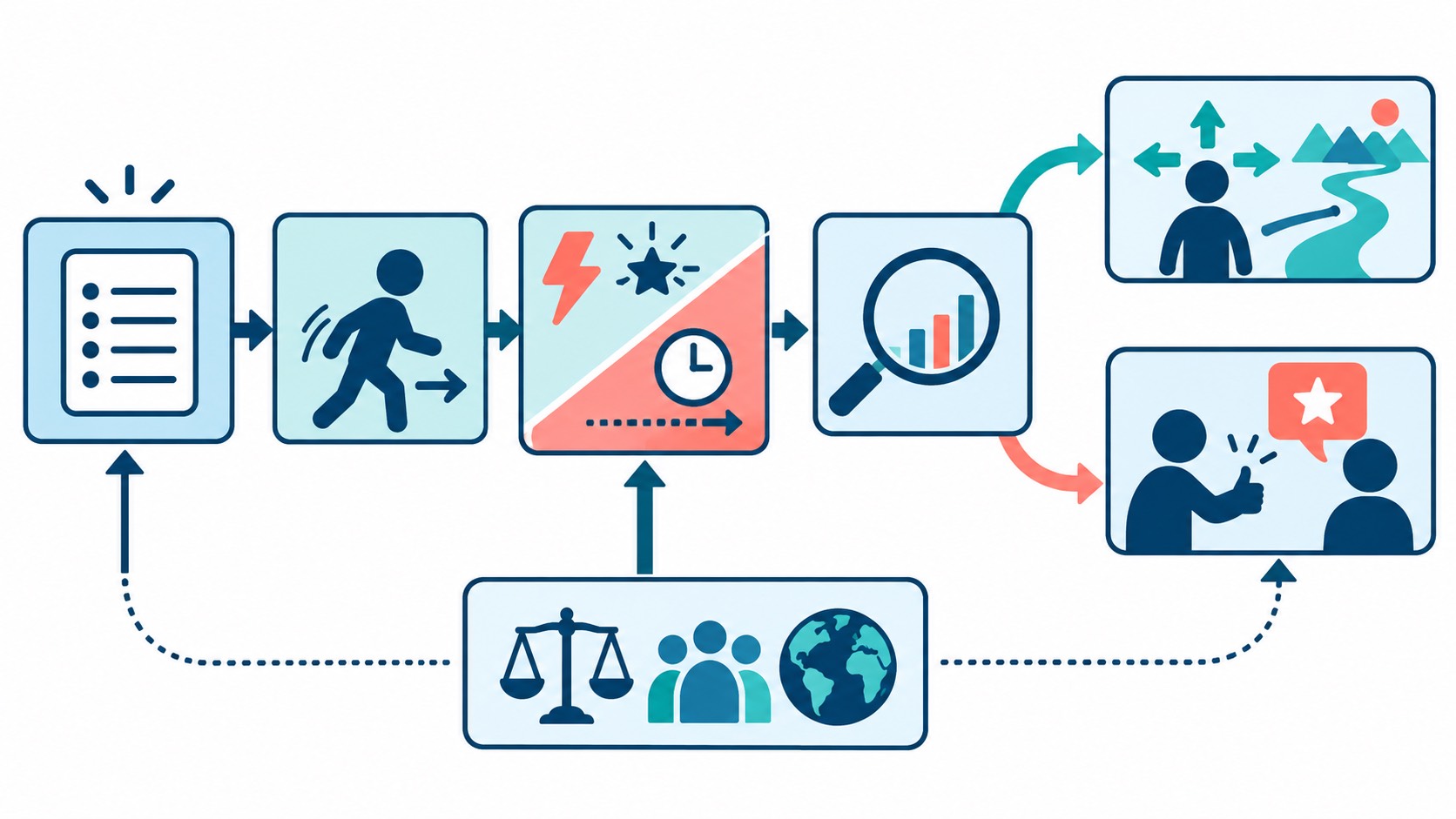
| Step | Question | Common error |
|---|---|---|
| 1. Locate the verbal stimulus | What was said, shown, signed, or written before the response? | Calling any antecedent instruction a complete contingency. |
| 2. Define the response | What exactly did the learner do? | Using “understood the rule” as a behavioral definition. |
| 3. Check direct contact | Has the learner experienced the consequence described? | Assuming direct learning when the stem says the outcome is novel. |
| 4. Compare stated and actual outcomes | Did the environment behave as the rule predicted? | Ignoring inaccurate or delayed consequences. |
| 5. Identify maintenance | What consequence now changes future responding? | Confusing the initial source of control with the maintaining consequence. |
| 6. Choose the narrowest answer | Which classification is supported by the facts? | Adding pliance, tracking, or augmental labels without evidence. |
If a rule and direct reinforcement coexist, the rule may occasion the first response while tokens reinforce it. “Learned through direct contact” points to contingency shaping even when an instruction is present.
Teaching Rule Following and Flexibility
Teaching should begin with an observable target: define the response, delivery mode, and outcome. Start with short, accurate rules and meaningful outcomes; use modeling, visuals, rehearsal, prompts, fading, and natural-context probes.
Flexibility matters. Teach “the rule applies,” “ask for clarification,” and “stop and report a safety problem.” Rule fading can transfer control to natural cues, while planned variation prevents rigid responding.
| Teaching target | Example procedure | Measurement |
|---|---|---|
| Rule discrimination | Present accurate and inaccurate or applicable and inapplicable examples. | Correct choice or response across varied trials. |
| Following a simple rule | State a brief contingency, prompt the response, and deliver the stated outcome. | Independent percentage and prompt level. |
| Rule verification | Teach the learner to check whether the predicted outcome occurred. | Accurate report, check, or help request. |
| Flexibility | Practice safe changes and teach when to pause or ask a question. | Correct adaptation across novel examples. |
| Generalization | Vary communication mode, people, settings, materials, and outcomes. | Performance across people and environments. |
| Maintenance | Thin prompts and test natural consequences after instruction. | Follow-up probes over time. |
Do not define success as silent obedience. Functional rule following can include checking applicability, refusing unsafe directions, requesting accommodation, or reporting a failed outcome. Preserve communication and assent.
Data, Context, and Ethical Boundaries
Data should show whether the rule changes useful behavior. Record the rule, context, response, prompt, stated and actual consequences, and competing variables. For important decisions, record accuracy, feasibility, cultural fit, and communication mode.
A rule should not override assent, self-advocacy, or safety information. Avoid unavailable promises and collaborate on meaningful targets.
| Data field | Why it matters | Example |
|---|---|---|
| Rule as delivered | Shows the actual verbal or visual stimulus controlling the opportunity. | Exact words, symbols, sign, or AAC sequence. |
| Context and motivation | Current conditions may alter the value of the stated outcome. | Fatigue, access, urgency, choice, or competing activity. |
| Response and prompt | Separates independent rule following from prompted compliance. | Completed step independently after a visual rule. |
| Stated versus actual outcome | Tests rule accuracy and correspondence with the environment. | Break was available as described, or not available. |
| Listener or partner behavior | Social consequences may maintain pliance or distort the program. | Adult praise, correction, or consistent follow-through. |
| Learner voice | Protects assent, preferences, and self-advocacy. | Learner reports confusion, refusal, or a safety concern. |
A useful rule is brief, accurate, and meaningful. If it fails, change the plan or environment.
BCBA Exam Traps, Checklist, and FAQ
Do not treat any instructed response as proof of rule-governed behavior. The stem must support verbal control. Also distinguish a rule from direct reinforcement and avoid pliance or tracking labels without evidence.
| Exam clue | Best analysis | Trap to avoid |
|---|---|---|
| The learner responds before contacting the described outcome. | Rule-governed control is likely. | Calling it contingency-shaped solely because a consequence is promised. |
| The learner changes responding after repeated direct reinforcement. | Contingency-shaped control is likely. | Calling it rule-governed because an instruction was present. |
| The rule is followed because adults praise compliance. | Consider socially mediated rule following or pliance. | Assuming tracking without natural-outcome evidence. |
| The rule corresponds with a natural outcome the learner contacts. | Consider tracking if that correspondence controls behavior. | Assuming any accurate rule is automatically tracking. |
| A statement changes the value of an outcome. | Consider an augmental function. | Using “augmental” as a synonym for every rule. |
| The stem does not state the learning history. | Choose the broadest supported classification. | Inferring function from grammar or intuition. |
See the contingency-shaped, direct-acting contingency, and mock exam guides. Identify control, actual consequence, and initial versus maintaining control.
Use this quick checklist:
- Locate the rule and response.
- Separate a rule from a prompt.
- Compare stated and actual contingencies.
- Check direct outcome contact.
- Identify competing consequences.
- Use subtype terms only with evidence.
- Check accuracy, generalization, assent, and self-advocacy.
- Choose the narrowest classification.
- Record what maintains responding.
- Teach flexibility when conditions change.
What is rule-governed behavior? Behavior influenced by a verbal description of a contingency, such as an instruction, schedule, or safety statement.
How is it different from contingency-shaped behavior? Rule control can precede direct outcome contact; contingency shaping changes through direct consequences. Both can operate together.
Is every instruction a rule? No. It is a rule when a verbal contingency participates in controlling behavior.
What if the rule is inaccurate? Update it, teach condition-checking, and do not treat unsafe or impossible promises as valid.
Classify by the verbal contingency, then verify consequences, history, context, and communication.



