
Does ABA work for ADHD? Behavioral strategies can help with specific ADHD-related goals, especially when they are part of an individualized behavior-therapy or parent-training plan. But “ABA” is not a guarantee, a diagnosis, or a substitute for comprehensive ADHD care. The useful question is which behavior is being supported, how progress will be measured, and whether the provider’s training and scope fit the need.
Table of Contents
- Does ABA Work for ADHD? The Short Answer
- What Does “Work” Mean in ADHD?
- How Is ABA Different From Behavior Therapy for ADHD?
- What Does the Evidence Actually Support?
- Which Goals Can Behavioral Support Target?
- How Do ABA Services and ADHD Behavior Therapy Compare?
- What About Age, Diagnosis, and Assessment?
- How Do You Choose a Provider?
- What Are BCBA Scope and Referral Boundaries?
- How Is This Tested on the BCBA Exam?
- ADHD and Behavioral Support Checklist
- Quick Review Checklist
- Take the Free BCBA Mock Exam
For families, educators, and BCBA candidates, the wording matters. Public-health guidance more often uses terms such as behavior therapy, parent training, classroom supports, and multimodal ADHD treatment. “ABA for ADHD” does not tell you what will happen, who is qualified, or whether it fits. This article explains the evidence limits and how to evaluate a referral. It is educational information, not a diagnosis or treatment prescription. Table of Contents
Does ABA Work for ADHD? The Short Answer
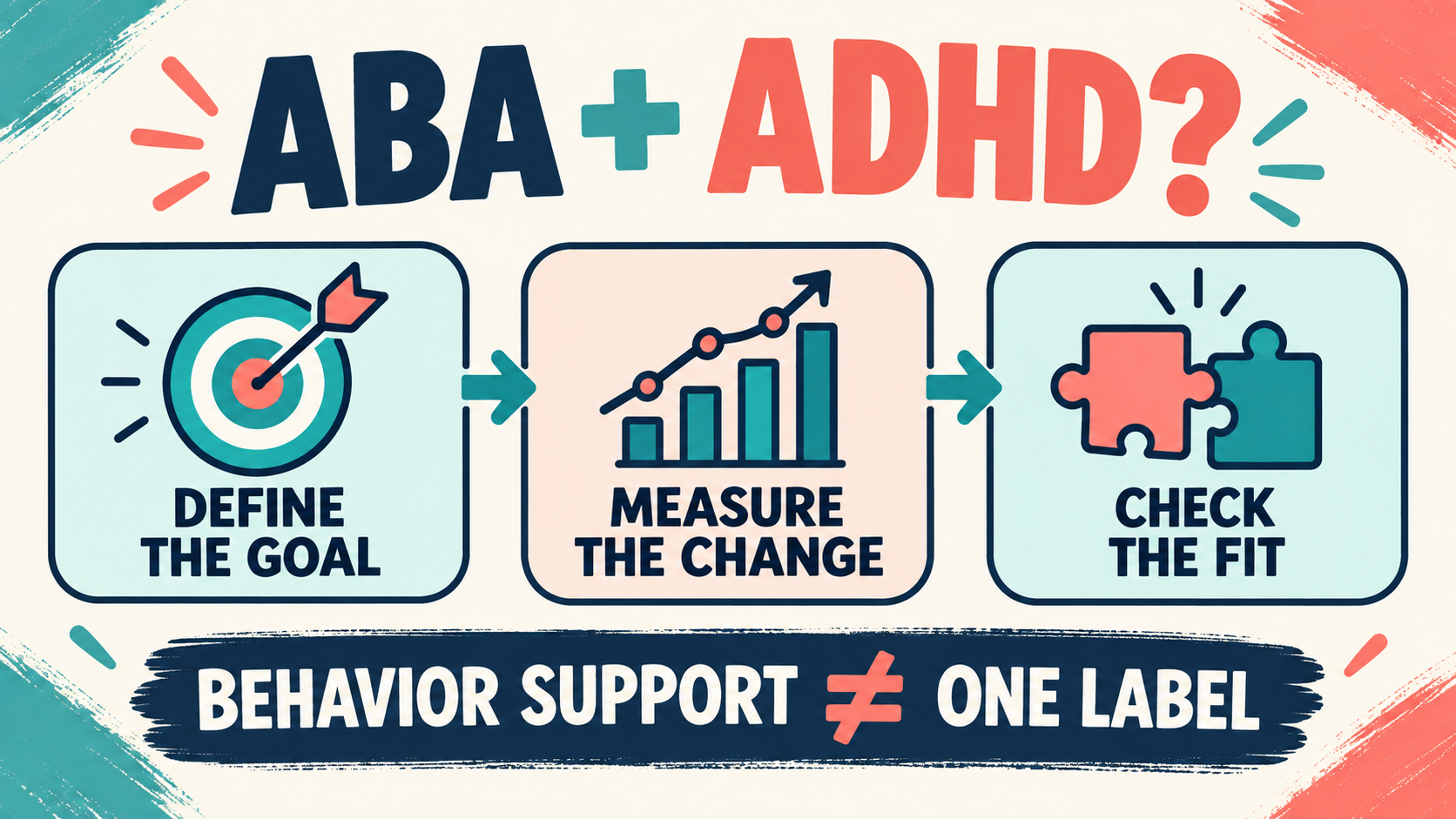
The most accurate answer is sometimes, for specific goals and with the right treatment match. Behavioral interventions can help a person build routines, increase task completion, practice organization, respond to prompts, and strengthen skills that make school, work, or home life more manageable. Parent training can also help caregivers use consistent, supportive strategies.
That answer is narrower than saying “ABA treats ADHD.” ADHD is a neurodevelopmental condition that should be evaluated by a qualified clinician. Behavior support may address routines and environmental barriers, but it does not establish a diagnosis or replace medical and psychological care. A person may also need school support, medication discussion with a prescriber, sleep support, or evaluation of co-occurring conditions.
“ABA” also means different things in different settings. A BCBA may use behavior-analytic procedures, a psychologist may provide behavior therapy within psychotherapy, and a school team may use classroom supports. Training, goals, procedures, and authorization matter more than the label.
What Does “Work” Mean in ADHD?
Before choosing an intervention, define the outcome in a way that is observable and meaningful to the person. “Improve ADHD” is too broad to guide a plan. A useful target might be starting a homework routine within ten minutes, using a visual schedule for a morning transition, recording assignments accurately, waiting for a turn in a group activity, or asking for a break before becoming overwhelmed. A strong goal has four parts:
- The behavior: what the person will do, not a vague demand to “try harder.”
- The context: where and when the behavior matters, such as a classroom, workplace, or bedtime routine.
- The measurement: frequency, duration, latency, accuracy, independence, or another measure that fits the goal.
- The person’s perspective: whether the goal improves participation, autonomy, relationships, safety, or quality of life.
Measurement should not turn a person into a score. Data are useful when they answer a practical question and are interpreted alongside preferences, stress, fatigue, and the person’s own report. Fewer interruptions are not automatically progress if the person has simply stopped participating or expressing disagreement.
How Is ABA Different From Behavior Therapy for ADHD?
The phrases overlap, but they are not interchangeable. The Centers for Disease Control and Prevention describes behavior therapy for ADHD as support that can improve functioning. Parent training is especially relevant for young children, while school-age children may need school-based supports.
ABA is a broad behavior-analytic science and professional approach. It examines behavior in context and uses assessment, environmental arrangement, teaching, reinforcement, prompting, and data-based decision making when those procedures are appropriate. Some of those tools can be part of an ADHD behavior-therapy plan. The shared techniques do not automatically make the services identical.
The practical distinction is this: behavior therapy describes a clinical intervention family, while ABA describes a behavior-analytic discipline and service framework. A provider should explain the framework, goals, procedures, and credential or license behind the service.
What Does the Evidence Actually Support?
Current ADHD guidance supports behavioral interventions as one part of care, with the mix depending on age, impairment, family priorities, and co-occurring needs. The CDC overview of ADHD treatment describes behavior therapy, medication, and school or workplace supports as options that may be combined. For younger children, it highlights parent training. The American Academy of Pediatrics guideline frames care around evaluation, impairment, family and school context, and evidence-based choices. Its evidence review does not place every intervention under one heading called “ABA.”
Research on defined behavior-management components can support selected outcomes. A meta-analysis of daily behavior report cards, for example, studied one school-based intervention, not a universal ABA package. Procedure-specific evidence cannot become a promise about every ABA-marketed clinic.
So the evidence-informed conclusion is modest but useful: behavioral support may help with targeted ADHD-related functioning, especially when it is individualized, implemented consistently, monitored, and coordinated with other care. The evidence does not justify guaranteed outcomes, a fixed number of service hours for every person, or the claim that ABA alone answers all ADHD needs.
Which Goals Can Behavioral Support Target?
A well-designed plan starts with a real-life obstacle and asks what environmental or skill changes could make participation easier. Possible targets include:
- Task initiation: breaking a large assignment into a visible first step, arranging materials, and reinforcing starting rather than waiting for perfect completion.
- Organization: using a consistent place for items, a short checklist, calendar prompts, or a routine for recording homework and deadlines.
- Time management: practicing transitions, estimating task duration, using timers carefully, and adjusting demands when the schedule is unrealistic.
- Parent or caregiver coaching: making instructions specific, offering choices, noticing effort, and using predictable consequences without shame or humiliation.
- School participation: collaborating with teachers on antecedent supports, work completion, breaks, communication, and accommodations.
- Self-advocacy: teaching a person to request clarification, negotiate a break, identify overload, or select a strategy that helps them re-engage.
These goals should not be used to punish ADHD traits or force a person to appear “less different.” If a goal is selected only because adults dislike movement, communication style, or harmless self-regulation, the team should reconsider its social significance and potential cost.
How Do ABA Services and ADHD Behavior Therapy Compare?
| Question | Behavior therapy / parent training | ABA service question |
|---|---|---|
| What is the starting point? | ADHD-related impairment, family routines, school context, and age. | A behavior-analytic referral question, assessment, and meaningful target behavior. |
| Who may deliver it? | A qualified mental-health or medical professional, parent coach, or school team depending on the service. | A behavior analyst or supervised team working within training, certification, licensure, and local rules. |
| What is measured? | Functioning, symptom-related impairment, caregiver implementation, and treatment response. | Observable behavior, context, skill acquisition, treatment integrity, and socially meaningful outcomes. |
| What should not be assumed? | That behavior therapy replaces diagnostic or medical evaluation. | That the word ABA proves a service is appropriate, comprehensive, or covered by a particular license or payer. |
This comparison is a decision aid, not a ranking. The best fit depends on the person’s goals, age, communication, health, family context, school or work demands, and the competence of the team.
What About Age, Diagnosis, and Assessment?
Age changes the support plan. Young children may need parent coaching and routine changes; school-age children may need classroom accommodations and organization supports; adolescents and adults may prioritize planning, work performance, safety, relationships, sleep, and self-advocacy. Do not copy one strategy across ages without checking fit.
An ADHD diagnosis requires more than observing distractibility. A qualified clinician considers symptoms across settings, developmental history, impairment, and alternative or co-occurring explanations. Sleep, anxiety, trauma, learning differences, medication effects, and environmental stress can affect behavior. A behavioral assessment clarifies patterns but does not replace diagnostic evaluation.
Good assessment is collaborative. Include the person, caregivers when appropriate, school or workplace supports with permission, and other clinicians when coordination is needed. Ask what the person wants to change and which interventions feel acceptable.
How Do You Choose a Provider?
Before beginning an ABA or behavioral-support service for ADHD, ask for plain answers to these questions:
- What exactly is the service? Is it parent training, behavior therapy, school consultation, behavior-analytic treatment, psychotherapy, coaching, or a coordinated combination?
- What is the provider’s credential and training? Ask who assesses, who writes the plan, who supervises, and which professional license or certification applies.
- What will be measured? Look for a small set of useful goals, a baseline, a review schedule, and a plan for changing ineffective procedures.
- How are preferences and refusal handled? The provider should describe assent, choice, breaks, privacy, dignity, and how a person can communicate that a procedure is not working.
- How will the team coordinate? Clarify communication with a prescriber, therapist, school, or workplace and how confidential information will be shared.
- What are the limits and costs? Ask about out-of-pocket expenses, coverage, service duration, discharge criteria, and referral options if the case changes.
Be cautious about claims that a single method cures ADHD, guarantees independence, eliminates all movement or mistakes, or requires a predetermined intensity for everyone. A credible provider can describe uncertainty and revise the plan when needed.
What Are BCBA Scope and Referral Boundaries?
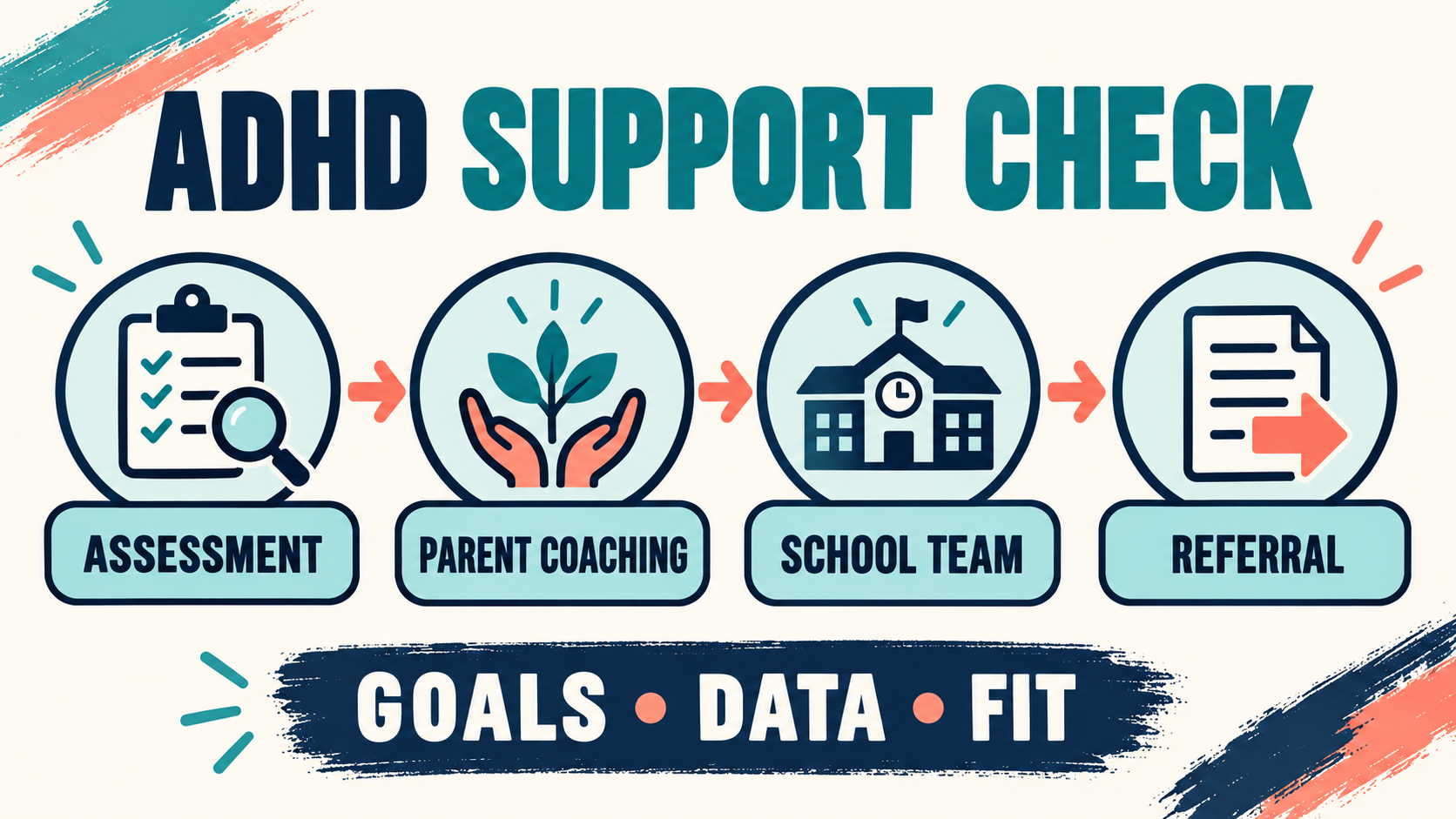
The BACB describes behavior analysis as a science concerned with behavior and its context. A BCBA may assess patterns, design behavior-analytic supports, train caregivers or staff, and evaluate outcomes. That credential alone does not authorize every mental-health treatment, diagnosis, medication advice, or psychotherapy service.
Scope depends on the service, education, supervised experience, competence, credential or license, setting, and law. The BACB Ethics Code emphasizes welfare, competence, consent, assent when relevant, accurate public statements, and action when a matter exceeds competence. A responsible BCBA should say when consultation or referral is needed. Referral may be appropriate for diagnostic clarification, medication evaluation, crisis assessment, medical treatment, psychotherapy outside the provider’s competence, speech or occupational therapy, or another specialized service. It protects the person from scope drift.
How Is This Tested on the BCBA Exam?
The BCBA exam may present ADHD in a scenario rather than ask whether ABA “works” as a yes-or-no fact. Use the current BCBA Test Content Outline as the controlling exam source, then reason through the case:
- Identify the referral question, the client’s goal, and the behavior or context being discussed.
- Separate an observable behavior-analytic target from a request for diagnosis, medication, psychotherapy, or another service.
- Check competence, informed consent, assent, client welfare, cultural responsiveness, and legal or employer requirements.
- Choose the least intrusive effective support, collect useful data, and revise the plan when it is not helping.
- Select consultation or referral when the need exceeds the BCBA’s training, authority, or competence.
For additional scenario practice, the free BCBA mock exam can be used as a study aid. It is not official BACB material and does not replace coursework, supervised fieldwork, or professional consultation.
ADHD and Behavioral Support Checklist
Use this short checklist before describing a service as “ABA for ADHD”:
- Is there a clear, person-centered goal rather than a demand to appear less different?
- Has a qualified clinician evaluated ADHD and possible co-occurring or alternative explanations?
- Does the provider explain whether the service is behavior therapy, parent training, ABA, coaching, psychotherapy, or a combination?
- Are the provider’s training, credential, license, supervision, and referral limits clear?
- Will the plan measure meaningful functioning while respecting preference, assent, privacy, and refusal?
- Is there a coordinated path for school, medical, mental-health, speech, occupational, or crisis needs?
- Does the provider avoid guaranteed outcomes, fixed-hour promises, and claims that one label fits every person?
The bottom line is careful but encouraging: behavioral support can help some people with ADHD reach specific goals, but the label ABA does not answer whether a service is effective or appropriate. Start with the person’s priorities, define the target, use evidence-informed methods, measure what matters, and keep diagnosis, medical care, psychotherapy, school support, and behavior analysis connected when the person needs more than one kind of help.
Quick Review Checklist
Use this final checklist to turn does aba work for adhd into exam-ready reasoning. The goal is not to memorize a label in isolation; it is to identify the relevant evidence and explain why the best answer fits the scenario. Key ideas to review:
- State the central definition or decision point for does aba work for adhd in your own words.
- Identify the detail that makes does aba work for adhd different from its closest related ABA term.
- Separate the observable facts in a scenario from assumptions that are not supported by the facts.
- Write one example and one nonexample so you can recognize the concept in a new setting.
Exam application checks:
- Ask what the question is actually requesting before comparing the answer choices.
- Mark the antecedent, response, consequence, or other evidence that supports the selected answer.
- Look for a distractor that describes a related process but does not answer the specific question.
Final self-check:
- Explain how you would verify the interpretation with clear observations or data.
- Change one detail in the scenario and decide whether your answer should change.
- Give a one-sentence rationale that a supervisor or study partner could evaluate.
Take the Free BCBA Mock Exam
If you want a low-pressure way to check your recall, use the free practice resource below. Take the Free BCBA Mock Exam



