
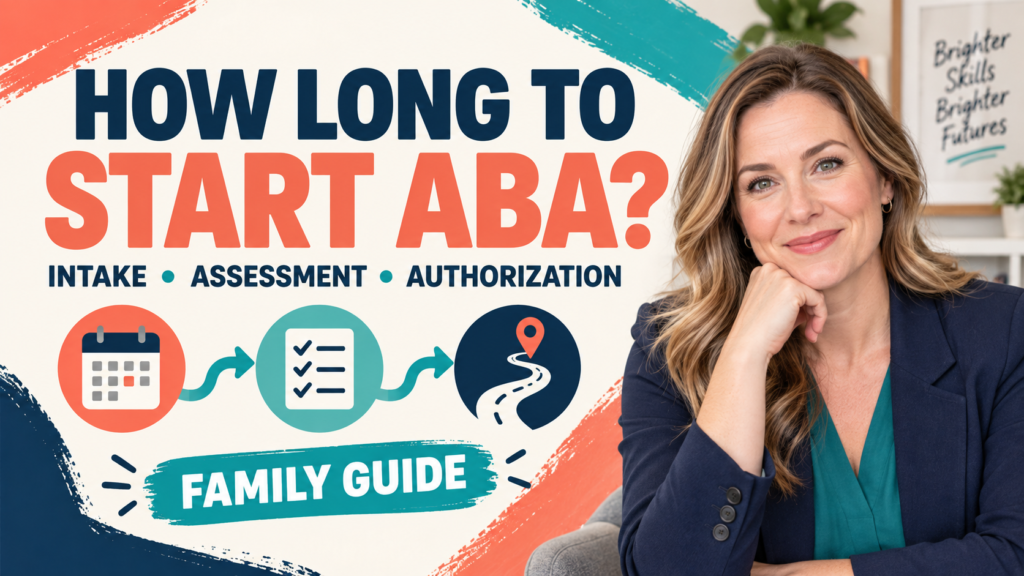
How long does it take to initiate ABA services? The practical question, how long to initiate ABA services, has no single national timeline. A family may move from first contact to the first session in a few weeks, while documentation gaps, insurance authorization, staffing, location, or a provider waitlist can stretch the process much longer. The predictable part is the sequence: intake, records and benefits review, assessment, treatment-plan development, authorization, and scheduling.
Table of Contents
- How Long to Initiate ABA Services: What Is a Realistic Timeline?
- Why Does the Timeline Vary So Much?
- What Are the Usual Steps Before the First Session?
- What Documents and Referral Details Are Needed?
- How Long Does the ABA Assessment Take?
- How Long Does Insurance Authorization Take?
- What Happens After Treatment Is Authorized?
- What Should You Do If Services Are Delayed?
- What Is the BCBA’s Role in Initiating Services?
- How Can BCBA Candidates Study This Process?
- ABA Service-Initiation Checklist
- Take the Free BCBA Mock Exam
That distinction matters because “initiate” can mean several different milestones. It may mean submitting an intake form, receiving approval for an assessment, completing the assessment, obtaining authorization for treatment, or actually attending the first ongoing session. A provider should tell you which milestone its estimate describes.
This guide explains the usual path, what can slow it down, and which questions help a family keep the process moving. It is general education—not an insurance guarantee, medical recommendation, or promise about a specific provider. Table of Contents
How Long to Initiate ABA Services: What Is a Realistic Timeline?
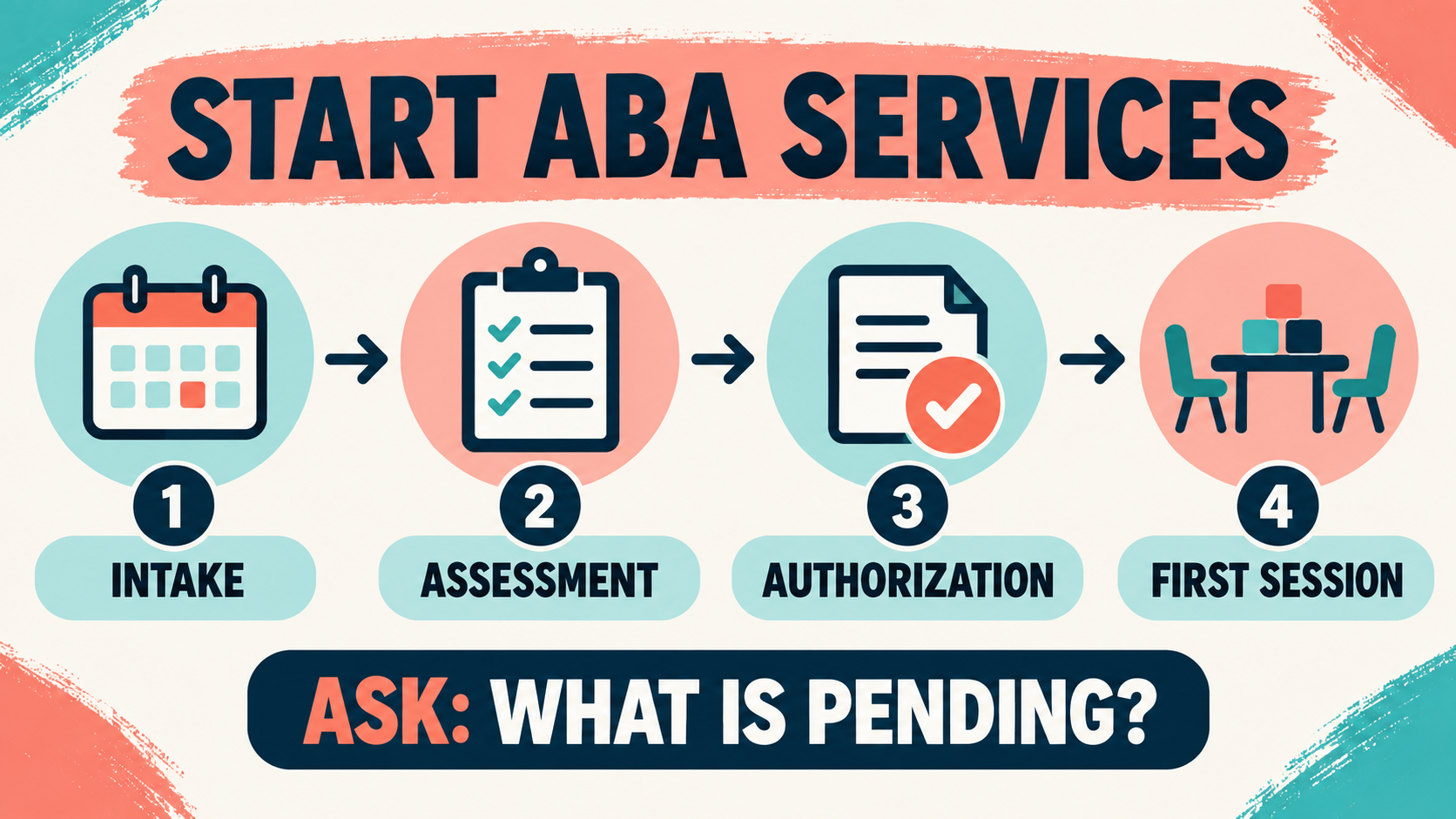
A practical planning range is several weeks to several months, but that range is not a service standard. Some providers describe a two-to-six-week process when documentation is complete, authorization is routine, and staff are available. Other families wait much longer because the agency has a limited opening, the payer requests more information, or treatment is not authorized on the first submission.
The TRICARE overview of ABA services describes assessment and a personalized treatment plan before ongoing services begin. State and provider guides show the same broad pattern, but their time estimates differ because payer rules, staffing, and local procedures differ. Use published estimates as examples, not as a promise that your case will follow the same calendar. When you call, ask three separate questions:
- How long until an intake coordinator responds?
- How long until the initial assessment can be scheduled and completed?
- After authorization, how long until a team and recurring schedule are available?
Those answers may come from different people. A fast intake response does not mean treatment can start immediately, and an approved assessment does not automatically mean an ongoing treatment slot is open.
Why Does the Timeline Vary So Much?
The timeline is a chain of dependencies. The next step cannot begin until the previous step produces the information or approval it needs. Common variables include:
- Referral and diagnosis records: the payer or provider may require a current evaluation, prescription, referral, or other documentation.
- Insurance rules: benefits verification, in-network status, prior authorization, medical-necessity criteria, and appeal procedures differ by plan and state.
- Assessment capacity: the provider needs a qualified clinician, an appropriate setting, and enough time to review records, interview caregivers, observe, and write recommendations.
- Staffing and geography: a clinic may have an assessment opening but no technician or supervisor available for the requested home, school, community, or clinic schedule.
- Family availability: incomplete forms, missed calls, transportation, language access, and limited appointment windows can add delay even when everyone is acting in good faith.
- Fit and consent: the family and provider may decide that a different service, a referral, or a revised goal is more appropriate than beginning immediately.
A long wait is not evidence that a service is better, and a short wait is not evidence that the plan is complete. Ask what has been finished, what is pending, who owns the next action, and when the next update will occur.
What Are the Usual Steps Before the First Session?
Most ABA service pathways contain the following stages. The order may change slightly, and some steps can overlap.
| Stage | What usually happens | Typical bottleneck |
|---|---|---|
| 1. Intake | The provider gathers contact, referral, goals, location, availability, and insurance information. | Missing forms, unanswered calls, or a waitlist. |
| 2. Benefits review | The provider checks network status, covered services, referral rules, and prior-authorization requirements. | Plan-specific rules or an unclear coverage question. |
| 3. Assessment | A qualified clinician reviews records, interviews, observes, and identifies meaningful goals and supports. | Limited assessment appointments or requests for more records. |
| 4. Treatment plan | The team documents goals, procedures, measurement, caregiver participation, setting, and requested service details. | Revisions, signatures, or missing clinical justification. |
| 5. Authorization | The payer reviews the request and may approve, deny, modify, or ask for more information. | Payer review time, benefit limits, or an appeal. |
| 6. Scheduling | The provider matches a BCBA, technician, setting, schedule, and supervision plan before ongoing sessions begin. | Staffing, commute, schedule fit, or a location waitlist. |
The table separates approval from availability. A payer can approve a plan while the provider is still recruiting or assigning staff. Conversely, a provider can have a clinician available but still need payer approval before billing ongoing treatment.
What Documents and Referral Details Are Needed?
Requirements vary, so ask the provider and insurer for a written list. Common items may include:
- the insurance card and member information;
- a diagnostic evaluation or other current clinical documentation when required;
- a physician or qualified-professional referral, prescription, or service order when the plan requires one;
- school, medical, therapy, or prior treatment records that clarify strengths, needs, and goals;
- signed releases, consent forms, intake questionnaires, and contact details for coordinating professionals; and
- the family’s preferred setting, language, availability, transportation limits, and accessibility needs.
Do not assume that a document required by one insurer is required by every insurer. Also, protect privacy when sending records. Confirm the secure method, the recipient, and whether the provider needs the entire record or only a relevant section.
How Long Does the ABA Assessment Take?
An assessment is not just a quick intake call. Depending on the referral question, it may include record review, caregiver or client interviews, direct observation, standardized measures, skill assessment, functional assessment, and a written treatment plan. The time needed depends on the person, the setting, the complexity of the goals, and the payer’s documentation rules.
The assessment should answer whether behavior-analytic services are appropriate and, if so, which goals and procedures are justified. It should not be used to force a predetermined number of hours or a one-size-fits-all program. Ask how the provider will include the person’s preferences, assent, communication, culture, and daily context.
Before the assessment ends, ask what happens next. Will the provider write the plan? Who submits it? Which person receives payer questions? How will the family review the goals and request changes? Clear ownership prevents a completed assessment from sitting without a submission date.
How Long Does Insurance Authorization Take?
Authorization is controlled by the payer, not by a universal ABA calendar. Some plans publish response targets; others request additional documentation, reduce requested services, or require an appeal. A provider handbook from ABA of Wisconsin, for example, describes assessment, treatment-plan development, and submission to the funder before services begin, while noting that its own authorization timing is specific to its process.
Ask for the authorization request date, reference number, expected response window, approved service dates, and the next step after approval. If the request is denied or modified, ask who will explain the reason, whether corrections or a peer review are available, and how an appeal deadline is calculated. Keep copies of every submission and decision. Coverage verification is also not a guarantee of payment. Confirm deductible, copay, network status, authorization limits, covered settings, and whether the provider’s contract is active on the date of service.
What Happens After Treatment Is Authorized?
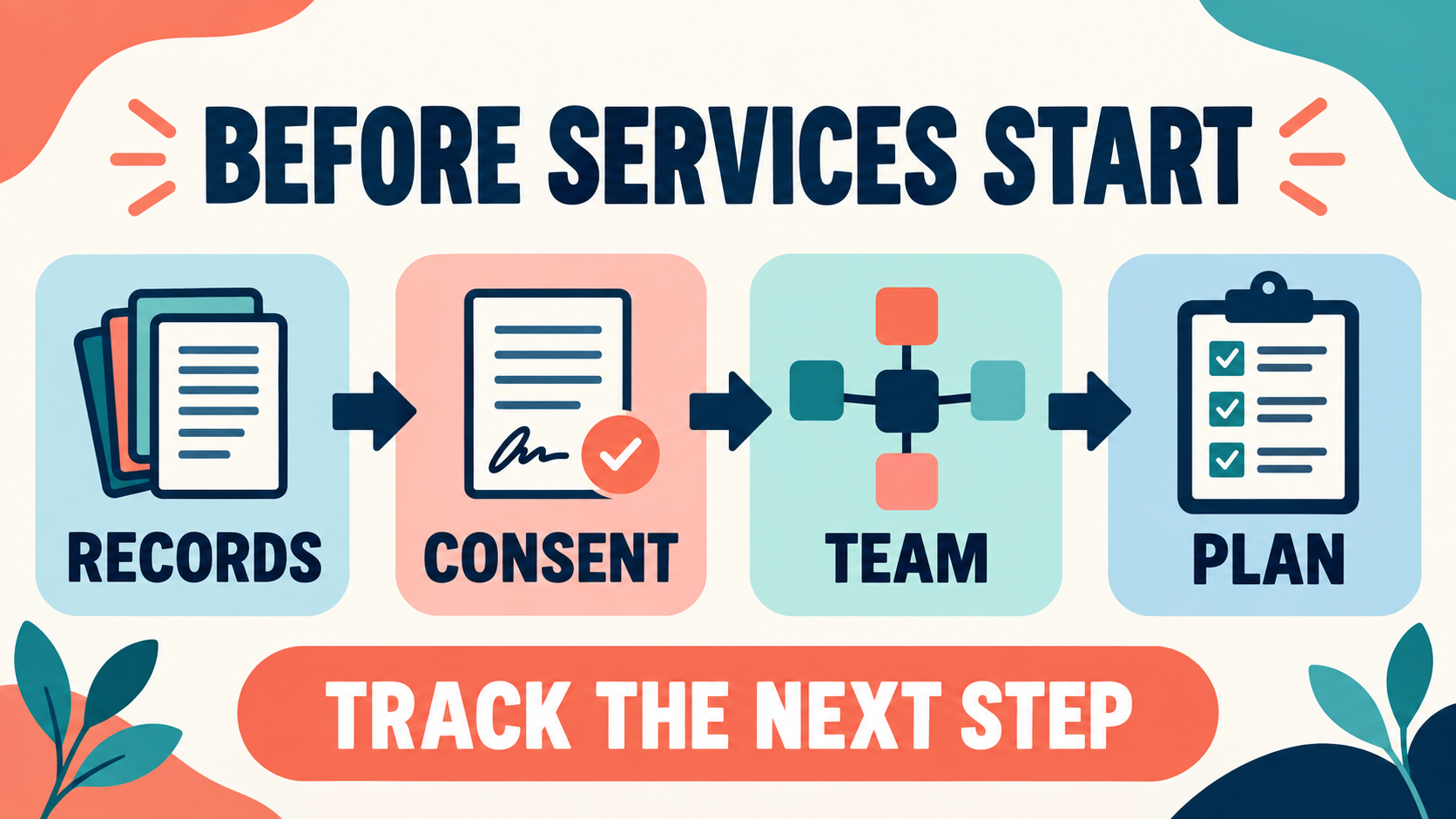
Authorization answers what the payer will cover; scheduling answers whether the provider can deliver it. The provider may still need to assign a BCBA, hire or match an RBT, coordinate a setting, confirm travel, and agree on a recurring schedule. A family may be offered a partial schedule first and then receive additional availability later.
Ask whether the proposed team has been selected, who supervises, how missed sessions are handled, and when the first treatment plan review will occur. You should also know how to communicate a safety concern, request a schedule change, or pause services while a plan is reviewed.
Do not accept a fixed “standard” intensity simply because it is available. Service frequency should be tied to assessed needs, meaningful goals, clinical judgment, payer rules, and the person’s and family’s capacity to participate.
What Should You Do If Services Are Delayed?
Turn a vague wait into a tracked action list:
- Ask the provider to identify the current stage: intake, records, assessment, plan, authorization, appeal, staffing, or scheduling.
- Ask who owns the next action and request a date for the next update.
- Call the insurer using the number on the card to verify that the request was received and is complete.
- Ask whether another in-network provider, setting, or schedule is available if the current waitlist is long.
- Continue appropriate support through the child’s clinician, school, or other providers while waiting; do not stop urgent care because an ABA intake is pending.
If there is an immediate safety or mental-health crisis, use the appropriate emergency or crisis resource for your location. ABA intake is not a substitute for urgent medical or crisis care.
What Is the BCBA’s Role in Initiating Services?
The BCBA may participate in assessment, goal selection, treatment-plan writing, caregiver training, supervision, data review, and coordination. The BACB’s overview of behavior analysis describes behavior-analytic practice as work grounded in behavior and its context. The Ethics Code for Behavior Analysts also makes competence, client welfare, informed consent, and accurate public statements central to practice.
That role has limits. A BCBA should not imply that certification guarantees insurance approval, diagnose every condition, prescribe medication, or promise a start date controlled by a payer or staffing team. When the referral question exceeds behavior analysis or the provider’s competence, consultation or referral may be needed. A transparent answer about limits is a quality signal, not a sign that the provider is unwilling to help.
How Can BCBA Candidates Study This Process?
For the BCBA exam, service initiation is useful as an applied ethics and assessment scenario. The BCBA Test Content Outline is the controlling exam reference. When a question describes a delayed or newly referred case, ask:
- What is the referral question, and is behavior-analytic service indicated?
- What records, assessment data, consent, and stakeholder input are required?
- Which decision belongs to the BCBA, the payer, the employer, the family, or another professional?
- What protects client welfare if the provider lacks competence, capacity, or authorization?
- What data and communication will show whether the plan should continue, change, or be referred?
For additional scenario practice, the free BCBA mock exam can help you rehearse scope, assessment, ethics, and documentation decisions. It is a study aid, not official BACB material.
ABA Service-Initiation Checklist
Before you assume services are about to start, confirm:
- Which milestone the provider’s timeline describes;
- which records, referral, prescription, and signatures are still needed;
- whether benefits are verified and whether prior authorization is required;
- the assessment date, plan-submission date, and payer reference number;
- who will contact you after approval and whether a team is available;
- how goals, assent, privacy, safety, and family participation will be handled; and
- what to do if the request is denied, modified, delayed, or no longer fits the person’s needs.
The bottom line is that ABA services usually begin through a sequence rather than a single appointment. For how long to initiate ABA services, plan for several weeks to several months, but ask for the specific bottleneck in your case. A complete intake, clear assessment, transparent authorization process, available team, and person-centered consent are more important than an optimistic date that no one can control. For targeted review, use our how long to initiate aba services practice questions to apply the concept in exam-style scenarios.
Take the Free BCBA Mock Exam
If you want a low-pressure way to check your recall, use the free practice resource below. Take the Free BCBA Mock Exam



