
Quick answer: If you searched board certified behavior analyst how long does it take, there is no single BACB-published average that fits every candidate. A realistic plan depends on your starting point, the time needed for a qualifying graduate degree and coursework, the pace of supervised fieldwork, exam preparation, application review, and any separate state-licensure step. Someone who already has a qualifying master’s degree may be planning in years or months at the fieldwork stage; someone starting college is planning across several academic stages.
Table of Contents
- Board certified behavior analyst how long does it take?
- Which stages control the timeline?
- What does the timeline look like from different starting points?
- Can graduate coursework and fieldwork overlap?
- How long do application review and the exam add?
- How can the 2027 changes affect timing?
- What is the bottleneck in your personal plan?
- What should you do this month?
- Board certified behavior analyst timeline FAQ
- Official sources for further verification
- Take the Free BCBA Mock Exam
The most useful estimate is therefore a scenario, not a promise. A full-time candidate who begins a qualifying master’s program and overlaps eligible fieldwork may often plan around two to four years from graduate-program start to certification. A candidate starting with only a bachelor’s degree may need additional time for graduate study. A part-time schedule, a delayed supervisor match, missing documentation, a retake, or a state license can extend the calendar.
This guide separates BACB requirements from planning estimates. It uses the current BACB handbook and transition information, but it is not an individual eligibility decision. Requirements and application processing dates can change, so confirm the current handbook before committing to a program or submitting an application. For broader credential context, review our board certified behavior analyst how long does it take: certification requirements overview before setting your own dates. Table of Contents
Board certified behavior analyst how long does it take?
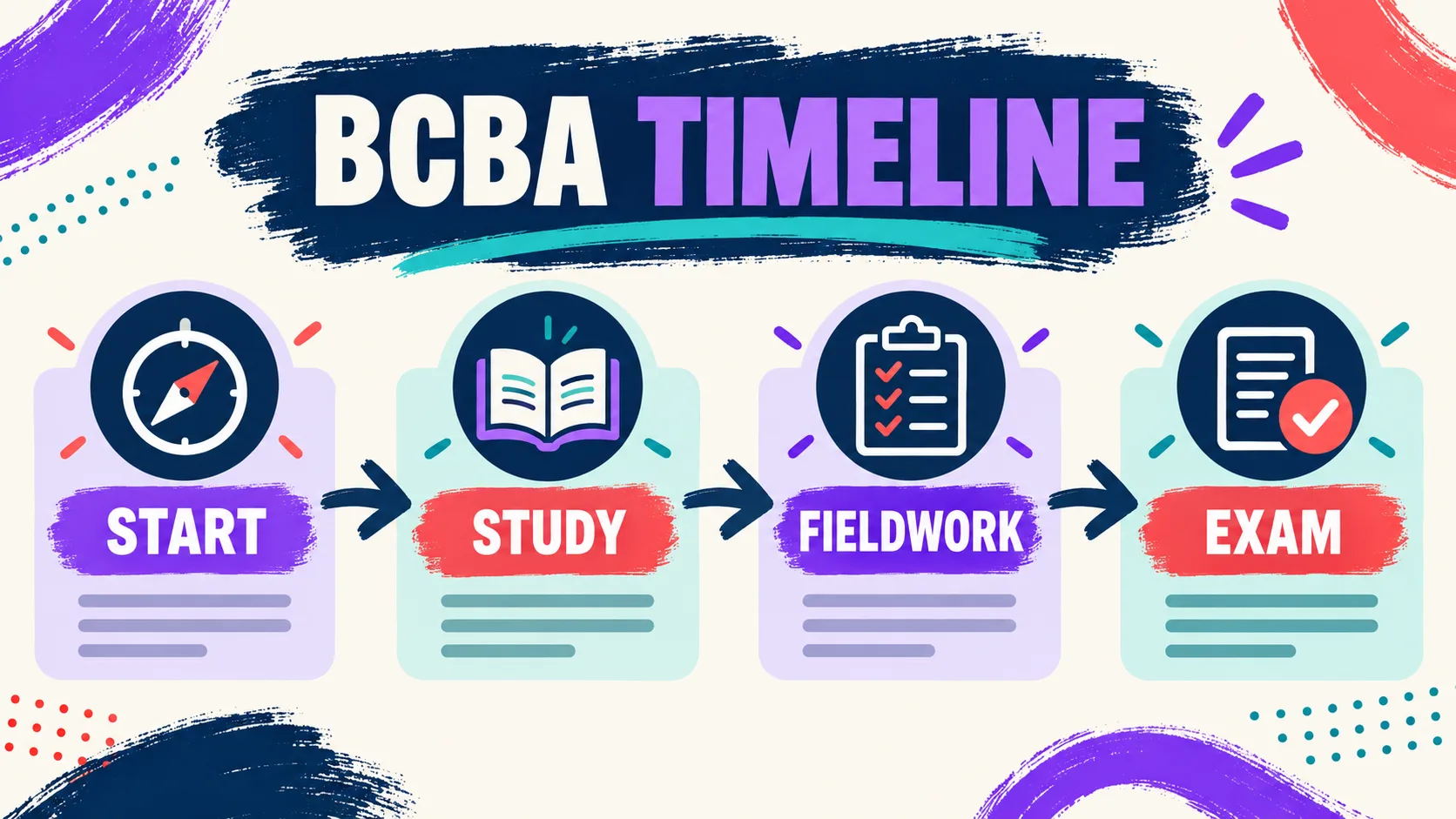
The honest answer is: it depends on where the clock starts. The BACB describes the requirements for becoming a BCBA, but it does not promise that every applicant will finish in a fixed number of years. The credential requires a graduate-level education route, behavior-analytic coursework or an eligible program pathway, supervised fieldwork, an application, and a passing examination. Those requirements can be arranged differently by different students. Use these broad planning ranges as a map, not as an eligibility rule:
| Starting point | Practical planning range | Main variable |
|---|---|---|
| Already have a qualifying master’s and coursework | Often about 1.5–3 years from a consistent fieldwork start to certification | Fieldwork pace, supervisor availability, documentation, exam readiness, and application review |
| Have a bachelor’s degree and are starting graduate study | Commonly about 2.5–4.5 years from graduate-program start | Program length and whether qualifying fieldwork begins during the program |
| Starting from an undergraduate degree or earlier | Often six years or more across undergraduate and graduate stages | Degree sequencing, prerequisites, finances, and the ability to study continuously |
These ranges are planning estimates assembled from the steps required; they are not BACB guarantees. A person can move faster or slower. The better question is not “Which number is the official answer?” but “Which requirement is currently limiting my next milestone?”
Which stages control the timeline?
Most candidates experience the BCBA path as several clocks running at once. Treating them as a strictly sequential checklist can make the plan look longer than it needs to be, while assuming that every step can overlap can create a compliance problem. The current BACB handbook is the source of truth for whether your particular fieldwork and education arrangement qualifies.
- Education and degree: you need the degree level and pathway that apply when you submit the certification application.
- Behavior-analytic coursework: the content, institution, and pathway must match the current BACB requirements.
- Supervised fieldwork: hours must be accrued, supervised, documented, and verified under the applicable fieldwork rules.
- Application preparation: transcripts, forms, attestations, fees, and supporting records have to be complete and consistent.
- Application determination: the BACB reviews the application and may request clarification or additional material.
- Examination: after authorization, you schedule, prepare for, and pass the BCBA examination.
- Local authorization: a state or other jurisdiction may have a separate license, registration, or employer requirement after certification.
Fieldwork is frequently the largest controllable part of the timeline. Under the 2027 high-level summary, candidates should expect detailed rules for supervised or concentrated fieldwork, including 2,000 supervised hours or 1,500 concentrated hours depending on the pathway and applicable requirements. Do not calculate hours from a social-media post alone; confirm the handbook version, monthly limits, supervision contacts, documentation forms, and start-date rules.
What does the timeline look like from different starting points?
Use the following scenarios to identify which plan resembles your situation. They are not promises and do not replace a formal BACB review. Scenario 1: You already have a qualifying master’s degree Your remaining calendar may be driven mainly by coursework gaps, fieldwork, examination preparation, and application processing. If you can obtain a qualified supervisor and accrue consistent hours while maintaining accurate records, a fieldwork-centered plan may take roughly 18 to 36 months. A slower schedule, a change in setting, or a documentation correction can add time. Scenario 2: You are entering an ABA master’s program
A full-time graduate program may take around 18 to 30 months, but the important question is whether the curriculum and fieldwork arrangement satisfy the BACB pathway you will use. If qualifying fieldwork begins during the program, the clocks overlap. If you wait until graduation to start fieldwork, the path is longer. Add a realistic period for exam preparation, application review, and scheduling rather than treating graduation as the finish line. Scenario 3: You are starting with a bachelor’s degree or changing careers
Your total route includes a graduate degree or other current pathway requirements in addition to fieldwork and the examination. A career changer may also need prerequisites, a new job setting, or time to locate supervision. The fastest plan is not always the safest plan: compressing coursework or hours without checking compliance can create a delay later when the application is reviewed. At any starting point, the calendar is more useful when written as milestones:
- eligibility pathway confirmed;
- program and coursework confirmed;
- supervisor and setting confirmed;
- monthly fieldwork record complete;
- final fieldwork documentation ready;
- application submitted with every required item;
- exam authorization received;
- exam date scheduled and study plan completed.
Can graduate coursework and fieldwork overlap?
Often, the reason one candidate finishes sooner than another is not that the requirements disappear; it is that eligible fieldwork begins while the candidate is completing graduate coursework. That overlap can reduce dead time, but it is not automatic. A job in an ABA setting is not automatically qualifying fieldwork, and a supervisor’s title alone does not prove that the arrangement meets BACB requirements. Before assuming that the clocks can overlap, check:
- whether your education pathway allows fieldwork at that stage;
- whether the supervisor is qualified and has agreed to the required supervision;
- whether the setting and activities are within the fieldwork definition;
- whether monthly hours and supervision contacts are achievable;
- whether your record system captures signatures, dates, activities, and corrections;
- whether the current forms and handbook apply to your intended application date.
When overlap is compliant, it can be the most effective planning lever. When it is assumed but later rejected, it can become the biggest source of delay because the candidate has to replace hours, find a new supervisor, or wait for another application cycle.
How long do application review and the exam add?
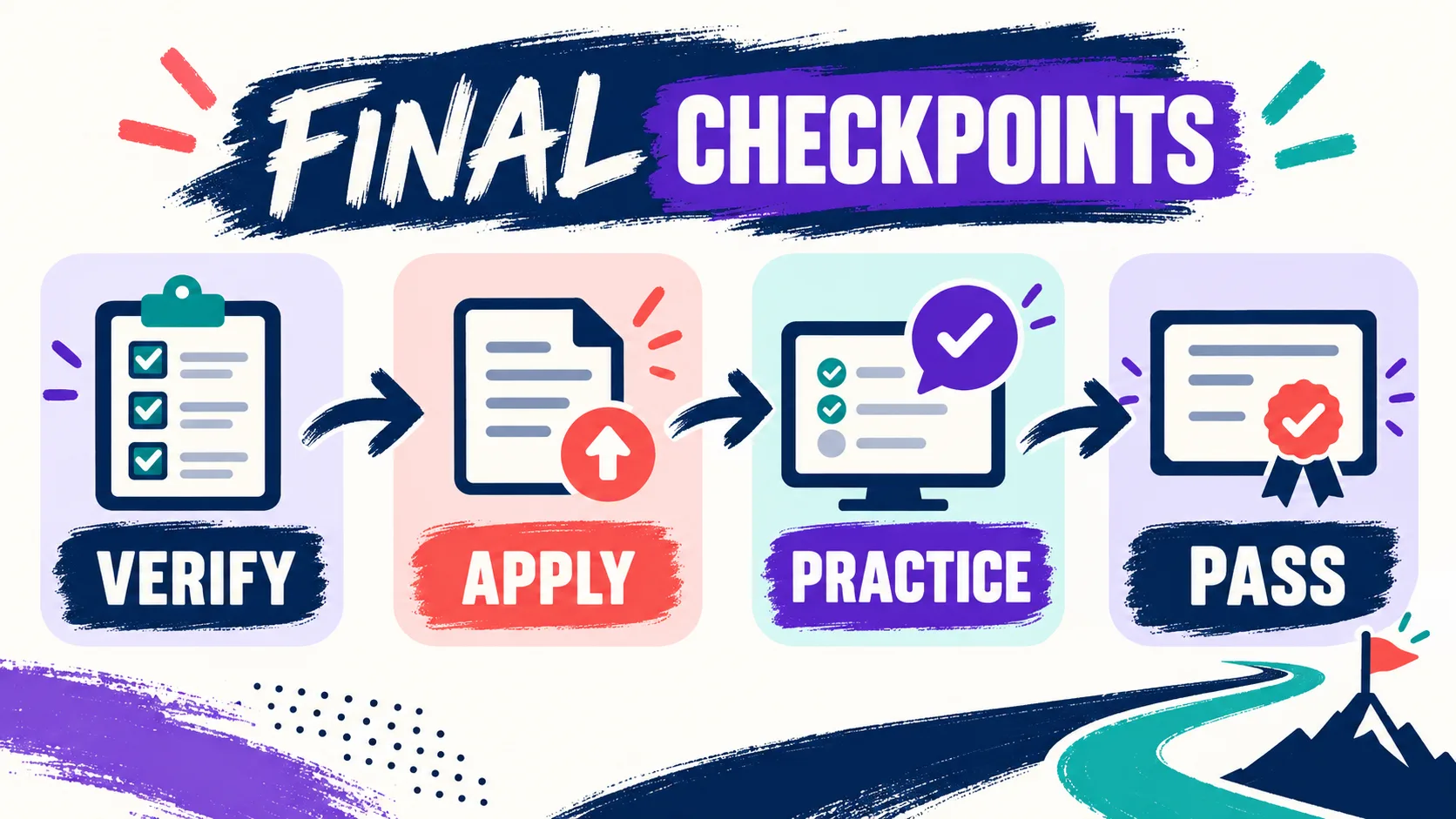
The post-fieldwork phase still has several steps. The current BCBA handbook describes an application sequence in which you complete the certification application in your BACB account, pay the fee, submit documents, receive an application determination, and then pass the examination. The handbook indicates that applicants should allow 45 days for application determination; that is a planning notice, not a guaranteed result for every complete or incomplete submission. Application time can expand when:
- an official transcript has not arrived;
- a fieldwork form is missing, inconsistent, or signed by the wrong person;
- the selected pathway does not match the evidence submitted;
- the BACB requests an action item or clarification;
- the candidate submits a response but does not track the resubmission date;
- the exam window or test-center availability does not match the candidate’s study schedule.
Check the BACB’s application processing updates page close to the time you apply. That page reports which submissions are currently being reviewed and can change. It should not be replaced by an old screenshot or an estimate from another candidate.
How can the 2027 changes affect timing?
The BACB says important BCBA eligibility changes take effect January 1, 2027. The 2027 summary describes two eligibility pathways and says Pathways 3 and 4 are discontinued beginning in 2027. The transition guidance also warns candidates to decide which requirements apply to their intended application date and to review the complete application rules.
This matters because a long timeline can cross the effective date. If you are still completing coursework or fieldwork, do not assume that starting under one set of rules means you can finish under the same set. Read the 2027 BCBA Requirements page and the transition guidance, then ask your program or supervisor to help you map the exact evidence needed.
| Timeline question | Why it matters | Evidence to save |
|---|---|---|
| Which pathway applies on my application date? | The pathway determines the degree, coursework, and documentation route. | Current BACB requirements page and handbook version. |
| Will my complete application arrive before a cutoff? | A course completion date is not necessarily the date the BACB receives a complete application. | Transcript receipt, payment confirmation, submitted forms, and portal record. |
| Can my hours be used under the applicable rules? | Hours accrued under the wrong form, ratio, or supervisor may not solve the future application problem. | Monthly forms, supervision records, and written supervisor confirmation. |
What is the bottleneck in your personal plan?
Write down the next date for each stage and circle the one that is furthest away. That is your current bottleneck. A bottleneck is not always the largest requirement; it is the step that prevents the next step from beginning.
- Education bottleneck: identify the next course, transcript, degree, or pathway decision and its earliest completion date.
- Fieldwork bottleneck: calculate a conservative monthly pace based on the actual setting, supervisor, and work schedule.
- Documentation bottleneck: audit signatures and forms before the end of the supervision period, not after the final hour.
- Application bottleneck: obtain transcripts and supporting evidence early, then verify the current portal instructions.
- Exam bottleneck: use practice results to decide whether you need content review, fluency practice, or test-taking strategy.
- Licensure bottleneck: research the state or jurisdiction separately because national certification and local authorization are not the same clock.
What should you do this month?
Turn the duration question into a small, verifiable plan:
- download the current BCBA handbook and record its version date;
- write your starting credential and intended application date;
- ask your program which BACB pathway and document set it supports;
- confirm your supervisor, fieldwork setting, and monthly schedule;
- create one folder for transcripts, forms, signatures, and policy notes;
- reserve a weekly study block before the exam authorization arrives;
- use a free BCBA mock exam for practice and feedback after you have learned the content; it is not an official BACB item bank or a passing-score guarantee.
The purpose of a practice exam is not to make an unsupported promise that you will finish sooner. It is to reveal whether the exam is your current bottleneck and to help you choose the next study action. Keep certification planning, fieldwork compliance, and exam practice as connected but separate workstreams.
Board certified behavior analyst timeline FAQ
What is the fastest realistic way to become a BCBA?: The fastest realistic route is usually a compliant, qualifying education plan with fieldwork beginning as soon as the applicable rules allow, consistent supervision, complete records, and focused exam preparation. “Fastest” does not mean skipping requirements or counting hours that the BACB may not accept.
Can I finish BCBA fieldwork in one year?: Do not assume a one-year fieldwork promise is possible for your pathway. Hour totals, monthly limits, supervision requirements, and the type of fieldwork determine the minimum calendar. Use the current handbook and your supervisor’s documented plan rather than a generic advertisement.
Does online study make the BCBA process faster?: Online delivery may improve scheduling flexibility, but it does not automatically shorten the education, fieldwork, application, or examination requirements. Compare the program’s pathway, course sequence, fieldwork support, and completion calendar with the current BACB rules.
How long does BACB application review take?: The current BCBA handbook tells applicants to allow 45 days for application determination, while the BACB processing-updates page shows the dates currently being reviewed. Treat both as planning information and submit complete, consistent documents to reduce avoidable delay.
Does passing the BCBA exam mean I can practice everywhere?: No. The BCBA is a national professional certification, while states and other jurisdictions may impose separate licensure, registration, title, supervision, or billing rules. Add the local authorization step to your personal timeline.
Official sources for further verification
- BACB Board Certified Behavior Analyst application hub
- BACB BCBA Handbook
- BACB application processing updates
- BACB 2027 BCBA Requirements
- BACB 2027 transition guidance
Bottom line: The answer to “board certified behavior analyst how long does it take” is a range built from your starting point and your slowest compliant stage. Map education, coursework, fieldwork, application review, exam preparation, and local authorization separately. Then check the current BACB handbook and the 2027 transition information before you treat any estimate as your own plan.
Take the Free BCBA Mock Exam
When you are ready to apply the idea, use the free practice resource below for additional feedback. Take the Free BCBA Mock Exam



