
BCBA career, identity, and practice guide If you are searching for an autistic BCBA, the most important starting point is to separate three ideas: autistic describes a person’s identity or neurotype, BCBA describes a professional certification, and practice describes how someone applies behavior-analytic knowledge. Those ideas can intersect in one person, but none automatically proves the others.
Table of Contents
- Autistic BCBA: What the Term Means
- Can an Autistic Person Become a BCBA?
- What an Autistic Perspective May Add—and What It Cannot Guarantee
- What Neurodiversity-Affirming Practice Can Look Like
- Questions About Access, Supervision, and Fit
- Choose the Right Next Step
An autistic person can consider a BCBA career, a BCBA can be autistic, and a client or employer can ask about professional fit without asking anyone to disclose private medical information. At the same time, autism does not replace education, supervised experience, ethical responsibilities, or the current certification process. This guide explains the boundaries, practical questions, and respectful next steps. For current certification, examination, and accommodation rules, use the BACB Handbook and the official BACB examination information. This article is educational; it is not a diagnosis, legal opinion, employment promise, or official BACB decision.
Autistic BCBA: What the Term Means
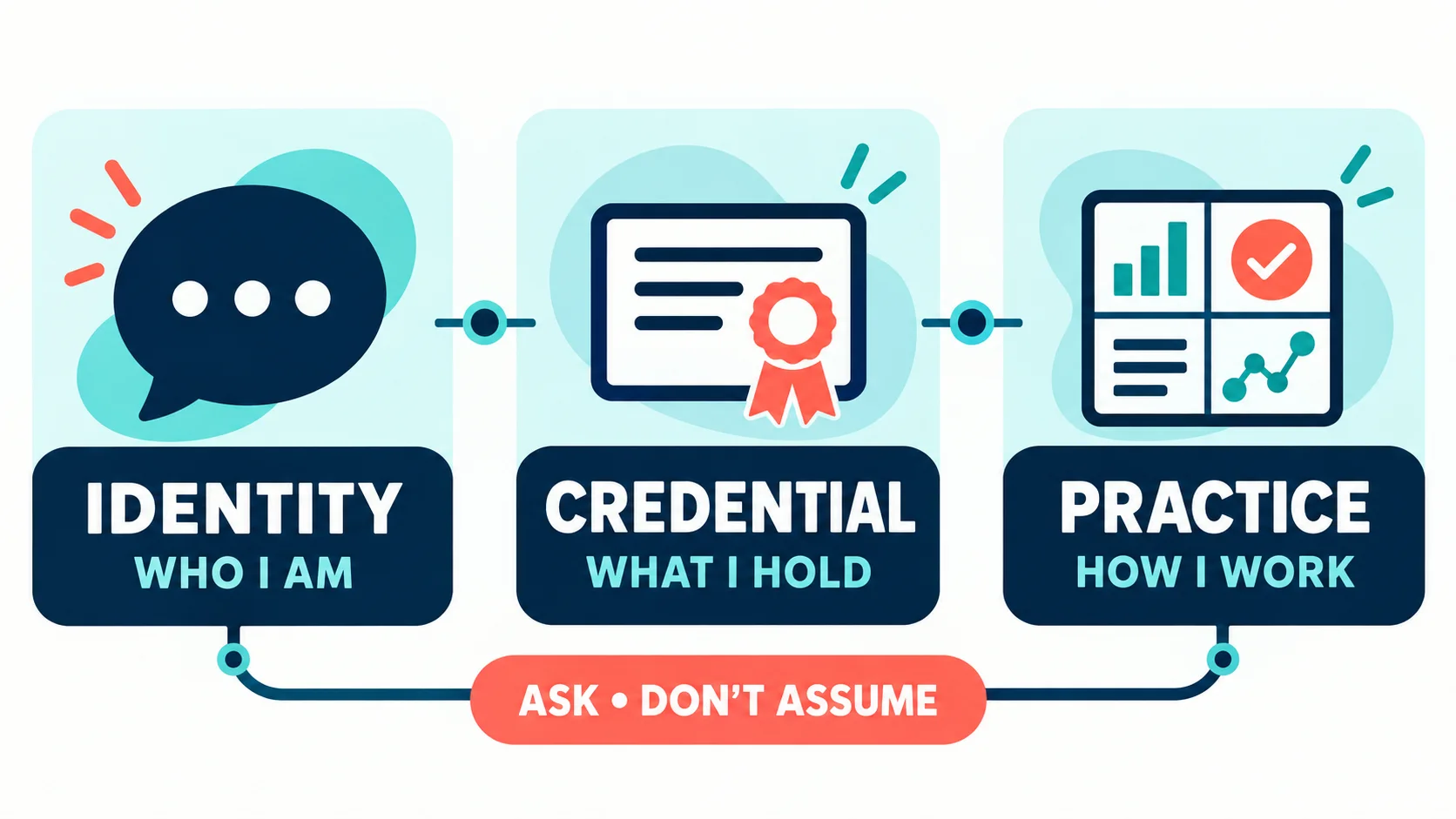
The phrase autistic BCBA is usually a description of an autistic person who holds, or is discussing a path toward, the Board Certified Behavior Analyst credential. It is not a separate BACB certification, specialty license, or treatment model. The term can also appear in personal writing when someone is describing lived experience, workplace accessibility, or a neurodiversity-informed point of view. Keep these three categories distinct:
- Identity: whether a person identifies as autistic, uses another preferred term, or chooses not to disclose personal information.
- Credential: whether the person currently holds the BCBA certification and meets the applicable professional requirements.
- Practice: the goals, methods, communication habits, ethical decisions, and supervision structure used in a particular setting.
Identity, credential, and practice can inform one another, but they are not interchangeable. An autistic professional does not represent every autistic client. A non-autistic professional cannot be judged solely from an assumption about identity. A certification is important evidence of a professional pathway, but it is not a guarantee that one provider will be the right fit for every client, team, or setting.
Language preferences also differ. Some people prefer identity-first language, such as “autistic person,” while others prefer person-first language or another description. When the preference is known, follow it. When it is not known, do not turn a search term into a demand for disclosure.
Can an Autistic Person Become a BCBA?
Autism itself is not a substitute for the BCBA eligibility and examination process, and a search result cannot determine whether any individual qualifies. The current BACB rules govern the education, coursework, supervised fieldwork, application, and examination steps that apply to a candidate. The rules and pathways can change, so candidates should read the current handbook rather than rely on a cached article or a course advertisement.
For an autistic candidate, the practical question is often not only “Can I meet the requirements?” but also “What learning and work environment will let me demonstrate what I know?” That can include sensory load, communication format, predictable scheduling, processing time, transition demands, feedback style, and the availability of a supervisor who understands accommodations without lowering professional standards.
- Start with the official pathway: identify the current BACB route that matches your degree, coursework, and supervised experience.
- Document the requirements: keep a single checklist for transcripts, fieldwork forms, supervision records, application deadlines, and exam tasks.
- Plan access early: if you may request examination accommodations, read the official request instructions and ask the appropriate qualified professional about documentation.
- Choose supervision deliberately: ask how meetings are structured, how feedback is delivered, and how disagreements are handled.
- Separate support from standards: an accommodation changes access to the assessment or work environment; it does not turn an incorrect answer into a correct one or remove ethical duties.
The BACB says candidates should use its current examination information for the request process. Do not treat a blog post as an accommodations handbook, and do not assume that a particular diagnosis or disclosure guarantees a particular result. The right plan is individual, documented, and tied to the current authority’s requirements.
What an Autistic Perspective May Add—and What It Cannot Guarantee
An autistic BCBA may notice questions about sensory environments, communication assumptions, masking, predictability, or the difference between a skill goal and a conformity goal. That perspective can prompt useful questions about client voice, assent, dignity, meaningful outcomes, and whether a plan is measuring what actually matters to the person. It may also help a team notice barriers that are easy to miss when a workplace has been designed around one communication style.
Those are possible contributions, not automatic qualifications. Autistic people have different strengths, support needs, cultures, languages, ages, and views about behavior analysis. A person’s lived experience can deepen curiosity and humility, but it does not replace assessment skill, evidence review, supervision, or the obligation to listen to the specific client. Similarly, an autistic professional may choose not to work in autism services, may use a different practice philosophy, or may have a career outside direct clinical work. A respectful team avoids two opposite mistakes:
- Tokenizing: expecting one autistic professional to speak for an entire community or to solve every inclusion problem.
- Gatekeeping: assuming that autistic communication, sensory needs, or disclosure choices automatically indicate a lack of competence.
The better question is specific: What does this person know, what support do they need to do the work well, how do they make decisions, and how will the team check whether the plan is helping the client?
What Neurodiversity-Affirming Practice Can Look Like
“Neurodiversity-affirming” is not a magic label that proves quality, and it is not a single protocol. In broad terms, it points toward practice that treats autistic people as whole people, respects autonomy and communication differences, and prioritizes meaningful quality-of-life outcomes instead of measuring success only by how closely someone imitates a narrow idea of typical behavior.
In a real case, the label should show up in decisions. A team might discuss whether a goal is meaningful to the client, whether a behavior is unsafe or merely unfamiliar to others, whether communication access is available, and whether the person has a genuine way to express assent, refusal, preference, and fatigue. The team should still define behavior clearly, use appropriate data, review outcomes, and change a plan when evidence or client feedback indicates that it is not working.
- Ask what the person wants to communicate, access, learn, or make easier—not only what others want them to stop doing.
- Offer more than one communication route when possible, including time to process and a way to refuse.
- Distinguish immediate safety needs from social discomfort, eye-contact expectations, harmless self-regulation, or preferences that simply look different.
- Review goals with the client and support network in language they can understand, then use data and feedback together.
- Invite autistic perspectives without assuming that one autistic professional can stand in for the client’s own voice.
These principles do not belong to one demographic. Any BCBA can practice with humility, cultural responsiveness, and respect. An autistic BCBA may bring especially relevant questions to a team, but the ethical responsibility remains shared and must be evaluated through actual conduct.
Questions About Access, Supervision, and Fit
Whether you are a candidate, employer, colleague, or family member, concrete questions are more useful than assumptions. The table below turns a broad search into a conversation about conditions, responsibilities, and verification.
| Situation | Useful question | What to look for |
|---|---|---|
| Candidate choosing supervision | How are meetings, feedback, and urgent questions handled? | Clear expectations, predictable channels, respectful feedback, and documented responsibilities. |
| Employer planning access | Which essential job tasks need to be completed, and what flexible method could support them? | A task-based conversation rather than stereotypes about eye contact, small talk, or speed. |
| Family or client choosing a provider | How will goals, refusal, communication, and progress be reviewed with the client? | Specific answers about assent, data, supervision, safety, and meaningful outcomes. |
| Credential verification | Which current certification or state license should be checked? | A current official source, not only a job title, badge, or social-media bio. |
Notice what these questions do not ask. They do not require an autistic professional to disclose a diagnosis in order to be respected, and they do not assume that a disclosed identity predicts a person’s competence. They focus on access, behavior, responsibilities, and the client’s experience.
Choose the Right Next Step
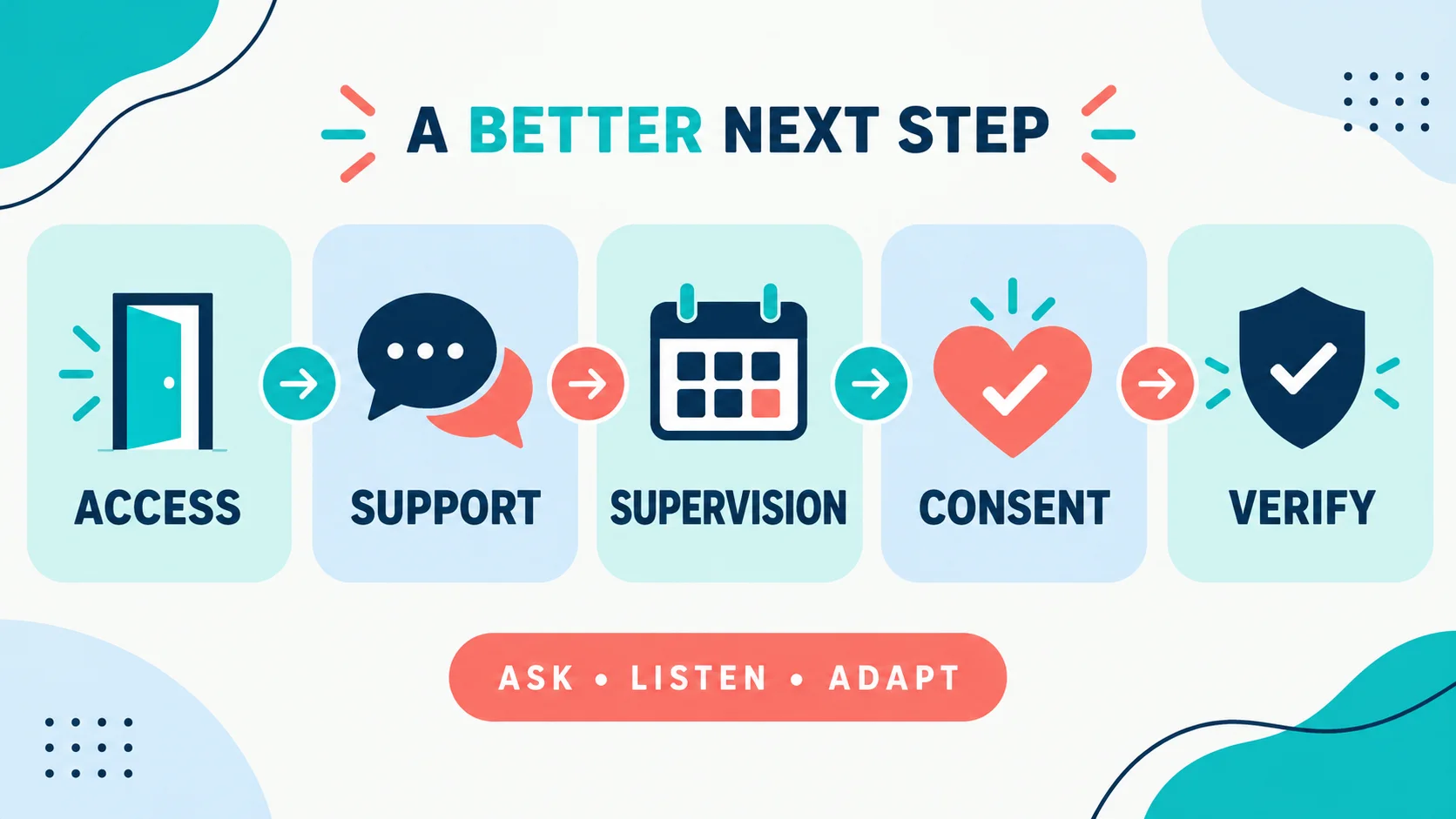
If you are looking for a BCBA: Start with the service question, not a stereotype. Ask what outcome matters to the person, who will be responsible for assessment and supervision, how communication and refusal will be supported, and how the team will respond when data or client feedback says that a plan needs to change. You can ask whether a provider has experience with neurodiversity-affirming work, but a label alone is not enough; ask for concrete examples of how goals are selected and reviewed.
- Define the person’s priorities in plain language.
- Ask who holds each role and how supervision works.
- Discuss communication access, assent, dignity, and safety before services begin.
- Verify the relevant credential or license through the appropriate official source.
- Set a review point so the plan can be adjusted based on data and the person’s experience.
If you are an autistic BCBA candidate: Build a pathway that is both standards-based and sustainable. Use the current BACB Handbook to map eligibility, coursework, fieldwork, application, and examination tasks. Then make a study and work plan around how you actually process information: shorter blocks, written instructions, predictable transitions, practice under realistic timing, or a quiet setting may be useful. These are planning options, not promises about an accommodation decision.
- Confirm the current eligibility route and write down the source for every requirement.
- Ask a potential supervisor how feedback, meetings, documentation, and schedule changes are handled.
- If accommodations may be appropriate, follow the official BACB request process and obtain the required documentation.
- Use the current test content outline to organize concept review, discrimination, and scenario practice.
- Track errors by concept and decision rule instead of judging yourself by one practice score.
When your next step is exam preparation, an unofficial practice set can help you rehearse applied reasoning and identify topics to review. Take the Free BCBA Mock Exam after reading this autistic BCBA guide as a practice resource, then verify current eligibility, examination, and accommodation details through BACB.
Bottom line: an autistic BCBA is an autistic person connected to the BCBA profession—not a separate credential and not a promise of one universal approach. Respect identity and privacy, verify credentials, ask specific questions about access and supervision, and judge practice by the person’s goals, ethical conduct, evidence, and lived experience.



