

A practical starting guide for future BCBA candidates If you are looking for ABA experience, start by deciding what you want the experience to do for you. Before graduate school, a good role can help you test whether behavior-analytic work fits your interests, learn how a real service team operates, and build habits around communication, documentation, and feedback. It does not automatically become BCBA fieldwork just because the job has “ABA” in its title.
Table of Contents
- What Does ABA Experience Mean?
- Which Types of ABA Experience Are Worth Considering?
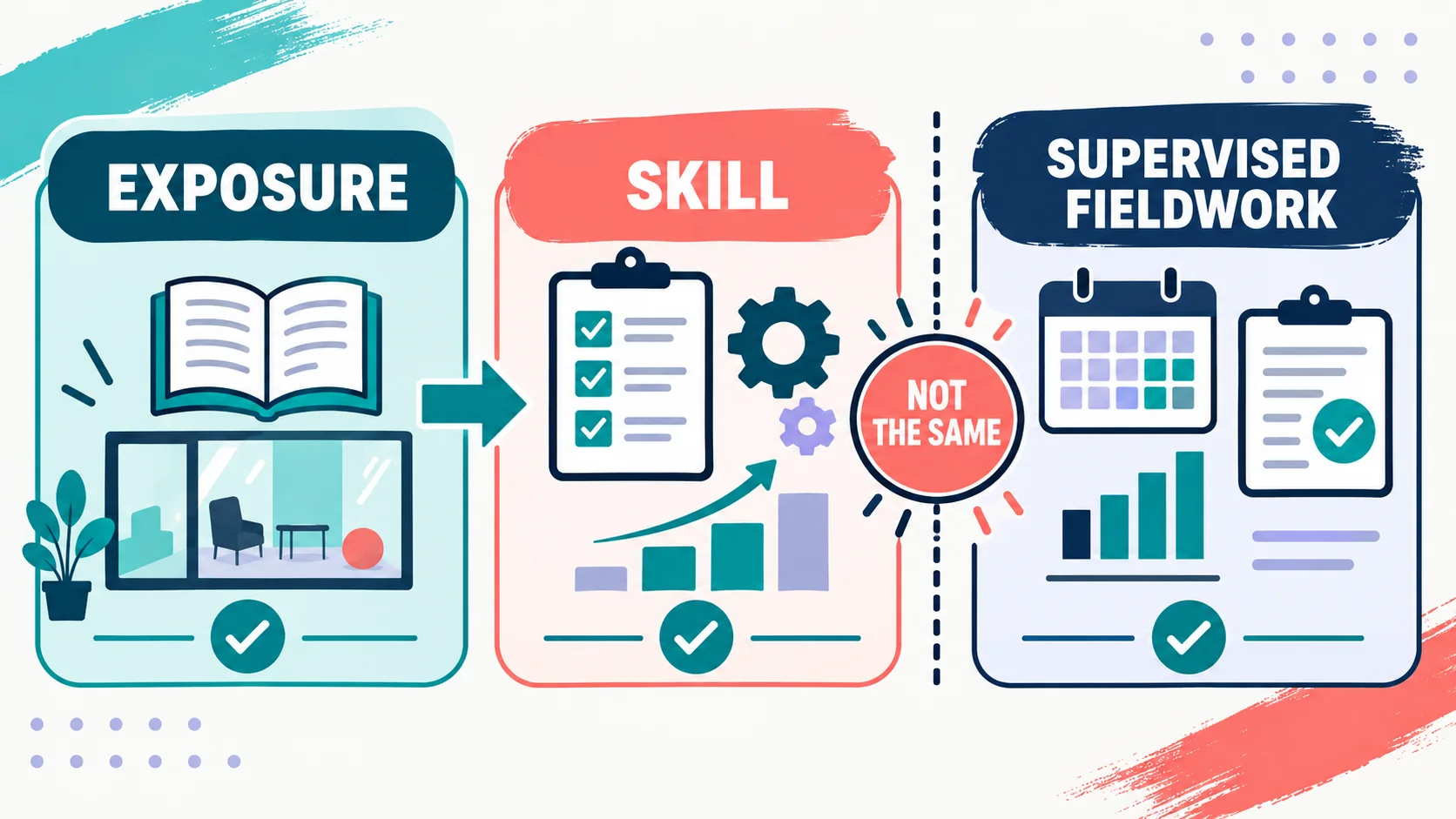
- How Is ABA Experience Different From BCBA Fieldwork?
- How to Evaluate an ABA Role Before Accepting It
- A 30-Day Plan for Getting Useful Experience
- What ABA Experience Does Not Replace
- When Experience Should Lead to BCBA Exam Prep
- Take the Free BCBA Mock Exam
People use the phrase ABA experience to describe several different things: observing a provider, volunteering in a behavior-support setting, working as a behavior technician, helping with ABA research, completing an internship, or accruing formal supervised fieldwork after the required coursework begins. Those experiences can be valuable, but they have different purposes and different rules. This guide shows how to choose a useful starting point without making an eligibility promise.
For the credential boundary, use the current BACB Handbook. The BACB updates its materials, and the requirements that apply depend on the pathway and timing of an application. This article is educational; it is not an official eligibility decision, employment guarantee, graduate-admission guarantee, or legal advice.
What Does ABA Experience Mean?
In plain language, ABA experience is meaningful exposure to the people, settings, decisions, and routines involved in applied behavior analysis. It might be paid or unpaid, direct or indirect, short-term or ongoing. The key question is not whether an organization uses the label “ABA.” The key question is what you actually do, who trains or supervises you, what you are allowed to document, and how the work affects the learner or client. For someone exploring a BCBA career, early experience can answer practical questions that a course catalog cannot:
- Do you enjoy careful observation, data collection, problem-solving, and repeated practice?
- Can you communicate respectfully with learners, families, teachers, and supervisors?
- Does the setting provide feedback that helps you improve rather than asking you to copy routines without understanding them?
- Do the schedule, sensory environment, emotional demands, and documentation expectations fit the support you need to work sustainably?
There is no single “right” first role. A person who is changing careers may start with observation or support work. A college student may seek research or a campus practicum. Someone already employed in a clinic or school may ask whether a new responsibility can be supervised and documented appropriately. Each route can teach you something different.
Which Types of ABA Experience Are Worth Considering?
The most useful option depends on your stage, your goals, and the quality of the supervision—not merely on the job title. Think of these routes as a menu for exploration, not a ranking that guarantees certification credit.
Observation or informational exposure: Observation can help you understand the pace of a clinic, school, home, or community setting before committing to a job. Ask what you may observe, what privacy rules apply, and whether the organization has permission from the learner or family. Observation is useful for career exploration, but watching a session is not the same as performing supervised fieldwork.
Entry-level behavior-support work: Behavior technician or similar roles can introduce you to reinforcement, prompting, skill acquisition, behavior reduction plans, data systems, team meetings, and caregiver communication. These roles may be a practical way to decide whether the field fits. They also have a defined scope: an entry-level employee should not present as a BCBA, make independent clinical decisions outside their role, or treat routine exposure as proof of advanced competence.
Research, school, volunteer, or community experience: Research assistance can develop operational definitions, data reliability, literature review, and ethical research habits. School or community work can build collaboration and observation skills. Volunteer roles may be valuable when training and boundaries are clear. General experience with children, disability services, or education can be relevant context, but it should not be described as formal ABA fieldwork unless the responsible program and qualified supervisor confirm that it meets the applicable requirements.
Practicum, internship, or formal fieldwork: These labels are not interchangeable. A university practicum may be tied to course credit. An internship may be an employer’s training program. Formal BCBA fieldwork has specific eligibility, supervision, documentation, and timing requirements. Read the current BACB materials and ask the program contact or qualified supervisor to explain exactly which pathway applies before counting hours.
How Is ABA Experience Different From BCBA Fieldwork?
This is the boundary that prevents the most expensive misunderstanding. General ABA experience describes what you learned or did in an applied setting. BCBA fieldwork is a formal component of a certification pathway, completed under the applicable BACB rules and a qualified supervisor. The current BCBA Handbook explains eligibility pathways and practical fieldwork requirements, including the need to establish the coursework and supervision context before assuming that hours qualify. Before you count anything toward certification, ask the person responsible for your pathway:
- Has my qualifying coursework started in the way the current pathway requires?
- Is this supervisor qualified for the role, and is a supervision agreement or contract required?
- Which activities are unrestricted or otherwise relevant under the applicable requirements?
- What records, monthly forms, observations, contacts, and signatures must be retained?
- What happens if the employer changes my schedule, supervisor, location, or job duties?
The safest rule is simple: treat early work as valuable experience until the current official requirements and your qualified supervisor confirm that a specific activity belongs in your formal fieldwork record. Do not rely on a recruiter’s promise, a social-media post, or a spreadsheet template as the final authority.
How to Evaluate an ABA Role Before Accepting It
A role can look attractive and still offer weak training, unclear responsibilities, or poor support. Use the questions below in an interview. You are not only trying to get hired; you are checking whether the role will help you learn ethically and sustainably.
| Area | Question to ask | Healthy signal |
|---|---|---|
| Training | What training happens before I work independently? | A defined onboarding plan, competency checks, and a way to ask questions. |
| Supervision | Who observes my work, how often, and how is feedback documented? | A named supervisor, predictable feedback, and clear escalation steps. |
| Scope | Which decisions are outside my role? | The employer distinguishes implementation, documentation, and independent clinical decisions. |
| Client dignity | How are communication, assent, refusal, privacy, and meaningful goals handled? | Specific answers about safety, consent, learner voice, and reviewing outcomes. |
| Career fit | What could I learn here, and what support exists if the role is not sustainable? | Honest expectations, reasonable workload conversations, and a professional exit process. |
Pay attention to how the organization answers, not only to the words it uses. A polished mission statement does not replace a clear supervisor, usable training, respectful communication, and a safe way to report concerns. You can also ask a current or former employee—without requesting confidential client information—what feedback and documentation are like in practice.
A 30-Day Plan for Getting Useful Experience
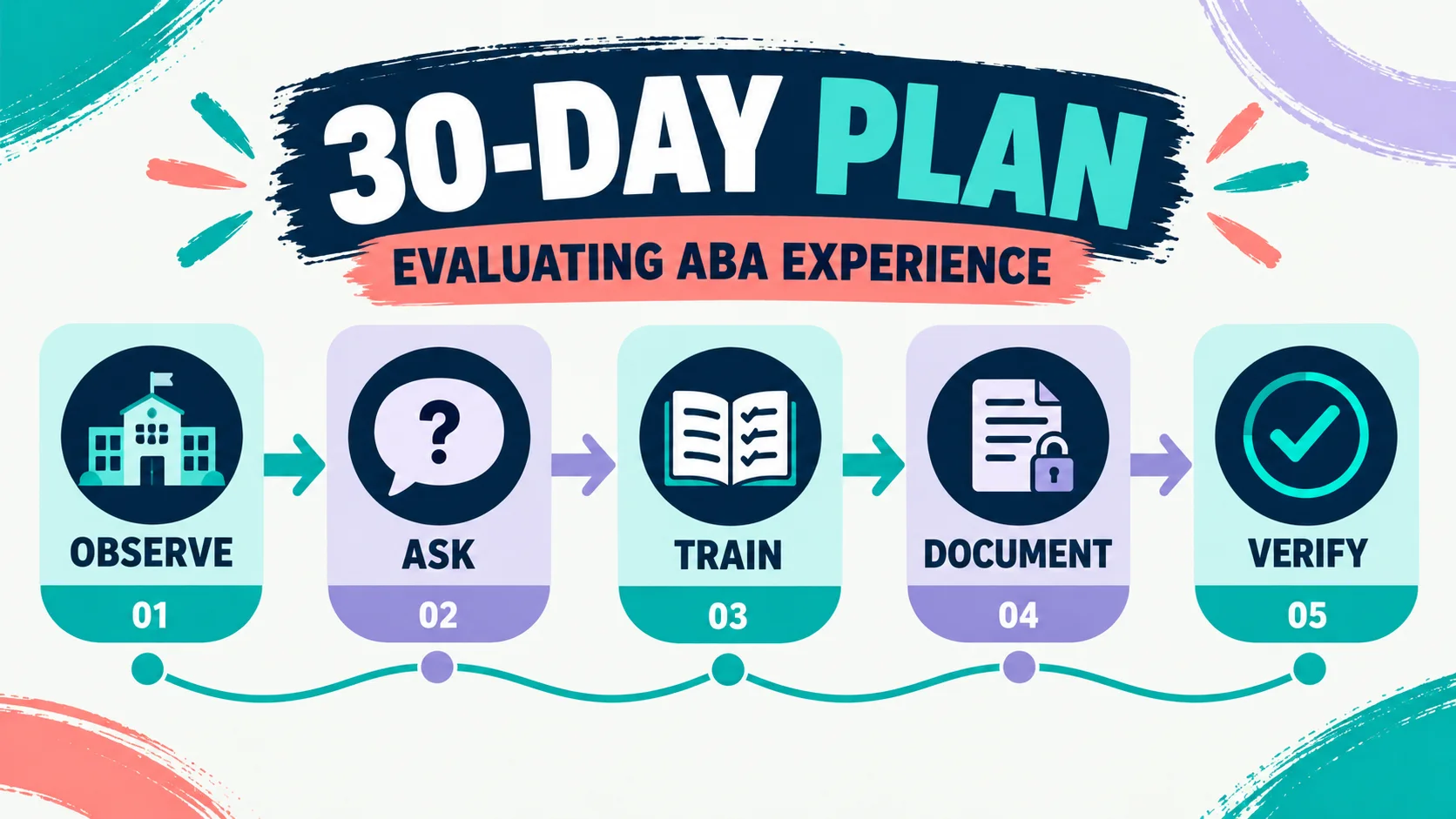
If you are starting from zero, turn the broad goal into a short experiment. The purpose of the first month is not to prove that you belong in the field. It is to gather enough information to make a responsible next decision.
- Observe: read the role description, visit the setting if appropriate, and notice the actual tasks, pace, communication demands, and support structure.
- Ask: write down questions about training, supervision, scope, documentation, client voice, schedule, and how concerns are escalated.
- Train: complete the required onboarding and learn the organization’s definitions, data system, safety procedures, and confidentiality expectations before improvising.
- Document: keep a private learning log of concepts, feedback, questions, and decisions. Do not copy identifying client information into personal notes.
- Verify: compare what you are doing with the current BACB pathway only when a qualified supervisor or program contact can interpret the requirements for your situation.
At the end of 30 days, ask yourself three questions. Did I learn how behavior-analytic decisions are made, or only how to follow a routine? Can I receive and use feedback? Does this setting offer the supervision and support I need for the next stage? A “not yet” answer is useful information; it may mean you need more training, a different setting, or a slower plan.
What ABA Experience Does Not Replace
Relevant work can strengthen your understanding of the field, but it does not replace the requirements that apply to BCBA certification. Depending on your pathway and application timing, you may still need qualifying education or coursework, formal supervised fieldwork, an application, and the BCBA examination. The official BACB examination information should be your source for current exam details, and the BACB Ethics Codes should guide questions about professional responsibility.
Experience also does not replace humility. A person can have years in an ABA setting and still need supervision, continuing education, or a new competency before taking on a task. Conversely, a beginner can ask excellent questions and show strong professional habits without pretending to have expertise. Use the experience to build judgment gradually.
- Do not call yourself a BCBA, BCBA trainee, or applicant in a way that misrepresents your actual status.
- Do not assume that direct service hours, staff meetings, or administrative work qualify simply because they happened at an ABA employer.
- Do not allow a job title to substitute for a current supervision agreement, documentation plan, or official requirement.
- Do keep the names of the current authority, program contact, supervisor, and documents you used to make each decision.
When Experience Should Lead to BCBA Exam Prep
Early ABA experience should lead to exam preparation only after you have confirmed that the BCBA path is the right goal and understand where you are in the eligibility process. If you are still deciding whether the work fits, focus on observation, role quality, feedback, and professional boundaries. If you have begun qualifying coursework and formal supervised fieldwork, your study plan can become more targeted: connect concepts to scenarios, review the current content outline, and track errors by decision rule rather than by one practice score.
When you are ready to rehearse applied reasoning, try the Free BCBA Mock Exam after building your ABA experience as an unofficial practice resource. It can help identify concepts to review, but it cannot determine eligibility, replace supervision, or predict an official score.
Bottom line: useful ABA experience helps you test fit, build professional habits, and make a better education or career decision. Choose roles with real training, clear supervision, respectful client care, and honest boundaries. Then verify whether anything can count toward formal BCBA fieldwork through the current BACB requirements and your qualified supervisor—not through a job title alone.
Take the Free BCBA Mock Exam
If you want a low-pressure way to check your recall, use the free practice resource below. Take the Free BCBA Mock Exam



