

Quick answer: A BACB supervisor contract is a written agreement that defines the supervision relationship before applicable fieldwork or supervision begins. It should identify the parties, purpose, roles, training and qualification responsibilities, activities and objectives, meeting and feedback expectations, documentation system, form-signature conditions, amendment process, and termination or transition plan. The exact language must match the credential and current BACB handbook; a generic employment agreement or a downloaded old template is not enough.
Table of Contents
- What Is a BACB Supervisor Contract?
- Who Needs a Supervision Contract?
- What Should a BACB Supervisor Contract Include?
- 1. Define the Parties, Scope, and Objectives
- 2. Document Training and Responsibilities
- 3. Connect the Contract to Records and Forms
- 4. Set Signature and Performance Conditions
- 5. Amend, End, or Transition the Relationship
- How Does the 2027 Transition Affect a Contract?
- BACB Supervisor Contract Checklist
- Common Contract Mistakes
- Frequently Asked Questions
- Take the Free BCBA Mock Exam
The phrase bacb supervisor contract often leads readers to a sample form. The more useful question is whether the contract can guide real decisions when supervision becomes complex: a missed observation, multiple supervisors, a performance concern, a change in requirements, or a request for a final signature. Use the current BACB resources as the authority, then use this page to review the contract’s operating parts.
What Is a BACB Supervisor Contract?
A BACB supervisor contract is the written agreement between a supervisor and a trainee or supervisee that sets the scope and expectations of supervision. For supervised BCBA or BCaBA fieldwork, the relevant handbook requires the parties to develop and sign a contract at the outset of the supervisory relationship. The contract protects the parties and connects fieldwork activities to the purpose of supervision.
The contract is not the same thing as a Monthly Fieldwork Verification Form, a Final Fieldwork Verification Form, an employment agreement, or a general clinic policy. It is the control document that explains how supervision will work. The forms record a period or conclusion; the handbook and current BACB resources establish the requirements.
Use the official BACB fieldwork resource hub and the current BCBA or BCaBA Handbook for the credential at issue. The BACB provides a sample contract as an optional resource, but a sample should be adapted to the actual role, setting, supervisors, objectives, and documentation system rather than copied without review.
Who Needs a Supervision Contract?
The answer depends on the purpose of supervision. A BCBA or BCaBA trainee accruing supervised fieldwork needs the contract required by the applicable fieldwork pathway. A current BCaBA receiving ongoing supervision and an RBT receiving ongoing oversight may need a different role-specific agreement or supervision specification. A supervisor who works with multiple trainees or multiple supervisors at one organization needs additional coordination language.
Start by writing the credential, activity, and requirement edition at the top of the working file. Then identify the person responsible for supervision and the person receiving it. If the relationship involves an organization, on-site manager, consulting supervisor, or more than one supervisor, name each relevant party and explain how responsibilities will be assigned.
- BCBA or BCaBA fieldwork: connect the contract to the applicable fieldwork pathway, objectives, forms, and documentation.
- Ongoing BCaBA or RBT supervision: use the role-specific handbook and supervision resources rather than importing fieldwork language without checking.
- Multiple supervisors: state each person’s role, coordination method, records, and signature responsibility.
- Workplace supervision: separate BACB responsibilities from employment, payer, state-licensure, and organizational policies.
What Should a BACB Supervisor Contract Include?
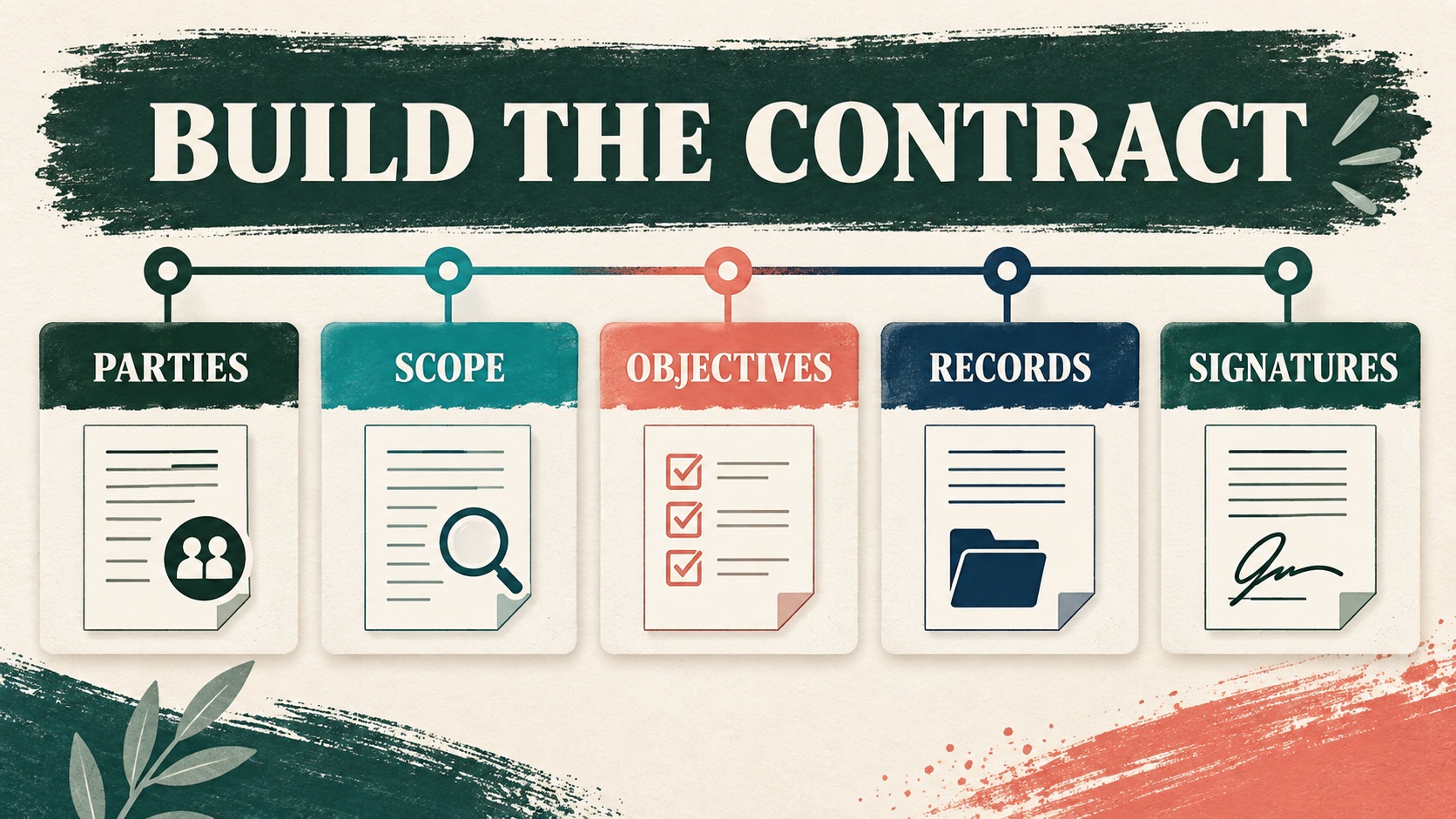
There is no safe universal template for every supervision relationship, but a complete contract should make the following decisions visible. Compare the draft against the current handbook and the official resource named for the role before signing.
| Contract section | What to state | Why it matters later |
|---|---|---|
| Parties and purpose | Names, credentials, BACB IDs when applicable, dates, setting, and purpose of supervision. | Prevents a form or hour from being attached to the wrong relationship. |
| Responsibilities and objectives | Supervisor and trainee duties, individualized goals, activities, meetings, feedback, and evaluation. | Creates a performance plan instead of only a calendar of meetings. |
| Records and signatures | Documentation system, forms, retention, review cadence, and conditions for signing. | Makes the evidence and decision path auditable. |
| Amendment and termination | How changes are dated and signed, how concerns are addressed, and how continuity is supported. | Reduces disputes when supervisors, settings, or requirements change. |
1. Define the Parties, Scope, and Objectives
The opening section should answer who is supervising whom, for what purpose, and during which dates. Identify the credential pathway or ongoing-supervision role. If the trainee is completing fieldwork, name the fieldwork structure and the activity categories the contract will support. If the contract covers ongoing supervision rather than certification fieldwork, say that plainly.
Individualize the training objectives. The current BACB supervision curriculum describes objectives based on the learner’s interests, deficits, coursework, and goals. A contract that says only “supervisor will provide guidance” is too vague to direct practice or evaluate progress. Add observable outcomes, examples of assignments or work samples, and how feedback will be delivered.
Set the meeting structure without promising a number that conflicts with the current requirement. Include expected frequency, location or remote format, individual or group supervision when relevant, observation arrangements, cancellation process, and how the parties will communicate between meetings. The contract should describe a workable system, not simply repeat a minimum percentage.
2. Document Training and Responsibilities
For relationships covered by the BACB supervision-training requirement, the supervisor’s completion of the applicable 8-hour training based on the Supervisor Training Curriculum Outline (2.0) should be verified before supervision begins. The contract can identify who is responsible for confirming that prerequisite and where the completion documentation is stored.
List the trainee’s responsibilities too. Depending on the pathway, that may include completing assigned work, maintaining accurate logs, protecting client information, asking for clarification, following the contract, reporting concerns, and retaining copies of documentation. Shared responsibilities matter because a contract is not a one-way promise from the supervisor.
Separate BACB responsibilities from other rules. State or provincial licensure, employer policies, payer requirements, and client-consent obligations may also apply. The contract should not suggest that signing it overrides those rules or guarantees certification, exam eligibility, payment, or a particular clinical outcome.
3. Connect the Contract to Records and Forms
A good contract tells the parties what evidence they will create while supervision is happening. Describe the documentation system, including who records meetings, observations, work samples, goals, feedback, fieldwork hours when applicable, and form reviews. Align the names and dates with the official monthly or final verification forms instead of creating a second set of definitions.
The current BCBA Handbook explains that the parties must retain the contract and supervision documentation for the applicable retention period and provide documentation if the BACB requests it. The current handbook and form instructions control the exact rule. Build the file so a reviewer can trace an attestation back to dated records without relying on memory.
- Save the signed contract and the version of the official resource used to create it.
- Keep meeting notes, observation records, logs, assignments, feedback, and evaluations in a secure system.
- Review hours and evidence during each supervisory period before a form is signed.
- Record corrections with dates instead of silently overwriting an earlier record.
- Keep copies available to all parties who are responsible for the relationship.
For the narrower multiple-supervisor problem, use the site’s BACB supervision contract guide for multiple supervisors. It covers role allocation and coordinated forms. This page owns the broader contract-drafting task.
4. Set Signature and Performance Conditions
The contract should describe the objective and measurable circumstances under which a supervisor may decline to sign an applicable verification form. That language must be consistent with the current handbook, the records, and the actual feedback provided during supervision. It should never be a vague threat that allows a signature to be withheld for an undocumented reason.
Define how performance concerns are raised. A useful process names the concern, gives the supervisee a chance to respond, sets a corrective objective, records follow-up, and explains what happens if the problem remains. If a supervisor later cannot sign honestly, the documentation should show how the decision connects to the contract and the evidence.
Signatures also have a timing function. The relevant parties should sign before the supervision relationship begins, and amendments should be signed and dated by the parties affected. A form signed months later cannot retroactively make an incomplete contract clear.
5. Amend, End, or Transition the Relationship
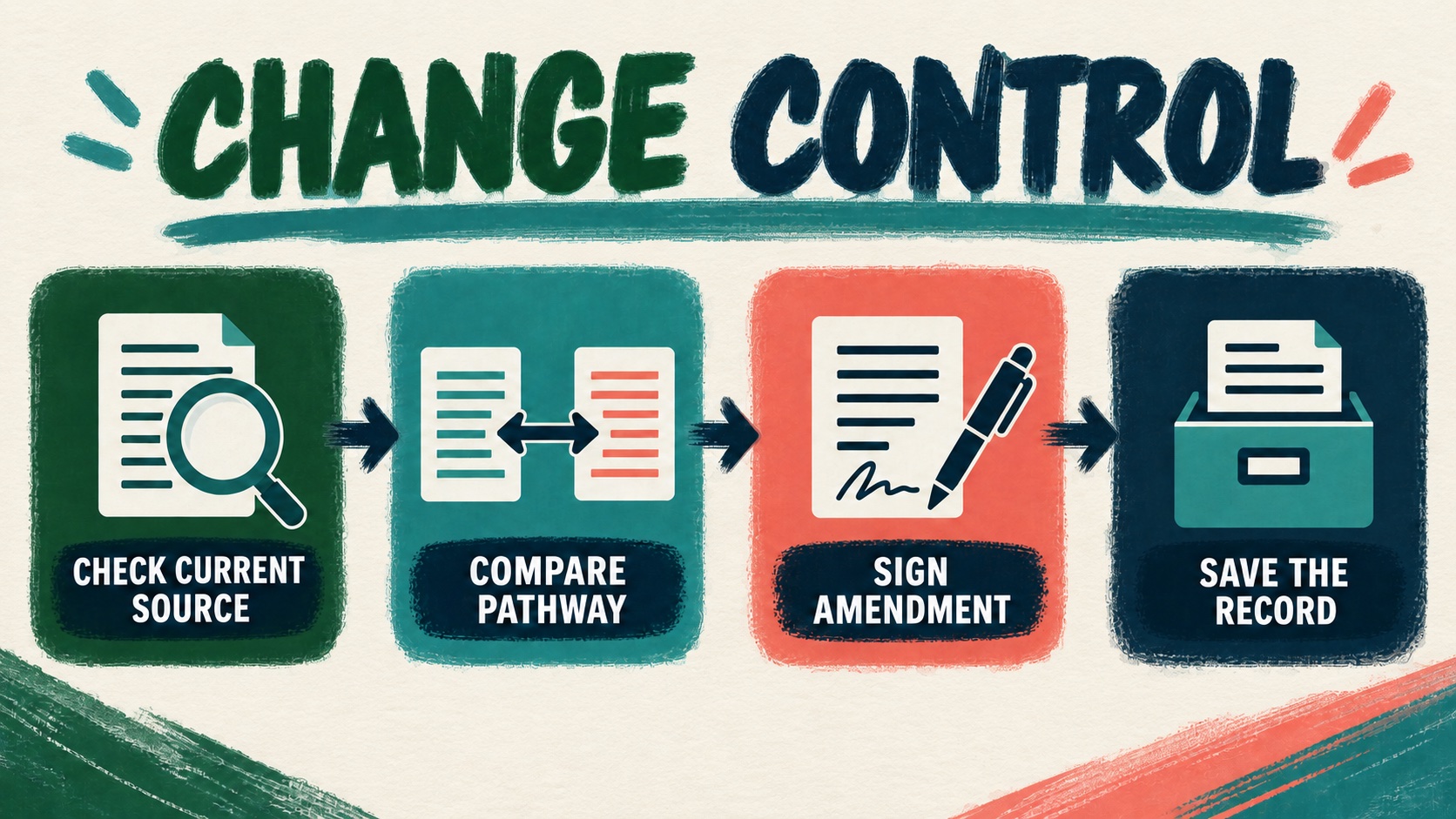
Supervision changes. A trainee may change settings, a supervisor may leave, the organization may add another supervisor, or the controlling requirement edition may change. Explain how an amendment is proposed, who must sign it, when it takes effect, and which records must be updated. Do not replace the original file without preserving the prior signed version.
Include a responsible ending process. State how the parties will complete or transfer records, address open performance concerns, handle applicable final forms, and support continuity for the trainee or supervisee. If a relationship ends because of safety, ethics, or competence concerns, the parties should follow the current BACB resources and applicable law rather than using the contract as a reason to ignore client welfare.
How Does the 2027 Transition Affect a Contract?
The BACB has published separate 2027 requirement pages, transition guidance, and credential-specific resources. Significant BCBA and BCaBA certification changes take effect January 1, 2027. A contract should therefore identify the pathway, supervision dates, and requirement edition that informed its terms.
Do not automatically discard a signed contract or call it compliant because a template adds “2027.” Check the current BCBA or BCaBA Handbook, transition guidance, form version, and official resource hub. If the applicable pathway changes, document the decision and amend the contract when the official guidance or the actual supervision scope requires it.
- Before signing: verify the current resource and requirement edition.
- During supervision: record the dates and form versions used.
- When rules change: compare the transition guidance with the existing scope.
- When amending: preserve the original, explain the change, and obtain the required signatures.
BACB Supervisor Contract Checklist
Use this checklist as a final review before the first supervision meeting. A “yes” answer means the contract states the issue clearly and the supporting evidence is available.
- Are the supervisor, trainee or supervisee, credential, setting, purpose, and dates identified?
- Does the supervisor’s qualification and required training status match the role?
- Are individualized objectives, activities, observations, feedback, and evaluation described?
- Does the meeting and communication plan fit the actual setting?
- Does the contract name the documentation system, forms, review cadence, and retention expectations?
- Are the conditions for signing or declining a form objective, measurable, and consistent with current BACB guidance?
- Are multiple supervisors, if any, assigned clear responsibilities and signatures?
- Does the contract explain amendments, termination, record transfer, and continuity?
- Have all relevant parties signed and dated the contract before applicable supervision begins?
- Has the current 2027 transition guidance been checked if the pathway or dates make it relevant?
Common Contract Mistakes
- Copying an old template: use the sample as a starting point and verify the current handbook and forms.
- Writing only job duties: add supervision objectives, evidence, feedback, and evaluation.
- Starting before signing: complete and date the contract before applicable supervision begins.
- Ignoring multiple supervisors: list every relevant role and how forms will be completed.
- Using vague signature language: document objective conditions and performance concerns as they arise.
- Changing a contract silently: preserve the original and sign/date each relevant amendment.
Frequently Asked Questions
Does BACB provide a supervisor contract template?: The BACB provides a sample supervision contract as an optional resource, along with handbook and fieldwork guidance. Treat the sample as drafting help, not as a universal form. Adapt it to the credential, setting, supervisors, objectives, records, and current requirement edition.
When should a BACB supervision contract be signed?: For supervised fieldwork, the contract should be developed and signed at the outset of the supervisory relationship, before applicable supervision begins. If the parties change the scope later, document the amendment and obtain the signatures required by the current rule.
Can an employment contract replace a BACB supervisor contract?: Usually not. An employment agreement may cover pay, schedule, and workplace duties, but it may not state the individualized objectives, fieldwork responsibilities, documentation system, form conditions, or transition terms required for supervision.
What if my supervisor refuses to sign a final form?: Review the contract, the documentation, and the current BACB guidance first. Try to resolve the matter and retain evidence of the attempt. The BACB’s Contested Fieldwork Form has specific limits and should not be treated as a substitute for a complete contract or documentation system.
Does a contract guarantee that my hours will count?: No. The contract supports the relationship, but the work, supervision, records, forms, ethics, and applicable handbook requirements must also be satisfied. A signature does not turn unsupported or noncompliant hours into qualifying experience.
Keep study and compliance separate: After you verify the current BACB contract and documentation requirements, use the free BCBA mock exam for independent terminology and application practice. It is study practice, not a BACB contract, official guidance, or certification guarantee. Official Sources Used
- BACB BCBA Handbook
- BACB BCaBA Handbook
- BACB BCBA Fieldwork Resource Hub
- BACB Supervision, Assessment, Training, and Oversight
- BACB Supervisor Training Curriculum Outline (2.0), Version 05/2026
- BACB Contested Fieldwork Form
- When Supervising Fieldwork Doesn’t Go as Planned
- 2027 BCBA and BCaBA Requirements: What You Need to Know
Take the Free BCBA Mock Exam
If you want a low-pressure way to check your recall, use the free practice resource below. Take the Free BCBA Mock Exam



