
Quick answer: To perform a BACB supervisor search, start with the official BACB Certificant Registry, verify the person’s current certification and any reportable disciplinary information, then confirm that the person meets the supervision requirements for your role and pathway. A registry result can help you identify a candidate, but it does not by itself prove that the person is available, is the right fit, has completed every applicable supervision requirement, or has agreed to supervise you.
Table of Contents
- What Does BACB Supervisor Search Mean?
- Where Do You Search for a BACB Supervisor?
- How Do You Verify a Supervisor?
- How Do You Check Supervision Eligibility?
- How Do You Evaluate Fit Before Agreeing?
- What Should You Confirm Before Starting?
- What If You Have Multiple Supervisors?
- What Should You Check During the 2027 Transition?
- A BACB Supervisor Search Workflow
- Common Search Mistakes
- Frequently Asked Questions
- Take the Free BCBA Mock Exam
People search for a supervisor for different reasons: BCBA or BCaBA fieldwork, ongoing BCaBA supervision, RBT oversight, or a consulting-supervisor arrangement. The search process is strongest when it separates four questions: Is the person certified? Are they eligible for this supervision role? Are they a good fit for the trainee and setting? Can the relationship be documented correctly?
What Does BACB Supervisor Search Mean?
The phrase bacb supervisor search can mean either finding a person to supervise you or checking whether a named supervisor is qualified. Those are related but different tasks. The public registry helps with identity and certification verification. The applicable handbook and supervision resources determine whether the person meets the requirements for the specific supervision role.
For BCBA or BCaBA fieldwork, the BACB’s current fieldwork checklist directs candidates to acquire an appropriate supervisor and verify the supervisor’s qualifications in the BACB Certificant Registry. It also connects that search to the supervision contract and documentation system. For RBTs and current BCaBAs, use the role-specific ongoing-supervision resources instead of assuming that fieldwork rules apply. A good search does not end when a name appears on the screen. It ends when the candidate, the role, the setting, the contract, and the evidence system fit together.
Where Do You Search for a BACB Supervisor?
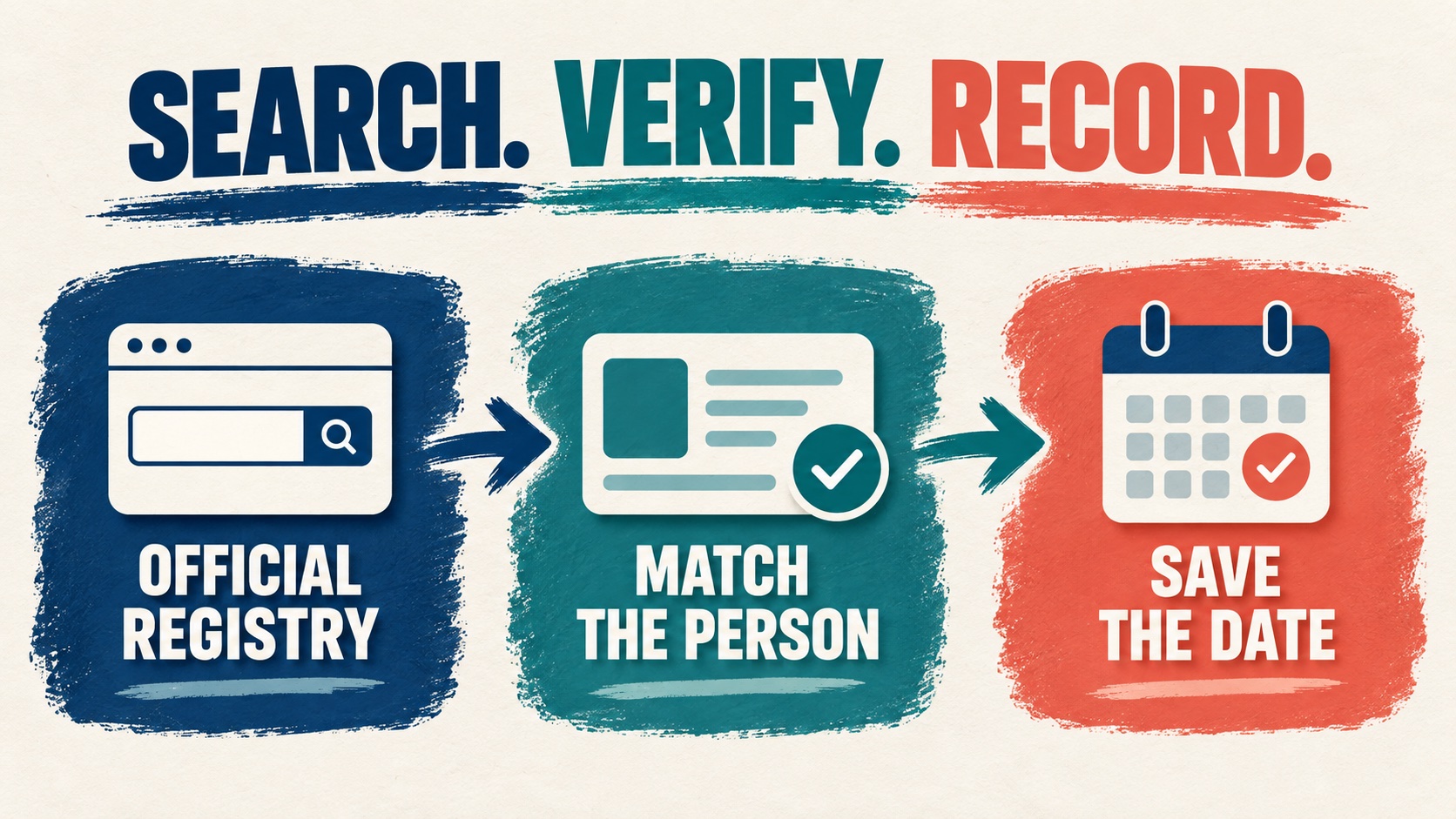
Start at the BACB’s official Verify BACB Certification page and open the BACB Certificant Registry. The BACB describes the Registry as the primary resource for verifying a person’s certification status and determining whether reportable disciplinary actions are associated with the record. The Registry is updated daily, so use it close to the time you make a supervision decision.
Search using the information the Registry requests, then compare the result with the person’s professional information. Do not rely on a social-media profile, a clinic bio, a screenshot from an old date, or an email signature as your primary verification source. If the person gives you a certification number or BACB ID, use that to reduce the risk of selecting the wrong person with a similar name.
The Registry is a verification and discovery tool, not a commercial mailing list. Follow the BACB’s terms of use and do not harvest contact information, create a marketing database, or use the Registry for prohibited solicitation. If you need to contact a potential supervisor, use an appropriate professional channel and explain why you are reaching out.
How Do You Verify a Supervisor?
Save a dated record of the verification result without collecting more personal information than you need. A useful search note includes the supervisor’s name, certification number or BACB ID when available, certification type, active status, date checked, and any relevant public disciplinary indication. If the Registry provides a supervision-eligibility or training date, record that too and confirm it against the current handbook.
| Check | What to confirm | What it does not prove |
|---|---|---|
| Identity and certification | The result belongs to the person you are considering and shows the relevant credential. | That the person has openings or will accept your case. |
| Status and public discipline | Current status and any reportable public information shown by the official Registry. | A complete private employment, licensure, or client-safety investigation. |
| Supervision eligibility | The current handbook’s certification, training, consultation, and role conditions. | That every fieldwork or ongoing-supervision responsibility will be handled well. |
| Fit and documentation | Scope, setting, goals, meetings, contract, records, and communication are workable. | That the BACB will approve an application or count hours automatically. |
How Do You Check Supervision Eligibility?
After verifying the credential, identify the exact supervision role. The BACB’s current supervision hub distinguishes supervising future behavior analysts, supervising BCaBAs or RBTs, assessing RBTs, and training RBTs. Each role can carry different qualification and training requirements.
For fieldwork, review the current BCBA or BCaBA Handbook. The current resources describe conditions such as active certification, the required period of certification, ongoing supervision education, the 8-hour supervision training, and consultation for some newer supervisors. Use the official handbook and Registry result together; do not decide eligibility from a profile description alone. Ask the candidate direct, professional questions:
- Which BACB supervision role do you currently provide?
- Have you completed the required supervision training for this relationship?
- Do you meet any current consultation or continuing-education condition?
- Have you supervised this credential pathway and setting before?
- What documentation system and contract do you use?
A candidate who cannot explain the role or refuses reasonable verification questions is not automatically disqualified, but the uncertainty should be resolved before signing or accruing applicable hours.
How Do You Evaluate Fit Before Agreeing?
Qualification is the floor; fit determines whether the relationship can produce useful learning and reliable documentation. Explain your pathway, coursework stage, setting, schedule, population, goals, and preferred communication. Ask how the supervisor observes work, gives feedback, evaluates competence, and handles concerns.
Look for a supervision plan rather than a promise to “sign hours.” The plan should include individualized objectives, real opportunities to practice, review of work samples, direct observation where appropriate, and a way to track progress. It should also explain what happens if the supervisor becomes unavailable or the relationship needs to end.
Check for conflicts and boundaries. A personal, employment, or financial relationship may create a problem under the role-specific rules or ethics requirements. State licensure, payer rules, the organization’s policies, and client-consent requirements may add conditions. The BACB search result does not answer those local questions, so discuss them before the contract is signed.
What Should You Confirm Before Starting?
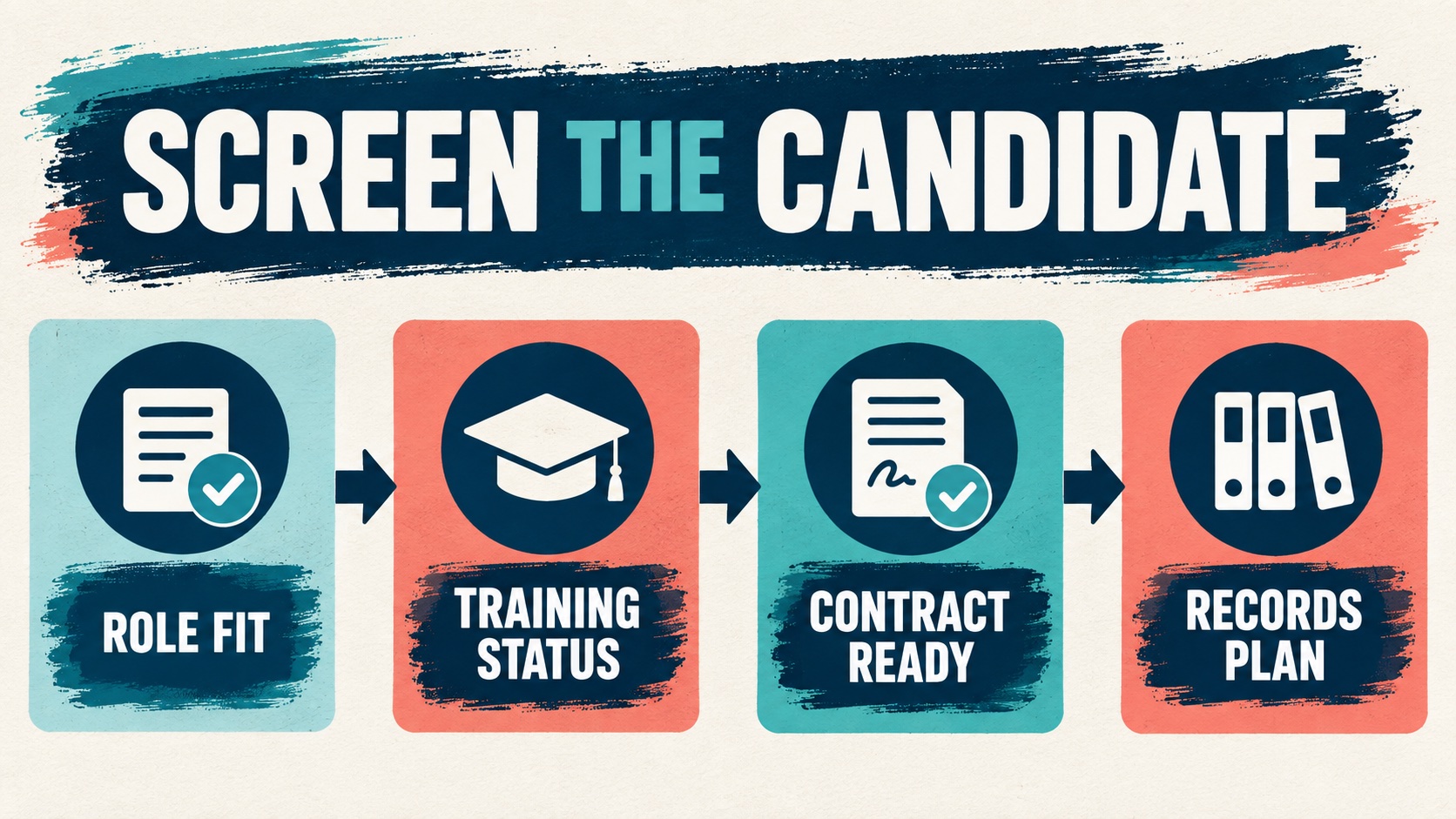
Before supervision begins, the parties should develop and sign the applicable written supervision contract. Confirm that it identifies the parties, purpose, objectives, responsibilities, meetings, observations, records, forms, signature conditions, amendments, and termination or transition process.
Make the contract and the Registry check part of the same dated record. Save the verification date, the requirement edition, the supervisor’s role, and the contract-signing date. If more than one supervisor will be involved, list all relevant supervisors and use the organization-level structure and forms that apply.
For a clause-by-clause contract guide, see the site’s BACB supervisor contract guide. For multiple supervisors at one organization, use the narrower multiple-supervisor contract guide. The search page identifies the candidate; the contract page defines how the relationship will operate.
What If You Have Multiple Supervisors?
Do not run several disconnected searches and assume the results form one supervision system. Verify every supervisor, identify the responsible supervisor or coordinating structure, and make sure every person providing applicable supervision is listed in the contract and connected to the correct forms.
Ask who will review the complete record, who will coordinate the training objectives, who will sign monthly or final forms, and how the supervisors will communicate. Keep the dated Registry checks and contract amendments together. If one supervisor leaves, update the supervision plan before the next period rather than relying on a verbal handoff.
What Should You Check During the 2027 Transition?
The BACB has published separate 2027 requirement pages, handbooks, transition guidance, and forms. Significant BCBA and BCaBA certification changes take effect January 1, 2027. When your application timing or fieldwork dates cross that boundary, repeat the supervisor search and eligibility review against the current source.
A supervisor who was appropriate for one requirement edition may still be a strong candidate, but the evidence and forms may need to be checked again. Record the date you verified the person, the requirement edition, the supervision role, the contract version, and the form version. Do not treat a 2027 label or an old screenshot as proof.
A BACB Supervisor Search Workflow
- Name the task: fieldwork, ongoing BCaBA supervision, RBT oversight, assessment, or training.
- Build a candidate list: use professional referrals, your program, an organization, and the official Registry as appropriate.
- Verify each candidate: confirm identity, current credential, public status, and any supervision indicator.
- Check role eligibility: read the current handbook and supervision resource for the exact pathway.
- Interview for fit: discuss objectives, observation, feedback, schedule, records, boundaries, and fees if relevant.
- Sign the contract: finish the applicable agreement and documentation system before applicable supervision starts.
- Review periodically: recheck records, performance, supervisor availability, and requirement changes.
Common Search Mistakes
- Choosing the first search result: use the official Registry and current role resources.
- Confusing certification with eligibility: a credential alone does not answer every supervision role condition.
- Using an old screenshot: the Registry is updated daily; record a current check date.
- Skipping the interview: availability, setting, goals, boundaries, and documentation fit still matter.
- Starting before paperwork: complete the contract and record system before applicable supervision begins.
- Using the Registry commercially: respect the BACB’s terms and do not create a solicitation database.
Frequently Asked Questions
How do I search for a BACB supervisor?: Start with the BACB Certificant Registry through the official Verify BACB Certification page. Verify the person’s identity and current credential, then check the applicable handbook and supervision resources for role eligibility. Finally, discuss fit and complete the contract before applicable supervision begins.
Does the BACB Registry show who is willing to supervise?: The Registry helps verify certificants and may show supervision-related information, but a listing is not a promise of availability. Contact the person through an appropriate professional channel and ask about role, schedule, setting, objectives, and documentation.
Can I trust a supervisor’s website instead of the Registry?: Use a website as a lead, not as the primary verification source. Certification status, public disciplinary information, and supervision indicators should be checked in the current BACB Registry and then compared with the relevant handbook.
Do I need to search again if my supervisor changes?: Yes. Verify the new supervisor, confirm the role-specific eligibility conditions, update the contract and records, and make sure the new person is connected to the applicable BACB portal or form process before relying on the new relationship. Does finding a qualified supervisor guarantee that my hours count?: No. You still need an appropriate contract, qualifying activities, required supervision, accurate records, applicable forms, ethical practice, and compliance with the current requirement edition.
Keep study and supervisor verification separate: After you confirm your supervision path and documentation, use the free BCBA mock exam for independent terminology and application practice. It is study practice, not a BACB Registry, supervisor verification, or certification guarantee. Official Sources Used
- BACB Verify Certification and Certificant Registry
- BACB Fieldwork Checklist and Tip Sheet Resource Hub
- BACB BCBA Handbook
- BACB BCaBA Handbook
- BACB Supervision, Assessment, Training, and Oversight
- BACB Terms of Use
- 2027 BCBA and BCaBA Requirements: What You Need to Know
Take the Free BCBA Mock Exam
If you want a low-pressure way to check your recall, use the free practice resource below. Take the Free BCBA Mock Exam



