
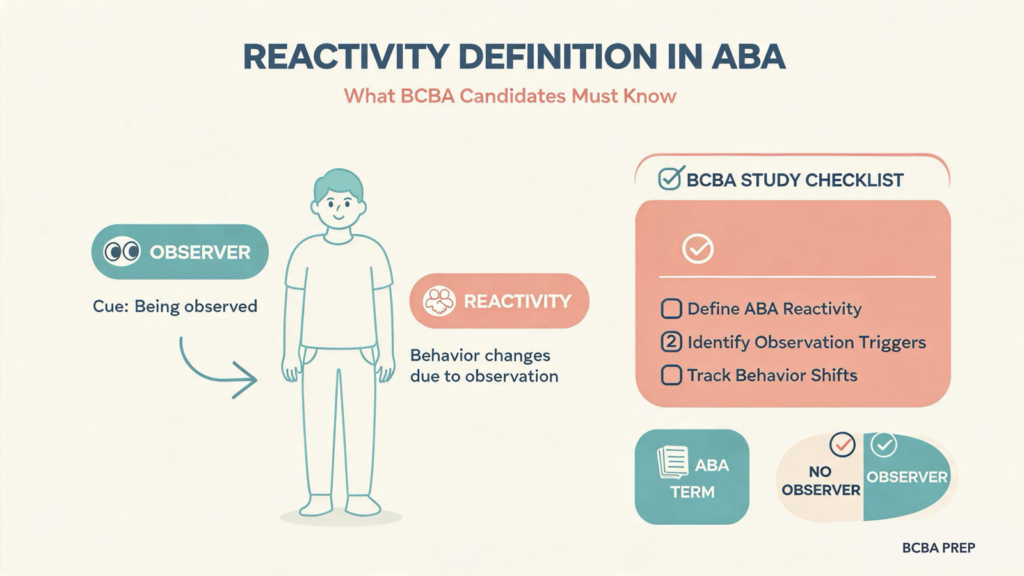
What Is Reactivity? A Core Concept in Behavioral Observation
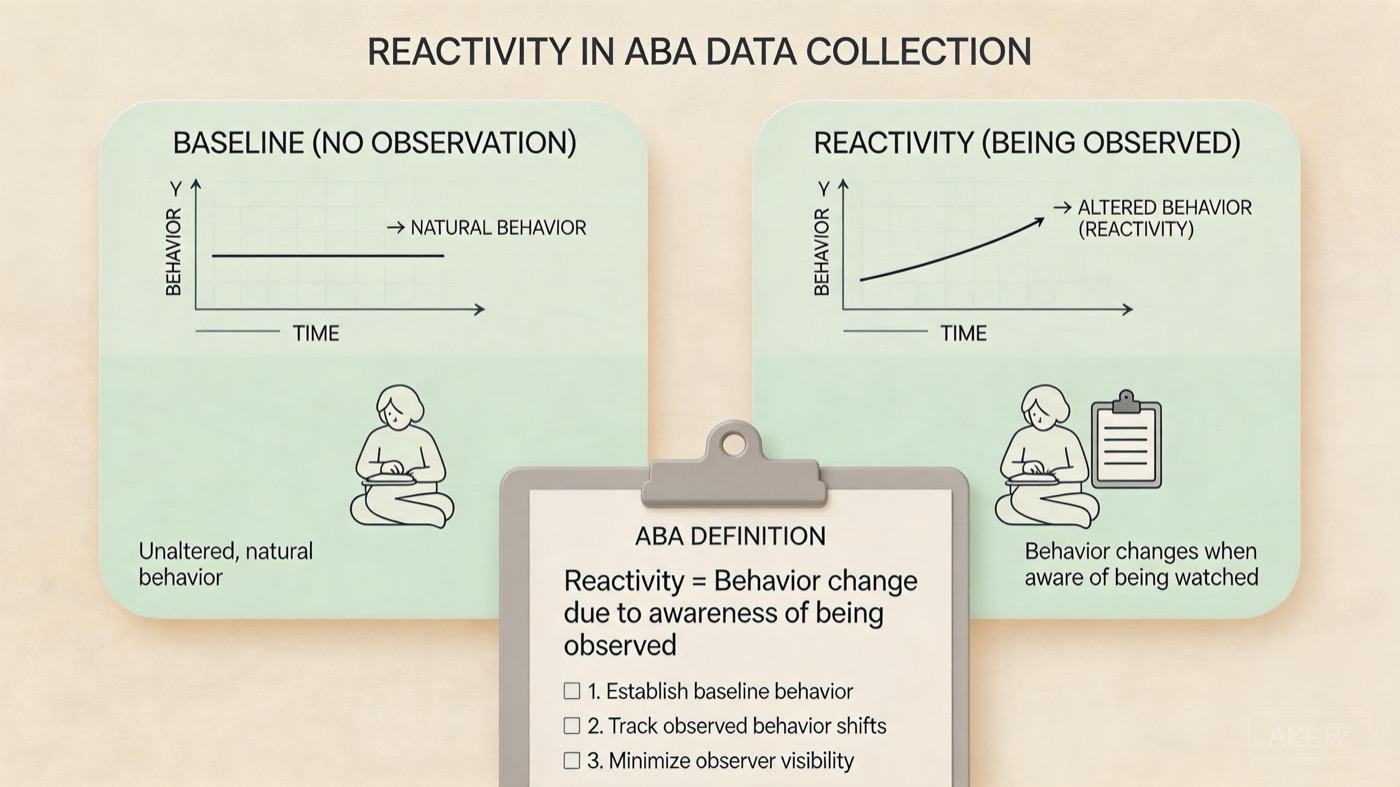
Reactivity is a phenomenon that can significantly affect the accuracy of behavioral data. The reactivity definition in applied behavior analysis refers to the change in an individual’s behavior when they are aware of being observed. This awareness can lead to behavior that differs from typical patterns, compromising the validity of baseline and intervention data.
Table of Contents
- What Is Reactivity? A Core Concept in Behavioral Observation
- Real-World ABA Examples of Reactivity
- Reactivity on the BCBA Exam: Traps and Tips
- Quick Checklist: Identifying and Managing Reactivity
- Final Thoughts: Reactivity and Your BCBA Success
Reactivity Definition and Key Characteristics
At its core, reactivity is the observer effect: the act of measuring behavior alters the behavior itself. Key characteristics include:
- Behavior change occurs due to observation, not the independent variable.
- It is temporary in many cases, diminishing as the observer becomes familiar.
- Reactivity can inflate or deflate target behaviors, depending on the context.
- It threatens internal validity if not controlled.
Why Reactivity Matters in Applied Behavior Analysis
Reactivity can distort baseline data, making it appear that behavior is more or less severe than it actually is. This can lead to incorrect conclusions about intervention effectiveness. For example, a teacher might report that a student’s disruptions decrease during observations, but the true rate may be higher when no observer is present. Recognizing and managing reactivity is essential for accurate measurement and data-based decision-making.
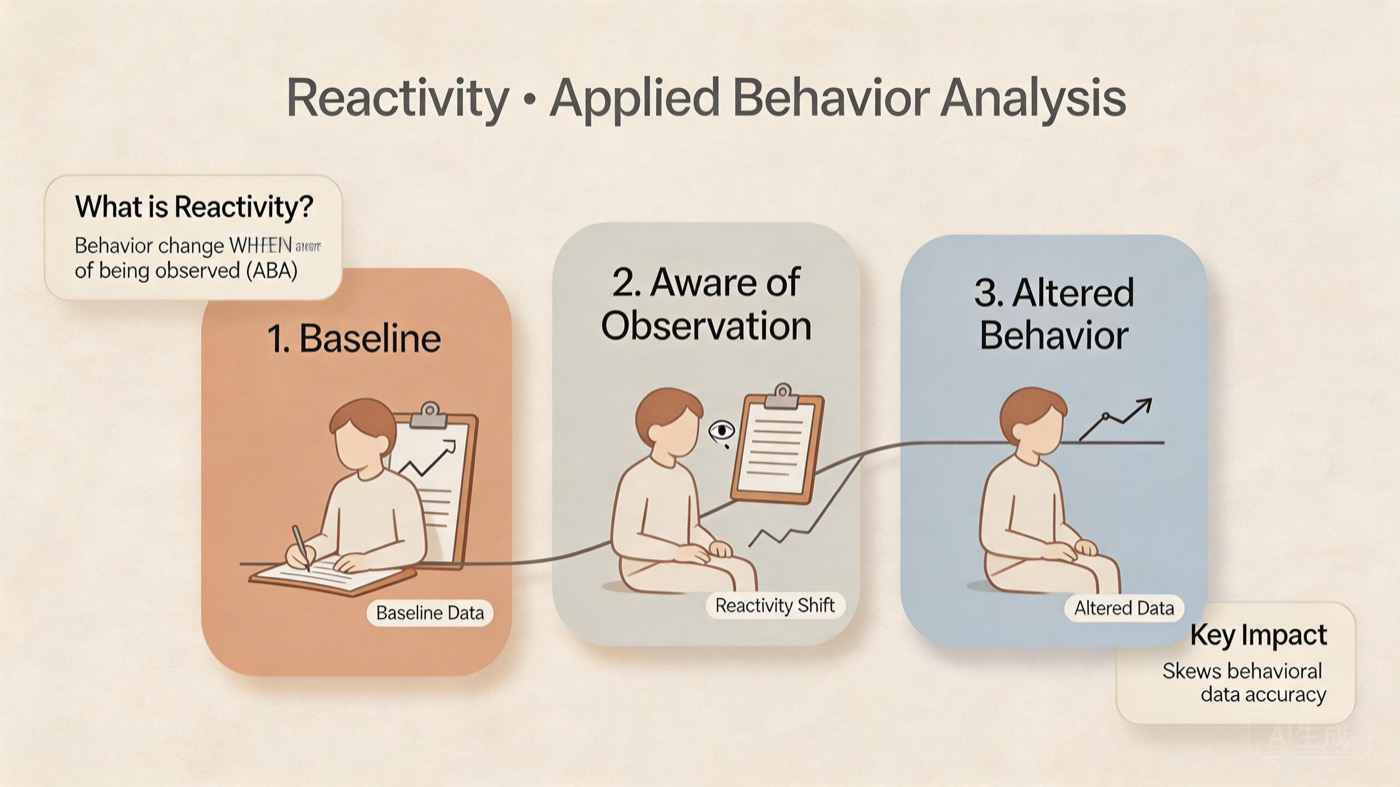
Real-World ABA Examples of Reactivity
Understanding reactivity is easier with concrete examples. Here are three scenarios commonly seen in ABA practice and on the BCBA exam.
Example 1: Classroom Observation and Student Disruption
A student with a history of disruptive behavior is observed by a new therapist. The student’s disruptions increase dramatically when the observer is present. An ABC analysis reveals: Antecedent = observer enters room; Behavior = loud outbursts; Consequence = peer and adult attention. The hypothesized function is attention-maintained. Over time, as the observer becomes a familiar presence, disruptive behavior returns to baseline. This demonstrates how reactivity can inflate behavior and why habituation periods are critical.
Example 2: Self-Monitoring and Habit Reversal
Self-monitoring is a strategy that uses reactivity to the client’s advantage. A client who bites their nails begins recording each instance on a tally sheet. The act of self-recording reduces nail-biting because the client becomes aware of the behavior. In this case, reactivity serves as an intervention component, increasing self-awareness and control. For more on self-monitoring, see our guide on behavior intervention plans.
Example 3: Parent-Child Interaction in Home Setting
During a parent training program, a parent reports that their child’s aggressive behavior almost disappears when a video camera is set up. This is a classic example of reactivity leading to desired behavior. The child may be on best behavior due to the camera’s presence. To obtain accurate data, practitioners should use unobtrusive measures or allow time for habituation before collecting baseline data.
Reactivity on the BCBA Exam: Traps and Tips
Exam questions about reactivity often test your ability to distinguish it from other threats to validity. Here are common misunderstandings and strategies.
Common Exam Misunderstandings
- Reactivity is NOT measurement bias; measurement bias refers to systematic error in the measurement system, whereas reactivity is a change in the behavior itself.
- Reactivity is not always a problem; in self-monitoring, it can be therapeutic.
- Reactivity can affect both participants and observers (observer drift is different).
How to Minimize Reactivity in Data Collection
- Use habituation: Allow the client to become accustomed to the observer before formal data collection.
- Employ unobtrusive observation: Use one-way mirrors, video recording with delayed review, or naturalistic settings.
- Collect data over multiple sessions: Average data points to reduce the impact of isolated reactive episodes.
- Consider using multiple observers and check interobserver agreement to detect reactivity.
- Be aware of reactional reactivity: The observer’s presence may change the environment; minimize social interaction during observation.
Practice Prompts for Exam Preparation
Question 1: A BCBA notices that a client’s tantrums increase when the BCBA is in the room. This is an example of: A) Observer drift B) Reactivity C) Measurement bias D) Placebo effect
Correct answer: B. Reactivity describes behavior change due to observation.
Question 2: Which strategy is most effective for reducing reactivity during a functional analysis? A) Using continuous measurement B) Having the therapist interact with the client C) Allowing a habituation period D) Increasing session length
Correct answer: C. Habituation reduces the impact of the observer’s presence.
Question 3: Self-monitoring often leads to a decrease in problem behavior. This is primarily due to: A) Negative reinforcement B) Reactivity C) Extinction D) Punishment
Correct answer: B. Self-monitoring makes the behavior salient, producing reactive effects.
Quick Checklist: Identifying and Managing Reactivity
Use this checklist to prepare for exam scenarios and applied practice:
- Does the behavior change when an observer is present? If yes, consider reactivity.
- Collect data using unobtrusive methods (e.g., hidden cameras, natural observation).
- Schedule habituation sessions before formal baseline.
- Compare data from obtrusive vs. unobtrusive observations to quantify reactivity.
- In self-monitoring, teach the client to record behavior discreetly to minimize reactivity.
- Always report potential reactivity in your assessment summaries.
Final Thoughts: Reactivity and Your BCBA Success
Mastering the reactivity definition is not just about passing the exam—it is about ensuring the integrity of your data in practice. By understanding how observation changes behavior, you can design more accurate assessments and interventions. For additional study resources, check out our BCBA exam prep guide. For an authoritative source, refer to the BACB website for ethics and measurement standards.
Complete BCBA Exam Prep
Turn this topic into exam-day practice
Practice concepts in context with five full-length 6th Edition mock exams, two bonus practice exams, a 6th Edition study guide, and key-term flashcards—all in one $120 USD package.
Get the $120 All-in-One Prep Pack
Review everything included on the product page before ordering. No pass guarantee is implied.



