

What is Extraneous Variation? A Definition for BCBAs
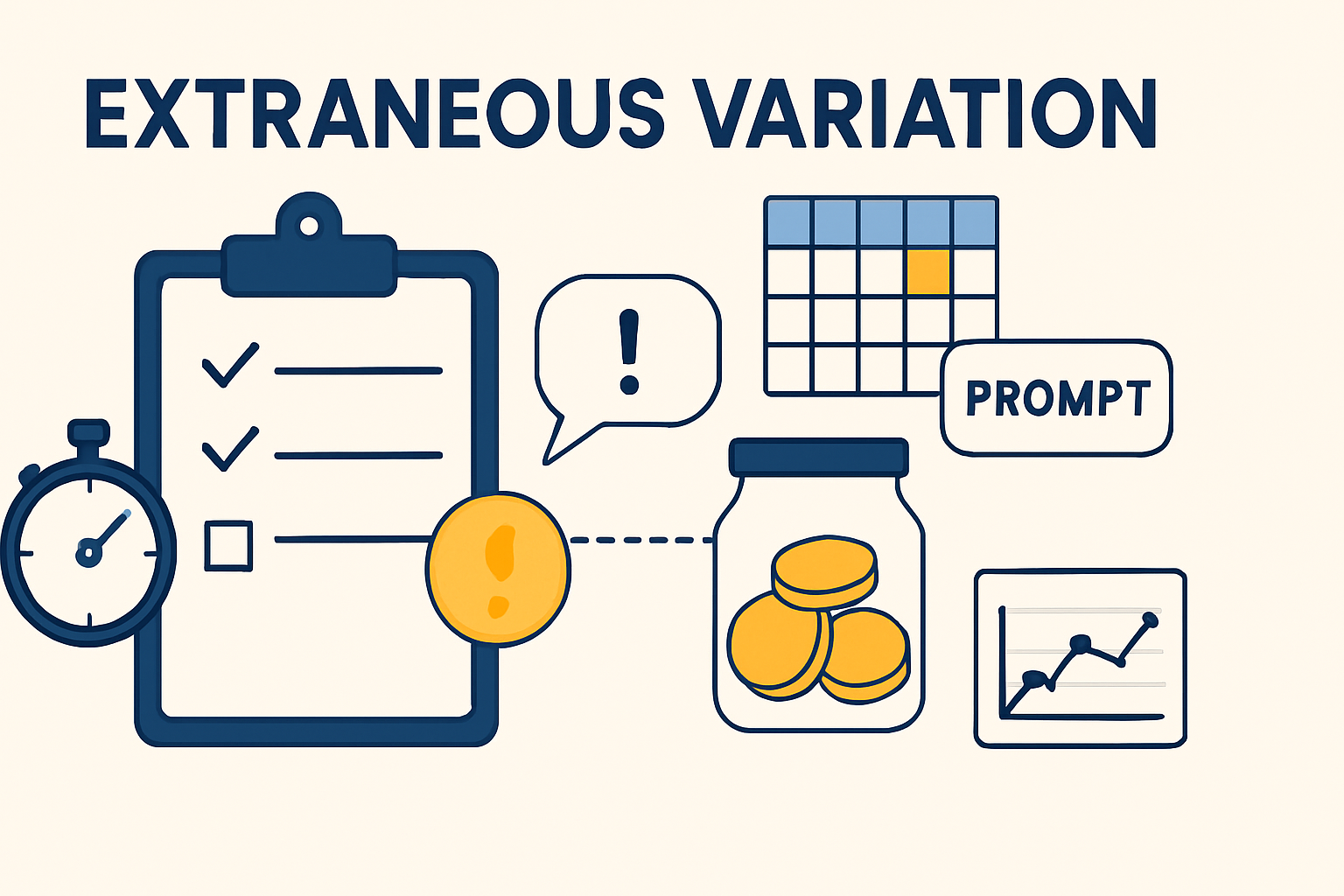
In applied behavior analysis, extraneous variation refers to any uncontrolled variable that introduces unwanted variability into your data. This concept is crucial for maintaining experimental control and establishing clear functional relationships between interventions and outcomes.
Table of Contents
- What is Extraneous Variation? A Definition for BCBAs
- Extraneous Variation in Practice: Worked ABA Examples
- Extraneous Variation on the BCBA Exam: Common Traps and Tips
- Controlling Extraneous Variation: A BCBA’s Quick Checklist
- Summary: Securing Experimental Control for the Exam and Beyond
When you conduct an ABA study or implement an intervention, you’re trying to demonstrate that changes in the dependent variable (the behavior you’re measuring) result from your independent variable (your intervention). Extraneous variation threatens this demonstration by adding ‘noise’ to your data that isn’t related to your intervention.
Extraneous Variation vs. Confounding Variables: Knowing the Difference
All confounding variables represent a type of extraneous variation, but not all extraneous variables become confounds. The key distinction lies in their relationship to your experimental conditions.
A variable becomes a confound when it systematically changes alongside your independent variable. For example, if you implement a token economy (IV) while also starting a new medication that affects attention, the medication change is a confound because it coincides with your intervention.
In contrast, general extraneous variation includes any uncontrolled factor that adds variability without necessarily aligning with your experimental conditions. Think of it as background noise rather than a competing explanation.
Extraneous Variation in Practice: Worked ABA Examples
Understanding extraneous variation requires seeing it in realistic scenarios. These examples illustrate how seemingly minor factors can threaten your experimental control.
Example 1: The Case of the Changing Classroom Aide
You’re evaluating a DRO intervention for hand-mouthing behavior with a hypothesized function of automatic reinforcement. Your intervention appears effective during the first two weeks, but then data becomes highly variable.
The extraneous variable: The school implements a rotating schedule of classroom aides. Each aide has different levels of implementation fidelity with your DRO protocol. Some provide reinforcement consistently, others forget, and a few modify the timing requirements.
This creates unsystematic variance in your dependent variable (hand-mouthing frequency). The variability in your data could be due to inconsistent implementation rather than the intervention’s effectiveness. This threatens your ability to demonstrate a clear functional relation between the DRO and behavior reduction.
Example 2: Medication Changes During an FA
You’re conducting a functional analysis for aggression with escape as the hypothesized function. Your test conditions show clear patterns initially, but then the data patterns shift unexpectedly during the escape condition.
The extraneous variable: The client’s physician adjusts their ADHD medication dosage mid-analysis without informing your team. The medication change affects the client’s response effort and overall activity level.
This medication adjustment could masquerade as a change in condition effects or interact with your test conditions. The altered data patterns might lead you to incorrect conclusions about the behavior’s function, compromising your analysis’s internal validity.
Extraneous Variation on the BCBA Exam: Common Traps and Tips
Exam questions about experimental control often test your ability to identify threats to validity. Recognizing these common traps will help you select the correct answers.
Trap 1: Mistaking Extraneous Variation for a Confounding Variable
When exam questions ask about the ‘greatest threat to internal validity,’ carefully analyze whether the variable changes systematically with conditions. Choose extraneous variation when the variable is present but not aligned with your experimental phases.
Select confounding variable only when the unwanted factor changes simultaneously with your independent variable. This distinction is crucial for questions about experimental design and data interpretation.
Trap 2: Overlooking Procedural Fidelity as a Source
Inconsistent implementation of your intervention is a classic source of extraneous variation. Exam scenarios often describe drifting protocols or multiple implementers with varying adherence levels.
Remember that procedural integrity issues introduce variability that can obscure your intervention’s true effects. When you see descriptions of inconsistent application, think immediately about extraneous variation affecting your experimental control.
Controlling Extraneous Variation: A BCBA’s Quick Checklist
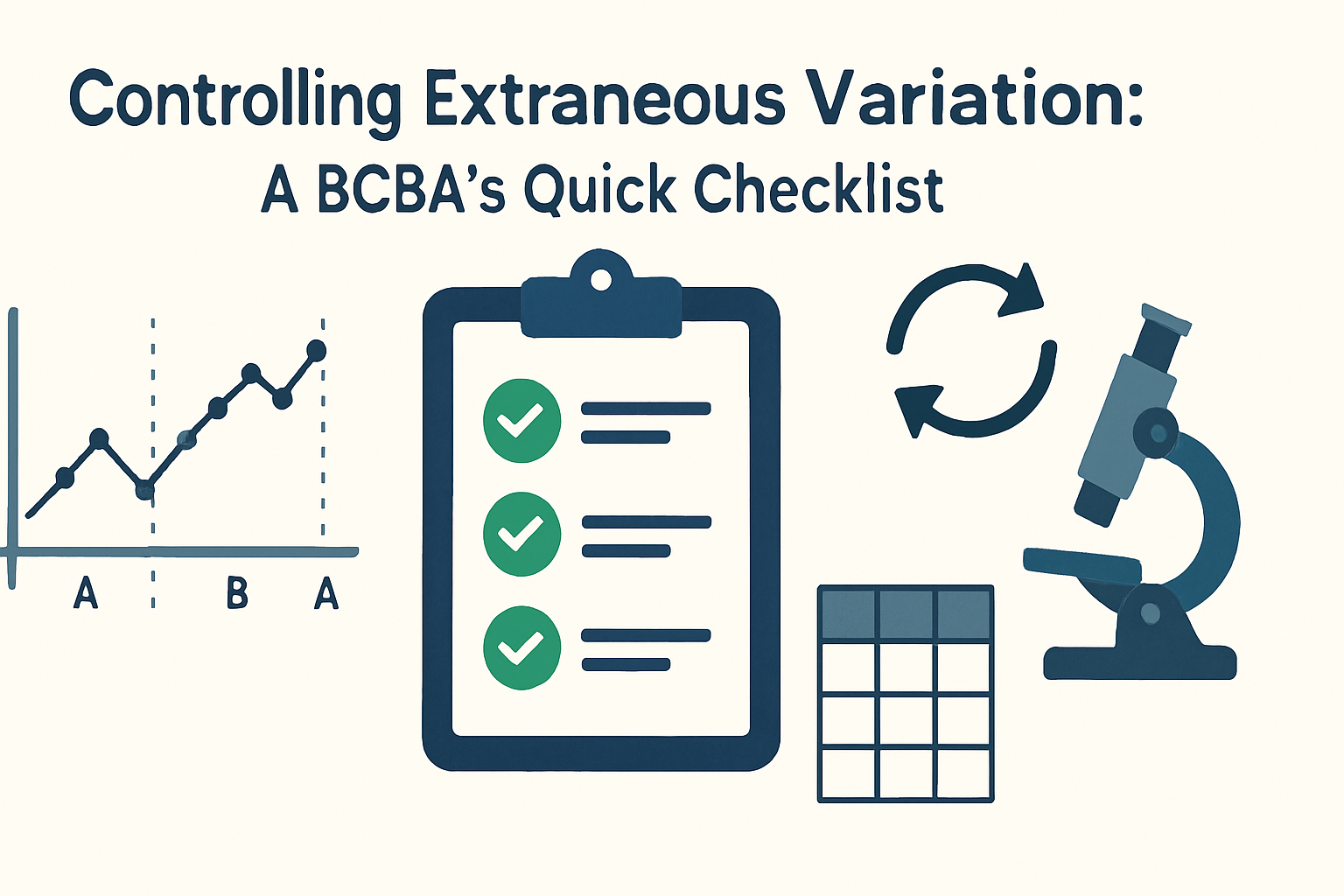
Use this actionable checklist to minimize extraneous variation in both research and practice. These strategies help establish clear experimental control and reliable data patterns.
- Standardize procedures across all sessions and implementers
- Implement regular procedural fidelity checks using observation and data collection
- Train all staff to criterion-level performance before data collection begins
- Control environmental factors like noise levels, lighting, and seating arrangements
- Document and account for medication changes, sleep patterns, and health status
- Use single-subject designs with appropriate baseline and treatment phases
- Implement treatment integrity measures as outlined in our guide to treatment integrity and social validity
Summary: Securing Experimental Control for the Exam and Beyond
Mastering extraneous variation is essential for both BCBA exam success and ethical practice. This concept sits at the heart of demonstrating experimental control and establishing clear functional relationships in ABA.
By identifying and controlling extraneous variables, you ensure that your data accurately reflects your intervention’s effects rather than random variability. This commitment to methodological rigor aligns with the scientific integrity that defines our field.
Remember that controlling extraneous variation isn’t just about passing an exam—it’s about producing reliable, valid results that genuinely benefit your clients. For more on experimental design fundamentals, explore our guide to single-subject experimental designs.
As you prepare for your exam, practice identifying extraneous variation in various scenarios and consider how different experimental designs help control these variables.



