

Is 10 hours of ABA enough? There is no responsible universal yes-or-no answer. Ten hours per week may be a focused starting point for one learner and a poor fit for another. The decision should come from assessment, meaningful goals, data, participation, treatment quality, and the learner’s context—not from a number treated as a prescription.
Table of Contents
- Is 10 Hours of ABA Enough? The Short Answer
- What Does 10 Hours of ABA Usually Mean?
- When Might 10 Hours Be a Reasonable Starting Point?
- When Might 10 Hours Not Match the Plan?
- How Should a BCBA Decide Whether 10 Hours Fits?
- How Do You Measure Whether 10 Hours Is Working?
- Is 10 Hours Focused or Comprehensive ABA?
- How Should Hours Be Adjusted Responsibly?
- What Questions Should Families Ask?
- What Mistakes Should Teams Avoid?
- What Are the BCBA Exam Clues?
- Is 10 Hours of ABA Enough FAQ
- Sources and Date Check
- Take the Free BCBA Mock Exam
Is 10 Hours of ABA Enough? The Short Answer
Ten hours of ABA per week can be enough for a focused plan when the learner has a limited set of clearly defined goals, the schedule is feasible, the treatment is effective, and progress is visible in outcomes that matter. It may also be a gradual starting point while a team builds rapport, trains caregivers, coordinates with school, or learns how the learner responds to treatment. Those possibilities do not turn ten hours into a minimum or a target that applies to everyone.
Ten hours may be insufficient when the plan is expected to address many domains at once, when significant safety or communication needs are not being reached, or when data show little progress despite sound implementation. It may also be the wrong question if the central issue is treatment quality, access to communication, an unrealistic target, inconsistent staffing, or a schedule that leaves no room for school, sleep, relationships, play, and ordinary family life. A BCBA should evaluate the whole plan rather than defend or reject a number in isolation.
The current BACB task-list framework emphasizes assessment results, client preferences, supporting environments, social validity, treatment integrity, and data-based decisions about effectiveness and ongoing services. That is the BCBA reasoning pattern to use here. For a broader discussion of fit, participation, and the question of when intensity becomes too much, see the site’s guide to ABA treatment intensity and fit; this page stays focused on the specific ten-hour question.
What Does 10 Hours of ABA Usually Mean?
“Ten hours” normally refers to the amount of direct ABA service scheduled in a week, but plans differ in what is counted. A schedule may distribute time across home, clinic, school, or community settings. It may include structured teaching, naturalistic instruction, caregiver coaching, generalization practice, and transitions. Direct treatment time, BCBA supervision, parent training, care coordination, and assessment time may be documented separately depending on the provider and payer.
That distinction matters because the same number can describe very different experiences. Ten varied hours tied to a small number of socially meaningful goals may function as a focused plan. Ten hours filled with poorly matched tasks, long waits, excessive prompting, or inconsistent procedures may not produce useful learning. Ask what happens during the hours, which outcomes are measured, who implements the plan, and how communication, breaks, assent, and generalization are protected.
When Might 10 Hours Be a Reasonable Starting Point?
A focused schedule can make sense when assessment identifies a manageable set of priorities and the team can deliver high-quality teaching consistently. The decision is not based on age or diagnosis alone. It is based on the learner’s current skills, behavior patterns, communication system, daily environments, risks, preferences, available support, and the goals that the learner and stakeholders consider important.
- A limited target set: the plan addresses a defined communication, adaptive, social, school-readiness, or safety priority rather than promising to change every developmental domain at once.
- A workable context: the learner can participate in the planned sessions, the setting supports learning, and the schedule does not crowd out essential health, school, rest, or family activities.
- An accessible response: the learner has a reliable way to request help, a break, a different activity, or a change in communication mode.
- A measurable review plan: the team has baseline data, observable goals, treatment-integrity checks, and a date for deciding whether the plan should continue, change, fade, or expand.
When Might 10 Hours Not Match the Plan?
Ten hours may not match the plan when the treatment model is comprehensive but the available time is only enough to touch a small portion of the goals. It may also be a poor fit when a learner has urgent safety needs, broad skill deficits, or a pattern of stalled progress that the current arrangement cannot address. Those observations do not automatically justify adding hours. They justify a careful review of assessment, priorities, implementation, coordination, and the learner’s experience.
- Goals are too broad for the schedule: the plan lists many domains but provides no clear priority or sufficient learning opportunities for the most important targets.
- Progress is flat: repeated data show no meaningful change, or gains occur only with intensive prompts and do not generalize to daily life.
- Safety or communication is under-addressed: the learner cannot reliably signal pain, refusal, danger, help, or a need for a pause.
- The service is poorly implemented: staff changes, weak treatment integrity, unavailable materials, or inconsistent reinforcement make the planned hours different from the delivered hours.
- The schedule creates harm or overload: fatigue, distress, missed education, disrupted sleep, or loss of valued activities indicates that the plan needs review even if the hour count is modest.
How Should a BCBA Decide Whether 10 Hours Fits?
The cleanest approach is to treat the number of hours as one variable in a clinical decision cycle. Start with assessment and socially meaningful goals. Specify the procedures and measurement system. Confirm that the team can implement the plan with fidelity. Then review outcomes and the learner’s participation at a predetermined interval. If the plan is not working, ask whether the problem is amount, design, setting, skill of the implementer, access to communication, or the target itself before changing the schedule.
| Decision signal | What to examine | Possible response |
|---|---|---|
| Goal fit | Are the goals observable, prioritized, socially meaningful, and realistic for the available opportunities? | Narrow or reorder targets before assuming that more hours are needed. |
| Learning response | Are skill-acquisition and behavior-reduction data moving in a meaningful direction? | Review the procedure, prompts, reinforcers, task difficulty, and measurement before changing dosage. |
| Implementation | Were the scheduled hours delivered with treatment integrity and competent supervision? | Fix training, materials, staffing, or fidelity barriers so the data represent the intended intervention. |
| Participation and fit | Does the learner have breaks, choice, communication access, and enough time for health, school, relationships, and rest? | Adapt the schedule, environment, or teaching arrangement with the learner and care team. |
How Do You Measure Whether 10 Hours Is Working?
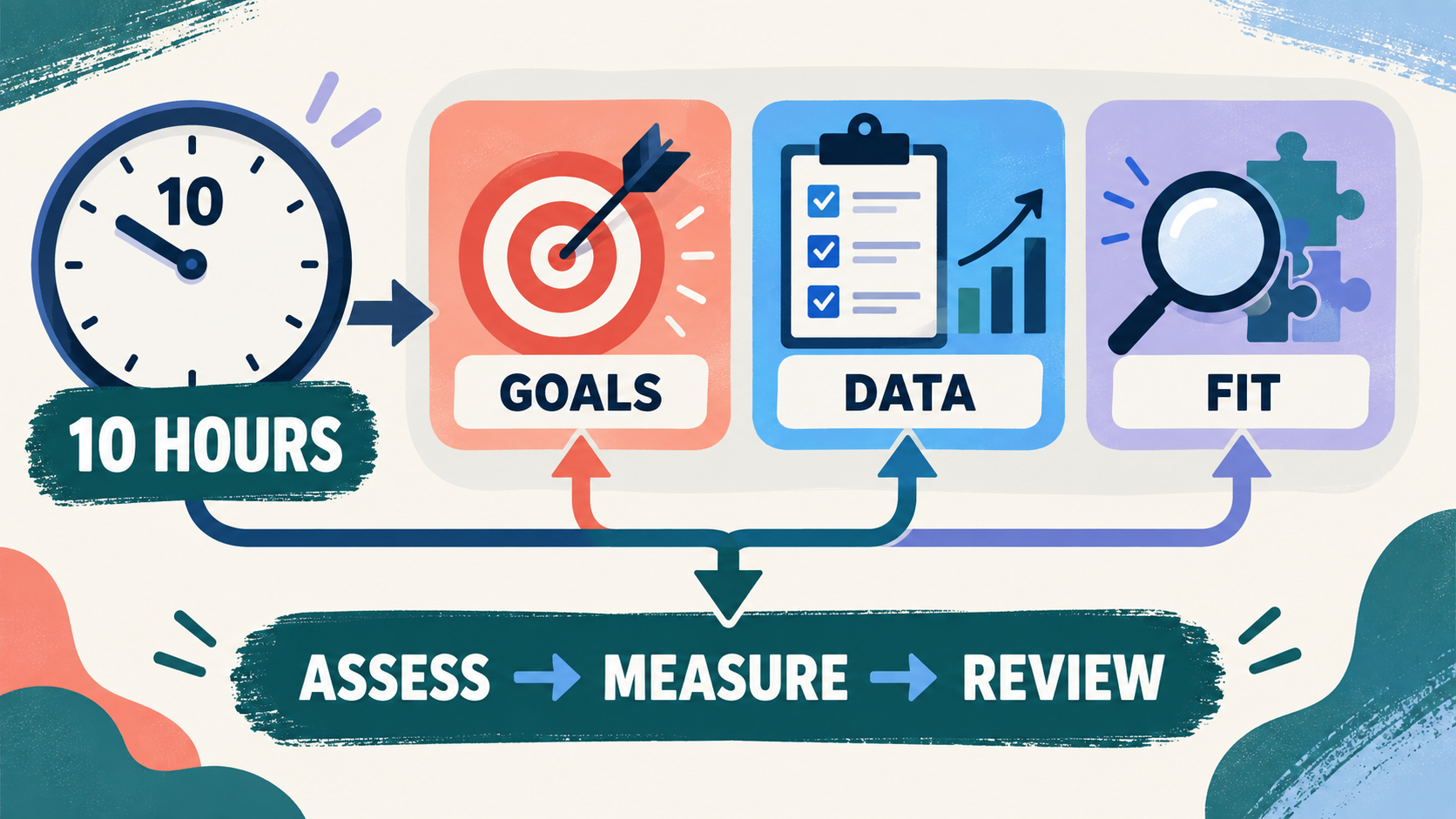
Measure outcomes that answer the reason the service was prescribed. Frequency, rate, duration, latency, percentage of opportunities, and task-analysis data can all be appropriate when they match the target. A graph should show baseline, intervention, relevant setting changes, and enough data points to interpret a trend. If the goal is requesting a break, measure independent requests and successful access to a pause—not merely the number of adult prompts.
Track both the target and the replacement or skill. A decrease in challenging behavior may reflect improvement, avoidance, suppression, or loss of opportunity. Pair reduction data with communication, independence, generalization, participation, prompt level, and quality-of-life indicators. For example, a useful review may show more independent requests, fewer unsafe episodes, and successful use of the skill with caregivers and teachers, not just better performance with one therapist.
Treatment integrity is part of interpretation. If staff delivered only half of the planned teaching trials, a flat graph does not tell you that ten hours failed. If the plan was delivered accurately but targets are still not improving, the team can make a more informed decision about changing the teaching procedure, priorities, setting, or service intensity. The BACB’s framework specifically connects monitoring, data-based intervention decisions, and decisions about ongoing services.
Is 10 Hours Focused or Comprehensive ABA?
Ten hours is generally discussed in practice as a focused amount, but labels vary across providers, researchers, and payers. Focused ABA usually targets a limited number of behaviors or skill areas; comprehensive ABA addresses broader needs across multiple domains and may involve more direct hours. The boundaries are not a universal legal definition, and the label does not prove that a plan is appropriate.
How Should Hours Be Adjusted Responsibly?
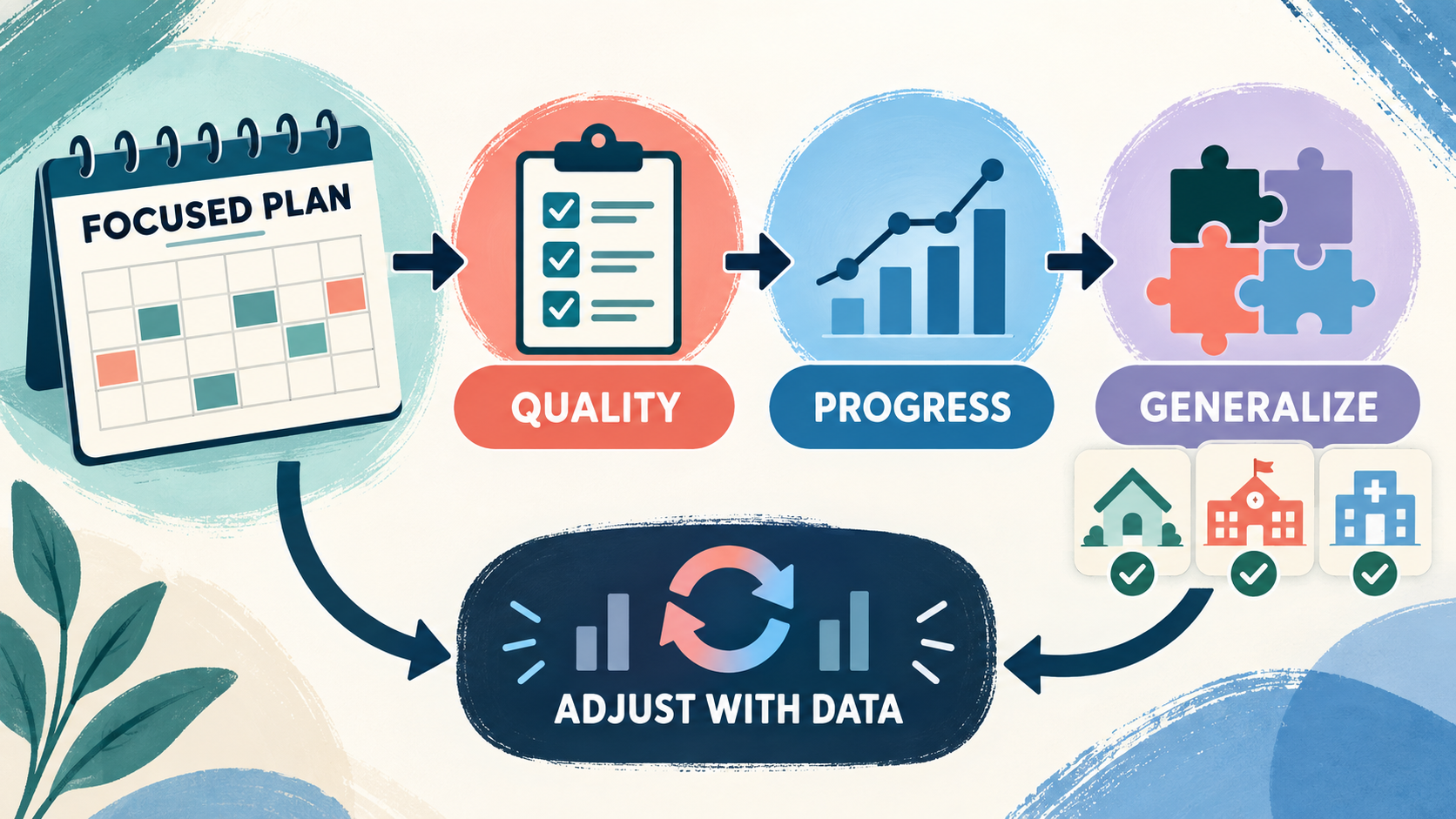
A schedule change should have a documented reason, an expected outcome, a measurement plan, and a review date. A team may first revise the target, change the teaching condition, improve treatment integrity, add caregiver coaching, coordinate with school, or alter the setting. If a change in hours is considered, the BCBA should explain why the new arrangement is expected to improve meaningful outcomes and how the learner’s participation and assent will be protected.
Changes should also account for transitions. Increasing time abruptly can affect fatigue, transportation, school participation, family routines, and tolerance for the teaching arrangement. Reducing time may require a fade plan, caregiver support, maintenance checks, or a transition to another setting. The responsible question is not “Can we authorize ten?” or “Can we add ten more?” but “What change is justified by assessment and data, and how will we know whether it helped?”
What Questions Should Families Ask?
Families do not need to calculate a universal number on their own. They can ask the team to explain how the recommendation connects to the learner’s goals and current data. A clear answer should identify what ten hours will include, what will be measured, who will review the plan, and what would trigger a change. Families can also ask how the learner can communicate assent, refusal, discomfort, or a request for a break.
- Which two or three outcomes are the first priority, and why?
- How will the team define progress and generalization outside the therapy session?
- What is included in the ten scheduled hours, and what is documented separately?
- How will the learner request a break, refuse a task, or communicate a different need?
- When is the formal review date, and what data would support changing the plan?
What Mistakes Should Teams Avoid?
- Using a universal rule: a single hour number cannot replace individualized assessment.
- Confusing authorization with clinical fit: the number a payer approves is not automatically the number a learner needs.
- Counting scheduled time as effective treatment: review delivered opportunities, treatment integrity, and meaningful outcomes.
- Changing hours before checking design: weak targets, inaccessible communication, and poor reinforcement can make any schedule ineffective.
- Measuring only compliance: include communication, independence, safety, choice, participation, and generalization.
- Ignoring the learner’s experience: fatigue, distress, refusal, and lost valued activities are review signals, not inconveniences to hide.
What Are the BCBA Exam Clues?
On a BCBA-style question, a fixed number such as ten hours is often a distractor when it appears without assessment, goals, data, or context. Look for the answer that identifies measurable priorities, considers client preferences and the environment, checks treatment integrity, and uses ongoing data to decide whether services should continue or change. The strongest response usually avoids promising that a particular dosage works for every learner.
Also separate focused treatment from comprehensive treatment without treating the labels as automatic prescriptions. If a question presents a flat outcome, first ask whether the intervention was implemented as designed and whether the measurement system matches the behavior. If the learner cannot communicate a pause or refusal, an ethical and clinically sound answer addresses communication access and participation before increasing demands. For scenario practice, the free BCBA mock exam is an independent study aid, not official BACB content and not a substitute for supervision.
Is 10 Hours of ABA Enough FAQ
Is 10 hours of ABA enough for every child?: No. Ten hours may fit a focused plan for one learner and may not address another learner’s priorities. A qualified team should base the schedule on assessment, goals, context, data, implementation quality, participation, and ongoing review.
Does more ABA always lead to better results?: No. Research on treatment amount is mixed across outcomes and populations. More time can create more learning opportunities in some plans, but quality, fit, communication access, treatment integrity, and meaningful goals remain essential. More hours do not automatically correct a poorly designed intervention.
Are 10 hours considered focused ABA?: Ten hours is often described as a focused amount because it is commonly used for a limited set of goals, but terminology varies. Read the actual treatment plan and ask what domains, settings, supervision, caregiver training, and generalization procedures are included.
Who decides how many ABA hours are appropriate?: The supervising clinical team should make an individualized recommendation using assessment, the learner’s and family’s priorities, available environments, risk, data, and applicable payer or school requirements. Families should receive a clear explanation and a way to participate in review.
Sources and Date Check
This article was reviewed on September 30, 2026 against the BACB Task List, the current BACB Ethics Code, and peer-reviewed evidence on treatment intensity and dosage, including the randomized intensity study, the intervention-amount meta-analysis, and the 2026 community-dosage analysis. Examples are educational illustrations; a qualified BCBA should adapt decisions to the learner, setting, communication system, risk, and stakeholder priorities.
Take the Free BCBA Mock Exam
If you want a low-pressure way to check your recall, use the free practice resource below. Take the Free BCBA Mock Exam



