
Inappropriate social interaction ABA is a search phrase, not an operational definition or a diagnosis. A responsible behavior-analytic answer identifies the observable interaction, the context and outcome that matter, the learner’s communication and preferences, and a function-matched alternative that improves safety, access, autonomy, or meaningful participation.
Table of Contents
- Inappropriate Social Interaction in ABA: The Short Answer
- Why “Inappropriate” Is Not an Operational Definition
- How Do You Define the Interaction?
- How to Assess an Inappropriate Social Interaction in ABA
- How Do You Teach a Function-Matched Alternative?
- How Do Assent, Autonomy, and Social Validity Matter?
- How Do You Measure Progress and Generalization?
- What Mistakes Should Teams Avoid?
- What Are the BCBA Exam Clues?
- Inappropriate Social Interaction ABA FAQ
- Sources and Date Check
- Take the Free BCBA Mock Exam
Inappropriate Social Interaction in ABA: The Short Answer
In ABA, a socially concerning interaction should be treated as a behavior-to-define and assess, not as a fixed trait of the learner. Examples might include repeatedly touching another person after a clear stop signal, entering someone’s personal space in a way that creates a safety concern, interrupting a conversation in a context where access is important, making a comment that violates a stated boundary, or using a behavior that reliably ends an activity the learner cannot tolerate.
The label alone tells you almost nothing about what to teach. The same topography can have different functions, and an adult’s preference for quiet, eye contact, small talk, or a particular social style is not automatically a socially significant treatment goal. Start by asking: What exactly happened? Where and when did it occur? Who was involved? What changed afterward? What did the learner communicate or gain? What outcome would the learner and relevant stakeholders value instead?
Why “Inappropriate” Is Not an Operational Definition
“Inappropriate social interaction” is often used as shorthand in a referral, classroom note, or search query. It is not precise enough to guide reliable data collection. Two observers may agree that an interaction felt uncomfortable while disagreeing about the response, the context, or whether it was harmful. A behavior plan based on that label can accidentally target harmless self-expression, autistic communication, cultural differences, or a learner’s reasonable attempt to escape an overwhelming situation.
A better approach keeps the concern visible while replacing the judgment with observable terms. For example, “stands within 10 centimeters of a peer and touches the peer’s shoulder after the peer says ‘stop’” is more useful than “has poor boundaries.” “Repeats the same topic after the partner has answered and turns away, for three or more exchanges” is more useful than “is socially inappropriate.” The definition should include the context and, when relevant, the safety or consent boundary.
A target deserves attention when it affects safety, consent, communication, access to education, relationships, health, independence, or another outcome that matters to the learner and stakeholders. The site’s guide to socially significant behaviors in ABA provides the broader exam concept; this page focuses on the functional workflow for one specific interaction.
How Do You Define the Interaction?
Write the definition so a trained observer can identify an instance and a non-instance without guessing the learner’s intention. Include the response form, the beginning and end, the setting or trigger, and any boundary that makes the event important. Avoid defining a person as “rude,” “attention-seeking,” “unmotivated,” or “too friendly.” Those may be hypotheses or opinions, not measurable behavior.
- Response form: what was said, done, touched, entered, or left?
- Context: which person, routine, cue, or setting was present?
- Boundary: what safety, consent, access, or participation concern makes it important?
For example, consider a learner who repeatedly talks about one topic during group discussion. A weak target is “inappropriate conversation.” A stronger target might be: “During a teacher-led group discussion, the learner makes a comment unrelated to the announced topic after a topic cue and continues for more than one turn without responding to the teacher’s redirection.” The team should still ask whether the target is educationally meaningful, whether the learner has a reliable way to request a topic change, and whether the group’s expectations are reasonable.
Define a replacement response at the same time. If the concern is touching after a stop signal, the replacement might involve stopping, stepping back, and using a communication response. If the concern is leaving a difficult conversation, the replacement might be requesting a break or changing the topic. If the concern is obtaining a preferred object from another person, the replacement might be requesting, waiting, or selecting an available alternative. The replacement must be teachable and functionally useful, not merely more pleasing to adults.
How to Assess an Inappropriate Social Interaction in ABA
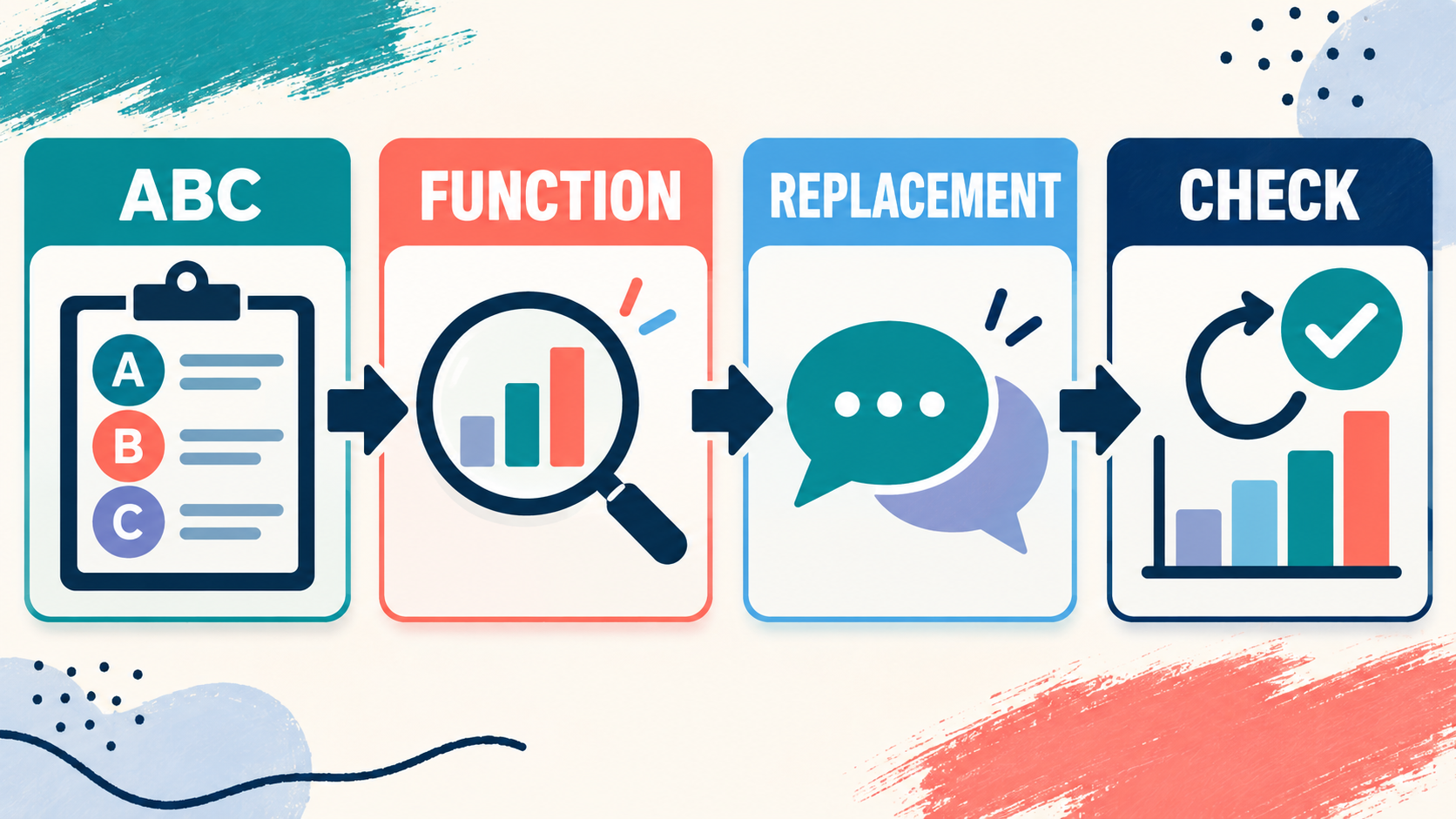
Assessment should begin with context, not with a punishment or a generic social-skills worksheet. A BCBA may review records, interview the learner and stakeholders, observe the interaction directly, and collect ABC or other descriptive data. The peer-reviewed study on functional analysis of inappropriate social interactions illustrates why a specific response and social condition matter: a behavior that looks similar on the surface may change when attention, conversation, escape, or another consequence changes.
Descriptive data do not automatically prove a function. They help the team form a hypothesis that can be evaluated safely and ethically. Ask whether the interaction reliably produces attention, access, escape, sensory input, control over a routine, or another outcome. Also look for setting events such as fatigue, pain, communication breakdown, crowding, unfamiliar people, or a sudden change in expectations.
| Assessment question | What to document | Possible next step |
|---|---|---|
| What exactly happened? | Observable words, movement, distance, contact, duration, and the stated boundary or context. | Rewrite the target and non-example so different observers can score it consistently. |
| What happened before? | Conversation cue, denied access, peer approach, task demand, transition, noise, waiting, or communication opportunity. | Adjust the antecedent, add an accessible communication response, or test the relevant social condition. |
| What changed afterward? | Attention, laughter, access, distance from the interaction, adult correction, delay, or activity termination. | Form a function hypothesis; do not assume the topography tells you the function. |
| What would help instead? | A response the learner can use to access the same outcome more safely, clearly, or independently. | Teach, prompt, and reinforce the replacement while making it efficient and socially meaningful. |
How Do You Teach a Function-Matched Alternative?
A replacement response is not simply the opposite of the target. It should produce a similar useful outcome with less risk or interference. If the target obtains attention, teach a clear attention request, a greeting, a tap on an agreed signal, or another response the learner and communication partners can use. If the target escapes a conversation, teach a break, “finished,” “not now,” or a topic-change response. If the target obtains an item, teach requesting, waiting, negotiating, or choosing an available option.
- Make the response accessible: use the learner’s communication mode, including speech, AAC, gesture, writing, visual support, or another reliable system.
- Teach before the crisis: practice when the learner is regulated and the relevant outcome is available, rather than waiting for the target interaction to escalate.
- Prompt only as needed: use the least intrusive prompt that helps the learner contact the outcome, then fade it so the response becomes independent.
- Reinforce the function: deliver the relevant attention, break, access, information, or social boundary when the replacement occurs, subject to safety and the individualized plan.
- Practice with variation: teach across partners, settings, materials, and conversation topics while respecting the learner’s right to pause or decline.
Safety still matters. A replacement plan should state how adults respond to immediate risk, protect physical boundaries, and involve the supervising BCBA. The environment and communication partners may need to change too.
How Do Assent, Autonomy, and Social Validity Matter?
Social interaction goals can easily become adult-centered. A learner may not want eye contact, small talk, physical contact, or a particular form of greeting. The BACB Ethics Code makes client welfare, individualized practice, and assent when applicable relevant considerations. A plan should identify how the learner communicates “no,” “stop,” “break,” “not that,” or “help,” and should not make those signals less effective.
Social validity asks whether the goal is important, whether the procedures are acceptable, and whether the outcome is meaningful in the learner’s life. Ask the learner when possible, not only the adults observing the behavior. Ask whether the plan improves access to preferred relationships, communication, safety, learning, or independence. If the only benefit is that adults find the behavior more comfortable, the team should reconsider the target or its wording.
For an adjacent exam topic, the site’s guide to treatment integrity and social validity explains why acceptability and meaningful outcomes matter alongside procedural fidelity. A socially valid plan may teach boundary-respecting interaction while also teaching peers and staff to respond consistently and respectfully.
How Do You Measure Progress and Generalization?
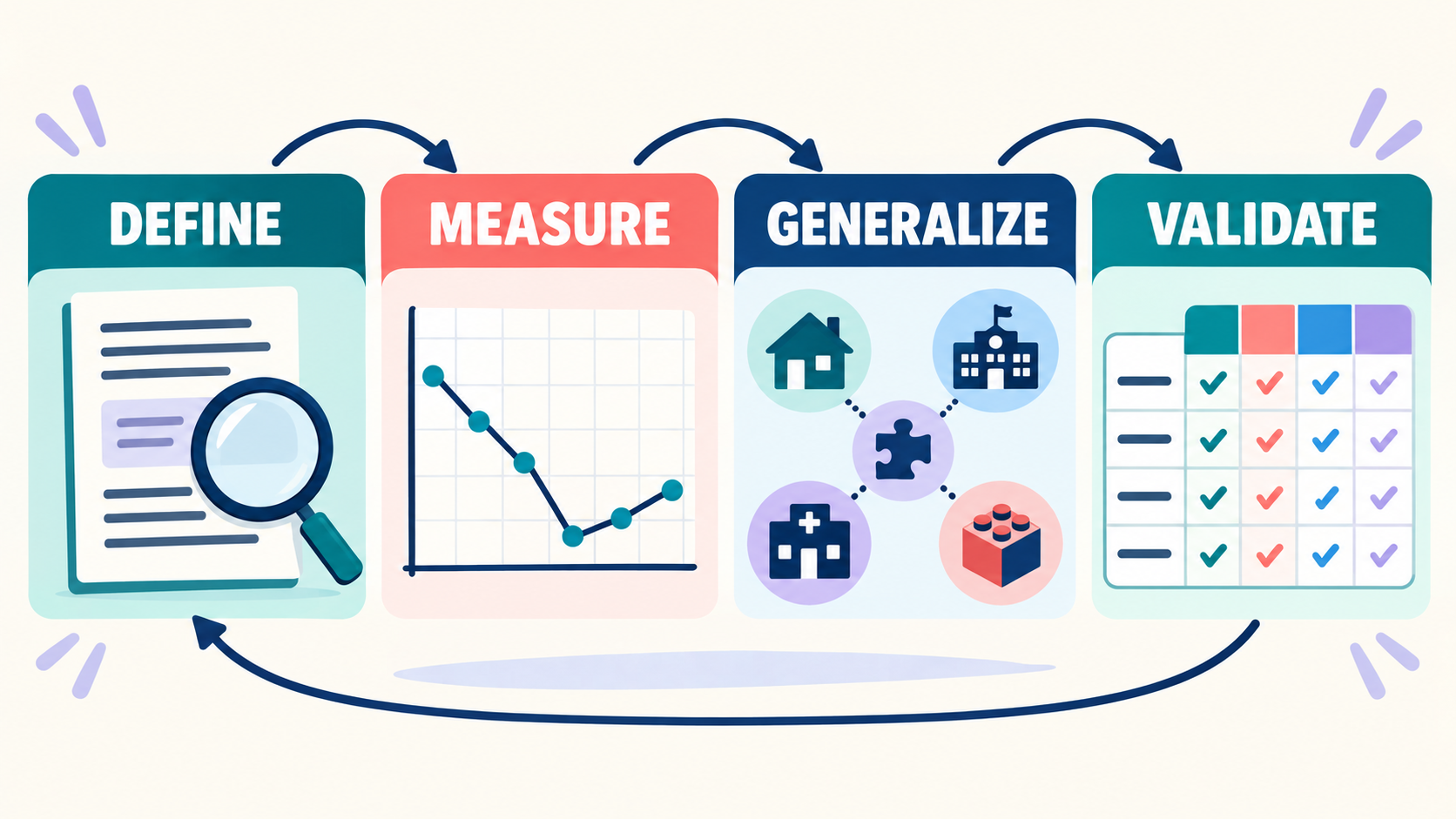
Choose a measurement system that matches the target. Frequency or rate may fit repeated interruptions or contacts. Duration may fit an extended interaction. Latency may fit the time from a social cue to a response. Percentage of opportunities may fit requesting, waiting, stopping, or responding to a partner. Partial-interval or whole-interval measures can be useful in some contexts, but the team should understand how the system may overestimate or underestimate behavior.
Track the replacement response as well as the target. A lower rate of an interaction is not enough if the learner is simply losing access, becoming quieter, or receiving more restrictive prompts. Review independent communication, successful boundary responses, choice, participation, distress, and prompt level. A meaningful data summary might show that uninvited contact fell from 6 to 2 events per session while independent “stop” and “space” requests rose from 1 to 8 opportunities across two settings.
Generalization should be planned, not assumed. Test the skill with the relevant partners and in the real settings where the outcome matters. Vary one dimension at a time when possible and preserve the same communication access. If the skill appears only with one therapist, the team may need to change the teaching arrangement rather than concluding that the learner has mastered it.
- Target data: frequency, duration, latency, or opportunity-based performance.
- Replacement data: independent communication, successful boundary responses, and prompt level.
- Context data: partner, setting, materials, schedule, and relevant environmental changes.
What Mistakes Should Teams Avoid?
- Using the label as the data: “inappropriate” is not a frequency, duration, latency, or opportunity-based measure.
- Assuming intent: a behavior may look attention-seeking, rude, or oppositional while serving escape, communication, sensory, or access functions.
- Targeting harmless difference: eye contact, quietness, movement, direct language, or a preferred topic is not automatically a problem.
- Teaching compliance without a replacement: suppressing a response without providing an effective way to request, stop, pause, or negotiate can reduce communication.
- Reinforcing the adult’s preference only: social validity should include the learner’s priorities and actual benefit.
- Ignoring the environment: peers, staff, noise, crowding, unclear rules, and inconsistent consequences may all affect the interaction.
- Measuring only reduction: track functional communication, independence, safety, participation, and prompt fading as well.
What Are the BCBA Exam Clues?
On a BCBA-style question, “inappropriate social interaction” is usually a signal to look for operational definition, functional assessment, replacement behavior, social validity, or ethical intervention selection. The strongest answer will identify observable behavior and relevant context before choosing a procedure. It will match the replacement to the maintaining outcome and avoid assuming that a generic social-skills script works for every learner.
Watch for distractors that recommend punishment before assessment, force eye contact, remove all social access, or define the learner with a personality label. Also watch for a replacement that does not produce the same function. For scenario practice, the free BCBA mock exam is an independent study aid, not an official BACB product and not a substitute for supervision or an individualized assessment.
Inappropriate Social Interaction ABA FAQ
What is an inappropriate social interaction in ABA? It is not one universal behavior. The phrase may refer to a specific interaction that creates a meaningful safety, consent, access, communication, or participation problem. The team must define the observable response and context before collecting data.
Is eye contact an appropriate ABA goal? Eye contact is not automatically required. A goal should be tied to a meaningful communication or participation outcome, respect the learner’s sensory and cultural context, and avoid treating an adult’s preferred appearance as the only measure of social success.
How do you find the function of a social interaction? Collect descriptive information about what occurs before and after the behavior, interview relevant stakeholders, observe across contexts, and use an ethical functional assessment when appropriate. Do not infer function from the topography alone.
What is a replacement behavior for an inappropriate interaction? It depends on the function. Examples include requesting attention, asking for space, using a break response, requesting an item, waiting, changing the topic, or stopping after a boundary signal. The replacement must be accessible and effective for the learner.
How do you know the plan is socially valid? Ask whether the goal matters to the learner and stakeholders, whether the procedures are acceptable, whether the outcome improves meaningful life participation, and whether the learner’s communication and assent are protected. Measure benefit, not just adult comfort.
Sources and Date Check
This article was reviewed on September 30, 2026 against the BACB Ethics Code, the peer-reviewed functional-analysis study of inappropriate social interactions, and a peer-reviewed treatment-selection review. Examples are educational illustrations; a qualified BCBA should adapt assessment and teaching to the learner, setting, communication system, risk, and stakeholder priorities.
Take the Free BCBA Mock Exam
If you want a low-pressure way to check your recall, use the free practice resource below. Take the Free BCBA Mock Exam



