
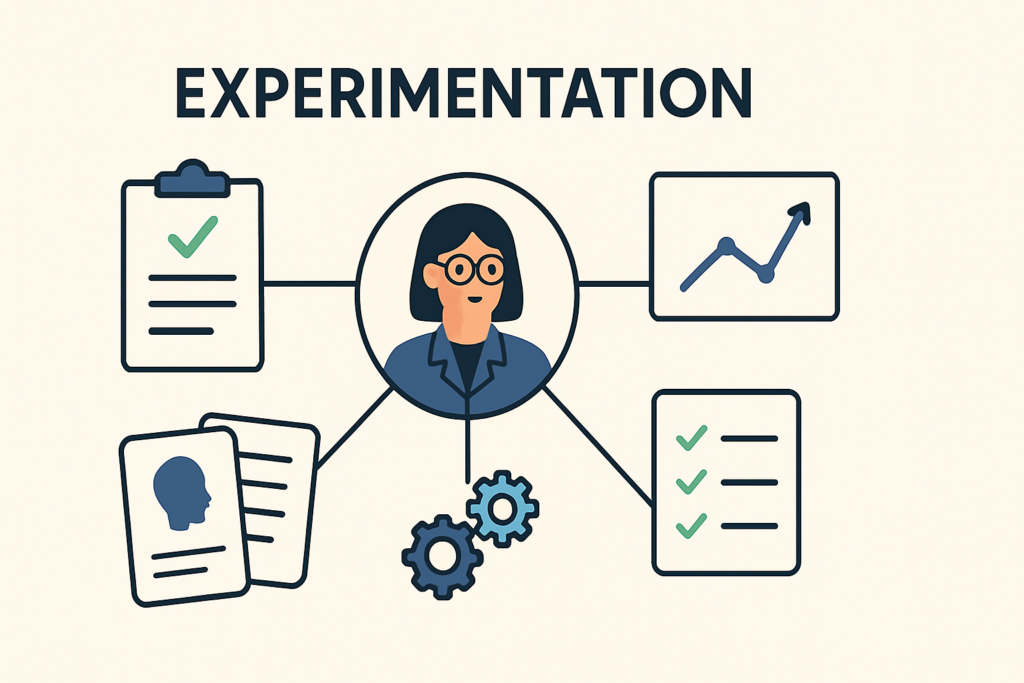
Understanding experimentation in ABA is fundamental for both effective practice and BCBA exam success. This concept moves beyond simple observation to establish causal relationships between variables. In applied behavior analysis, experimentation refers to systematically manipulating environmental conditions to demonstrate functional control over behavior.
Table of Contents
- Experimentation in ABA: What Does Experimentation Mean in Applied Behavior Analysis?
- Experimentation in Practice: Worked ABA Examples
- Experimentation on the BCBA Exam: What to Expect
- Quick-Reference Checklist for Mastery
- Summary: From Definition to Application
Experimentation in ABA: What Does Experimentation Mean in Applied Behavior Analysis?
Experimentation represents the scientific backbone of behavior analysis. Unlike casual observation, true experimentation involves deliberate manipulation of variables to establish functional relationships. This approach aligns with the scientific method and forms the basis for evidence-based interventions.
The Hallmark of Experimentation: Demonstrating Control
The defining feature of experimentation is demonstrating experimental control. This means showing that changes in the dependent variable (behavior) occur systematically when you manipulate the independent variable (intervention). Descriptive assessments can identify correlations, but only experimentation can establish causation.
Key Components of an Experimental Analysis
Every experimental analysis in ABA includes several essential components:
- Independent Variable (IV): The intervention or condition being manipulated
- Dependent Variable (DV): The target behavior being measured
- Control Conditions: Baseline or comparison phases to establish a reference point
- Replication: Repeating the manipulation to demonstrate reliability
- Measurement System: Objective, reliable data collection procedures
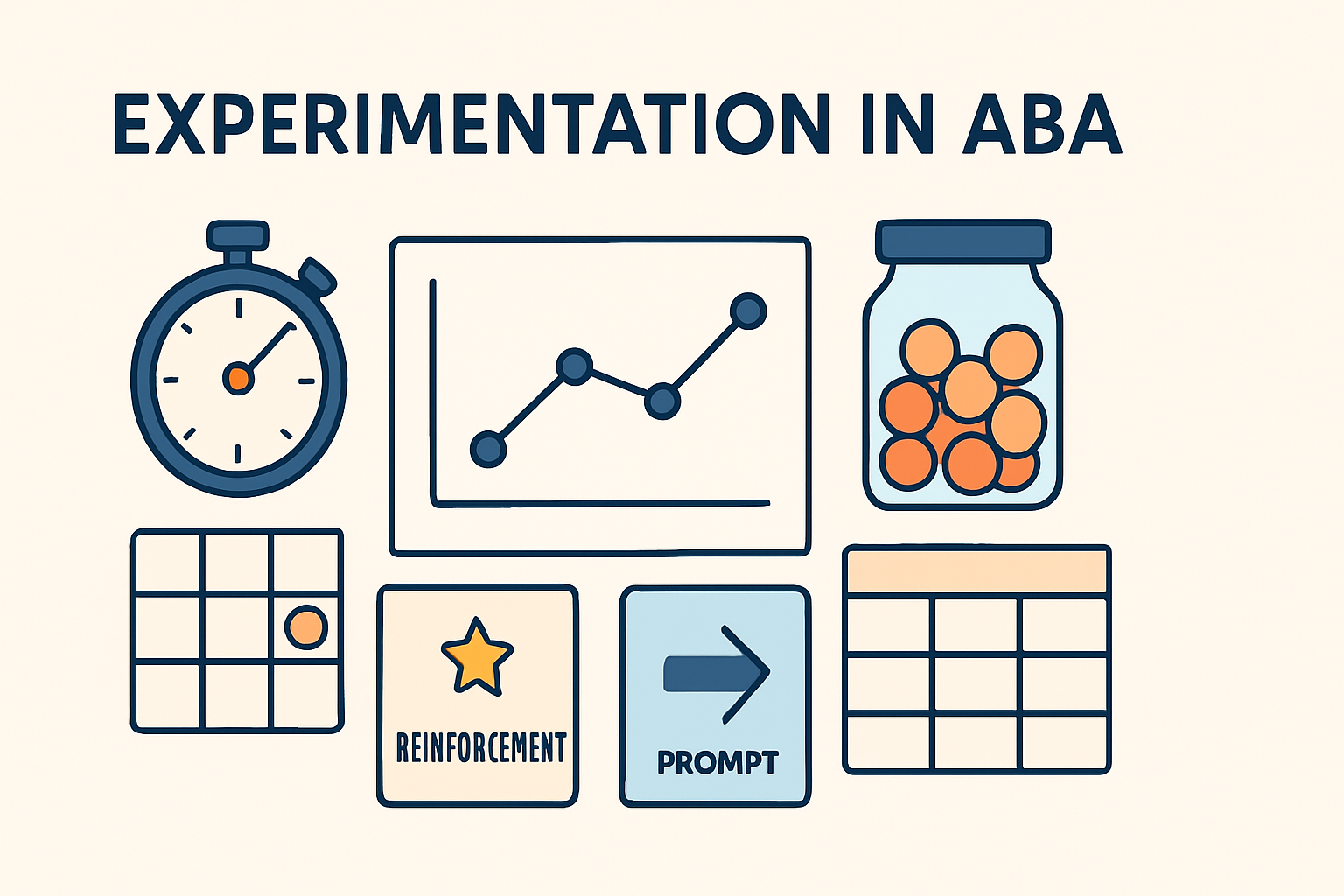
Video Study: Experimental Design
Watch: BCBA® Section D Explained | 6th ed. Experimental Design & Single-Case Logic
Watch this lesson before the design examples below so you can connect the research logic to the graphs and exam scenarios.
Prefer a second pass? Open this lesson on YouTube.
Experimentation in Practice: Worked ABA Examples
Translating theoretical concepts into practical applications helps solidify understanding. These examples demonstrate how experimentation works in real-world behavior analysis scenarios.
Example 1: Testing a Tangible Function for Elopement
A BCBA suspects that a child’s elopement behavior is maintained by access to preferred toys. To test this hypothesis experimentally:
- IV manipulation: Alternating between conditions where toys are freely available versus restricted
- DV measurement: Frequency of elopement attempts per session
- Experimental design: Using an alternating treatments design to compare conditions
- Control demonstration: Showing elopement decreases when toys are available, increases when restricted
Example 2: Evaluating a Visual Schedule on Transition Compliance
To determine if a visual schedule affects transition compliance:
- IV: Presence versus absence of the visual schedule
- DV: Latency to complete transitions (measured in seconds)
- Design: Reversal design (A-B-A-B) to demonstrate control
- Data pattern: Lower latency with schedule present, higher latency when removed, then improved again when reintroduced
Experimentation on the BCBA Exam: What to Expect
The BCBA exam frequently tests your understanding of experimental concepts. Questions may present scenarios requiring identification of experimental components or evaluation of research designs.
Common Exam Traps and Misconceptions
Several common pitfalls can trip up exam candidates:
- Confusing correlation with causation: Assuming relationship means control
- Mistaking observation for experimentation: Descriptive data doesn’t equal experimental control
- Incorrect IV/DV identification: Reversing which variable is manipulated versus measured
- Overlooking replication: Failing to recognize the need for repeated demonstrations
- Missing control conditions: Not identifying baseline or comparison phases
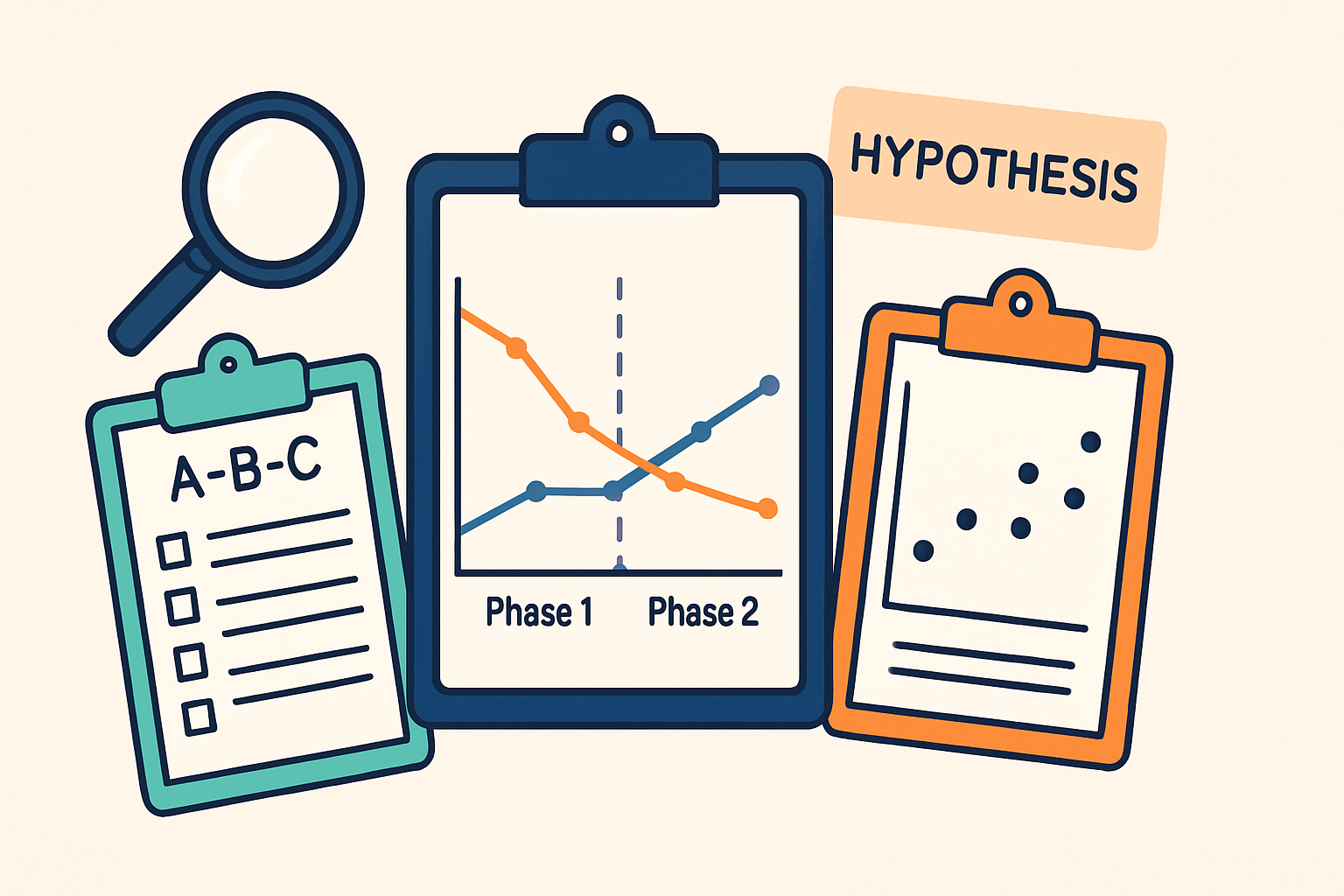
Sample Practice Prompts
Test your understanding with these exam-style questions:
1. A BCBA implements a token economy and collects data on task completion. When she removes the tokens, task completion decreases. When she reintroduces them, completion increases again. What experimental component does this demonstrate?
2. In a functional analysis, the therapist alternates between attention and alone conditions while measuring self-injurious behavior. What is the independent variable in this experimental arrangement?
Quick-Reference Checklist for Mastery
Use this checklist to assess your understanding of experimentation concepts:
- ✓ Can define experimentation in ABA terms
- ✓ Can distinguish between independent and dependent variables
- ✓ Can identify experimental control in data patterns
- ✓ Can differentiate experimentation from descriptive assessment
- ✓ Can recognize common single-subject designs
- ✓ Can explain the role of replication in experimentation
- ✓ Can identify control conditions in experimental arrangements
Summary: From Definition to Application
Mastering the concept of experimentation transforms how you approach behavior analysis. This understanding enables you to design effective interventions, evaluate outcomes scientifically, and contribute to the evidence base of our field. Remember that true experimentation requires more than observation—it demands systematic manipulation to establish functional relationships.
For further study of related concepts, explore our guide to independent and dependent variables or learn more about the seven dimensions of ABA. The BACB Test Content Outline provides additional guidance on experimental concepts tested on the exam.
Next step for BCBA exam prep
Turn this topic into exam-day practice
Use this topic as a focused review, then test it in exam-style conditions with a free mock before deciding whether five full-length mocks are the right next step.
Start the Free BCBA Mock Exam
Continue with Five Full-Length Mocks — $99
Review the included materials and access details before ordering. No pass guarantee is implied.



