
What Is an Extinction Burst in ABA?
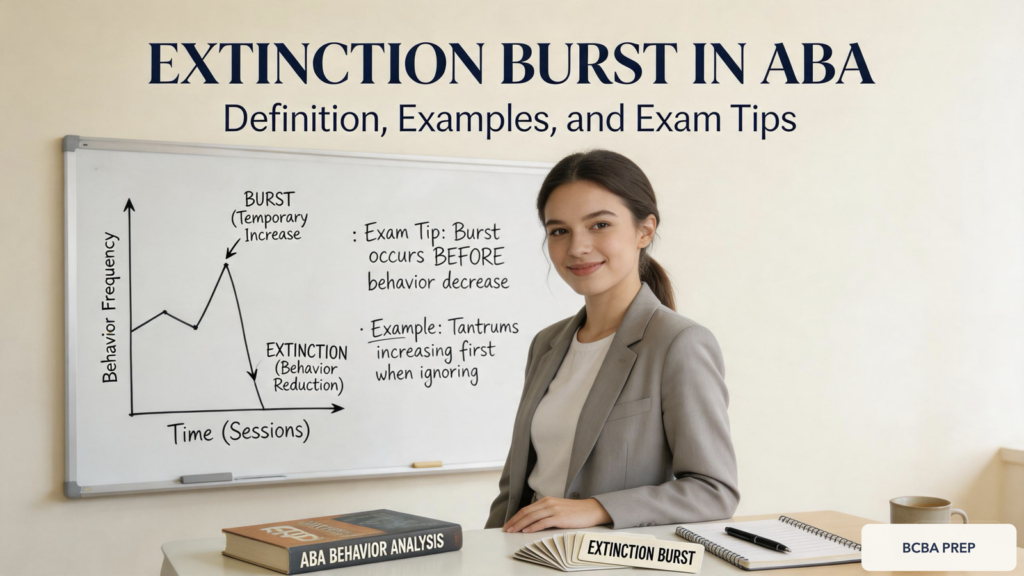
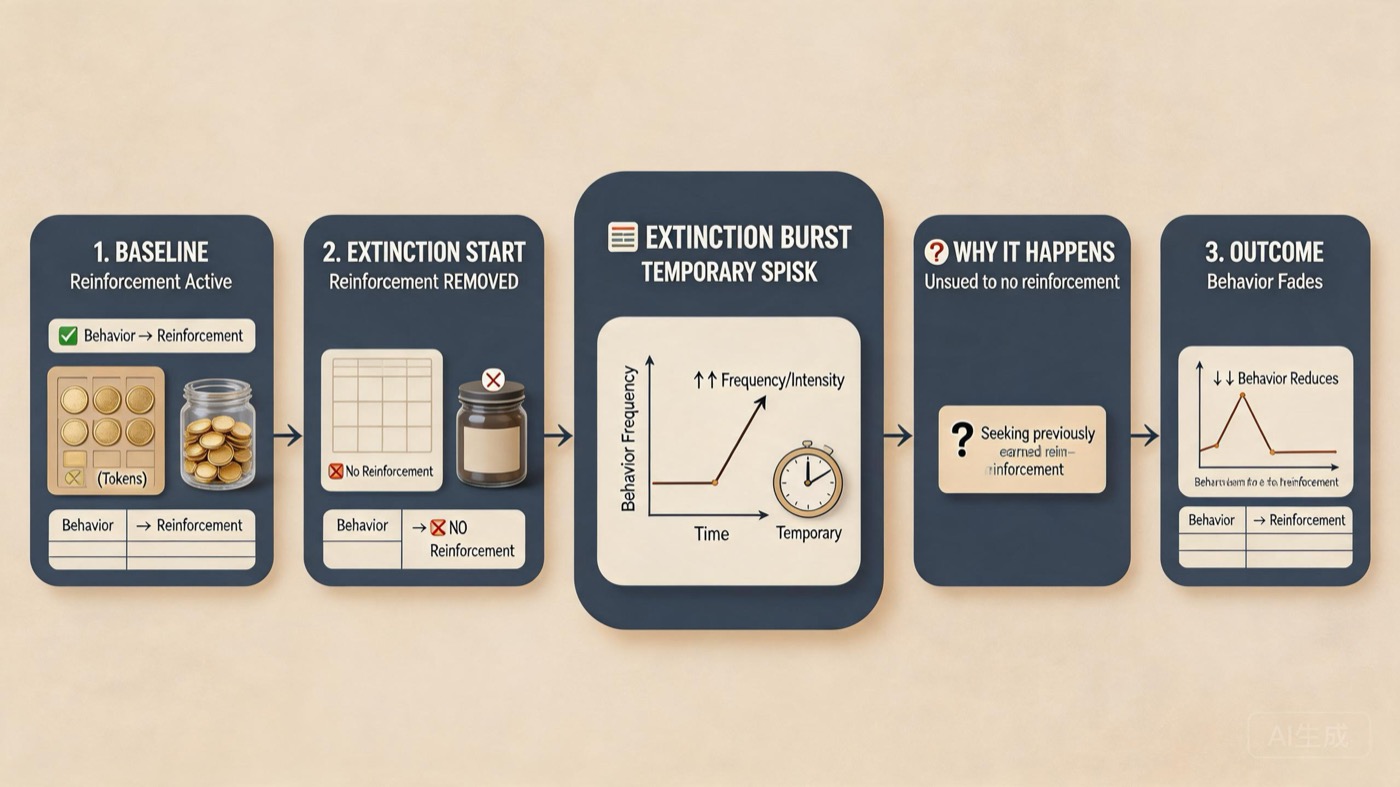
An extinction burst is a temporary increase in the frequency, duration, or intensity of a behavior when reinforcement is first removed. This phenomenon occurs because the individual is not yet accustomed to the absence of reinforcement and may escalate efforts to obtain it. In applied behavior analysis, understanding extinction bursts is crucial for designing effective behavior intervention plans. When implementing an extinction procedure, the targeted behavior often gets worse before it gets better. Recognizing this pattern helps practitioners maintain treatment integrity and avoid inadvertently reinforcing more intense behaviors.
Table of Contents
- What Is an Extinction Burst in ABA?
- Real-Life Extinction Burst Examples for the BCBA Exam
- Exam Relevance of Extinction Bursts
- Quick Checklist: Handling an Extinction Burst
- Key Takeaways and Final Exam Tips
- References
An extinction burst is not a sign that the intervention is failing; rather, it is a predictable and often expected phase of the extinction process. For BCBA candidates, understanding this concept is essential for correctly interpreting behavior change and making data-based decisions. Without this knowledge, practitioners might mistakenly conclude that extinction is ineffective and revert to reinforcement, inadvertently strengthening the very behavior they aim to reduce.
Extinction Burst vs. Other Behavioral Phenomena
An extinction burst is often confused with other behavioral processes. Here are key distinctions:
- Spontaneous recovery: The reappearance of a previously extinguished behavior after a break, not an immediate increase at the start of extinction.
- Resurgence: The reappearance of a previously reinforced behavior when a current behavior is placed on extinction, not the escalation of the same behavior.
- Behavioral momentum: Refers to the tendency to maintain behavior under high reinforcement rates, not a temporary increase during extinction.
During an extinction burst, the behavior increases in frequency, duration, or intensity, but this is short-lived if extinction is consistently applied. On the BCBA exam, you may be asked to differentiate between these terms in a multiple-choice scenario. For example, a question might describe a child who stops tantruming after extinction but later has a brief tantrum after returning from a weekend break. The correct answer is spontaneous recovery, not an extinction burst.
Real-Life Extinction Burst Examples for the BCBA Exam
The BCBA exam often presents scenarios where you must identify an extinction burst and predict future behavior. Below are three ABC examples with hypothesized functions, plus an additional example to deepen your understanding.
Example 1: Refusing Bedtime (Escape Extinction)
ABC: Antecedent: Parent says ‘Time for bed.’ Behavior: Child cries, hits, and says ‘No.’ Consequence: Parent previously allowed child to stay up to stop crying. Intervention: Planned ignoring (extinction). Burst: Child cries louder, leaves room, and attempts to negotiate. Function: Escape from bed. The burst occurs because the child previously escaped the demand by crying; when that stops working, the child tries harder. The parent must remain consistent—if they give in to the louder cries, they will reinforce the burst and make future bedtimes even more challenging.
Example 2: Requesting a Snack (Attention Extinction)
ABC: Antecedent: Child says ‘I want a snack.’ Behavior: Repeating ‘snack’ while tugging parent’s sleeve. Consequence: Parent gives attention by talking or offering alternatives. Intervention: No attention for snack requests (extinction). Burst: Child yells, screams, or whines more loudly. Function: Attention. During the burst, it is critical not to inadvertently reinforce the more intense form of the behavior. A common mistake is to turn and say, “Stop screaming!” which provides the very attention that maintains the behavior. Instead, the parent should continue ignoring the behavior and only provide attention when the child asks appropriately.
Example 3: Aggression During Turn-Taking (Tangible Extinction)
ABC: Antecedent: Peer has a preferred toy. Behavior: Child hits peer and grabs toy. Consequence: Peer drops toy, child gets it. Intervention: Block access without attention (extinction). Burst: Aggression increases in frequency or intensity. Function: Access to tangible. The behavior analyst should teach a replacement behavior (e.g., asking nicely) during the extinction burst to accelerate progress. In this case, the child may hit harder or try to bite. Staff must be trained to block the behavior safely while withholding access to the toy. If safety is a concern, the environment can be rearranged (e.g., placing the toy out of reach) until the burst subsides.
Example 4: Loud Complaints in a Classroom (Automatic Extinction)
ABC: Antecedent: Student is given an independent worksheet. Behavior: Student loudly says “This is too hard!” and slams pencil. Consequence: Teacher previously provided help or reassurance. Intervention: No reaction to complaints (extinction). Burst: Student begins to shout, throw items, or seek peer attention. Function: Escape from task. The burst may include new topographies like profanity or destruction. The teacher must continue to withhold attention and wait for a calm request for help. This example illustrates how an extinction burst can involve novel behaviors (e.g., throwing) that are not part of the original behavior. Practitioners should plan for these possibilities during the functional behavior assessment.
Exam Relevance of Extinction Bursts
On the BCBA exam, extinction bursts are tested in the context of differential reinforcement, schedules of reinforcement, and functional communication training. Common traps include confusing an extinction burst with spontaneous recovery or assuming the behavior will never decrease. You must know that an extinction burst is a temporary spike that requires consistent treatment integrity. For more on differential reinforcement, see our guide on differential reinforcement in ABA.
Another exam trap: When asked how to respond to an extinction burst, the correct answer is to maintain extinction and reinforce alternative behaviors (e.g., through DRA). Never reinforce the burst, as this would strengthen the behavior on an intermittent schedule, making it harder to extinguish. A less common question might ask about the typical duration of an extinction burst. While it varies, the burst generally lasts from a few hours to a few days depending on the behavior and history of reinforcement. If the burst persists for longer than expected, it may indicate that extinction is not being implemented correctly or that the reinforcer is not actually being withheld.
Quick Checklist: Handling an Extinction Burst
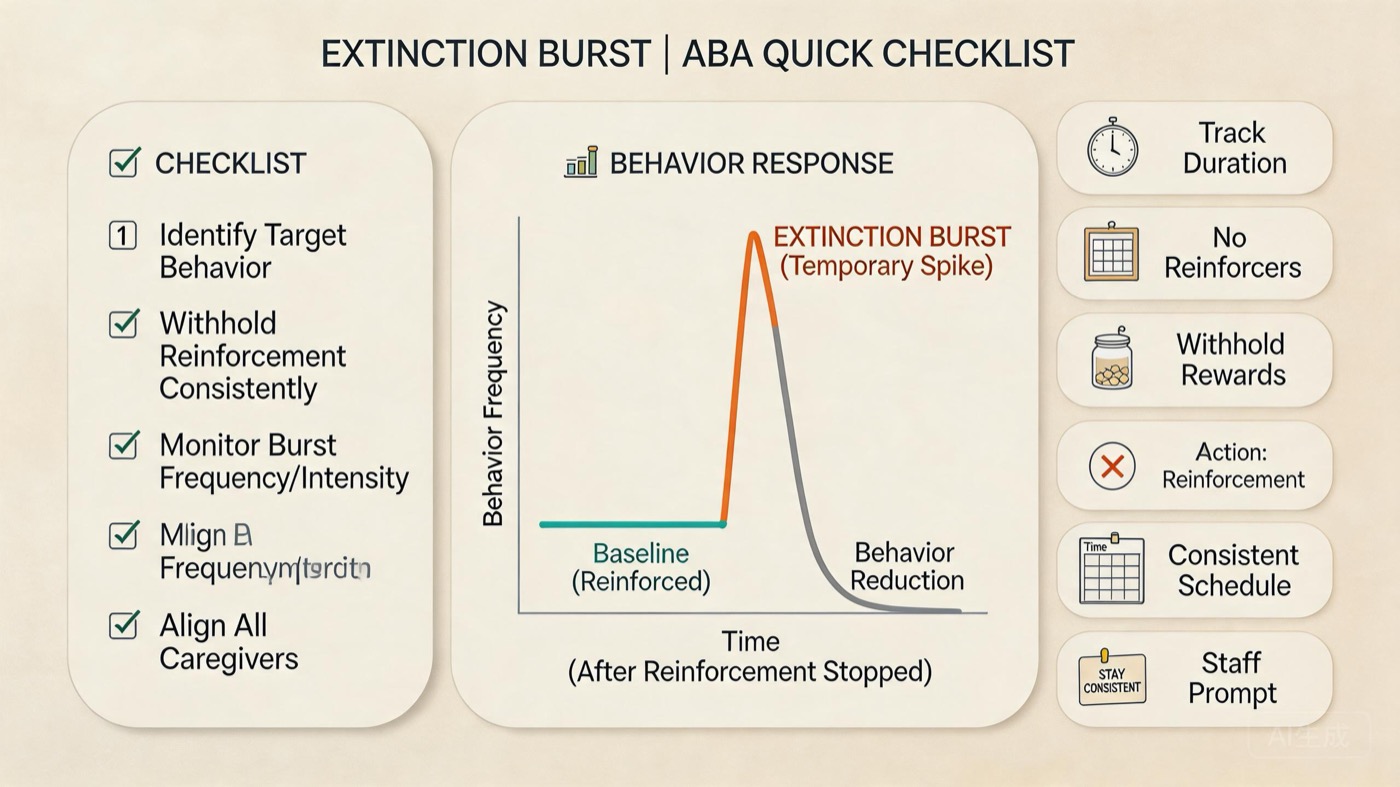
Follow these steps to prepare for and manage extinction bursts in practice:
- Conduct a functional behavior assessment to identify the function of the behavior before starting extinction.
- Ensure the environment is safe; plan for increased intensity or aggression if necessary.
- Train all staff and caregivers on the extinction procedure and the expected burst.
- Implement differential reinforcement of an appropriate alternative behavior (e.g., FCT).
- Monitor data closely; if the burst does not subside, reassess the function or fidelity of extinction.
- Never provide reinforcement for the burst; maintaining consistency is key.
- Review the schedule of reinforcement history: behaviors reinforced on a variable ratio schedule tend to have more robust bursts and require longer extinction duration.
Key Takeaways and Final Exam Tips
An extinction burst is a predictable, temporary increase in behavior when reinforcement is withdrawn. Remember: the burst is short-lived if extinction is applied consistently. On the BCBA exam, you will need to identify extinction bursts in scenarios and choose the best response: maintain extinction and reinforce an alternative behavior. Practice with mock exam questions to solidify your understanding. For a deeper dive into extinction procedures, read our article on extinction in ABA.
Finally, always remember that an extinction burst is a positive sign that the intervention is working—the behavior is resisting loss of reinforcement. With patience and fidelity, the behavior will decrease. The key is to keep your eyes on the data and your commitment to the plan.


