
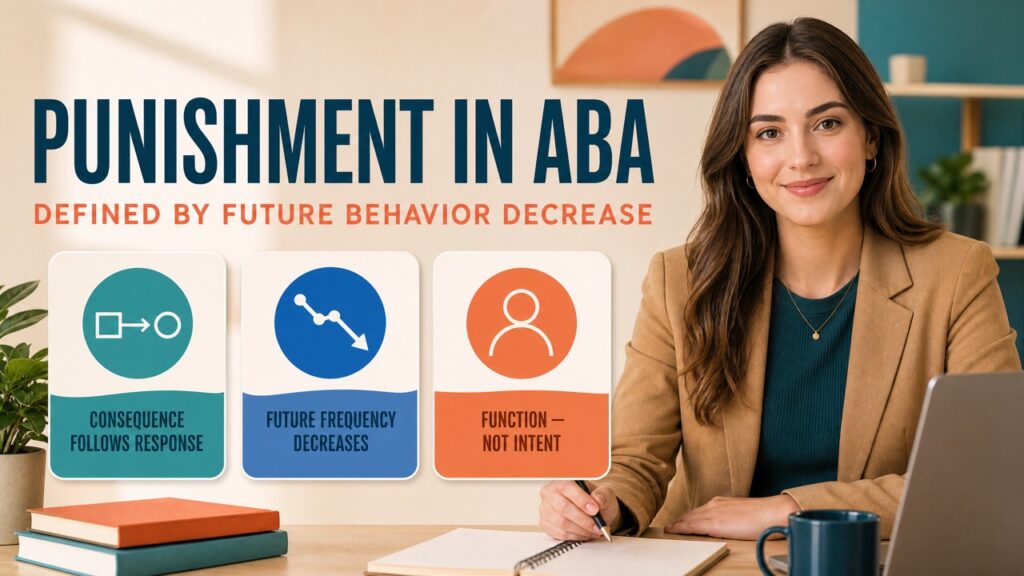
Understanding DRL in Applied Behavior Analysis
When you first encounter differential reinforcement of low rates (DRL), it’s natural to wonder whether it functions as punishment. After all, the goal is to reduce behavior. But in applied behavior analysis, the distinction between reinforcement and punishment hinges on the mechanism, not just the outcome. In this article, we’ll break down DRL, answer the question directly, and equip you with the conceptual clarity needed for the BCBA exam.
Table of Contents
- Understanding DRL in Applied Behavior Analysis
- The Core Definition of DRL
- Is DRL Punishment? The Conceptual Answer
- How DRL Works: Step-by-Step
- Practical Examples of DRL
- Why This Matters for the BCBA Exam
- Quick Checklist: DRL vs. Punishment
- Summary and Final Thoughts
- Take the Free BCBA Mock Exam
- References
DRL is one of several differential reinforcement procedures used to decrease behavior. Unlike procedures that target elimination, DRL aims to reduce the rate of behavior to a socially acceptable level while still allowing the behavior to occur. This distinction is critical because it influences how you design interventions and interpret data.
The Core Definition of DRL
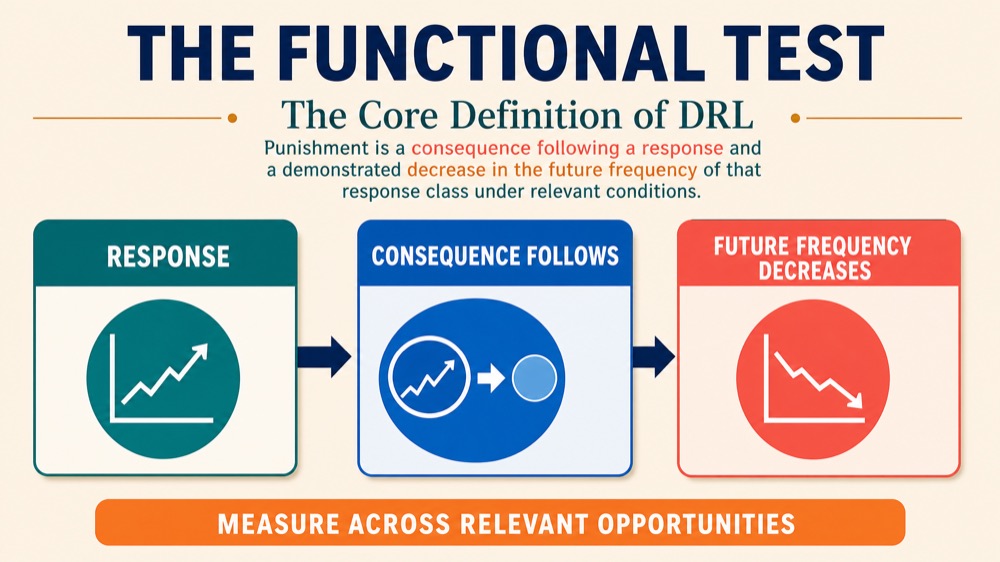
DRL is a schedule of reinforcement in which reinforcement is delivered only when the target behavior occurs at a rate lower than or equal to a predetermined criterion. In simpler terms, you reinforce fewer instances of the behavior within a specified time period. For example, if a student raises their hand 20 times per hour, you might set a DRL criterion of no more than 10 raises per hour. When the student meets that criterion, they earn reinforcement. Key components of DRL include:
- Reinforcement: A consequence that increases the future probability of the behavior it follows. In DRL, reinforcement is contingent on the low rate.
- Behavior: The specific response targeted for reduction, defined objectively and measurably.
- Criterion: The maximum allowable number of responses (or the minimum inter-response interval) within a specified time period.
- Contingency: The rule that specifies when reinforcement will be delivered based on the behavior rate.
DRL differs from other differential reinforcement procedures like DRA, DRI, or DRO. While DRA reinforces an alternative behavior, DRI reinforces an incompatible behavior, and DRO reinforces the absence of the target behavior, DRL uniquely reinforces the target behavior itself—but only when it occurs at a lower rate. This nuance is a frequent source of confusion and a common exam trap.
Is DRL Punishment? The Conceptual Answer
The direct answer is no, DRL is not punishment. Punishment is defined as a stimulus change that follows a behavior and decreases the future frequency of that behavior. In punishment, an aversive consequence is delivered (positive punishment) or a reinforcing consequence is removed (negative punishment). DRL, in contrast, uses reinforcement—not an aversive stimulus—to achieve a lower rate of behavior.
To understand why, consider the mechanism. In DRL, the target behavior still results in a reinforcing consequence, but only when it occurs at a sufficiently low rate. The learner is not being punished for the behavior; rather, they are being rewarded for restraint. This is a fundamental distinction: punishment suppresses behavior through aversive control, while DRL strengthens the contingency between low-rate responding and reinforcement. Let’s compare:
- Punishment: A consequence that decreases behavior (e.g., reprimand, loss of tokens). It operates on the principle of aversive control.
- DRL: A consequence that reinforces low-rate behavior (e.g., praise, access to a preferred item). It operates on the principle of positive reinforcement.
Another way to see it: DRL is a reinforcement-based intervention for behavior reduction, not a punishment procedure. The BCBA exam often tests this distinction by presenting scenarios where a behavior is reduced but the consequence is reinforcing. If you see reinforcement being delivered, the procedure cannot be punishment.
How DRL Works: Step-by-Step
Implementing DRL requires careful planning and data collection. Here are the practical steps: Step 1: Define the behavior and measure baseline. Collect data on the current rate of the behavior to establish a baseline. This is essential for setting an achievable criterion.
Step 2: Set the initial criterion. The criterion should be slightly lower than the baseline rate, but not so low that the behavior rarely occurs. For example, if the baseline is 15 interruptions per class, set the criterion at 12. As the learner succeeds, gradually adjust the criterion downward.
Step 3: Deliver reinforcement for meeting the criterion. Reinforcement should be delivered immediately after the time period ends, if the behavior occurred at or below the criterion. Ensure the reinforcer is potent and consistently applied.
Step 4: Monitor and adjust. Track data daily. If the learner consistently meets the criterion, lower it incrementally. If they are not meeting it, raise it temporarily or reconsider the reinforcer. DRL requires ongoing data-based decisions.
Practical Examples of DRL
Let’s bring DRL to life with three practical examples. These illustrate how DRL can be applied across different settings and functions. Example 1: Reducing Tardiness in a Classroom: Antecedent: The bell rings to signal the start of class.
Behavior: The student walks into the classroom after the bell rings (tardiness).
Consequence: The teacher provides praise and a sticker when the student is tardy no more than two times per week. The hypothesized function is likely attention from the teacher, as the student often receives a verbal prompt upon arrival. In this DRL, the student’s tardiness is not eliminated; it is allowed but limited. The teacher reinforces a lower rate of tardiness, which is a more acceptable target than expecting zero tardiness immediately.
Example 2: Decreasing Interruptions in a Work Setting: Antecedent: A colleague is engaged in a conversation with another team member.
Behavior: The employee interrupts the conversation to speak.
Consequence: The supervisor provides verbal acknowledgment when the employee interrupts no more than three times per shift. The function is likely attention from the supervisor and peers. Here, DRL allows the employee to still participate in conversations but discourages frequent interruptions. The supervisor’s acknowledgment reinforces the lower rate of interrupting.
Example 3: Lowering Snack Requests: Antecedent: The child is seated at home after school.
Behavior: The child asks for a snack repeatedly.
Consequence: The parent provides a snack when the child asks no more than four times per day. The function is access to a tangible item.
This DRL reduces the frequency of requests while still allowing the child to receive snacks. The parent might use a token system to track requests and deliver the snack when the daily criterion is met.
Why This Matters for the BCBA Exam
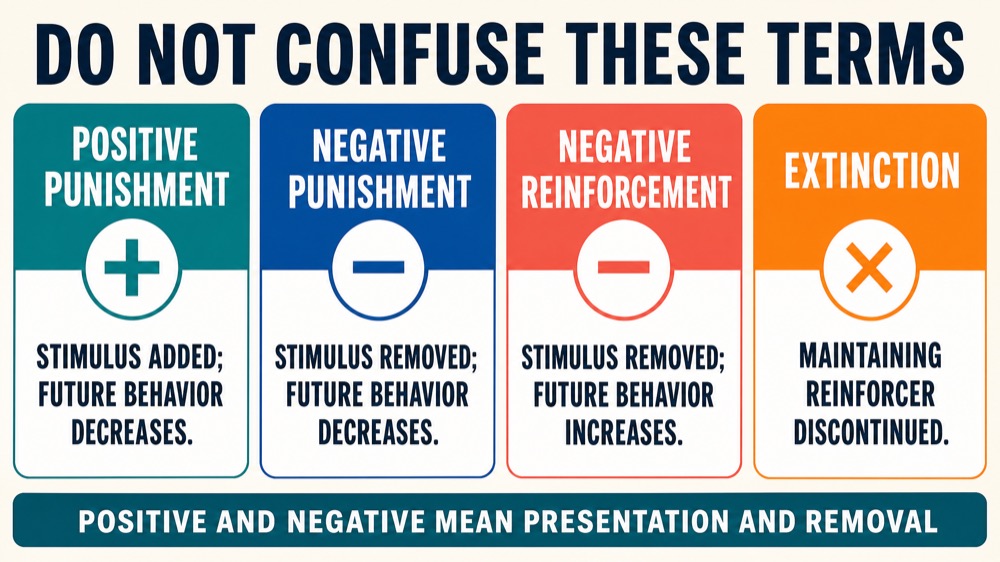
The BCBA exam frequently tests your ability to distinguish between reinforcement-based procedures and punishment. A common trap is seeing a decrease in behavior and immediately concluding it’s punishment. However, if the behavior decreases because of reinforcement contingent on a low rate, it’s DRL, not punishment.
- Confusing DRL with punishment: As discussed, DRL uses reinforcement, not aversive consequences.
- Confusing DRL with DRO: DRO reinforces the absence of the behavior for a period of time, while DRL reinforces a lower rate of the behavior itself.
- Ignoring the criterion: DRL requires a specific, measurable criterion. If the intervention simply withholds reinforcement for high rates, it might be extinction, not DRL.
- Misidentifying the schedule: DRL is a schedule of reinforcement, not a punishment procedure. Know the definitions cold.
When answering related questions, look for cues: Is reinforcement being delivered? Is the behavior reduced but not eliminated? Is there a specified time period and criterion? If yes to all, it’s likely DRL. Also, be aware that DRL can be implemented in two forms: full-session DRL and interval DRL. Full-session DRL delivers reinforcement after the entire session if the total number of responses is below criterion; interval DRL delivers reinforcement at the end of each interval if the number of responses within that interval is below criterion. Both are tested on the exam.
Quick Checklist: DRL vs. Punishment
Use this checklist to quickly differentiate DRL from punishment in exam scenarios:
- Mechanism: DRL uses reinforcement; punishment uses aversive consequences.
- Consequence: In DRL, the behavior still leads to a reinforcer; in punishment, it leads to an aversive stimulus or loss of a reinforcer.
- Goal: DRL aims to reduce rate, not eliminate; punishment aims to decrease or eliminate.
- Data: DRL requires a baseline and criterion; punishment does not require a criterion.
- Ethical consideration: DRL is generally preferred over punishment because it is reinforcement-based and less likely to produce side effects.
Summary and Final Thoughts
DRL is a powerful tool for reducing behavior without resorting to punishment. By reinforcing lower rates of a behavior, you can achieve meaningful change while maintaining a positive therapeutic relationship. For BCBA candidates, understanding the distinction between DRL and punishment is essential for both exam success and ethical practice.
Remember: if the consequence is reinforcing and the behavior is reduced but not eliminated, it’s not punishment—it’s DRL. For more insights on related concepts, check out our guide on DRA in ABA and negative punishment to deepen your understanding. We hope this breakdown helps you master DRL and approach the exam with confidence. Keep practicing with scenario-based questions, and you’ll be well-prepared.
Take the Free BCBA Mock Exam
Ready for more practice? Use the free mock exam to keep testing your accuracy with realistic BCBA-style items. Take the Free BCBA Mock Exam



