

Is ABA therapy only for autism? No—not as a general description of behavior analysis. Applied behavior analysis is an approach for understanding behavior and teaching meaningful skills, and practitioners may work on goals in more than one population or setting. Autism is the context most people see in public coverage and research, so the terms are often treated as if they are identical.
Table of Contents
- Is ABA Therapy Only for Autism?
- What Does ABA Actually Address?
- Why Is ABA So Closely Associated With Autism?
- Does Insurance Cover ABA Outside Autism?
- How Should a Family Evaluate a Proposed Plan?
- What Questions Should You Ask?
- ABA Therapy and Autism FAQ
- Key Takeaway
- Take the Free BCBA Mock Exam
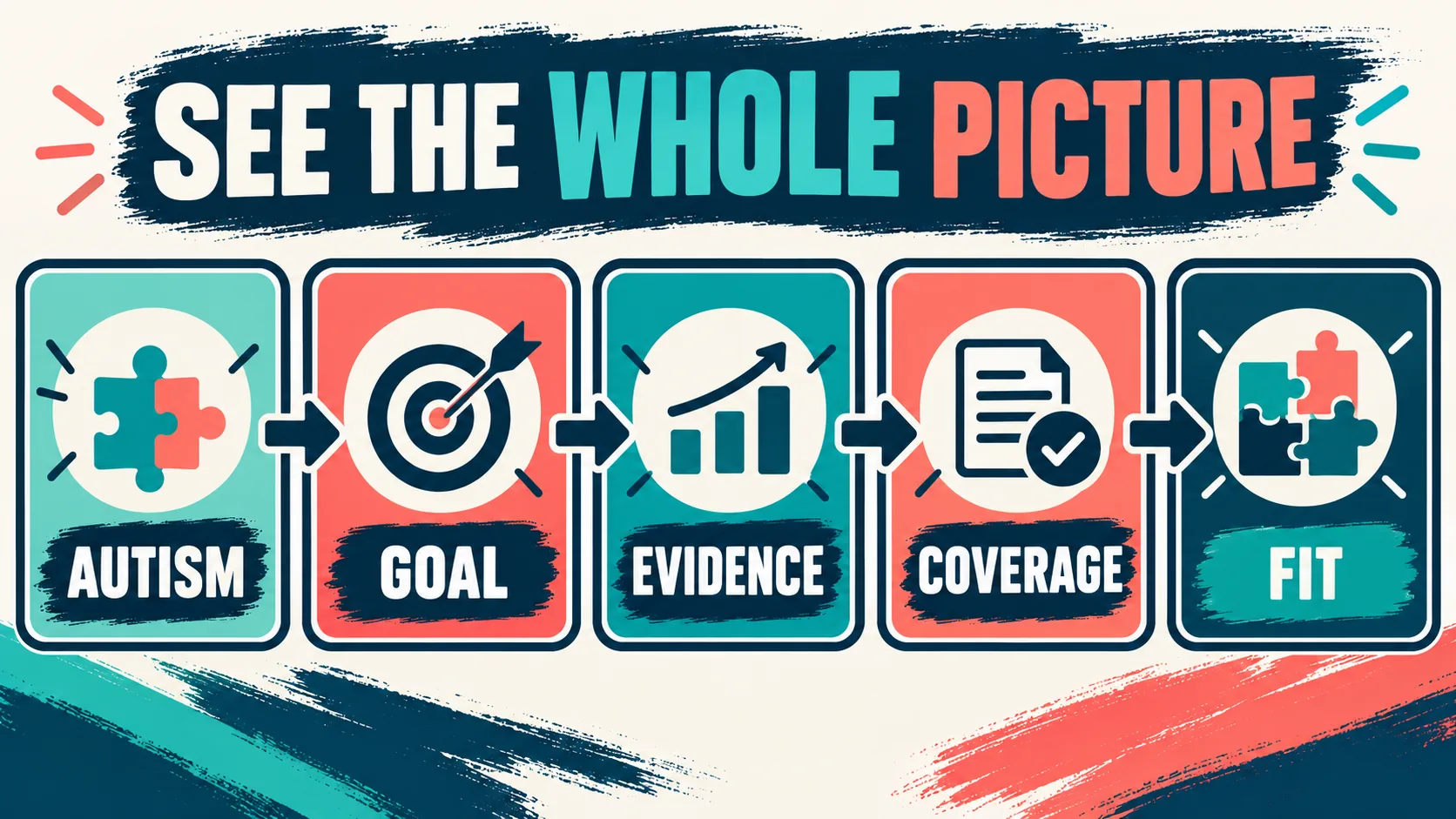
The careful answer has four parts: what the intervention is designed to change, who the client is, what evidence supports the specific goal, and what a payer will cover. A method can be clinically relevant outside autism while a particular insurance policy limits payment to autism-related services. Neither statement should be used as a universal promise.
Is ABA Therapy Only for Autism?
For the search question is ABA therapy only for autism, the direct answer is no, but a responsible recommendation depends on the individual and the goal. Behavior-analytic procedures can be used to teach communication, daily-living, learning, safety, organizational, and other observable skills. The person does not need to have autism for the underlying principles of behavior to be relevant.
That does not mean every ABA package is appropriate for every person. A qualified clinician should define the behavior or skill, measure it, explain why the selected procedure is likely to help, monitor effects, and adjust or stop the plan when it is not beneficial. Goals should be meaningful to the client, respectful of communication and autonomy, and sensitive to the person’s preferences and quality of life.
What Does ABA Actually Address?
ABA is not one single exercise or a universal autism program. It is a field that uses observation, measurement, environmental changes, teaching procedures, and analysis of outcomes. A plan may focus on increasing a useful skill, reducing a dangerous behavior, making a routine more accessible, or helping a person communicate a need. Before discussing a diagnosis, ask what the proposed service is meant to accomplish:
- Which specific skill or behavior is the client and team trying to change?
- How will the team measure progress and the client’s experience of the plan?
- How will the plan support communication, choice, dignity, and safety?
- What alternative explanations, environmental barriers, or medical concerns need attention?
- Who will implement the plan, who supervises it, and how will concerns be addressed?
These questions matter whether the client has autism, another developmental or behavioral diagnosis, a learning goal, or a specific safety need. A label alone should not substitute for an individualized assessment.
Why Is ABA So Closely Associated With Autism?
Autism is the most visible setting for ABA because families, schools, Medicaid programs, commercial insurers, and autism-service organizations have built substantial infrastructure around early intervention and behavioral support. The CDC’s autism treatment information describes a range of interventions and emphasizes that approaches should be discussed with qualified professionals.
The CMS Medicaid FAQ is an example of a federal program question centered on children with autism. It helps explain why families may encounter ABA in autism coverage, but it does not define every clinical application of behavior analysis or every state’s benefit.
Evidence is also not one undifferentiated category. A study or guideline about an autism intervention may not answer whether a particular procedure is effective for another population, goal, age, or setting. The American Academy of Pediatrics clinical report is a medical and developmental resource, not a universal authorization for a specific ABA plan.
Does Insurance Cover ABA Outside Autism?
Coverage is a separate question from clinical scope. A plan may cover ABA only for a defined diagnosis, age range, service setting, provider type, or medical-necessity pathway. Another plan may use broader behavioral-health benefits, while a state Medicaid program may have its own rules. A public policy page or a provider’s “we accept insurance” statement does not guarantee payment for a specific request.
| Question | What it tells you | Who to ask |
|---|---|---|
| Is the goal clinically appropriate? | Whether the proposed plan fits the person, skill, risk, and evidence. | Qualified clinician and the client/family |
| Is the service a covered benefit? | Whether the plan includes the category under its terms. | Member services and plan document |
| Is authorization required? | Whether review, codes, units, or documentation are required first. | Payer and provider authorization team |
| Is the provider eligible? | Whether credential, network, state, and setting rules are met. | Provider and payer |
Some policies explicitly limit non-autism indications. For example, an Aetna clinical policy bulletin is a payer document with its own medical-policy language. It should be read as a plan-policy source, not as a scientific definition of all possible behavior-analytic work. When checking coverage, keep these documents together:
- The plan’s benefit language or member handbook.
- The clinician’s assessment, treatment rationale, and requested service codes.
- Any prior-authorization decision, denial reason, or appeal deadline.
How Should a Family Evaluate a Proposed Plan?
Start with the person’s goals and preferences, not the name of a therapy. A strong discussion should make the plan understandable and measurable without reducing the client to a list of deficits. Look for these elements:
- A concrete description of the target skill, routine, communication need, or safety concern.
- A baseline and a reasonable way to track progress over time.
- Opportunities for the client to communicate refusal, preference, discomfort, or a need for change.
- Generalization to meaningful routines rather than performance only in a therapy room.
- A review plan that includes stopping, changing, or replacing procedures that are ineffective or harmful.
The BACB ethics-code resources can help families understand the importance of competent, individualized, and client-centered professional conduct. They do not tell a clinician what a specific person’s goals should be; that discussion belongs with the client, family, and qualified care team.
What Questions Should You Ask?
Before agreeing to services, ask:
- What specific outcome are we trying to improve, and why?
- How will the client’s preferences and communication be included?
- What will happen if the goal is not improving or the plan causes distress?
- Who supervises the service and how can the family raise a concern?
- What does the insurance plan cover, and what needs prior authorization?
- Which part of the plan is evidence-informed, and what is still uncertain?
For non-autism requests, also ask the payer whether the benefit is diagnosis-limited. If a claim is denied, request the reason in writing and distinguish a coverage exclusion from a clinical disagreement. That distinction determines whether the next step is a plan appeal, a revised clinical request, a second opinion, or a different service.
ABA Therapy and Autism FAQ
Can ABA be used for people who do not have autism?: Behavior-analytic methods can be relevant to goals outside autism, but the appropriateness and evidence depend on the specific person, target, procedure, setting, and clinician.
Why do many insurance plans connect ABA to autism?: Autism-specific laws, Medicaid guidance, employer benefits, and clinical infrastructure have made autism the most visible coverage context. Coverage language does not define every possible use of behavior analysis. Does a denial mean ABA is never appropriate?: No. A denial may reflect a plan exclusion, diagnosis rule, missing authorization, provider issue, or documentation problem. It is not automatically a scientific conclusion. Is every ABA program appropriate for every autistic person?: No. A plan should be individualized, respectful, measurable, and responsive to the person’s goals, preferences, communication, safety, and quality of life.
Key Takeaway
ABA therapy is not only for autism, but autism-related evidence and coverage rules explain why most public information centers on it. Separate behavior-analytic scope, the person’s clinical goals, the evidence for the specific plan, and the payer’s benefit rules. The right question is not only “what diagnosis does the person have?” but also “what meaningful outcome is being pursued, how will it be measured, and is the proposed service appropriate and covered?”
Take the Free BCBA Mock Exam
When you are ready to apply the idea, use the free practice resource below for additional feedback. Take the Free BCBA Mock Exam



