
Getting certified as a behavior analyst is a sequence of eligibility decisions, documentation checks, and examination steps—not just a course purchase. Start by choosing the credential that matches your education and career goal. If you are asking how to get certified as a behavior analyst, the short answer is: identify the right BACB credential, verify the current eligibility pathway, complete the required education and supervised experience, submit an accurate application, receive exam authorization, and then prepare for and pass the certification examination. The order matters. Practice questions are useful, but they do not replace a degree, coursework, fieldwork, documentation, or the BACB’s application review.
Table of Contents
- How to Get Certified as a Behavior Analyst: Start by Choosing the Credential
- Follow the BCBA Sequence
- Check the 2027 Transition Before You Enroll
- Build an Application-Ready Evidence File
- Use an Exam-Readiness Gate
- Avoid the Common Delays
- Build a 30-Day Action Plan
- FAQ About Behavior Analyst Certification
- Take the Free BCBA Mock Exam
How to Get Certified as a Behavior Analyst: Start by Choosing the Credential
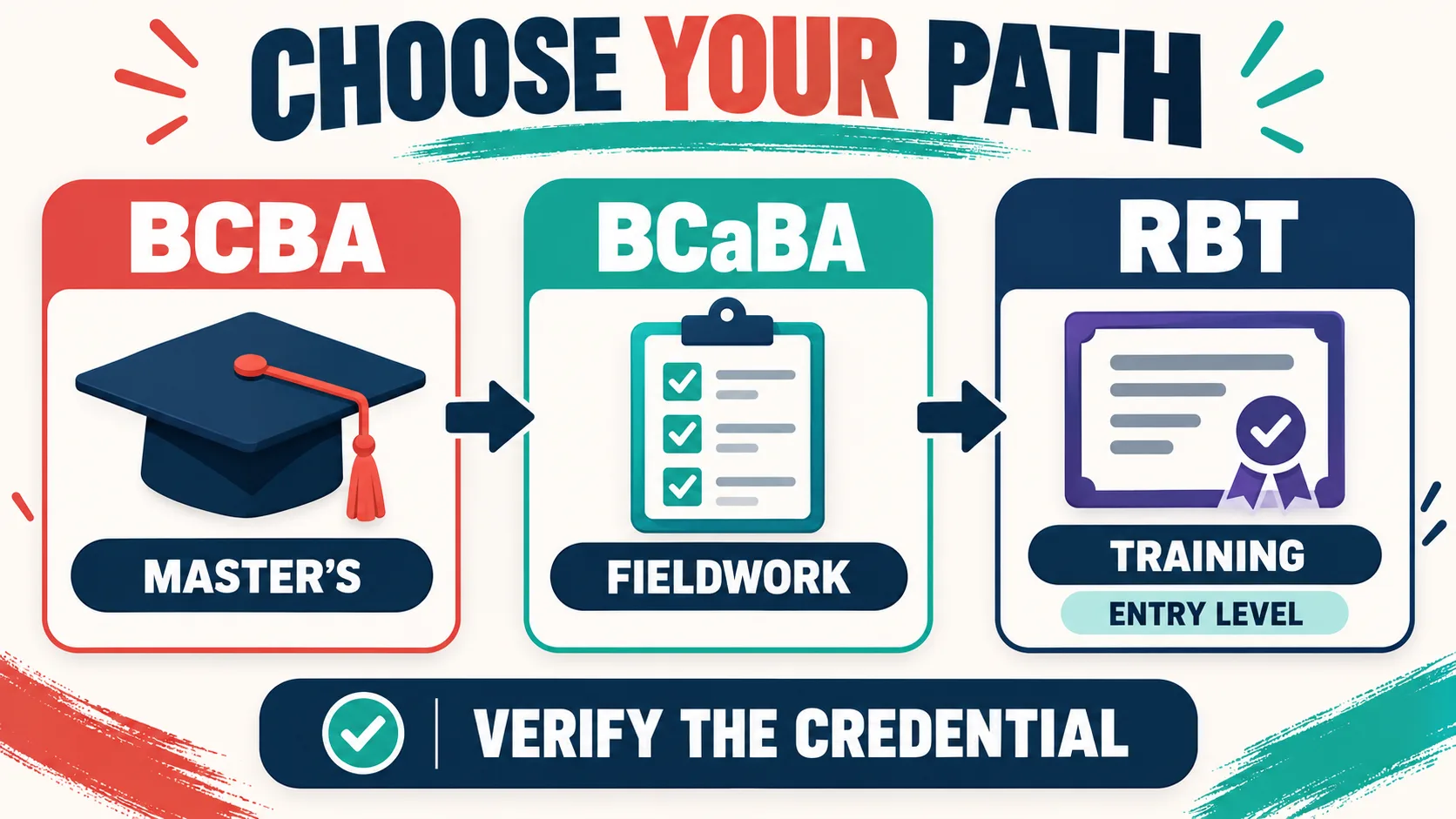
The phrase “behavior analyst certification” can refer to more than one BACB credential. The BACB identifies the BCBA as a graduate-level certification, while BCaBA and RBT are different certification levels with different scopes and preparation routes. Treating them as interchangeable can send you into the wrong degree program, the wrong fieldwork plan, or the wrong examination materials. Use this first-pass comparison to decide what you need to verify. It is a planning tool, not a substitute for the current handbook or a formal application decision.
| Credential | Best first question | Planning signal |
|---|---|---|
| BCBA | Am I planning for graduate-level, independent behavior-analytic practice? | Check the degree, coursework, supervised fieldwork, application, and BCBA exam sequence. |
| BCaBA | Do I need an assistant-level credential under the supervision of a qualified BCBA? | Use the BCaBA handbook and requirements; do not assume BCBA requirements apply unchanged. |
| RBT | Am I entering behavior-analytic services as a technician implementing a plan? | Check the RBT training, competency, background-check, supervision, and examination requirements. |
For most people searching this exact phrase, “certified behavior analyst” means the BCBA route. If that is your goal, move to the next step with a clear understanding that the credential is administered by the Behavior Analyst Certification Board and may also interact with state licensure or employer rules. A BACB certification and a state license are related but not identical questions.
Follow the BCBA Sequence
The safest way to plan a BCBA certification is to treat it as a sequence of gates. The BACB BCBA page and the current BCBA Handbook are the authority for the version that applies to your application. Your personal route can vary, but the planning logic is consistent:
- Confirm the degree route. Determine which degree and program-recognition or coursework pathway applies to your situation. Keep transcripts and program information available instead of relying on a school’s marketing summary.
- Confirm the behavior-analytic coursework. Match your coursework to the current BACB requirements and, when applicable, the required attestation process. A list of classes is not the same as an approved application record.
- Complete qualifying supervised fieldwork. Plan the experience with a qualified supervisor, use the correct forms, and keep dates, hours, activities, supervision contacts, and signatures consistent.
- Submit the certification application and required documents. The application is a review gate. Do not schedule the exam on the assumption that enrollment or fieldwork completion automatically equals authorization.
- Schedule and take the examination after authorization. Once you receive the relevant approval and scheduling instructions, use the current examination information and handbook to plan the test appointment, deadline, and preparation cycle.
This sequence also explains why “start studying immediately” is not always the best first move. If your degree, coursework, or fieldwork evidence is incomplete, more mock exams will not repair the eligibility gap. Study can begin early, but your first planning action should be an eligibility audit.
Check the 2027 Transition Before You Enroll
The BACB has published a specific 2027 BCBA Requirements document because important eligibility and maintenance changes take effect on January 1, 2027. The exact effect depends on your application timing, education history, fieldwork record, and the applicable transition language. Do not turn a general article into a personal eligibility determination.
Use the transition document as a checkpoint before you commit to a program or assume that a previous plan will remain valid. In broad terms, 2027 planning makes program recognition, coursework alignment, and pathway choice more important. It also means that two candidates with similar degrees may need different documentation depending on when and where the degree or coursework was completed.
| Planning checkpoint | What to verify | Why it matters |
|---|---|---|
| Before enrollment | Program status, degree level, coursework plan, and expected completion date. | The cheapest time to find a pathway mismatch is before tuition and fieldwork decisions. |
| During coursework | Whether the institution can provide the current documentation or attestation required for your route. | Course titles alone may not establish that an application requirement is met. |
| Before application | Current handbook, forms, fieldwork verification, transcripts, fees, and submission instructions. | A current application record matters more than an old checklist or forum answer. |
| Before exam prep | Whether you have exam authorization or a realistic authorization timeline. | Your study schedule should match the examination window and the current content outline. |
Build an Application-Ready Evidence File
An application-ready file is more than a folder of PDFs. It is a cross-checked record that allows you to explain where each requirement is met, who can verify it, and which version of the form or rule you used. Build it while you progress rather than trying to reconstruct it after a supervisor or registrar is difficult to reach.
- Education: keep the degree name, institution, dates, transcript request process, and program-status evidence together.
- Coursework: map each required content area to the course or attestation that supports it, and flag anything that needs confirmation.
- Fieldwork: maintain monthly or final verification records, supervisor details, dates, hours, activities, and signatures in one consistent log.
- Identity and application: use the same legal name and contact information across the portal, transcript request, forms, and exam appointment.
- Transition notes: save the date you checked the handbook and 2027 requirements so you know when a rule needs to be revalidated.
The BACB notes that it cannot determine whether a particular individual meets a requirement outside its formal review. That is a useful boundary: an advisor, school, supervisor, or article can help you organize questions, but the official application process is where your evidence receives its formal determination.
Use an Exam-Readiness Gate
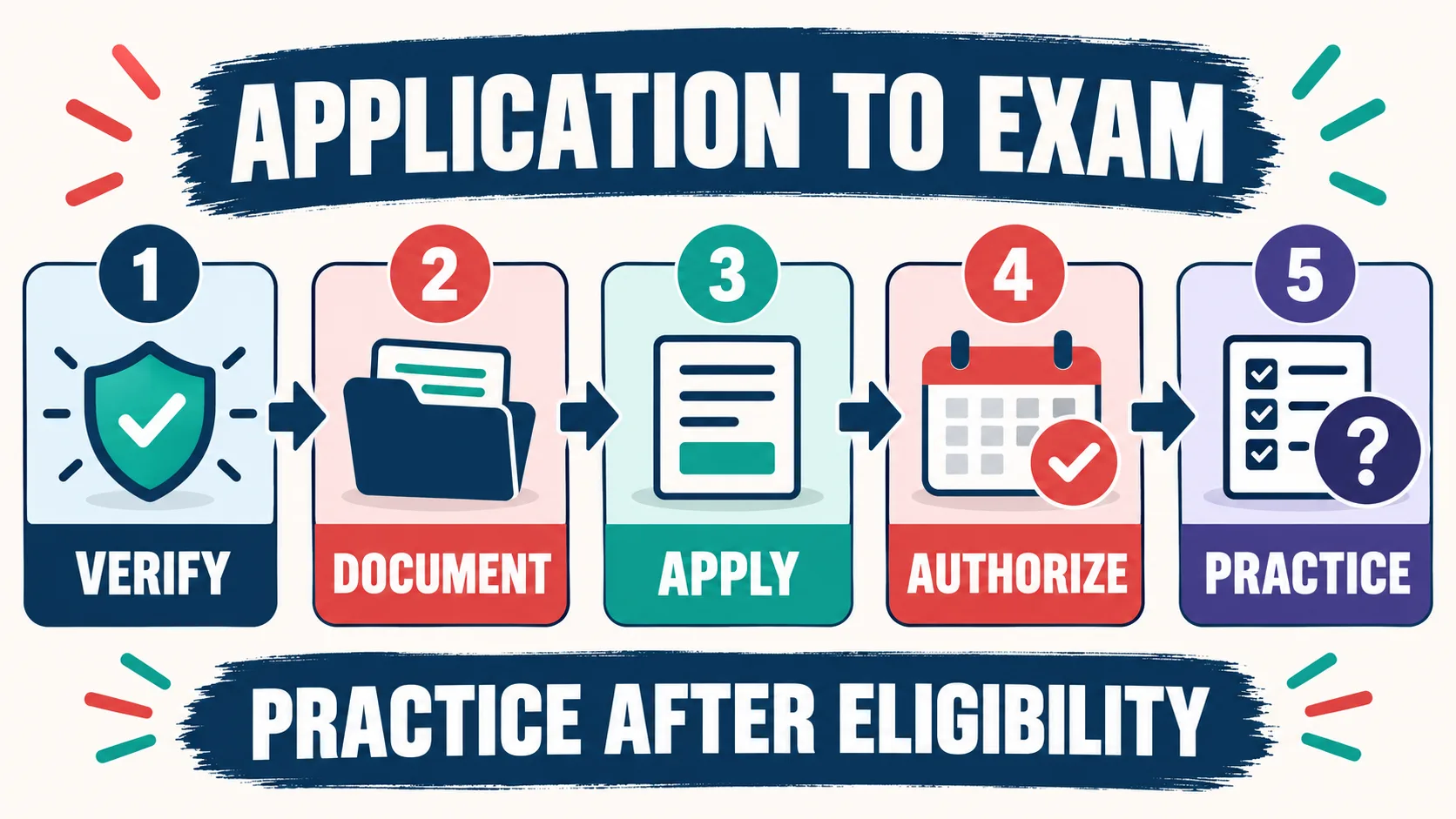
Exam preparation should become the next major action when three conditions line up: your eligibility evidence is substantially complete, you understand the current exam content outline, and you have a realistic authorization or appointment timeline. If one of those is missing, keep working on the missing gate while using light review to build familiarity. The BACB examination information page explains the official examination sequence and links to the relevant handbook materials. Your study plan should then move from retrieval to application:
- Map: divide the current content outline into domains and identify the domains that need the most attention.
- Retrieve: answer focused questions without looking at notes first.
- Explain: state why the correct answer fits and why the distractors fail.
- Apply: practice with scenarios that change the target, measurement, ethics issue, or supervision context.
- Audit: track accuracy by domain and error type rather than relying on one overall percentage.
When your eligibility and authorization gates are in place, a targeted BCBA mock exam can show whether you are applying concepts under time pressure. Use the result as a diagnostic: review the explanation, classify the mistake, and return to the relevant domain. A practice score is evidence about your preparation, not proof of certification eligibility.
Avoid the Common Delays
Most avoidable delays come from treating a planning assumption as an official determination. Watch for these patterns:
- Choosing a program by title alone: a program that sounds like behavior analysis still needs to be evaluated against the current route and documentation requirements.
- Mixing certification and licensure: a BACB credential does not automatically answer every state’s practice or licensure question.
- Using old forms: transition years make the document version and effective date important.
- Counting hours without checking the rule: a total number is not enough if the activities, supervision, or verification do not meet the applicable requirements.
- Taking an exam before the application gate is clear: preparation should support an authorized examination plan, not replace the eligibility process.
When you find uncertainty, write a specific question and attach the relevant official page or form. “Am I eligible?” is hard to act on. “Which pathway and attestation apply to this degree, completion date, and coursework record?” is a better question for a program contact, supervisor, or BACB support channel.
Build a 30-Day Action Plan
If you are at the beginning of the process, use the next month to reduce uncertainty before spending more time or money. The goal is not to finish every requirement in 30 days; it is to know what the next correct requirement is.
| Days | Action | Deliverable |
|---|---|---|
| 1–7 | Choose BCBA, BCaBA, or RBT and read the current official handbook or credential page. | One-page pathway decision with unanswered questions. |
| 8–14 | Check degree, coursework, program contact, supervisor, and 2027 transition implications. | Evidence map with owners and dates. |
| 15–21 | Organize fieldwork records, transcript steps, forms, and application questions. | Application-readiness checklist. |
| 22–30 | If the eligibility gate is clear, start domain-based exam practice; otherwise resolve the highest-risk gap. | A dated next step and a measurable study or documentation target. |
FAQ About Behavior Analyst Certification
How long does it take to get certified as a behavior analyst?: There is no single timeline for every candidate. The time depends on the degree and coursework route, supervised fieldwork, application review, examination scheduling, and any state or employer requirements. Build your timeline from the official requirements that apply to your route rather than copying a generic number from a career article.
Can I become a BCBA without a master’s degree?: Do not assume that a short course or bachelor’s degree satisfies BCBA eligibility. The current BACB materials describe graduate-level BCBA certification pathways and the documentation associated with them. Review the current handbook and 2027 requirements for your specific education history.
Is a BCBA certification the same as a state license?: No. The BACB credential and state licensure are separate systems. A state may have its own rules about who can practice, use a title, bill, or provide services. Check the state authority and employer requirements in addition to BACB requirements.
When should I start using BCBA practice exams?: Begin light content review when it helps you learn, but use full practice exams strategically after you understand your eligibility path and have a realistic examination window. That lets your scores answer a useful question: which exam skills and content domains need work before the appointment?
Sources checked for this guide include the BACB BCBA page, the current BCBA Handbook, the official 2027 BCBA Requirements document, BACB examination information, university-training guidance, and BACB consumer resources. Requirements can change; always confirm the current official materials for your application.
Take the Free BCBA Mock Exam
When you are ready to apply the idea, use the free practice resource below for additional feedback. Take the Free BCBA Mock Exam



