
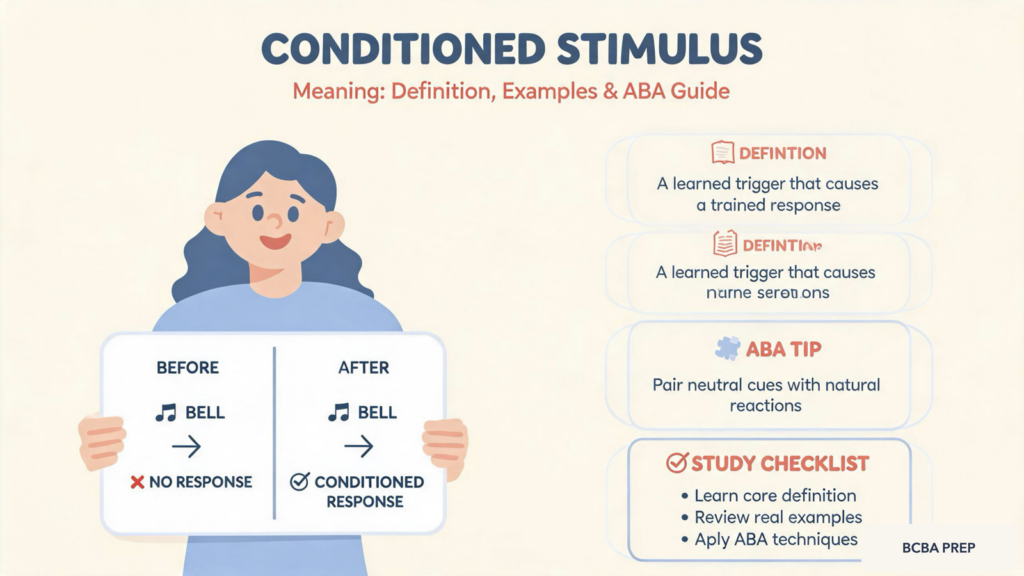
What Is a Conditioned Stimulus?
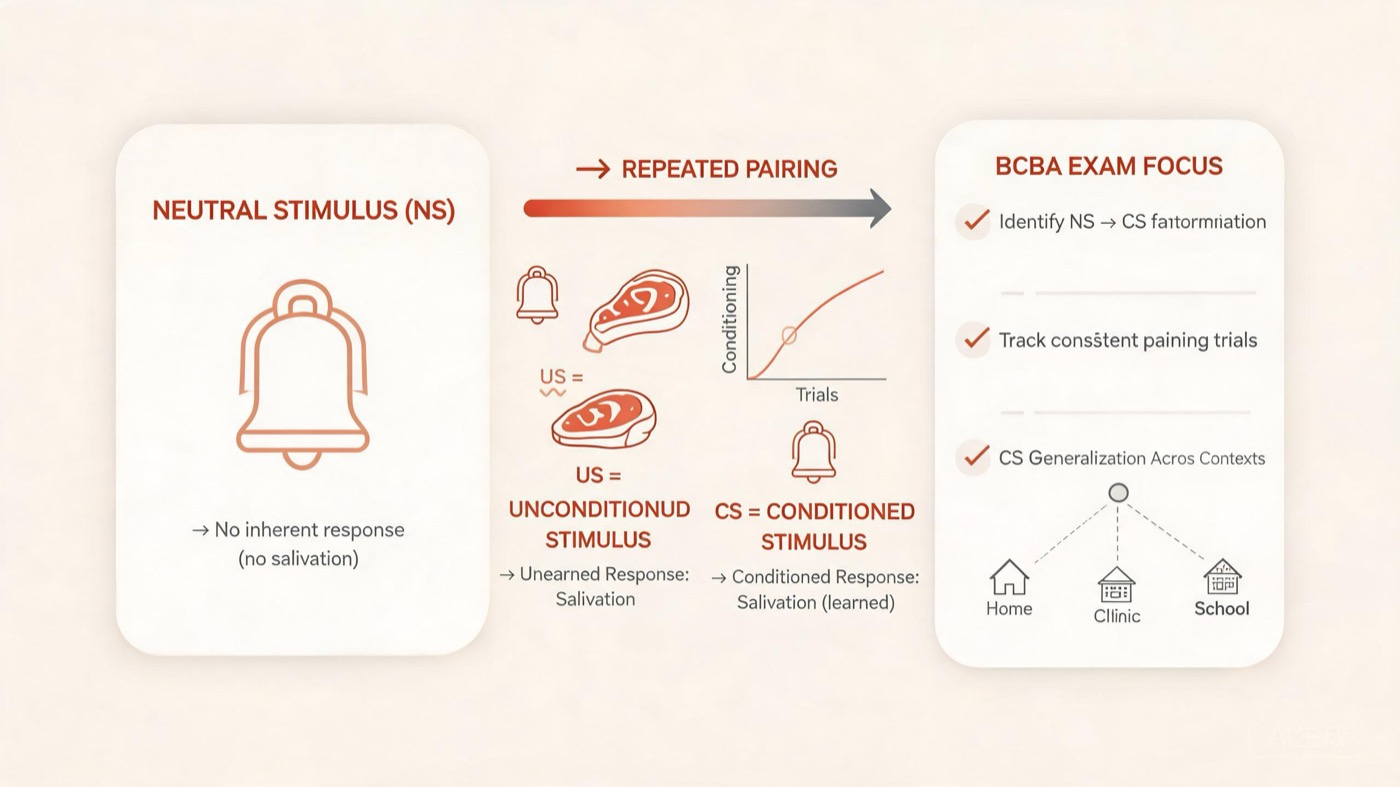
In applied behavior analysis, understanding the conditioned stimulus meaning is essential for mastering respondent conditioning. A conditioned stimulus (CS) is a previously neutral stimulus that, after repeated pairing with an unconditioned stimulus (US), elicits a learned response. For example, a bell (neutral) paired with food (US) eventually triggers salivation (conditioned response).
Table of Contents
- What Is a Conditioned Stimulus?
- How Conditioned Stimuli Develop: The Acquisition Process
- ABA Examples of Conditioned Stimuli in Practice
- Why the Conditioned Stimulus Matters for Your BCBA Exam
- Summary
- References
Conditioned Stimulus vs. Unconditioned Stimulus vs. Neutral Stimulus
To fully grasp the conditioned stimulus meaning, it helps to compare it with related terms:
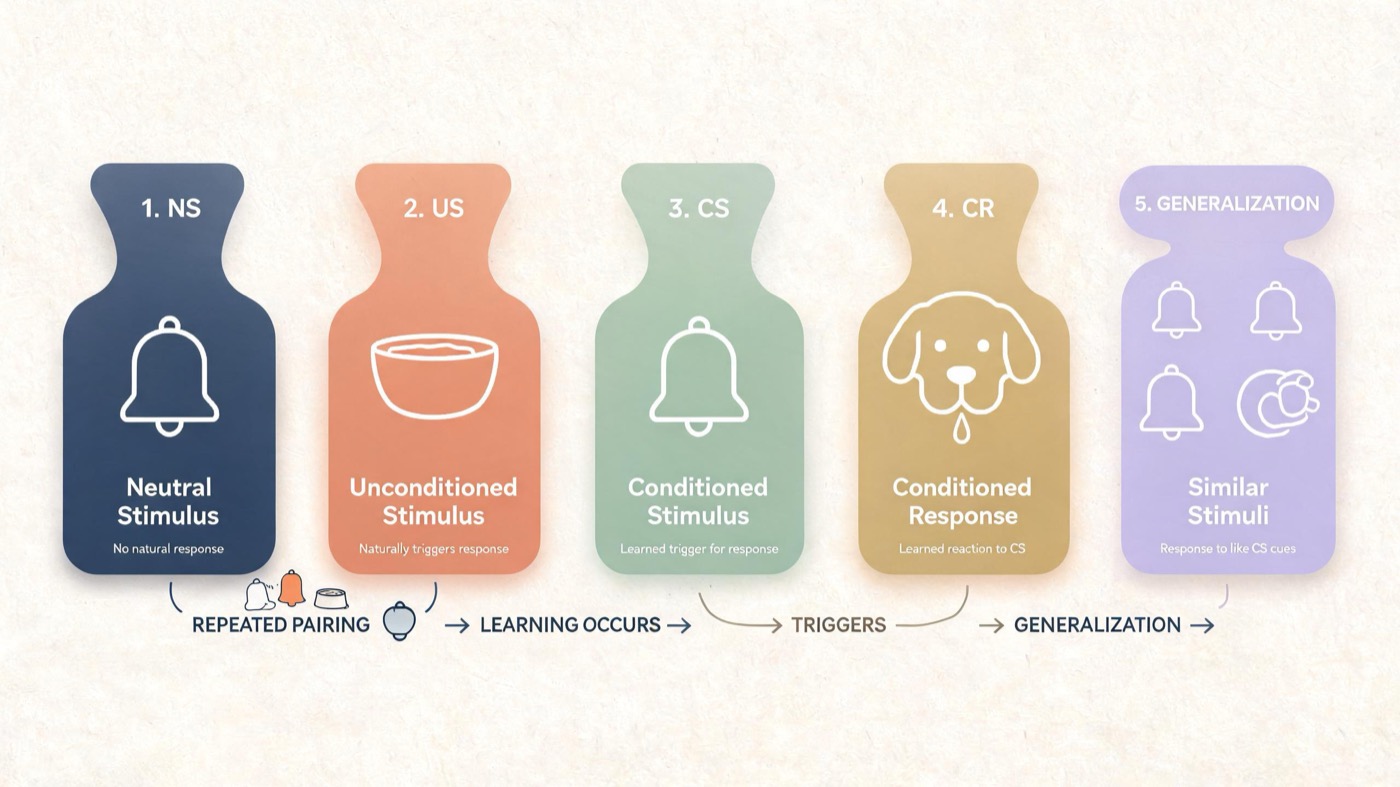
- Unconditioned Stimulus (US): A stimulus that naturally elicits a reflexive response without prior learning. Example: food causing salivation.
- Neutral Stimulus (NS): A stimulus that initially produces no reflexive response. Example: a bell before any pairing.
- Conditioned Stimulus (CS): After pairing with the US, the formerly neutral stimulus now elicits a learned response. Example: the bell after training.
For a deeper dive into the processes underlying conditioning, see our guide on respondent conditioning BCBA exam examples.
How Conditioned Stimuli Develop: The Acquisition Process
The development of a conditioned stimulus follows a systematic process called acquisition. This occurs when a neutral stimulus is repeatedly paired with an unconditioned stimulus until it gains the power to elicit a response.
Step-by-Step Example: From Neutral to Conditioned
Consider a classic example adapted for ABA contexts:
- Before pairing: A therapist plays a specific tone (neutral stimulus). The child shows no reflexive reaction.
- During pairing: The tone is played immediately before presenting a preferred snack (unconditioned stimulus). The child naturally salivates (unconditioned response).
- After repeated pairings: The tone alone (now a conditioned stimulus) elicits salivation (conditioned response).
This acquisition process demonstrates how environmental stimuli can acquire new functions through learning. The strength of the conditioned response depends on the number of pairings and the consistency of the contingency.
ABA Examples of Conditioned Stimuli in Practice
Seeing the conditioned stimulus meaning applied in real ABA scenarios helps solidify the concept for exam questions. Below are two practical examples using the ABC format.
Example 1: Teaching a Child to Respond to a Safety Signal
- Antecedent (CS): A red card placed on the child’s desk signals that a break is coming in 30 seconds.
- Behavior: The child looks at the therapist and says ‘break please.’
- Consequence: The therapist praises ‘great asking!’ and provides a 2-minute break.
- Function: The red card is a conditioned stimulus that elicits a learned response (asking for a break) because it was previously paired with the unconditioned stimulus of the therapist’s verbal prompt and break.
Example 2: A Therapist Using a Clicker as a Conditioned Reinforcer
- Antecedent (CS): Click sound from a clicker.
- Behavior: The child completes a trial by placing a block in a bucket.
- Consequence: The click is followed by a small edible (US).
- Function: The click becomes a conditioned stimulus that elicits a conditioned response (anticipation of food), which strengthens the operant behavior.
These examples show how conditioned stimuli can function within both respondent and operant paradigms. For more on how stimuli evoke behavior, review discriminative stimulus ABA.
Why the Conditioned Stimulus Matters for Your BCBA Exam
The conditioned stimulus meaning appears frequently on the BCBA exam, especially in questions about respondent conditioning and stimulus-stimulus pairings. Understanding this concept helps you differentiate between types of stimuli and their functions.
Common Exam Trap: CS vs. Discriminative Stimulus (SD)
One of the most frequent mistakes is confusing a conditioned stimulus with a discriminative stimulus. Here’s the key difference:
- Conditioned Stimulus (CS): Elicits a respondent behavior (reflexive, involuntary). It works through stimulus-stimulus pairing.
- Discriminative Stimulus (SD): Evokes an operant behavior (voluntary, learned). It signals that a reinforcer is available for a specific response.
For example, a click paired with food is a CS if it elicits salivation, but the same click could become an SD if it signals that pressing a lever will produce food.
Quick Checklist for Exam Questions on CS
When you see a scenario on the exam, run through this checklist:
- Is the stimulus learned? If it was neutral before pairing, it’s likely a CS.
- Does it elicit a reflexive response? If yes, it’s respondent conditioning, not operant.
- Was it paired with an US? Look for a history of pairing with an unconditioned stimulus.
- Is the response involuntary? Respondent behaviors are automatic, not voluntary.
Additional Exam Traps: CS and Stimulus Generalization
Another trap involves stimulus generalization: a stimulus similar to the original CS may also elicit a conditioned response. For instance, if a bell of 500 Hz is the CS, a 550 Hz tone might also cause salivation. The exam may test whether you identify this as generalization or a new CS.
Also watch for questions about extinction of a conditioned stimulus. If the CS is presented repeatedly without the US, the conditioned response will gradually weaken. This is known as respondent extinction.
Actionable Study Tip: Create Your Own Examples
To master the conditioned stimulus, create at least three original examples from your practice. For each, identify the NS, US, CS, and conditioned response. Then, modify one element (e.g., change the pairing schedule) and predict the effect on the response. This active learning method boosts retention for exam day.
For a broader review of behavior principles, see our BCBA exam prep 2025 page.
Summary
The conditioned stimulus meaning is a cornerstone of respondent conditioning in ABA. A CS is a formerly neutral stimulus that, through pairing with an unconditioned stimulus, comes to elicit a learned response. It differs from unconditioned and neutral stimuli, and from discriminative stimuli that evoke operant behavior. On the BCBA exam, remember the checklist: Is it learned? Does it elicit a reflexive response? Was it paired with an US? By practicing with real-world examples and recognizing common traps, you can confidently answer any question on this topic.



