

Good board certified behavior analyst training is more than a list of classes. Before you enroll, verify the program evidence that connects your degree, coursework, fieldwork, examination plan, and application date. Searching for board certified behavior analyst training usually means you are comparing programs, certificate sequences, graduate degrees, or fieldwork options. The difficult part is not finding a page that says “BCBA.” The difficult part is checking whether the training actually fits the certification pathway and application timeline you plan to use.
Table of Contents
- Board Certified Behavior Analyst Training: Start With an Evidence Audit
- Identify the Certification Pathway
- Audit the Coursework Map
- Audit Fieldwork Before You Pay a Deposit
- Check the Examination Connection
- Run the 2027 Transition Check
- Questions to Ask a Training Program
- Frequently Asked Questions
- Quick Review Checklist
- Take the Free BCBA Mock Exam
Use the BACB’s current 2027 BCBA requirements as the anchor for this audit. The right question is not “Does this program sound comprehensive?” It is “Can the program show me which requirement each part supports, who verifies it, and what changes if I apply on or after January 1, 2027?”
This guide does not determine your eligibility. The BACB reviews individual applications, and schools or supervisors can change their offerings. Ask the program and the BACB for written confirmation when a decision affects your eligibility.
Board Certified Behavior Analyst Training: Start With an Evidence Audit
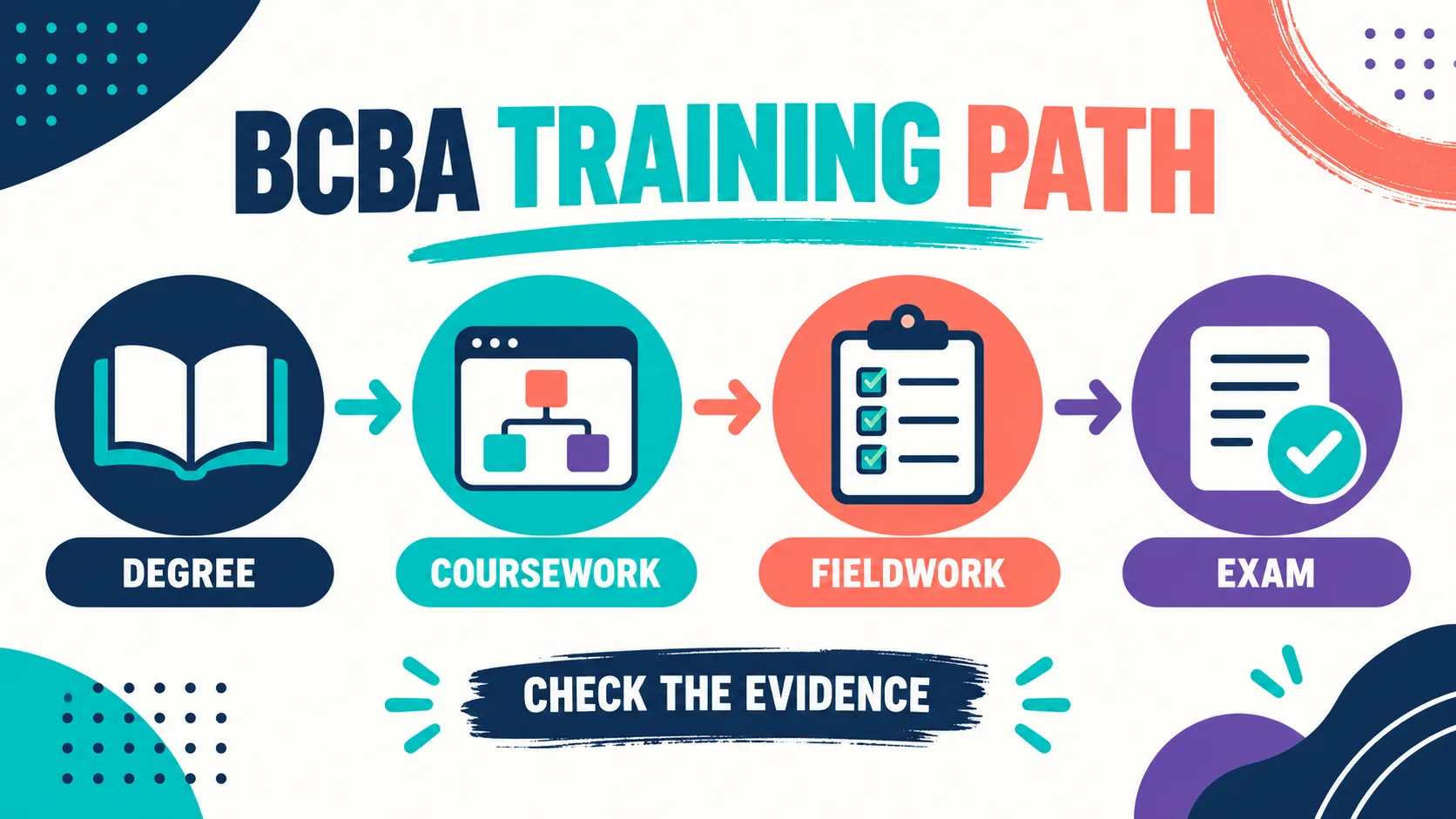
Start with the whole certification chain rather than a single brochure. A training provider can offer a useful class without offering every piece needed for your intended application. Your audit should connect five evidence areas: degree, behavior-analytic coursework, supervised fieldwork, examination preparation, and the documents required for the application.
| Evidence area | What to request | Why it matters |
|---|---|---|
| Degree | The degree type, institution status, conferral timing, and pathway it supports | A certificate sequence may not replace the graduate-degree requirement for the pathway you intend to use. |
| Coursework | Course titles, content areas, credit or content hours, and the program contact who verifies them | A course title alone does not prove that the required content is covered in the required format. |
| Fieldwork | Supervisor qualifications, placement support, monthly tracking, observation, and verification forms | A strong academic program may still leave you responsible for finding and documenting qualifying fieldwork. |
| Examination | Current task-list alignment, application practice, rationales, and exam-day planning | Training and eligibility are related, but completing classes does not guarantee examination readiness. |
Save the evidence in a folder before you commit: program page, catalog, course map, written answers from the advisor, fieldwork agreement, and the BACB pages that govern your application date. If the provider will not identify the owner of a requirement, mark that item as unresolved rather than filling the gap with an assumption.
Identify the Certification Pathway
Beginning January 1, 2027, the BACB describes two BCBA eligibility pathways. Pathway 1 uses a qualifying accredited or recognized program plus practical fieldwork and the examination. Pathway 2 combines a qualifying graduate degree, behavior-analytic coursework, practical fieldwork, and the examination. The official 2027 document is the source of the current definitions and exceptions.
This distinction changes what “training” needs to prove. A graduate program that is recognized for Pathway 1 may organize degree and behavior-analytic content together. A separate coursework sequence may be intended for Pathway 2. A short certificate, exam-prep course, or continuing-education bundle should not be described as if it independently grants BCBA eligibility.
| Pathway question | Evidence a program should explain | Do not assume |
|---|---|---|
| Is this an accredited or recognized degree program? | The relevant accreditation or recognition status, dates, and program scope | A marketing phrase such as “BCBA track” is the same as BACB pathway evidence. |
| Is this a Pathway 2 coursework sequence? | The current coursework map and the program contact or attestation route | An old Verified Course Sequence label automatically answers a 2027 application question. |
| What remains outside the training? | A written list of fieldwork, application, documentation, and exam-preparation responsibilities | Completing the course equals certification or a guaranteed exam result. |
The BACB’s university faculty resources explain that pathway contacts help attest to qualifying coursework and that applicants must use the requirements in effect for their application. Ask the program whether its contact process, catalog, and course map have been updated for the cohort you would enter, not for a previous cohort.
Audit the Coursework Map
Do not audit only course names. Download or request the syllabus and map its content to the official requirements. For a 2027 Pathway 2 plan, the BACB transition guidance highlights several format-sensitive changes: Basic Principles must be a standalone course; Theory and Philosophy must be standalone; Behavior Assessment and Intervention content must be covered across two freestanding courses; Organizational Behavior Management requires 45 content hours in a freestanding course; and Ethics must be one standalone course with 45 content hours.
The point is not to memorize a marketing checklist. The point is to see whether the program can answer, in writing, where each required area is taught and how it will be documented. A course title such as “professional issues” may be useful, but it does not by itself prove that the course satisfies the current Ethics format.
Ask for a transcript-planning conversation before enrollment. Have the advisor identify what appears on the transcript, what is verified by the program contact, and what would need to be completed elsewhere. If you already have coursework under an earlier requirement set, ask which items need a standalone replacement rather than assuming that a similar title will be accepted.
Audit Fieldwork Before You Pay a Deposit
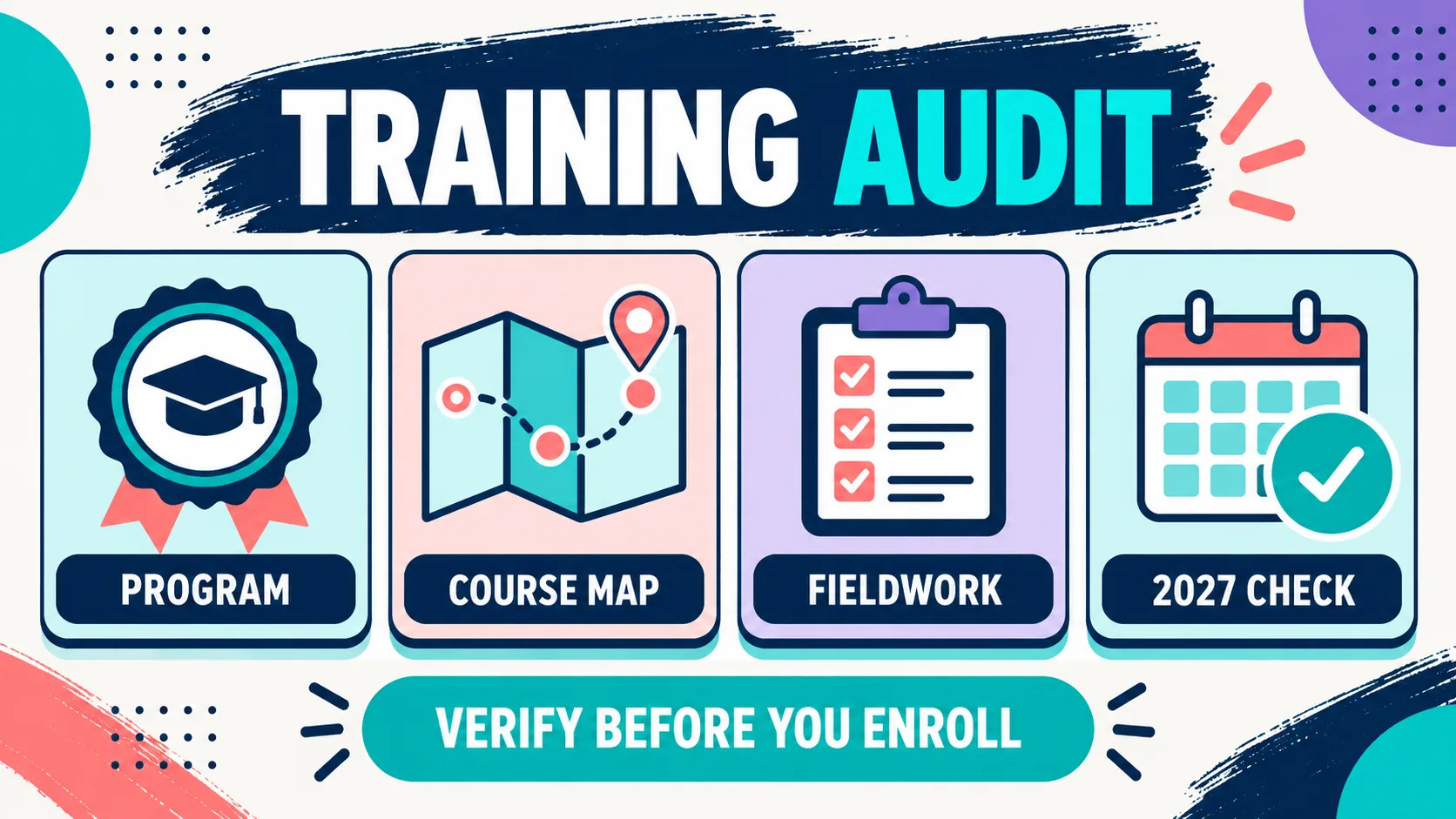
Fieldwork is where many training plans become vague. A program may advertise “fieldwork support” while leaving the placement, supervisor, hours, observation, and forms to the trainee. That can be workable, but you should know the boundary before you enroll.
For applications under the 2027 requirements, the BACB’s overview lists 2,000 hours for Supervised Fieldwork or 1,500 hours for Concentrated Supervised Fieldwork. It also describes different supervision percentages, monthly hour ranges, observation minutes, and supervisor qualifications. Review the official table and the BCBA Handbook for the complete details; do not use a short program page as a substitute.
| Fieldwork audit | Ask the provider | Save as evidence |
|---|---|---|
| Placement | Does the program place students, introduce sites, or only provide general advice? | Placement policy, service area, start conditions, and waitlist terms |
| Supervisor | Who supervises, how are qualifications checked, and who covers an interruption? | Supervisor agreement, qualifications, and contact process |
| Tracking | What is recorded each supervisory period, including unrestricted activities and observations? | Monthly logs, observation records, and signed verification forms |
| Transition | Which form set and application-date rules will your cohort use? | Written transition guidance and the form version tied to your plan |
Keep your own parallel record even when the program provides a tracker. The BACB’s transition guidance recommends planning carefully when fieldwork crosses the requirement change, including maintaining documentation that demonstrates compliance. A private backup is not a challenge to your supervisor; it is a way to catch missing signatures or dates before an application is assembled.
Check the Examination Connection
Academic training and exam preparation support each other, but they are not the same product. Ask whether the program teaches the current BCBA Task List and whether students receive applied practice, explanations, and a way to review errors. The BACB’s examination information describes a four-hour, multiple-choice exam, and the current task-list resources identify the sixth edition outline in use for the present cycle.
A school does not need to sell a separate mock-exam product to be a good program. What matters is that you can explain how the coursework becomes usable knowledge: define the concept, apply it to a scenario, discriminate it from a close alternative, and review the rationale after practice. If the program provides no practice or feedback, budget for that gap separately.
Before exam preparation becomes a major purchase, use a small diagnostic set to see whether your next problem is missing content, weak application, pacing, or inconsistent review. The Free BCBA Mock Exam can serve as a low-commitment practice checkpoint. It is not an official BACB result and cannot establish eligibility.
Run the 2027 Transition Check
Your application date determines which requirement details need the closest review. The official BACB transition document says that if coursework or fieldwork spans the 2022 and 2027 requirements, candidates should plan carefully, review both sets of requirements, and maintain documentation that supports the applicable application. That is a reason to ask an advisor precise date-based questions rather than accept a general statement that the program is “2027 ready.” Use this sequence:
- Write down the month and year you expect to submit the certification application.
- Identify the pathway and requirement year that your application will use.
- Compare your planned coursework with the official current map, including standalone-course rules.
- Confirm fieldwork forms, supervision, observation, and documentation for the application date.
- Ask the program to answer any gap in writing and save the response with your records.
Do not treat a 2027 label as a guarantee. A program may update its marketing faster than its catalog, or a student may change application timing. The BACB’s official pages and your individual account remain the final references.
Questions to Ask a Training Program
- Which 2027 BCBA pathway is this program designed to support?
- Where can I see the current course-to-requirement map and syllabus?
- Which content areas are standalone courses, and which are combined?
- Who verifies the coursework, and what attestation or transcript evidence is produced?
- Does the program provide fieldwork placement, supervision, tracking, or only referrals?
- Which requirement-year forms will my cohort use if my fieldwork crosses 2026 and 2027?
- What exam practice and feedback are included, and what is outside the tuition?
- What happens if a course, supervisor, placement, or requirement changes before I apply?
Frequently Asked Questions
What counts as board certified behavior analyst training?: Training can include a qualifying graduate program, behavior-analytic coursework, supervised fieldwork, and exam preparation, depending on the certification pathway. A short prep course or certificate may support learning without independently satisfying every BCBA eligibility requirement.
Can I use an online program for BCBA training?: An online format may be part of a qualifying program, but the format alone does not answer the eligibility question. Verify the program status, coursework map, fieldwork plan, documentation, and application-date rules with the provider and the BACB.
Does a BCBA training program guarantee certification?: No. A provider can describe the education and support it offers, but the BACB determines whether an individual application meets the requirements, and the candidate must pass the examination. Treat pass or certification guarantees as a warning sign.
What should I check first if I want to apply in 2027?: Start with the official 2027 requirements and transition guidance, then identify your pathway and application date. Next audit the course map, standalone content requirements, fieldwork documentation, and form version. Ask the program to resolve gaps in writing.
Should I choose training based on the biggest number of courses?: No. A bigger catalog does not prove better pathway coverage. Choose a program that can show the evidence chain, explain what it does not provide, and give you a realistic plan for coursework, fieldwork, application, and exam practice.
Bottom line: Evaluate board certified behavior analyst training as an evidence chain, not a marketing label. Verify the pathway, map the coursework, audit fieldwork support, connect the plan to current exam preparation, and run a written 2027 transition check before you enroll.
Quick Review Checklist
Use this final checklist to turn board certified behavior analyst training into exam-ready reasoning. The goal is not to memorize a label in isolation; it is to identify the relevant evidence and explain why the best answer fits the scenario. Key ideas to review:
- State the central definition or decision point for board certified behavior analyst training in your own words.
- Identify the detail that makes board certified behavior analyst training different from its closest related ABA term.
- Separate the observable facts in a scenario from assumptions that are not supported by the facts.
- Write one example and one nonexample so you can recognize the concept in a new setting.
Exam application checks:
- Ask what the question is actually requesting before comparing the answer choices.
- Mark the antecedent, response, consequence, or other evidence that supports the selected answer.
- Look for a distractor that describes a related process but does not answer the specific question.
Final self-check:
- Explain how you would verify the interpretation with clear observations or data.
- Change one detail in the scenario and decide whether your answer should change.
- Give a one-sentence rationale that a supervisor or study partner could evaluate.
Take the Free BCBA Mock Exam
When you are ready to apply the idea, use the free practice resource below for additional feedback. Take the Free BCBA Mock Exam



