
Choosing a BCBA exam prep course is less about finding the longest video library and more about matching the right study system to the current task list, your starting point, and the feedback you need next.
Table of Contents
- BCBA Exam Prep Course: Start With the Outcome You Need
- Compare TCO Alignment, Not Content Volume
- Evaluate the Practice Feedback Loop
- Match Support to Your Constraints
- Build a Study Loop, Not a Content Pile
- Plan Around Current and 2027 Requirements
- Red Flags Before You Buy
- Frequently Asked Questions
- Quick Review Checklist
- Take the Free BCBA Mock Exam
If you search for a BCBA exam prep course, you are probably not looking for another list of textbooks. You are deciding whether a structured course, question bank, membership, tutoring package, or free diagnostic tool is the best use of your time and budget. That is a buying decision, but it is also a learning-design decision.
The safest way to compare options is to begin with the official exam scope. The BACB’s current task-list resources identify the BCBA Task List (6th ed.) as the examination content outline in use for the current cycle. The BACB also explains that the examination has 185 multiple-choice questions, including 175 scored questions and 10 unscored pilot questions, with four hours at Pearson VUE. A course should help you work with that scope; it cannot promise a passing result.
BCBA Exam Prep Course: Start With the Outcome You Need
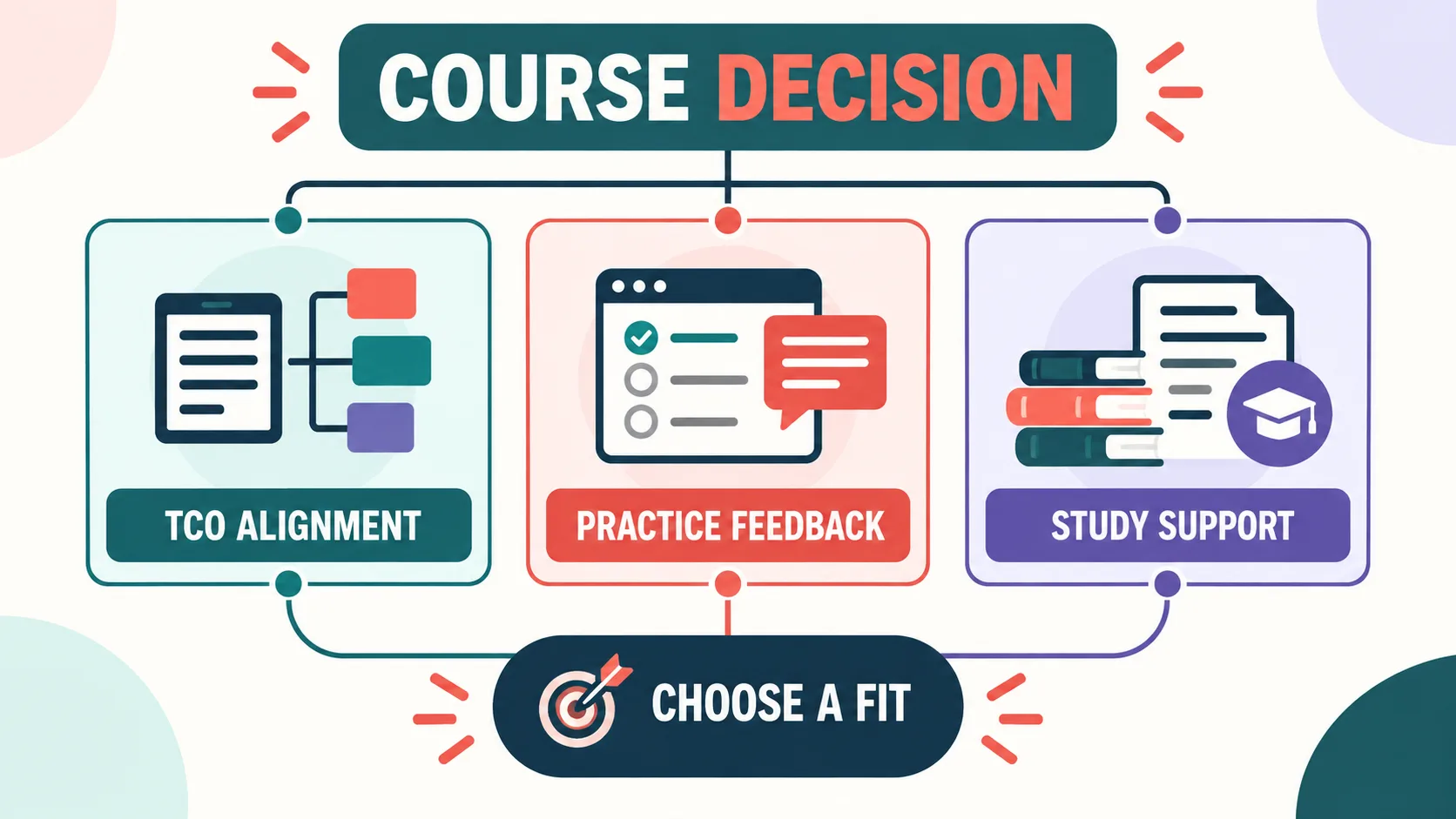
Before comparing prices, write down the problem you want the resource to solve. Someone who has never mapped the BCBA content outline needs a different tool from someone who has completed a course and keeps missing application questions. A useful prep course makes that difference visible instead of treating every learner as if they need the same package.
| Your starting problem | Resource feature to prioritize | Question to ask before buying |
|---|---|---|
| I do not know what to study first. | A clear content map, baseline assessment, and sequence by task-list domain | Will this tell me what to do next, or only give me more material? |
| I know the terms but miss questions. | Scenario practice, answer rationales, and distractor analysis | Can I see why each option is right or wrong? |
| I study inconsistently. | A realistic calendar, short assignments, reminders, and progress tracking | Can the schedule adapt to my work and fieldwork obligations? |
| I am close to exam day. | Timed mixed sets, review queues, and a way to locate weak domains quickly | Does this help me prioritize, or does it require a full restart? |
This first diagnosis prevents a common mistake: paying for a large library when the real need is feedback. A course can be excellent and still be a poor fit if it solves a different problem from yours.
Compare TCO Alignment, Not Content Volume
The first technical check is alignment with the BACB Task List, not the number of hours advertised. A large library can create the impression of rigor while leaving you unsure which task each lesson supports. Look for a visible map from lesson or practice set to the applicable task-list domain.
The BACB’s current examination information describes a four-hour, multiple-choice exam. That means a useful course should connect concepts to applied decision-making and sustained practice. It should not imply that watching every video is equivalent to demonstrating retrieval, discrimination, and application.
| Alignment check | What strong evidence looks like | Weak signal |
|---|---|---|
| Task-list map | Lessons and practice sets identify the domain or task they support. | The page says “complete coverage” without showing the map. |
| Applied scenarios | Questions require choosing, interpreting, or applying a principle in context. | Most activities are definition recall with no explanation. |
| Update discipline | The provider states which outline and requirement year the material follows. | The date, outline, or revision history is unclear. |
| Exam behavior | The plan includes mixed practice, pacing, and review of errors. | The promise is based only on hours watched or questions completed. |
Do not confuse a task-list map with a claim that a provider has access to real exam questions. A responsible resource uses original educational content and makes its scope transparent. If a sales page implies that it can predict or reproduce live exam items, treat that as a serious warning sign.
Evaluate the Practice Feedback Loop
Practice becomes useful when it changes what you do next. Before purchasing, check whether the platform records more than a score. Ideally, you can see the domain or skill area, review the rationale, identify the distractor that attracted you, and return to a short targeted lesson.
Ask to see a sample question and its explanation. A correct answer without an explanation can confirm performance, but it cannot reliably teach discrimination. A detailed rationale should explain the governing concept, why the best option fits the scenario, and why the alternatives do not. It should also avoid pretending that one practice result predicts a future exam outcome.
A good diagnostic process is intentionally small at the beginning. You do not need to complete an entire question bank before learning where to focus. Start with a mixed set, note the patterns in your errors, and then choose the content or support that addresses those patterns. This is where a free mock exam can be useful: as a baseline and routing tool, not as a substitute for the official examination.
Match Support to Your Constraints
Two learners can need different levels of support even when they are preparing for the same test. Compare the total fit of the resource rather than the headline price. Include time, access period, feedback quality, schedule flexibility, and whether you will actually use the format.
| Option | Best use | Limit to understand |
|---|---|---|
| Structured prep course | You need a sequence, explanations, and a regular study rhythm. | A fixed sequence may be inefficient if you already have strong coverage in some domains. |
| Question bank | You already understand the material and need retrieval plus application practice. | Question volume cannot replace explanations or a plan to repair gaps. |
| Tutoring or coaching | You need accountability, individualized explanation, or help interpreting errors. | The quality depends on the provider and the consistency of the feedback. |
| Free diagnostic or mock exam | You need a low-commitment baseline before choosing a larger resource. | A single score is not a study plan and does not guarantee exam readiness. |
Look at access details as carefully as lesson quality. Can you pause a lesson? Can you retake a practice set without losing the original result? Does the course work on the device you actually use? Are explanations available after the question, or only in a separate lecture? Small friction points become large when you study around work, supervision, or family responsibilities.
Build a Study Loop, Not a Content Pile
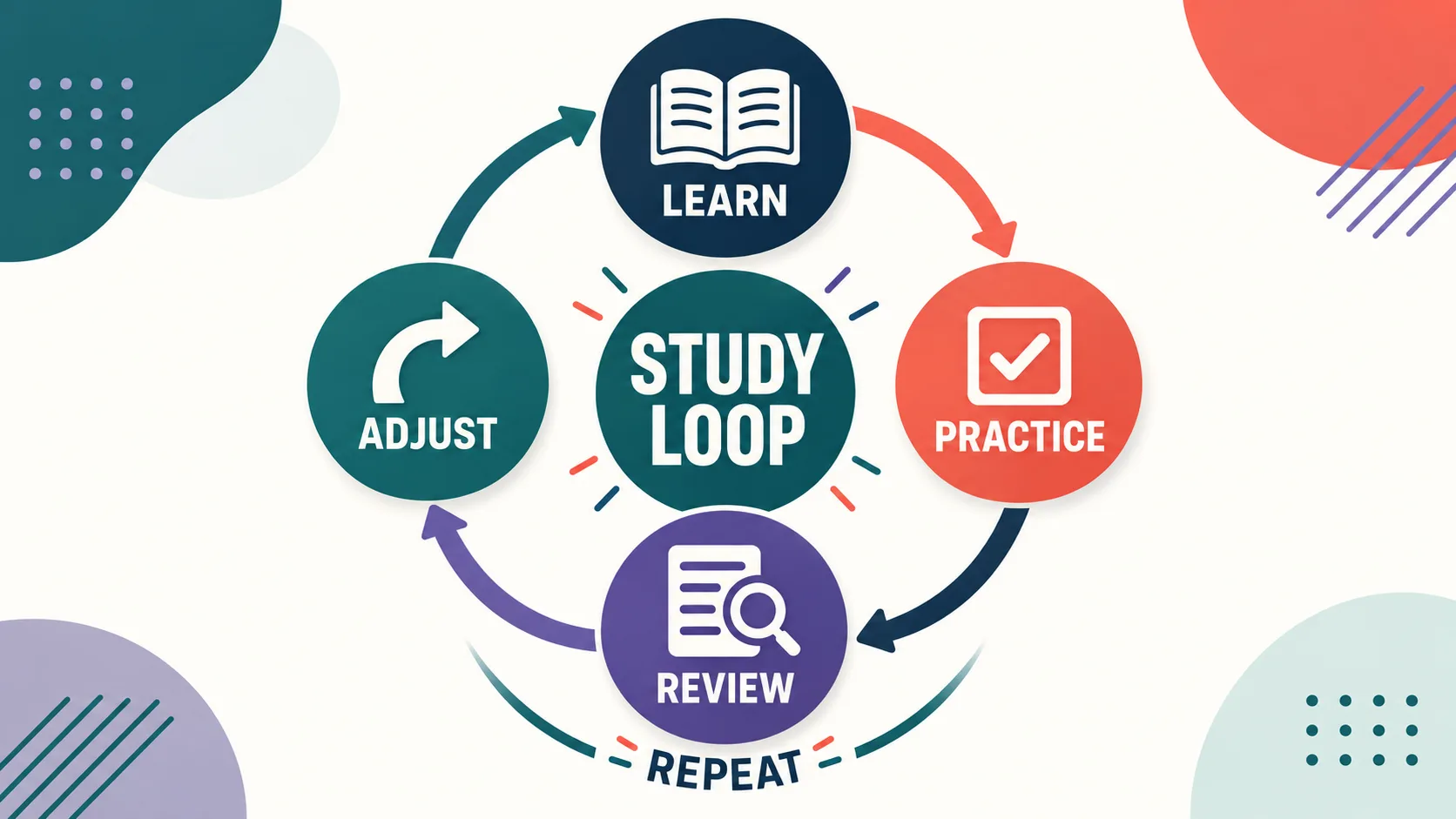
The most practical way to use a BCBA exam prep course is a repeating loop:
- Learn: review one defined concept or task-list area.
- Practice: answer a focused set and then a smaller mixed set.
- Review: record why each missed or guessed answer happened.
- Adjust: change the next study block based on the error pattern.
- Repeat: revisit the same skill later under a different scenario.
This loop is more informative than watching a complete course from beginning to end without checking retention. It also gives you a clean reason to use different resources together. A structured course may supply the explanation, a question bank may supply repetition, and a mock exam may show which domains need a closer look.
After you have defined your baseline, you can try the Free BCBA Mock Exam as a diagnostic practice step. Use the result to select your next review block. It is practice support, not an official BACB score, a pass guarantee, or a replacement for the current examination information.
Plan Around Current and 2027 Requirements
A preparation purchase should also fit your application timeline. The BACB’s 2027 BCBA requirements page and its transition explanation describe changes to eligibility pathways beginning January 1, 2027. The practical lesson is not to assume that a course page written for an earlier requirement year answers your current eligibility question.
Separate two checks: exam preparation and application eligibility. A course can help you prepare for the exam while you separately verify degree, coursework, fieldwork, application, and timing requirements with the BACB. If your planned application crosses the 2026–2027 transition, save the official guidance, identify the pathway that applies to you, and confirm the current instructions in your BACB account before paying for a long access period.
Red Flags Before You Buy
- Guaranteed outcomes: no honest prep resource can guarantee a passing result, certification, or a particular score.
- Unclear scope: the course does not identify the task list, revision date, or content boundaries it follows.
- Only volume metrics: sales copy emphasizes hours, videos, or question counts without showing explanations and review paths.
- Exam-item claims: the provider suggests access to live or recalled examination questions.
- No exit plan: you cannot tell what you should do after a weak diagnostic result or how your access ends.
- Outdated transition language: the page treats 2027 requirements as if they were already identical to the current application rules, or never dates its guidance.
Frequently Asked Questions
What is the best BCBA exam prep course?: The best fit depends on your starting point and the type of support you need. Compare task-list alignment, applied practice, explanations, progress tracking, access terms, and schedule fit. A course that is excellent for a beginner may be inefficient for someone who mainly needs feedback on application questions.
Should I buy a course or a question bank?: Choose a structured course when you need a sequence and teaching. Choose a question bank when your content foundation is reasonably strong and you need retrieval and application practice. Many learners use both, but the deciding factor should be the gap shown by a small diagnostic set, not the largest advertised library.
How do I know whether a course is aligned with the BCBA exam?: Look for a transparent map to the current BACB Task List, applied scenarios, original explanations, and a stated update date. Then compare those claims with the official BACB examination information. Alignment should be explainable; it should not depend on a provider promising access to real exam questions.
Can a free BCBA mock exam replace a prep course?: A free mock exam can help establish a baseline and route your next study session. It usually cannot replace a full teaching sequence, individualized support, or repeated practice. Treat it as one step in the learn–practice–review–adjust loop.
Does the 2027 change mean I need a different prep course?: Not automatically. First separate the exam content and your preparation needs from the certification eligibility and application rules. Read the current BACB transition guidance, check the pathway and date that apply to you, and confirm that any paid course clearly states which requirement year its advice addresses.
Bottom line: Choose a BCBA exam prep course by the problem it solves: task-list alignment, applied practice, useful feedback, and a realistic study loop. Check the current BACB guidance separately, use a mock exam to establish direction, and avoid any resource that replaces evidence with volume or guarantees. For targeted review, use our bcba exam prep course practice questions to apply the concept in exam-style scenarios.
Quick Review Checklist
Use this final checklist to turn bcba exam prep course into exam-ready reasoning. The goal is not to memorize a label in isolation; it is to identify the relevant evidence and explain why the best answer fits the scenario. Key ideas to review:
- State the central definition or decision point for bcba exam prep course in your own words.
- Identify the detail that makes bcba exam prep course different from its closest related ABA term.
- Separate the observable facts in a scenario from assumptions that are not supported by the facts.
- Write one example and one nonexample so you can recognize the concept in a new setting.
Exam application checks:
- Ask what the question is actually requesting before comparing the answer choices.
- Mark the antecedent, response, consequence, or other evidence that supports the selected answer.
- Look for a distractor that describes a related process but does not answer the specific question.
Final self-check:
- Explain how you would verify the interpretation with clear observations or data.
- Change one detail in the scenario and decide whether your answer should change.
- Give a one-sentence rationale that a supervisor or study partner could evaluate.
Take the Free BCBA Mock Exam
When you are ready to apply the idea, use the free practice resource below for additional feedback. Take the Free BCBA Mock Exam



