
Quick answer: If you are researching behavior analyst certification North Carolina, plan for two different authorities. The Behavior Analyst Certification Board (BACB) issues the national BCBA certification, while the North Carolina Behavior Analyst Licensure Board handles the state license required to practice as a licensed behavior analyst in North Carolina. A BCBA certificate is important evidence for the state application, but it is not automatically the same document as a North Carolina license.
Table of Contents
- What does behavior analyst certification North Carolina mean?
- Are BCBA certification and an NC license the same?
- What does North Carolina ask for?
- What is the application sequence?
- What supervision boundary matters before certification?
- How do certification and state renewal differ?
- How does the 2027 BCBA change affect the plan?
- Which mistakes create delays?
- How should a candidate study this topic?
- North Carolina behavior analyst certification FAQ
- Official sources for verification
- Take the Free BCBA Mock Exam
The safest order is to confirm the current BACB eligibility and examination route, obtain and maintain the national credential, then follow the North Carolina board’s application, background-check, character, and document requirements. The state board’s current materials also describe an assistant behavior analyst route, so do not select the wrong application simply because both roles use the word “behavior analyst.”
This guide is a source-linked planning and BCBA exam-preparation aid. It is not individualized legal advice, a licensure guarantee, or a substitute for the current North Carolina rules. Fees, forms, portal instructions, and state requirements can change; verify them with the board before paying or practicing. Table of Contents
What does behavior analyst certification North Carolina mean?
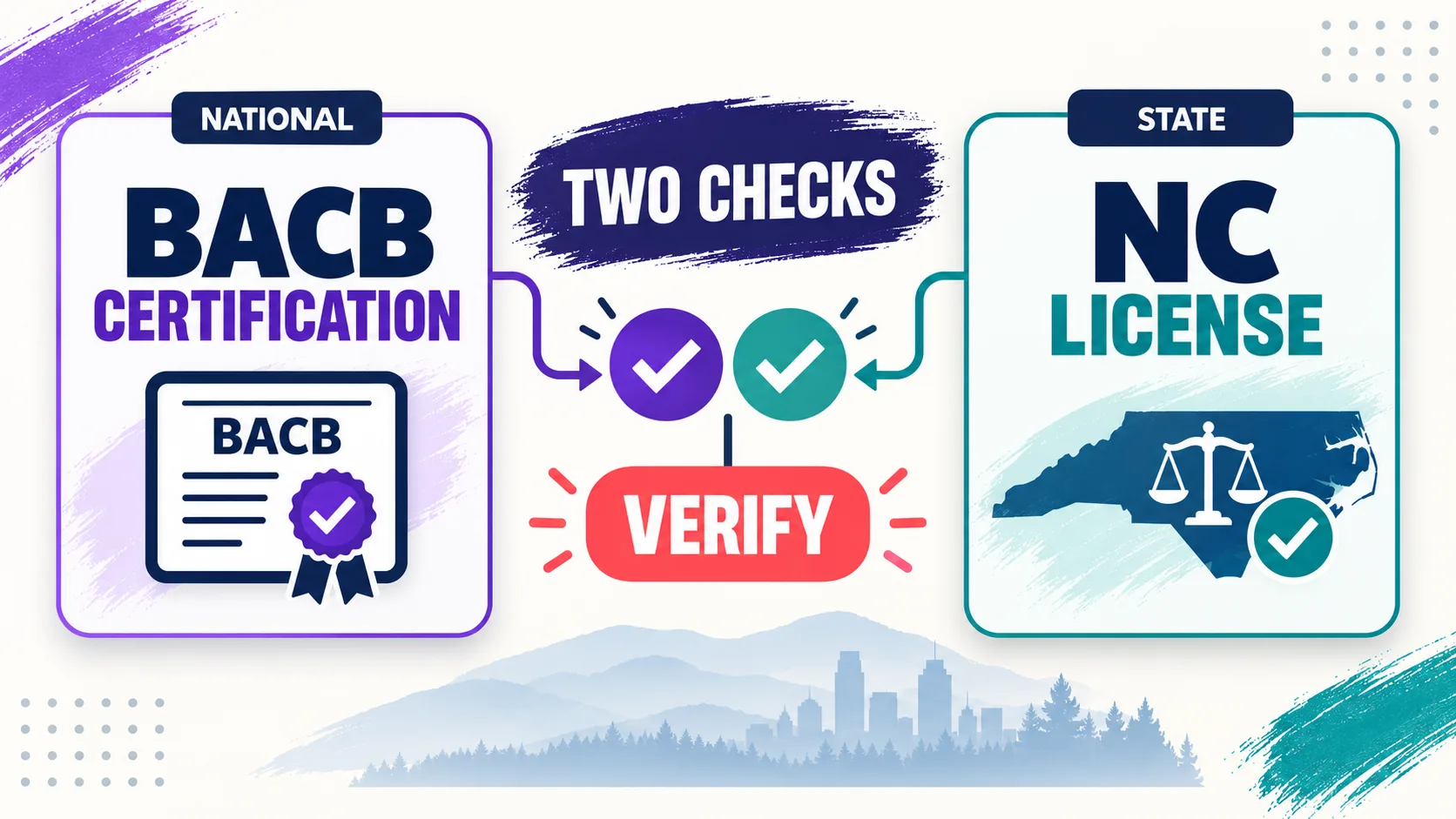
The keyword joins a national professional certification with a state-specific license. In plain language, most BCBA candidates should think of the pathway as two checks:
- National check: do you meet BACB eligibility requirements, complete the required experience or coursework route, submit an application, and pass the BCBA examination?
- North Carolina check: after or alongside the appropriate national credential, do you meet the North Carolina board’s licensure application requirements for the role you intend to practice?
The North Carolina General Statutes define a licensed behavior analyst as someone who is certified by the certifying entity as a BCBA and has been issued an active, non-suspended license under the state article. The board’s own requirements page lists a current BCBA or QBA certificate as part of the behavior-analyst application materials. That wording is why a candidate should never stop at “I passed the BCBA exam” when the work will be performed in North Carolina.
At the same time, state licensure does not replace the BACB’s national rules. Your degree, coursework, supervised fieldwork, examination, ethics obligations, and maintenance still belong to the BACB layer. The state board then decides whether the state-license application is complete and acceptable under North Carolina law and rules.
- BACB: national certification, examination, fieldwork framework, ethics requirements, and recertification.
- North Carolina board: state licensure, state application, criminal-history process, character statements, and state renewal.
- Employer or funder: additional hiring, credentialing, billing, or network requirements that may be stricter than either credential alone.
Are BCBA certification and an NC license the same?
No. They are connected, but they answer different questions. BCBA certification asks whether a person has met the BACB’s national professional standard. North Carolina licensure asks whether that person is authorized by the state to practice behavior analysis as a licensed behavior analyst under North Carolina’s legal framework.
| Question | BACB certification | North Carolina license |
|---|---|---|
| Who controls the rule? | Behavior Analyst Certification Board | North Carolina Behavior Analyst Licensure Board and state law |
| What is the core evidence? | Eligibility evidence, approved experience or coursework route, and a passing BCBA examination | State application, current certification proof, background check, character statements, and other board documents |
| What can lapse? | National certification status and recertification cycle | State license status and state renewal obligations |
| Does one automatically create the other? | No. The BACB credential does not submit the state application for you. | No. A state license does not replace BACB maintenance requirements. |
For a national overview, use the site’s BCBA certificate guide. This page has a narrower job: it tells a North Carolina candidate where the national process ends and the state-license process begins.
What does North Carolina ask for?
The North Carolina board’s current requirements overview lists separate evidence for a behavior analyst and an assistant behavior analyst. For a behavior analyst application, the page currently lists a complete application, public notice statement, application fee, criminal-history fee, fingerprint materials, a background check, a current BCBA or QBA certificate, statements about character and professional conduct, a photo, an authority-for-release form, and proof of current certification.
Because this is a state process, treat the list as a verification checklist rather than a promise that every applicant has the same file. The board may ask for information connected to your history, prior licenses, certification, or application status.
- Identify whether you are applying as a behavior analyst or assistant behavior analyst.
- Open the current North Carolina board application instructions and create an account in the correct portal.
- Confirm the application fee and the separate criminal-history fee shown at the time you apply.
- Arrange the fingerprint or criminal-history materials exactly as the board directs.
- Order the required background check using the current package instructions on the board page.
- Prepare proof of the current national certificate issued by the accepted certifying entity.
- Identify the people who can submit the required character and professional-conduct statements.
- Upload the photo, authority-for-release form, and any other items the portal requests.
- Save confirmation numbers, receipts, submitted forms, and board messages in a dated folder.
The board’s current overview displays an application fee of $250 for a behavior analyst and $200 for an assistant behavior analyst, plus a $14 North Carolina Department of Justice criminal-history fee. Treat those numbers as a snapshot, not a permanent promise. Confirm the current amount directly on the North Carolina requirements page before payment.
What is the application sequence?
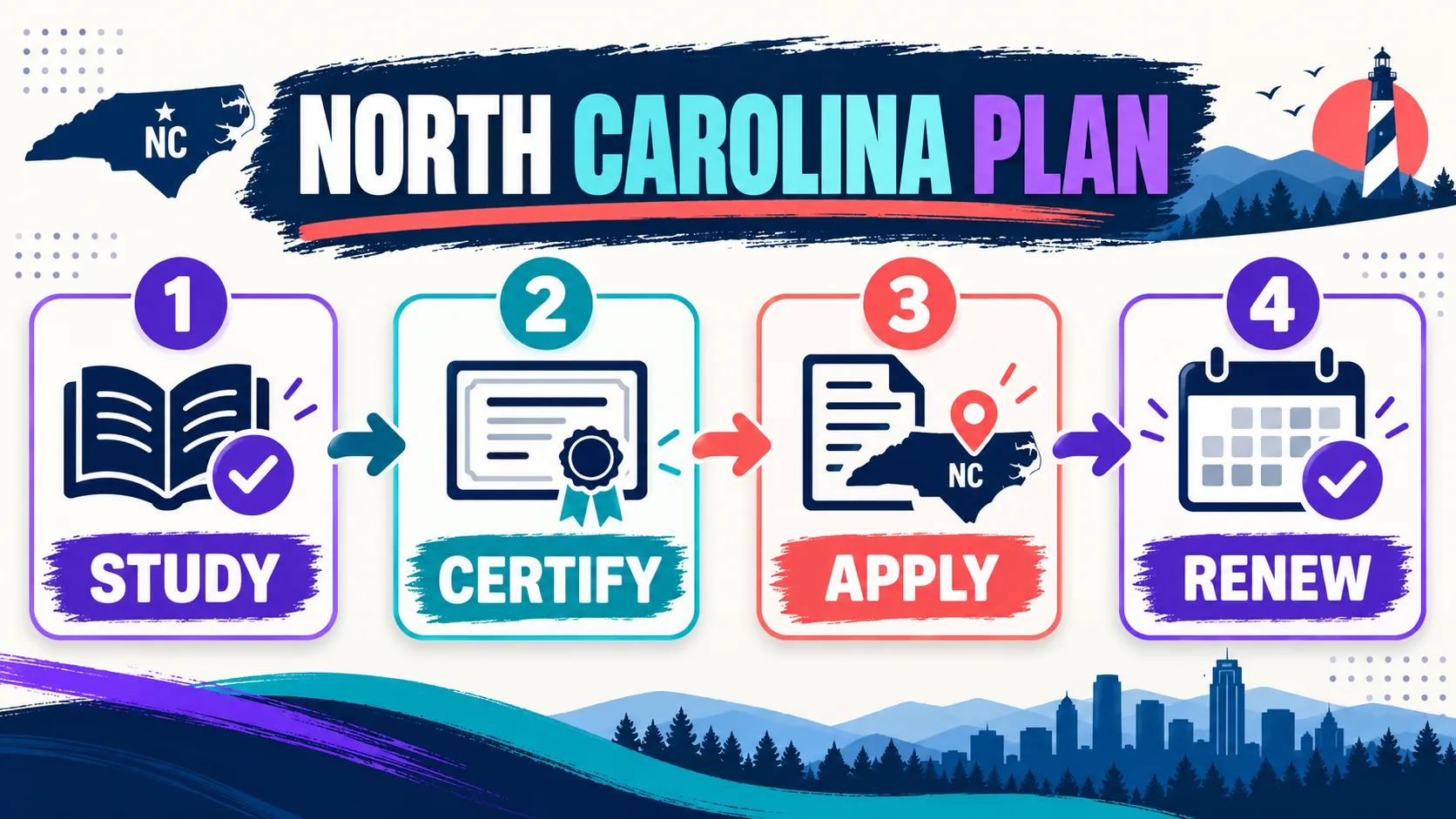
A clean sequence reduces the chance of paying for the wrong credential or submitting a nearly complete file that cannot be reviewed. Use this order as a planning model, then follow the portal’s current instructions if they differ:
- Study and qualify: choose the BACB pathway and complete the national education and fieldwork requirements that apply to your application date.
- Certify: submit the BACB application, receive authorization, and pass the BCBA examination if you are pursuing the behavior-analyst route.
- Apply to North Carolina: submit the state application, fees, background materials, certification proof, character statements, and uploads.
- Renew: keep both the BACB certification and North Carolina license current, using each authority’s separate dates and rules.
The state board’s Licensure Gateway is the official place to apply, renew, manage a license, and update licensee information. A third-party checklist or employer email can help you prepare, but it should not replace the board portal or current rules.
What supervision boundary matters before certification?
North Carolina’s FAQ says that a person obtaining certification with BACB or QABA while working with patients in North Carolina needs supervision from a current licensee of the board, an instructor in a course sequence approved by the certifying entity, or a qualified faculty member, according to the circumstances described by the board. That is a state-specific supervision question layered on top of the certifying entity’s experience requirements. Do not assume that a supervisor who satisfies one authority automatically satisfies every authority. Before accruing hours, write down:
- which certifying entity and pathway you are using;
- which North Carolina license or faculty qualification the supervisor holds;
- who is responsible for the client setting and the fieldwork records;
- which forms and attestations belong to the BACB or QABA route;
- what happens if the supervisor’s license, certification, employment, or status changes.
For the national side, start with the BACB’s current BCBA application hub and handbook. For the state side, use the board FAQ and current rules. A candidate should be able to explain which document supports each hour instead of relying on the label “supervised experience.”
How do certification and state renewal differ?
Renewal is another place where two systems can be confused. BACB recertification uses a national cycle and continuing-education requirements. North Carolina has its own license-renewal process and portal. A renewal notice from one authority does not necessarily renew the other credential.
- Track the BACB certification expiration or recertification date.
- Track the North Carolina license renewal date separately.
- Keep national continuing-education records with provider, date, hours, and category details.
- Check the North Carolina board’s renewal checklist for state-specific attestations or fees.
- Update address, employer, or other licensee information through the official state portal when required.
- Do not continue representing yourself as licensed if the state license is inactive, expired, suspended, or otherwise not current.
The board’s license renewal page is the current starting point for the state side. If your national credential changes, contact both authorities when necessary; a state license built on current certification evidence may require a separate update.
How does the 2027 BCBA change affect the plan?
The BACB has published 2027 eligibility and maintenance changes that begin January 1, 2027. The official summary describes two BCBA eligibility pathways, supervised fieldwork, examination based on the BCBA Test Content Outline 6th edition, and revised maintenance requirements. It also states that Pathways 3 and 4 are discontinued for the 2027 framework.
These are national certification changes. They do not erase North Carolina’s separate licensure process. If your BACB application or fieldwork crosses the transition date, verify which BACB handbook, form, and application-timing rule applies. Then check whether North Carolina requires current proof of the resulting certificate and whether any state instruction has changed.
| If your question is about | Start with | Then confirm |
|---|---|---|
| 2027 degree, coursework, fieldwork, or exam | BACB 2027 requirements and BCBA Handbook | Application date, transition form, and your supervisor’s current qualification |
| Permission to practice in North Carolina | North Carolina statutes and board requirements | Current license status, application file, and employer/funder rules |
Which mistakes create delays?
- Calling the BACB certificate a state license: the national credential is evidence for the state process, not the state authorization itself.
- Applying under the wrong role: behavior analyst and assistant behavior analyst applications have different certification evidence and fee listings.
- Starting fieldwork without checking North Carolina supervision: state supervision expectations can sit beside the certifying entity’s rules.
- Paying an old fee: always confirm the live board page and portal before submitting payment.
- Uploading only a score report: the board’s checklist asks for proof of a current certificate, not merely an exam result.
- Letting one renewal calendar stand in for two: national recertification and state licensure are separate maintenance events.
- Using a 2027 national rule as a state-law answer: identify which authority controls each sentence in your plan.
How should a candidate study this topic?
For the BCBA exam, treat this as a scope-and-authority problem. The exam may test certification, supervision, ethics, or professional practice, while a real application adds state-law facts. Practice separating a national credential from an authorization to practice in a particular jurisdiction.
- Make a two-column note titled “BACB” and “North Carolina.”
- Put the examination and fieldwork pathway under the national column.
- Put the state application, background check, character statements, and license renewal under the North Carolina column.
- Circle every date, fee, form version, and status that must be checked live.
- Use the free BCBA mock exam for practice and feedback after reviewing the rule; it is not an official BACB item bank or a passing-score guarantee.
If you are choosing a school, ask a direct question: “Which national credential does this program prepare me for, and what will I still need to do for North Carolina licensure?” A useful answer names the certifying entity, the experience route, the current state board, and the documents that are not supplied by the school.
North Carolina behavior analyst certification FAQ
Can I work as a BCBA in North Carolina with only BACB certification?: Do not assume so. North Carolina law and board materials distinguish a BCBA certificate from the state license to practice as a licensed behavior analyst. Review the current board requirements and any applicable exemption or employer rule before providing services.
Does North Carolina accept only BCBA certification?: The board’s current materials describe accepted certification from BACB or QABA for the relevant behavior-analyst and assistant-behavior-analyst routes. The exact certificate depends on the license category. Read the live board checklist rather than applying a BCBA rule to the assistant route.
Do I need a North Carolina-licensed supervisor for BACB fieldwork?: The North Carolina board FAQ describes supervision conditions for people pursuing certification while working with patients in North Carolina. The certifying entity also has its own experience requirements. Check both sources and document the supervisor’s status before counting hours.
Will the 2027 BCBA requirements automatically change the North Carolina license?: Not automatically. The 2027 changes are BACB national eligibility and maintenance changes. North Carolina licensure remains a separate state process. Verify any state response, certificate-proof requirement, or form update with the North Carolina board.
Official sources for verification
- North Carolina Behavior Analyst Licensure Board requirements overview
- North Carolina board general FAQs
- North Carolina license application checklist FAQs
- North Carolina license renewal information
- North Carolina General Statutes, Chapter 90, Article 43
- BACB BCBA application and maintenance resources
- BACB 2027 BCBA Requirements
Bottom line: Behavior analyst certification in North Carolina is best planned as a two-authority pathway: earn and maintain the national BCBA certification, then satisfy North Carolina’s separate licensure requirements for the role you will practice. Verify the current board checklist, fees, background process, supervision boundary, and renewal date before treating a course, certificate, or job title as permission to practice.
Take the Free BCBA Mock Exam
When you are ready to apply the idea, use the free practice resource below for additional feedback. Take the Free BCBA Mock Exam



