

Quick answer: If you searched for BCBA certification Australia, the key update is that certification in Australia is entering a clear transition. The BACB says it will discontinue offering new BACB certifications in Australia effective January 1, 2027. People who already hold a BACB certification in Australia may maintain it under the applicable BACB requirements, but a person planning a first application should not assume that an Australian residence will remain an available route after that date.
Table of Contents
- What does BCBA certification in Australia mean now?
- What changes on January 1, 2027?
- What should a new applicant check first?
- How is BACB certification different from Australian practice rules?
- What can an existing Australian certificant do?
- What 2027 requirements matter if you remain eligible?
- Which planning mistakes are most expensive?
- How should you study and plan your next step?
- BCBA certification Australia FAQ
- Official sources for further verification
- Take the Free BCBA Mock Exam
That is a location and timing rule, not a statement that behavior analysis, Australian employers, or every local professional pathway is ending. It also does not answer state, territory, visa, funding, or employer questions. The practical first step is to identify whether you are a new applicant or an existing certificant, confirm your residence and application date, and then read the current BACB notice before paying for coursework or fieldwork.
This guide explains the published BACB policy in plain language. It is an exam-preparation and planning aid, not an individual eligibility determination. Requirements can change, and the BACB—not a blog, school, or study product—controls the application decision. Table of Contents
What does BCBA certification in Australia mean now?
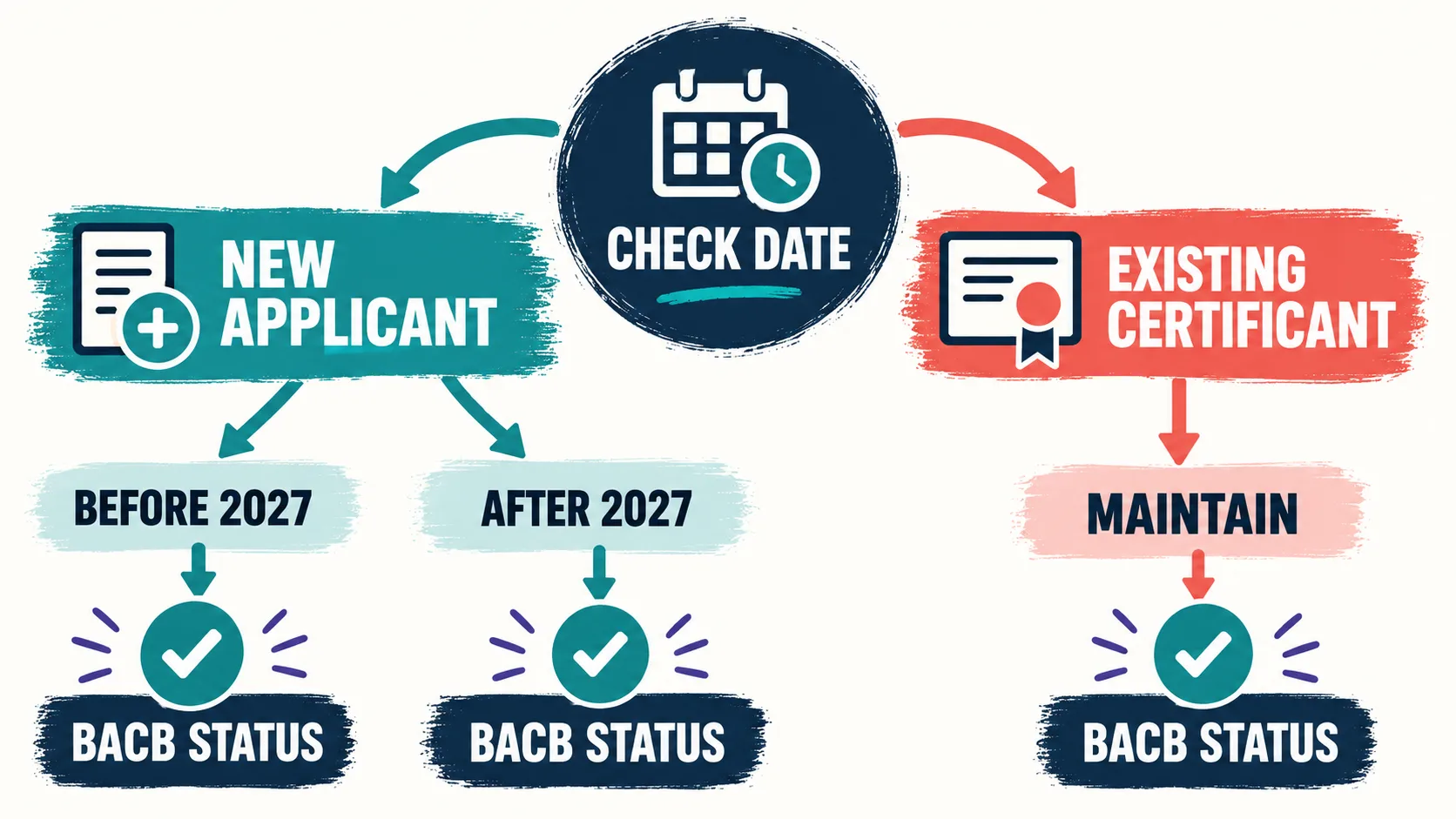
The phrase BCBA certification Australia can describe two different situations. The first is a person who lives in Australia and wants to apply for a BACB credential for the first time. The second is a person who already holds a BACB credential connected with Australia and wants to keep it current. Those situations should not be placed in the same checklist.
For a new applicant, the important question is not simply whether an Australian university offers behavior-analysis courses. The question is whether the BACB is accepting a new application from an Australian resident on the date and through the pathway you intend to use. The BACB’s current international-development page says new BACB certifications in Australia will be discontinued effective January 1, 2027. The BACB’s upcoming-changes table also states that residents of Australia will no longer be able to apply for BACB certification, while people who already hold BACB certifications in Australia will be able to maintain them.
For an existing certificant, the starting point is maintenance: recertification timing, continuing education, ethics and self-reporting duties, and any applicable updates from the BACB. Do not treat the end of new applications as an automatic cancellation of credentials already held. Conversely, do not treat grandfathering language as permission for a new applicant to submit a first application after the cutoff.
- New applicant: verify whether your residence and complete application date allow a new BACB application.
- Existing certificant: verify how to maintain and recertify the credential under the current handbook.
- Student or employee: separate BACB certification from an Australian course, job title, funding rule, or local practice requirement.
- Exam candidate: study the rule as a date-and-status distinction, not as a blanket claim that all Australian behavior analysts lose access to practice.
What changes on January 1, 2027?
January 1, 2027 is the effective date published for the Australia change. The most important wording is “new BACB certifications.” The policy is about the availability of new BACB certification applications for residents of Australia. It is not the same as saying that every certificate disappears that day, that every Australian ABA service becomes unlawful, or that an Australian degree automatically becomes invalid.
| Situation | What the BACB policy says | What to verify next |
|---|---|---|
| Australian resident planning a first application | New BACB certifications in Australia discontinue effective January 1, 2027. | Residence, complete application deadline, application completeness, and current BACB instructions. |
| Australian resident who already holds a BACB certification | The published change says existing BACB certifications in Australia may be maintained. | Recertification date, CE documentation, ethics duties, and any updated handbook or BACB notice. |
| Person moving between countries | A move does not automatically answer whether an application is available or how a credential is treated. | The BACB’s current jurisdiction definition, physical residence, application date, and local practice rules. |
Because the cutoff is close to the 2027 BCBA requirement transition, timing deserves extra care. A candidate should not rely on a course start date, an informal email, or a statement that an application is “almost ready.” Ask what the BACB means by a complete application and check the current official instructions. If a fact is decisive—such as residence on a particular date—submit a specific question through the BACB’s official contact process.
What should a new applicant check first?
If you are in Australia and do not yet hold a BACB certification, pause before treating a BCBA program advertisement as a certification route. Use an evidence sequence that begins with jurisdiction and date, then moves to education and fieldwork. This prevents a common financial mistake: completing a large program under an assumption that the certifying body will still accept the application.
- Confirm your residence: record where you physically reside under the BACB’s current jurisdiction guidance, rather than relying only on citizenship or where a university is located.
- Confirm your status: determine whether you are a new applicant or already hold a BACB certification.
- Confirm the effective date: compare the date you expect to submit a complete application with January 1, 2027.
- Read the official notice: use the BACB international-development page and the recent/upcoming changes page as the starting sources.
- Ask the program a precise question: request written confirmation of what credential the program prepares you for and whether it is making a BACB eligibility claim.
- Check the current handbook: if the route remains open to you, verify degree, coursework, fieldwork, supervision, examination, and document requirements.
- Keep evidence: save the policy version, program response, transcripts, fieldwork records, and any BACB correspondence in one dated folder.
The BACB’s official 2027 BCBA Requirements document is useful for understanding what an eligible candidate would need under the 2027 framework. It describes two pathways beginning January 1, 2027, but that document should not be read as overriding the separate Australia jurisdiction policy. Eligibility is always the intersection of the pathway requirements and the current jurisdiction rules.
How is BACB certification different from Australian practice rules?
A BACB credential and the legal or professional rules governing practice in Australia are related but not interchangeable. The BACB controls its own certification and maintenance requirements. Australian governments, employers, funders, professional bodies, and service organizations may impose additional conditions. A person can therefore have a question about certification, a separate question about whether a job title is protected, and another question about billing or service delivery. Use the following boundary when reading school pages or job advertisements:
- Certification question: Can the BACB accept or maintain this credential for this person and date?
- Education question: Does a university or training provider award the advertised degree or coursework?
- Practice question: What Australian or local rule applies to a service, title, employer, or funder?
- Career question: What does a particular organization require for hiring or supervision?
Do not solve a certification problem by changing the wording of a résumé. Calling a person a “BCBA equivalent” does not create a BACB credential, and a course described as “BCBA-aligned” is not necessarily a route to certification. Ask the organization and the relevant authority to identify the exact credential, its issuer, and the rule that governs it.
What can an existing Australian certificant do?
If you already hold a BACB certification in Australia, the published policy points to maintenance rather than a new application. Start with your BACB account and the current handbook. Confirm your recertification date and treat continuing education records as audit-ready evidence. The exact requirements depend on your certification, cycle, role, and the handbook version that applies to you. A practical maintenance checklist includes:
- Check the certification status and recertification date in the BACB portal.
- Review the current maintenance and continuing-education requirements, including ethics and supervision categories when applicable.
- Keep certificates, provider information, dates, hours, and category details together.
- Track self-reporting and ethics obligations rather than waiting for a renewal reminder.
- Use the BACB Certificant Registry when an employer, colleague, or organization needs to verify current status.
- Contact the BACB if a change in residence, inactive status, lapse, or application history creates a question that the handbook does not answer.
“May maintain” is not the same as “maintenance is automatic.” A certificant still has to meet the ongoing obligations and keep the credential in good standing. If your certificate has lapsed or your situation has changed, do not infer a reinstatement route from the Australia announcement alone; use the current BACB instructions for that specific status.
What 2027 requirements matter if you remain eligible?
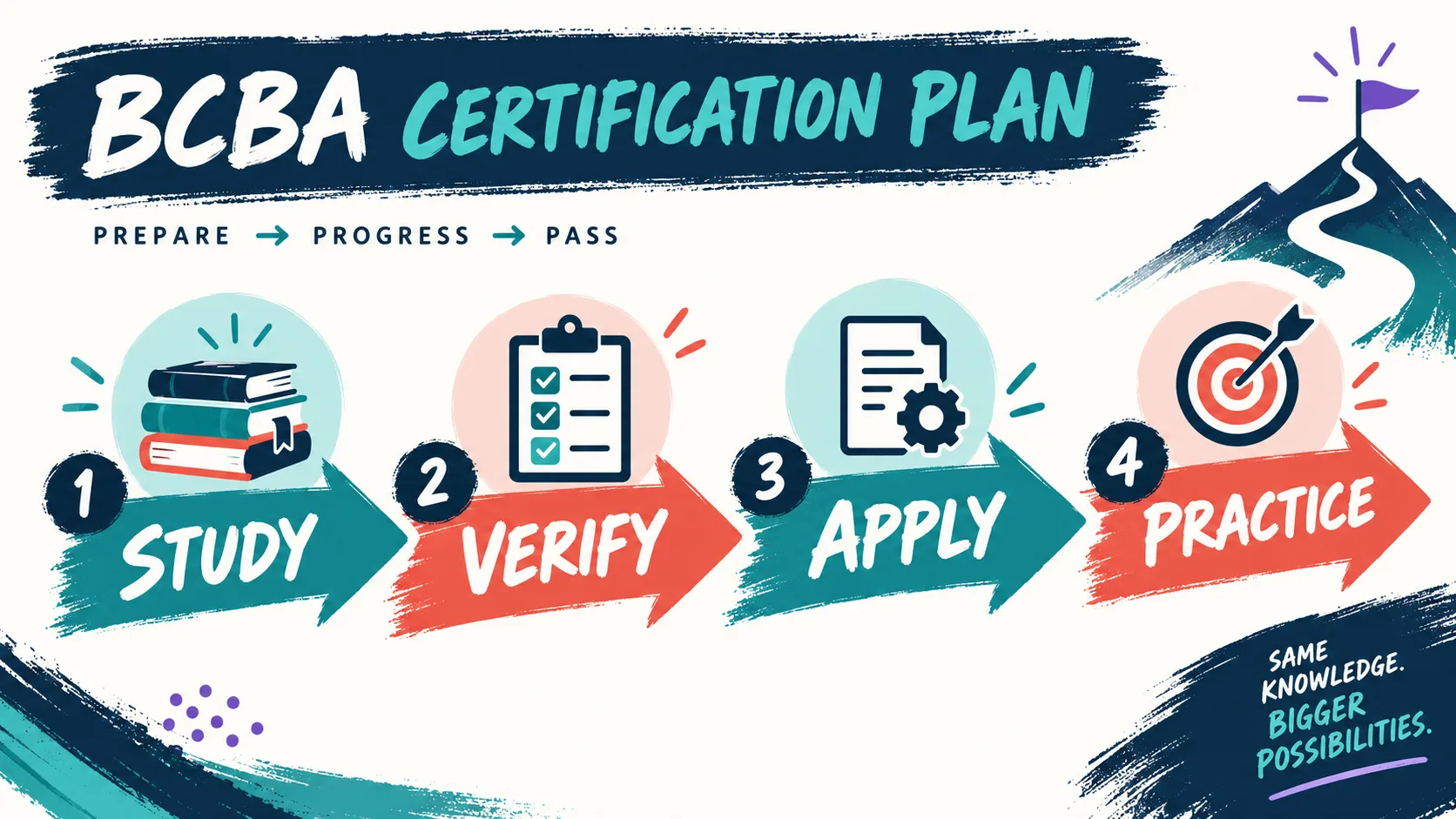
For readers who are eligible to apply in an authorized jurisdiction, the 2027 BCBA summary provides the context behind many current program advertisements. The document describes a master’s degree route, behavior-analytic coursework where applicable, supervised fieldwork, examination, and maintenance. It also states that Pathways 3 and 4 are discontinued beginning January 1, 2027.
| 2027 topic | Published high-level detail | Planning question |
|---|---|---|
| Pathways | Two BCBA eligibility pathways are listed beginning in 2027; Pathways 3 and 4 are discontinued. | Which pathway and jurisdiction apply to the applicant? |
| Fieldwork | The summary describes 2,000 supervised or 1,500 concentrated fieldwork hours, subject to the detailed handbook rules. | Can the supervisor, setting, records, and forms satisfy the current version? |
| Maintenance | The summary lists 32 CEUs per two-year cycle, including 4 ethics CEUs and 4 supervision CEUs for supervisors. | Does this apply to the person’s certification and role, and is the course documentation acceptable? |
Those numbers are useful only after jurisdiction has been resolved. A polished checklist cannot turn an unavailable application route into an available one. If you are studying from Australia for a different authorized-country pathway, document the actual residence and application facts instead of assuming that an online course location changes the policy.
Which planning mistakes are most expensive?
- Confusing Australia-based study with BACB eligibility: the location of a course does not by itself decide whether new certification applications are accepted.
- Using the wrong date: a course start date, graduation date, and complete application date may be different events.
- Mixing new and existing status: maintenance language for current certificants should not be used as a new-applicant exception.
- Reading a 2027 pathway document in isolation: eligibility requirements and jurisdiction rules must both be satisfied.
- Assuming an employer’s title equals certification: job descriptions and BACB credentials are not interchangeable.
- Trusting an outdated blog or screenshot: use the current BACB pages and document version instead of relying on a past announcement.
How should you study and plan your next step?
For a BCBA exam candidate, this topic is a good example of a rule-discrimination question. Build your notes around the facts that change the answer: residence, current versus new status, effective date, and the authority that owns the rule. Then separate the geographic policy from the general 2027 coursework and fieldwork requirements.
- Write the January 1, 2027 effective date at the top of your notes.
- Make two columns labeled “new applicant” and “existing certificant.”
- Place “cannot assume a new application route” in the first column and “verify maintenance” in the second.
- Link every numeric requirement to the current BACB requirements document rather than memorizing an isolated number.
- Check the document date whenever a question refers to Australia, the UK, Ontario, or another jurisdiction.
- Use the free BCBA mock exam for practice and feedback after you understand the rule; it is not an official BACB item bank or a guarantee of a passing score.
The best next action depends on your status. A new applicant should confirm the jurisdiction and application route before committing money. An existing certificant should audit the renewal record. A student who is unsure should ask the school to identify the credential it awards and then compare that answer with the BACB’s current policy.
BCBA certification Australia FAQ
Can someone in Australia apply for a new BCBA certification after January 1, 2027?: The BACB’s published policy says new BACB certifications in Australia will be discontinued effective January 1, 2027, and that residents of Australia will no longer be able to apply for BACB certification. Do not rely on an exception unless the BACB confirms that your specific facts fall within an official transition rule.
Will current Australian BCBAs lose their certification on that date?: No automatic cancellation is stated in the published summary. It says people who already hold BACB certifications in Australia can maintain them. They still need to meet the applicable maintenance, recertification, ethics, and continuing-education requirements.
Does an Australian ABA master’s degree automatically lead to BCBA certification?: No. A degree or course can be valuable without creating a BACB certification route. Check the current jurisdiction policy, the degree and coursework requirements, the fieldwork arrangement, and the application instructions before treating a program as BCBA-qualifying.
Can moving to another country solve the application problem?: A move may change the facts, but it does not create an automatic exception. The BACB will apply its current jurisdiction and application rules to the person’s actual circumstances. Verify residence, timing, and the complete application requirements directly.
Official sources for further verification
- BACB International Development & Support
- BACB Recent & Upcoming Changes to Requirements
- BACB July 2024 Newsletter
- BACB 2027 BCBA Requirements
- BACB Verify Certification and Certificant Registry
Bottom line: BCBA certification in Australia is not a normal evergreen application keyword anymore. The decisive facts are whether you are a new applicant or an existing certificant, whether you live in Australia under the BACB’s current jurisdiction rules, and whether the date is before or after January 1, 2027. Verify those facts first, then plan study, coursework, fieldwork, or maintenance from the current BACB source.
Take the Free BCBA Mock Exam
When you are ready to apply the idea, use the free practice resource below for additional feedback. Take the Free BCBA Mock Exam



