
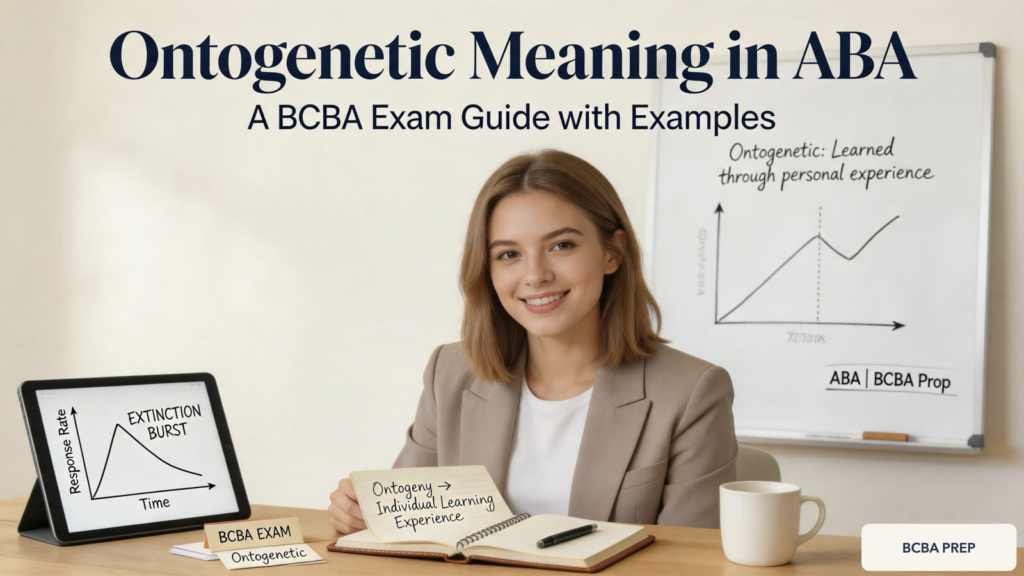
Understanding Ontogenetic Meaning in ABA
In behavior analysis, ontogenetic meaning refers to changes in behavior that result from an individual’s unique learning history. These changes are shaped by direct interactions with the environment, including reinforcement, punishment, and other contingencies. Ontogenetic variables are contrasted with phylogenetic variables, which are inherited through evolution.
Table of Contents
- Understanding Ontogenetic Meaning in ABA
- Examples of Ontogenetic Variables in Behavior Analysis
- Why Ontogenetic Variables Matter for the BCBA Exam
- Quick Checklist: Remembering Ontogenetic for the Exam
- Final Summary
For example, a child who learns to raise their hand in class because that behavior was previously reinforced is demonstrating an ontogenetic effect. The behavior is not innate; it was acquired through experience. This concept is central to applied behavior analysis because it underscores the importance of environmental variables in shaping and maintaining behavior. By understanding ontogenetic meaning, you can better analyze why a behavior occurs and how to intervene effectively.
Ontogenetic variables are often contrasted with phylogenetic variables, which are shaped by natural selection over generations. For instance, a baby’s rooting reflex is phylogenetic—it appears without direct learning. In contrast, a toddler learning to say “please” after being prompted and praised is ontogenetic. This distinction is critical for the BCBA exam, as questions frequently test your ability to differentiate between behaviors influenced by learning history versus those that are innate.
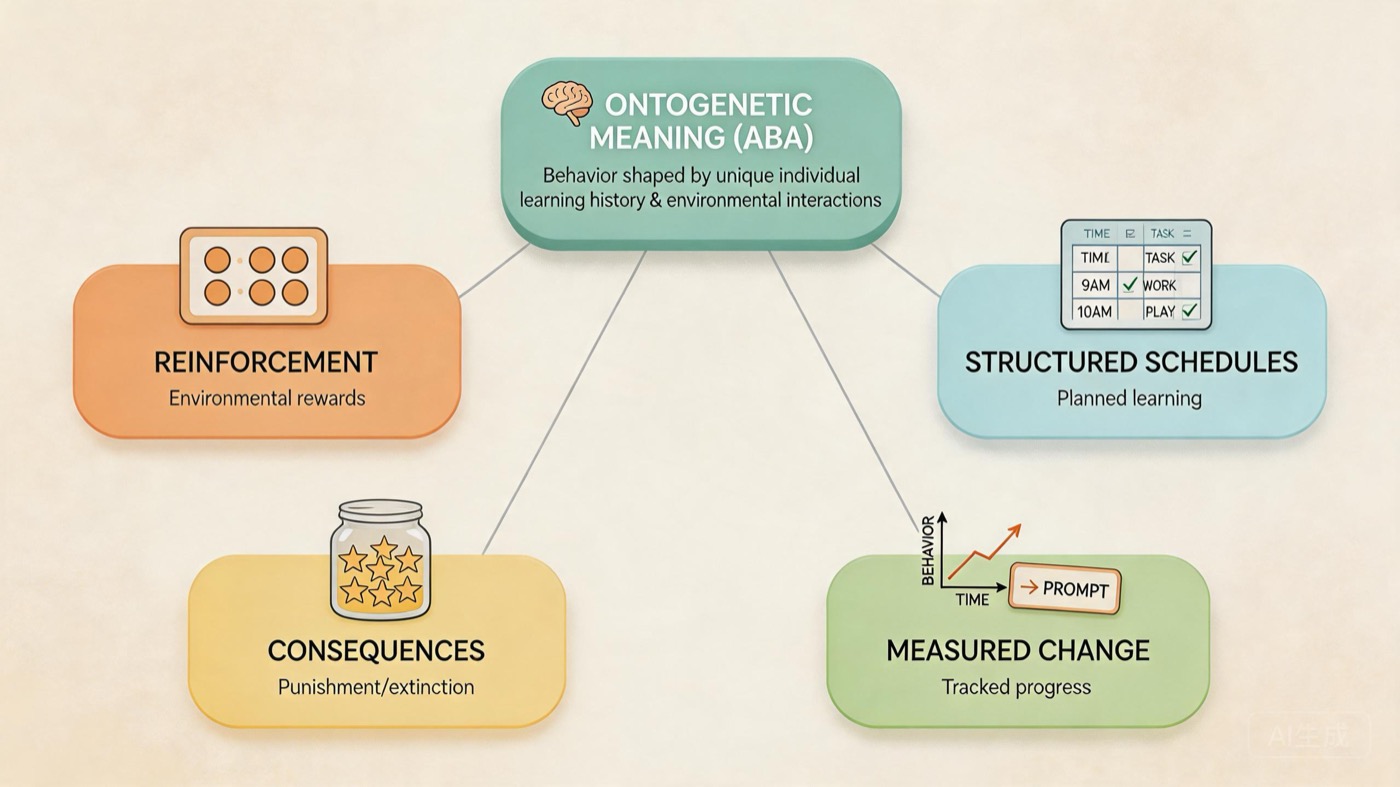
Ontogenetic vs. Phylogenetic: Key Distinction for the Exam
To master ontogenetic meaning, you must distinguish it from phylogenetic influences. The table below summarizes the differences:
- Ontogenetic: Changes due to individual learning history (e.g., a student learns to ask for help after being praised for doing so).
- Phylogenetic: Changes due to evolutionary history of the species (e.g., a baby’s rooting reflex is present at birth).
- Exam tip: Look for keywords like ‘learning history,’ ‘experience,’ or ‘reinforcement history’ to identify ontogenetic variables.
Additionally, note that some behaviors involve both ontogenetic and phylogenetic influences. For example, a child’s fear of snakes may have a phylogenetic basis (evolutionary preparedness) but can be strengthened or weakened through ontogenetic experiences (e.g., a scary encounter). The BCBA exam often expects you to identify the primary source, but be aware that interactions exist.
Examples of Ontogenetic Variables in Behavior Analysis
Applying this concept to real-life scenarios helps solidify understanding. Below are two common examples you might encounter on the exam. Each illustrates how learning history shapes behavior through specific contingencies.
Example 1: Child Refusing Homework
A child is given a math worksheet (antecedent) and throws the worksheet on the floor (behavior). The parent says, ‘Fine, no homework tonight’ (consequence). The hypothesized function is escape from a non-preferred task. This behavior is ontogenetic because the child has a history of escaping tasks through refusal. Over time, this pattern may strengthen if escape continues to be reinforced.
Example 2: Adult Nail Biting
An adult feels bored during a meeting (antecedent) and begins biting their nails (behavior). The sensory stimulation from nail biting provides automatic reinforcement. The person may have a long history of using nail biting to reduce boredom, making this an ontogenetic variable. Even though it appears automatic, the behavior was learned through repeated pairing of nail biting with relief from boredom.
Example 3: Dog Sitting on Command
A dog sits when the owner says “sit” (antecedent) and receives a treat (consequence). This behavior is ontogenetic because it was shaped through reinforcement. The dog did not sit on command at birth; it learned through a history of reinforcement. This example is frequently used on the exam to contrast with unconditioned behaviors like salivating when food is presented (phylogenetic).
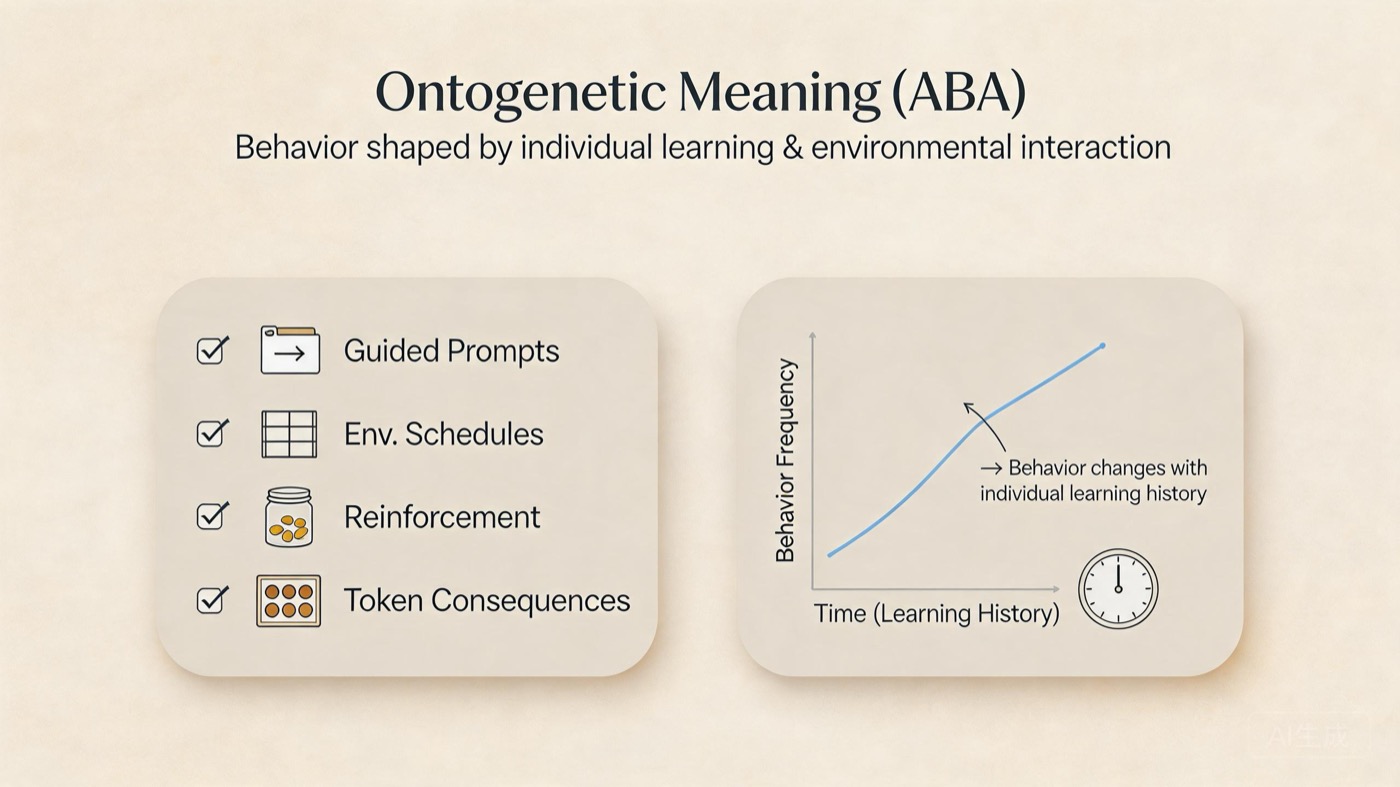
Why Ontogenetic Variables Matter for the BCBA Exam
The BCBA exam tests your ability to identify and apply behavioral concepts. Questions about ontogenetic meaning often appear in the context of functional analysis or intervention planning. Understanding the role of learning history is crucial for selecting effective interventions. For instance, if a behavior is ontogenetic, you can modify the environment to change it; if it is phylogenetic, you might need to accept it or work around it.
Common Exam Traps Involving Ontogenetic Meaning
- Confusing ontogenetic with maturation: Maturational changes (e.g., walking) are primarily phylogenetically determined, not learned. However, a child may learn to walk earlier or later depending on reinforcement.
- Ignoring learning history: Some scenarios describe behaviors that appear automatic but actually have a reinforcement history. Always consider whether the behavior could have been learned.
- Overlooking environmental variables: Ontogenetic changes require specific environmental interactions; if no learning history is described, it may not be ontogenetic.
- Mixing up with respondent conditioning: While respondent behaviors often involve phylogenetic reflexes, some conditioned responses are ontogenetic (e.g., a conditioned emotional response). Be careful to identify the source of conditioning.
Practice Prompts to Test Your Knowledge
Try these short scenarios: A dog flinches at a loud noise (phylogenetic). A dog sits when told after being trained with treats (ontogenetic). A child cries when separated from a parent (may involve both, but learning history often plays a role). Always ask: ‘Is this behavior due to the individual’s unique experiences?’ Additional scenario: A student raises their hand before speaking after being praised for doing so. This is ontogenetic because the praise reinforced hand-raising. If you struggle, review the ABC contingency and identify whether the consequence has a learning history.
Quick Checklist: Remembering Ontogenetic for the Exam
- ✅ Define ontogenetic as changes due to individual learning history.
- ✅ Contrast with phylogenetic (evolutionary) changes.
- ✅ Identify keywords: ‘learning history,’ ‘experience,’ ‘reinforcement history.’
- ✅ Apply by analyzing ABC contingencies in examples.
- ✅ Avoid confusing with maturation or innate reflexes.
- ✅ Remember that ontogenetic behaviors can be modified through environmental changes, while phylogenetic behaviors are less malleable.
Final Summary
Understanding ontogenetic meaning is essential for the BCBA exam because it is a foundational concept in behavior analysis. Ontogenetic variables emphasize the power of the environment and learning history in shaping behavior. By distinguishing ontogenetic from phylogenetic factors, you can accurately analyze behavior and design effective interventions. Practice with examples and watch for exam traps to strengthen your knowledge. For more practice, check out our BCBA mock exam and exam prep guide. For official definitions, refer to the BACB website.


