

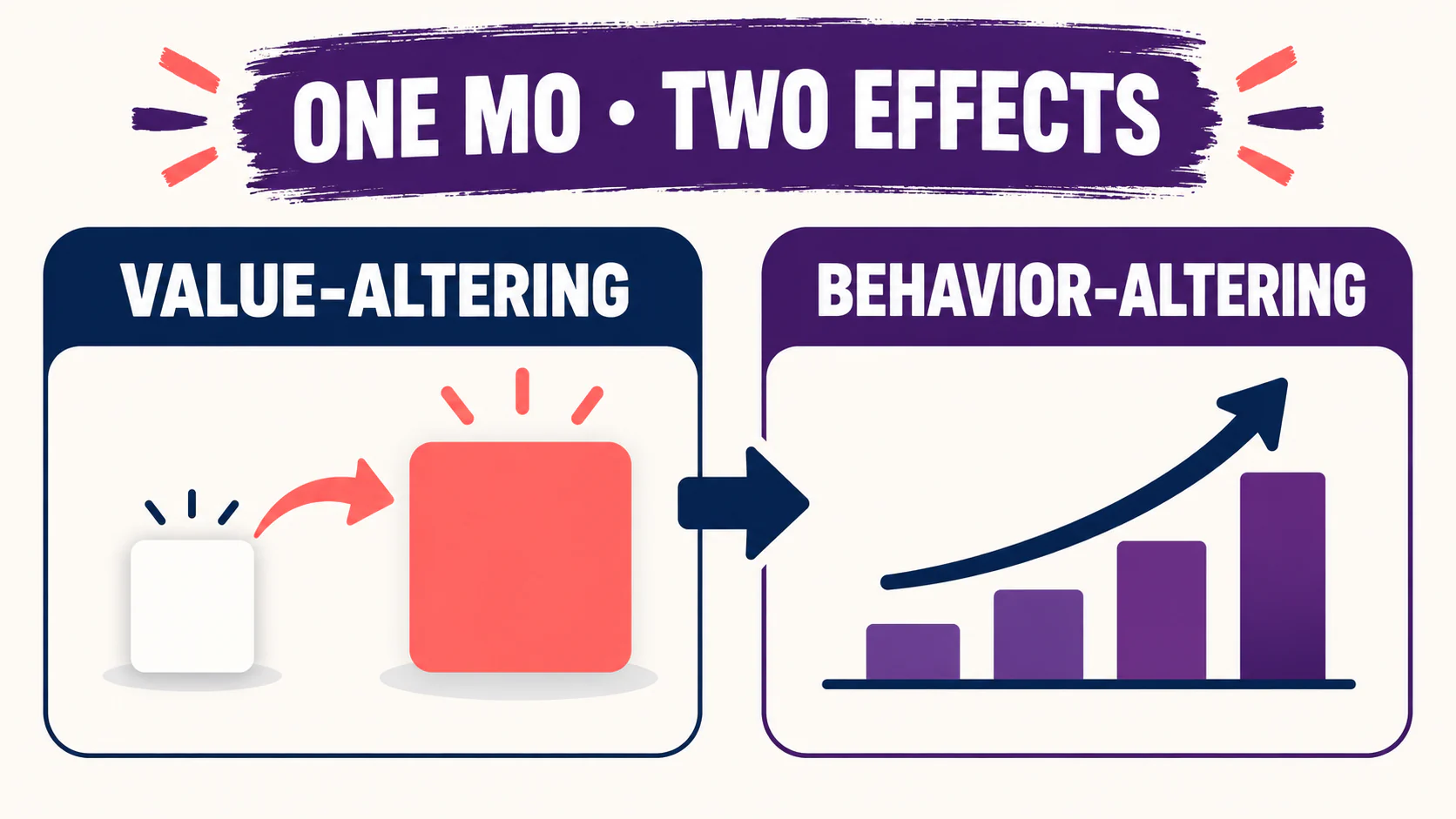
Value altering effect ABA questions are asking about one part of a motivating operation: whether an antecedent changes how effective a consequence is as a reinforcer or punisher right now. The phrase does not directly mean that the behavior will increase or decrease. That behavioral change is the separate behavior-altering effect.
Table of Contents
- Value Altering Effect ABA: The Short Answer
- See the Two Effects Inside One MO
- Use EO and AO to Trace Reinforcer Value
- Separate Value-Altering From Behavior-Altering Effects
- Do Not Confuse an MO With an SD
- Apply the Same Logic to Learned Motivating Operations
- BCBA Exam Traps and a Fast Answer Test
- Frequently Asked Questions
- Sources for Further Study
- Quick Review Checklist
- Take the Free BCBA Mock Exam
This distinction matters because BCBA exam questions often place the two effects in the same scenario. A learner who has gone without water may value water more, and drinking-related behavior may become more likely when water is available. “More valuable” describes the value-altering effect; “more likely to occur” describes the behavior-altering effect.
This study guide uses EO/AO examples, contrasts motivating operations with discriminative stimuli, and shows how to select the best answer without turning a terminology shortcut into an individualized clinical conclusion. The existing motivating operations ABA reference and related EO/AO pages remain read-only; this new URL focuses narrowly on the two effects.
Value Altering Effect ABA: The Short Answer
The value-altering effect is the part of a motivating operation that changes the current effectiveness of a consequence as a reinforcer or punisher. An establishing operation can increase that effectiveness; an abolishing operation can decrease it. The effect is about the value of the consequence, not a guarantee that a specific response will occur. The most useful exam sentence is:
An MO can change the value of a consequence and, separately, change the current frequency of behavior that has produced that consequence in the past.
For example, a period without access to a preferred activity may make that activity more reinforcing. That is the value-altering effect. If the learner then completes a task more often because the activity is available for completing it, the change in task behavior is the behavior-altering effect. The two descriptions can be true at the same time, but they answer different questions.
See the Two Effects Inside One MO
| Question in the scenario | Effect to name | What it describes |
|---|---|---|
| Did the antecedent change how effective the consequence is? | Value-altering effect | The current value of a reinforcer or punisher. |
| Did the antecedent change the momentary frequency of a related response? | Behavior-altering effect | The evocative or abative change in behavior tied to that consequence. |
| Is the consequence differentially available in the presence of a stimulus? | Discriminative function | An SD signals a history of reinforcement availability; it does not define an MO. |
A quick way to avoid the common mistake is to circle the noun in the question. If the question asks about the value of the reinforcer, choose value-altering. If it asks why a response is more or less likely now, choose behavior-altering. If it asks whether reinforcement is available in the presence of a stimulus, examine the SD relation.
Use EO and AO to Trace Reinforcer Value
Establishing operation (EO) and abolishing operation (AO) are useful study labels for opposite changes in consequence effectiveness. The label does not mean that every person will respond in the same way or that a single event explains a complete functional relation. It means the antecedent is being analyzed for its current effect on the value of a consequence and related behavior.
| Operation | Value-altering effect | Possible behavior-altering effect |
|---|---|---|
| EO for a consequence | The consequence becomes more effective as a reinforcer or punisher. | Responses with a history of producing that consequence may be momentarily more likely. |
| AO for a consequence | The consequence becomes less effective as a reinforcer or punisher. | Responses with a history of producing that consequence may be momentarily less likely. |
| Neither established | The scenario does not justify saying the consequence value changed. | Look for other variables instead of forcing an MO explanation. |
Scenario 1: A learner has had no access to a preferred game for several hours. If the game has previously reinforced completing a short task, the deprivation may increase the game’s current reinforcing value. The value-altering effect is the increased value of the game; the behavior-altering effect is the possible increase in task completion or communication that has produced the game before.
Scenario 2: A learner has just had extended access to the same game. The game may be less effective as a reinforcer for the moment. That reduced value is the value-altering effect of an AO. A lower rate of a previously game-maintained response would be the behavior-altering effect. The example is a study illustration, not a universal prediction about a particular learner.
Separate Value-Altering From Behavior-Altering Effects
The phrase “value altering effect ABA” often appears in questions that ask for the exact distinction. Use this two-column mental model:
- Value first: What consequence became more or less effective?
- Behavior second: What response with a relevant reinforcement history became more or less likely?
- Do not reverse them: A behavior change is evidence about the behavior-altering effect, not the definition of the value change.
Also remember that an MO does not create a reinforcement history out of nowhere. If a response has never produced the consequence, changing the consequence’s value does not automatically explain why that response should occur. The history connecting response and consequence remains important.
Do Not Confuse an MO With an SD
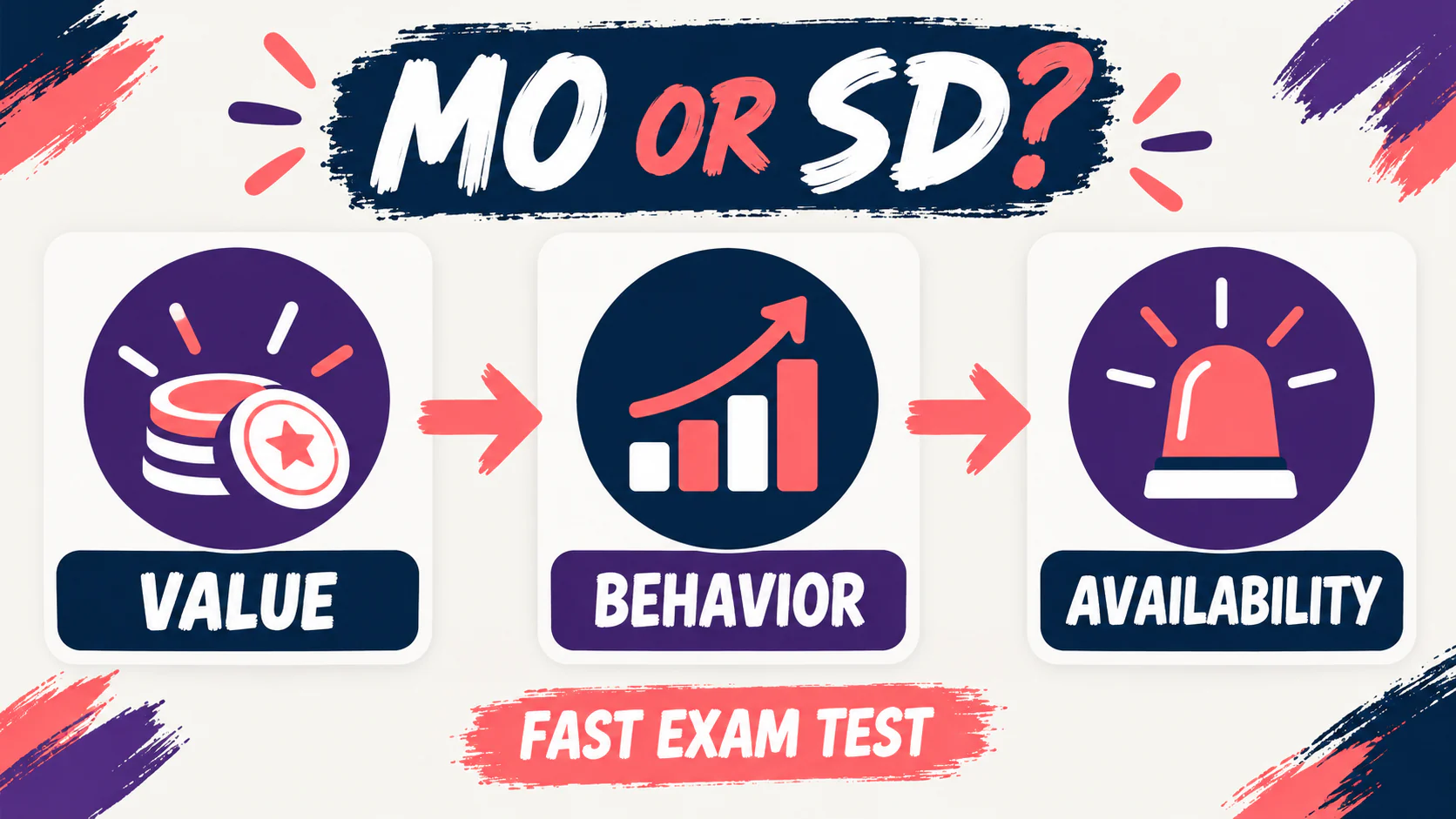
An SD and an MO can both appear before behavior, but their functions differ. An MO changes the current value of a consequence and can alter behavior related to that consequence. An SD signals that a particular consequence has been available for a response in the presence of that stimulus. In a written scenario, ask whether the key fact is value change or availability signal.
| Clue in the question | Likely concept | Ask yourself |
|---|---|---|
| The consequence is suddenly more desirable after deprivation. | Value-altering effect of an EO. | What consequence changed in value? |
| A response is more likely because it has produced the now-effective consequence. | Behavior-altering effect. | What response has the relevant history? |
| A cue signals that reinforcement is available for a response. | SD function. | What availability history does the cue signal? |
| A learned stimulus changes the value of another consequence. | Learned MO, such as a CMO relation. | What learned relation gives the stimulus its current function? |
Apply the Same Logic to Learned Motivating Operations
Some motivating operations are unconditioned, such as physiological variables, while others acquire their effects through a learning history. A conditioned motivating operation can change the value of a consequence because of a relation among stimuli, events, and outcomes. For exam purposes, the same two questions still work: What consequence value changed, and what behavior related to that consequence changed?
For example, a stimulus that signals loss of access or makes another event necessary may acquire a value-altering function through its learning history. Do not label a stimulus a CMO merely because it occurs before behavior. Look for the learned relation that explains why it changes the effectiveness of a consequence. Also keep the distinction between a CMO and an SD: one changes value, while the other signals differential availability.
BCBA Exam Traps and a Fast Answer Test
Common traps include choosing behavior-altering when the stem asks about reinforcer value, calling every antecedent an MO, treating an EO as a prompt, and assuming that an SD changes the value of reinforcement. Another error is saying that an MO “caused” the behavior without identifying the relevant reinforcement history and the other conditions in the scenario. Use this four-step test:
- Name the consequence: What reinforcer or punisher is in the scenario?
- Find the value clue: What event made that consequence more or less effective?
- Find the behavior clue: What response has a history of producing or avoiding that consequence?
- Check the availability clue: Is a stimulus signaling when the consequence is available? If so, examine SD function separately.
For more practice separating motivating operations, reinforcement, measurement, and ethics terminology, the Free BCBA Mock Exam provides a study diagnostic. It is not a substitute for supervision or a guarantee of certification.
Frequently Asked Questions
What is the value-altering effect in ABA?: It is the effect of a motivating operation that changes how effective a consequence is as a reinforcer or punisher at that moment. An EO can increase effectiveness and an AO can decrease it, depending on the consequence and context.
What is an example of a value-altering effect?: If limited access to a preferred activity makes that activity more reinforcing, the increased value is the value-altering effect. A response that has previously produced the activity may then become more likely, which is the separate behavior-altering effect.
How is value-altering different from behavior-altering?: Value-altering describes the consequence becoming more or less effective. Behavior-altering describes a momentary change in the frequency of behavior related to that consequence. One motivating operation can have both effects.
Is an SD a value-altering operation?: No. An SD signals a history of differential reinforcement availability for a response. An MO changes the current value of a consequence and can alter behavior related to that consequence. A scenario can contain both, but they should be analyzed separately.
Sources for Further Study
For current professional boundaries and credential context, review the BACB Ethics Codes, BCBA Handbook, and BCBA resource hub. For additional terminology practice, compare the value-altering effect glossary and the behavior-altering versus value-altering explainer. Recheck current course, supervision, and practice requirements before applying any example in real services.
Quick Review Checklist
Use this final checklist to turn value altering effect aba into exam-ready reasoning. The goal is not to memorize a label in isolation; it is to identify the relevant evidence and explain why the best answer fits the scenario. Key ideas to review:
- State the central definition or decision point for value altering effect aba in your own words.
- Identify the detail that makes value altering effect aba different from its closest related ABA term.
- Separate the observable facts in a scenario from assumptions that are not supported by the facts.
- Write one example and one nonexample so you can recognize the concept in a new setting.
Exam application checks:
- Ask what the question is actually requesting before comparing the answer choices.
- Mark the antecedent, response, consequence, or other evidence that supports the selected answer.
- Look for a distractor that describes a related process but does not answer the specific question.
Final self-check:
- Explain how you would verify the interpretation with clear observations or data.
- Change one detail in the scenario and decide whether your answer should change.
- Give a one-sentence rationale that a supervisor or study partner could evaluate.
Take the Free BCBA Mock Exam
When you are ready to apply the idea, use the free practice resource below for additional feedback. Take the Free BCBA Mock Exam



