
Handbook of ABA can mean more than one thing. A searcher may be looking for a book titled Handbook of Applied Behavior Analysis, the official BACB handbook for a credential, a broad ABA reference text, or a compact BCBA exam study guide. Those resources can be useful, but they are not interchangeable and they do not have the same authority.
Table of Contents
- Handbook of ABA: The Short Answer
- Separate Official Guidance, Textbooks, and Study Guides
- Match the Resource to the Job
- Choose a Resource Without Losing the Exam Target
- Verify Currency, Scope, and Copyright
- Build a Resource-Based BCBA Study Plan
- BCBA Exam Resource Checklist and FAQ
- Frequently Asked Questions
- Sources for Further Study
- Quick Review Checklist
- Take the Free BCBA Mock Exam
This page is a resource-selection guide, not a book reproduction or a claim that one commercial title is the official BACB handbook. If you came for a specific edition, use the publisher’s page to verify the title, authors, format, and availability. If you came for certification requirements, start with the current BACB BCBA Handbook and official resource hub.
The goal is simple: identify what you need, choose the resource that performs that job, verify that it is current, and pair it with active practice. The existing BACB handbook guide and BCBA study guide remain read-only references; this new page focuses on disambiguation.
Handbook of ABA: The Short Answer
There is not one universal object called “the handbook of ABA.” In search results, the phrase can point to a publisher’s Handbook of Applied Behavior Analysis, a professional reference edited by several authors, or an official BACB handbook that explains a credential or process. Before buying, downloading, or studying, ask: Am I looking for requirements, a reference text, an exam guide, or practice?
Use the official BACB source for current certification rules, eligibility, applications, maintenance, and other credential information. Use a textbook or handbook of applied behavior analysis for deeper concepts, research discussions, and examples. Use a study guide for review structure. Use practice questions to test retrieval and decision making. A practice product should not be treated as the authority for a policy that belongs to BACB.
Separate Official Guidance, Textbooks, and Study Guides
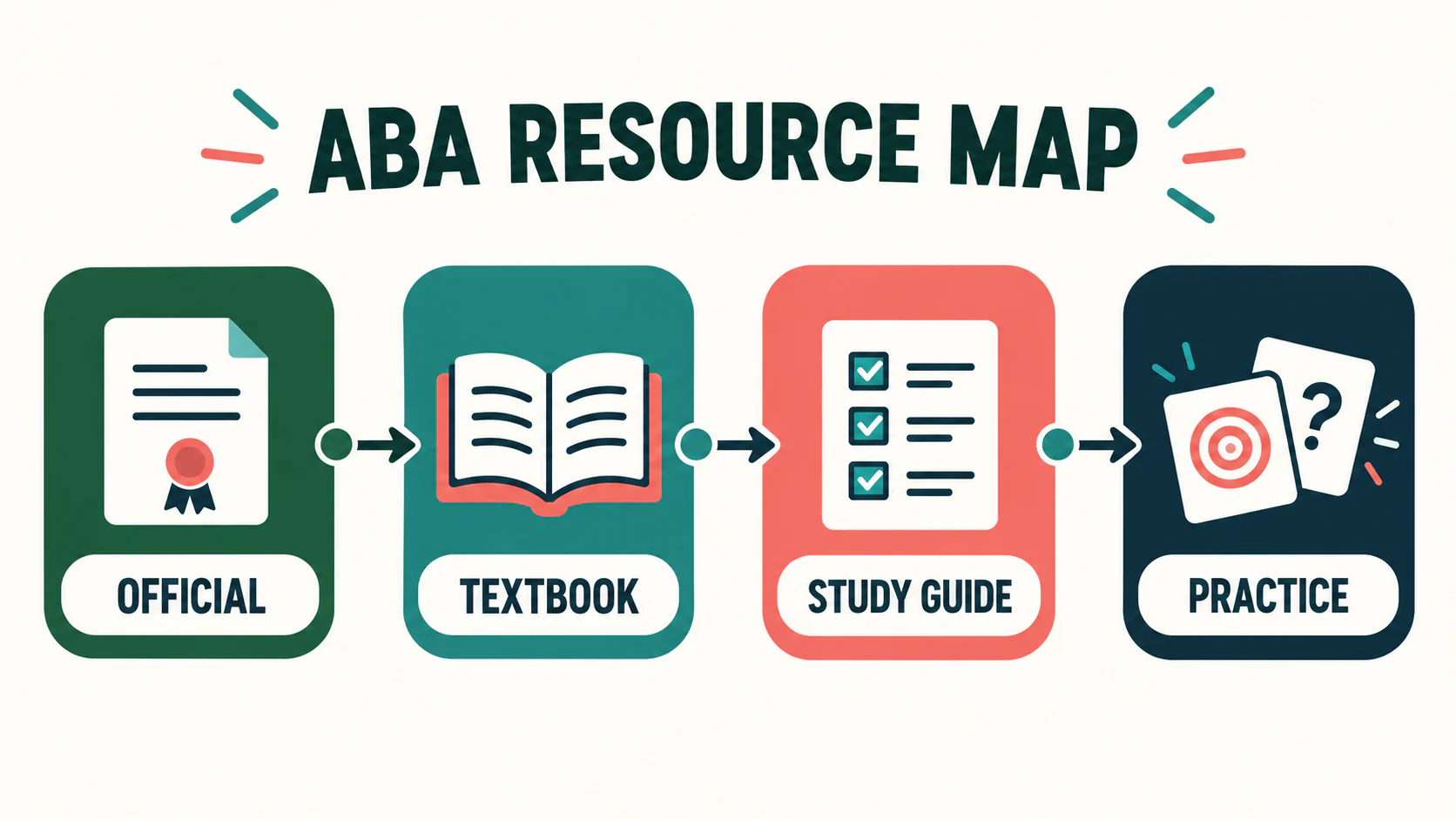
| Resource type | Best job | What it cannot replace |
|---|---|---|
| Official BACB handbook | Verify current credential requirements, procedures, and official terminology. | Coursework, supervised fieldwork, or professional judgment. |
| ABA reference handbook or textbook | Build conceptual depth, read research context, and compare applications. | The current source of BACB policy or a guarantee that every example fits your setting. |
| BCBA study guide | Organize review around domains, definitions, and common decision patterns. | The official handbook, supervision, and a complete learning experience. |
| Practice questions | Reveal retrieval gaps and train application under time pressure. | Instruction, feedback from a qualified supervisor, or official exam policy. |
These roles can overlap. A large reference book may contain review questions, and a study guide may explain concepts. The distinction is still useful because it tells you where to verify a claim. When the topic is an application deadline or current requirement, the official source wins. When the topic is a conceptual comparison, consult a sound text and class notes, then verify any policy claim separately.
Match the Resource to the Job
Choose a resource by the job you need it to perform, not by the word “handbook” on the cover. A resource that is excellent for conceptual depth may be too slow for final review. A short exam guide may be efficient for recall but too thin for learning a difficult measurement or intervention concept.
| Your immediate need | Start with | Check before relying on it |
|---|---|---|
| “What does BACB currently require?” | The current official BACB handbook and resource hub. | Publication date, applicable pathway, and whether the page is official. |
| “Why does this ABA concept work?” | A reputable textbook, course text, or research-informed handbook. | Author expertise, references, definitions, and distinction between evidence and opinion. |
| “What should I review this week?” | A study guide mapped to the current exam content outline or course plan. | Edition, domain coverage, explanations, and current alignment. |
| “Can I apply this under time pressure?” | Practice questions followed by error analysis. | Rationale quality, ambiguity, feedback, and whether results guide the next study step. |
Choose a Resource Without Losing the Exam Target
For BCBA preparation, do not read a long ABA handbook from the first page to the last page simply because it is comprehensive. Start with the current official exam and credential information, then use the resource to answer a defined learning question. A practical sequence is:
- Locate the domain or skill: name the concept you need to learn, such as measurement, assessment, intervention, ethics, or supervision.
- Study the explanation: read the definition, examples, nonexamples, assumptions, and limits. Mark terms that are easy to confuse.
- Apply it: solve a short scenario without looking at the answer. Explain why the other options are less appropriate.
- Record the error: label the gap as vocabulary, discrimination, measurement, application, or test-taking process.
- Return to the source: use the official handbook for policy and current requirements, and use your course or supervisor for individualized clarification.
This approach protects you from a common study failure: collecting many books without building retrieval or application. One deep reference, one current official source, and a deliberate practice loop can be more useful than a shelf of overlapping summaries.
Verify Currency, Scope, and Copyright
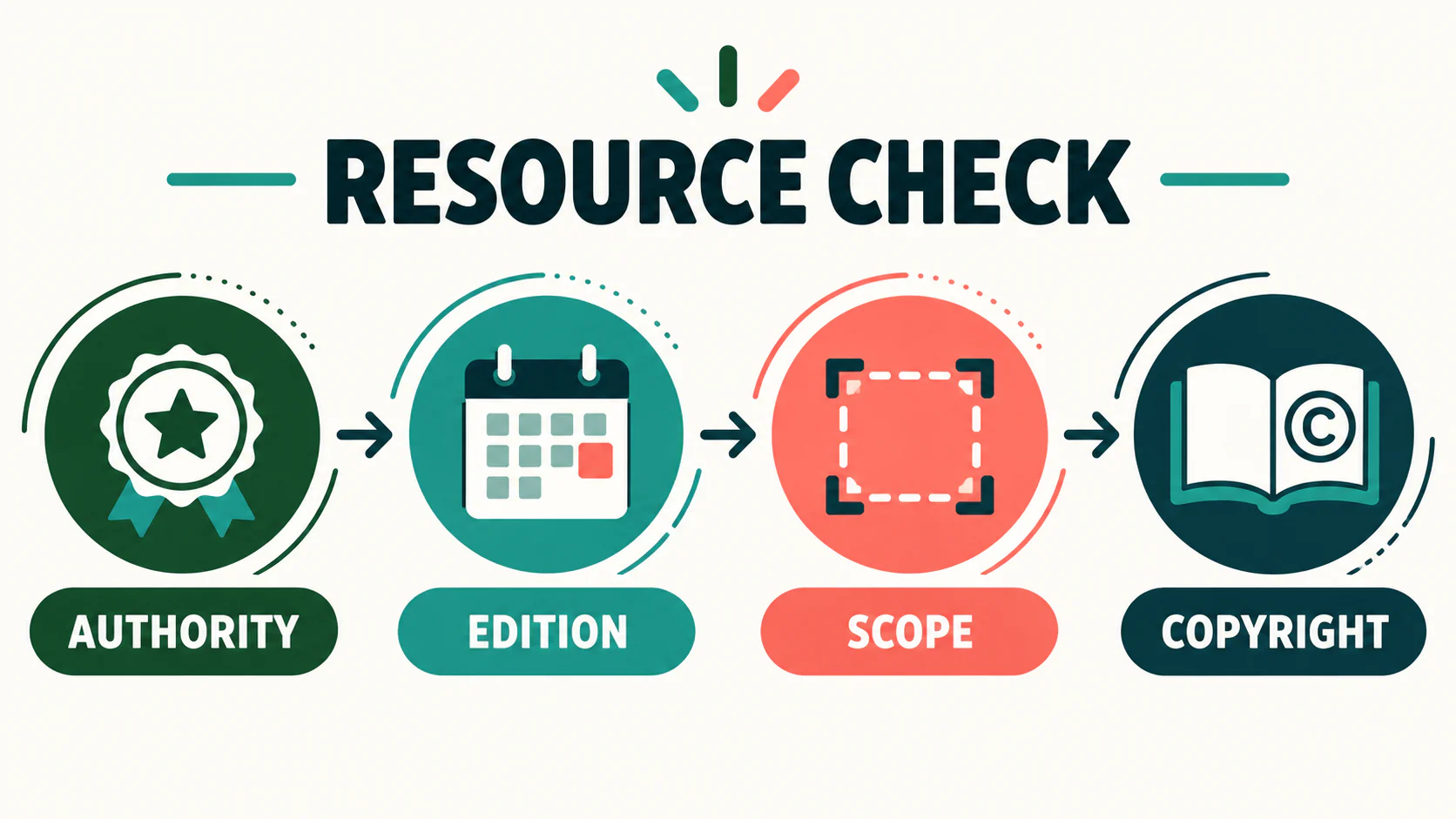
Before you trust a “handbook of ABA” result, perform a short source check. The title alone does not tell you whether a page is official, whether the edition is current, or whether it is intended for certification requirements. Resource pages can also preserve old terminology after the exam or credential process changes.
- Authority: Is the claim about BACB policy hosted by BACB, or is it an author’s summary?
- Currency: Does the page show an edition, revision date, or link to current official updates?
- Scope: Is this a reference text, a study guide, a supervision handbook, or a product page?
- Evidence: Does the resource explain its sources and distinguish research from opinion?
- Copyright: Are you using a legitimate copy, and are you avoiding reposting chapters, answer keys, or images?
| Red flag | Why it matters | Safer action |
|---|---|---|
| A page calls itself “official” without a BACB source. | Students may mistake marketing language for credential authority. | Verify the claim at bacb.com. |
| The edition or revision date is unclear. | Older requirements or terminology may remain. | Check the publisher and current BACB resource before studying from it. |
| The answer key is sold or shared without rationale. | A score cannot tell you which concept or discrimination failed. | Use practice that explains the reasoning and keeps the source legitimate. |
| A scanned copy includes chapters or images posted without permission. | It may violate copyright and may not be a reliable edition. | Use the publisher, library, course, or authorized seller. |
Build a Resource-Based BCBA Study Plan
A simple plan can combine the strengths of different resource types:
- Anchor: keep the current BACB handbook and official resource hub as the authority for requirements and terminology.
- Learn: use a textbook or handbook chapter to build depth on one difficult concept.
- Condense: write a short definition, example, nonexample, and boundary in your own words.
- Practice: answer scenarios, record the reason for each choice, and review errors rather than only scores.
- Recheck: revisit official updates and ask a qualified supervisor or instructor about questions that depend on your situation.
Do not use a commercial book to make a clinical decision for a real learner. A handbook can expand knowledge, but it cannot replace assessment, consent, supervision, cultural responsiveness, or the professional responsibilities that apply to actual services.
BCBA Exam Resource Checklist and FAQ
Before adding a resource to your study plan, ask:
- Is this an official BACB source, a publisher book, a course text, a study guide, or a practice product?
- Which exact learning job will it perform this week?
- What edition, revision date, and source references does it provide?
- Does it explain why an answer is correct and why alternatives are weaker?
- Am I using a legitimate copy and protecting copyrighted material?
For targeted retrieval and application practice after you have identified your official source, the Free BCBA Mock Exam can help you diagnose which concepts need another pass. It is a study tool, not the official BACB handbook and not a guarantee of certification.
Frequently Asked Questions
Is there one official Handbook of ABA?: No single phrase identifies one universal book. Some searchers mean a book titled Handbook of Applied Behavior Analysis; others mean an official BACB handbook or a BCBA study resource. Verify the publisher or BACB source before assuming what the result represents.
Is a handbook of applied behavior analysis the same as the BCBA Handbook?: Usually not. A handbook of applied behavior analysis is typically a broad professional or academic reference, while the official BCBA Handbook is a BACB resource for credential information and procedures. They can serve different study jobs.
Can I use an ABA handbook to prepare for the BCBA exam?: Yes, a reputable reference can deepen conceptual understanding, but pair it with current official BACB information, your course or supervision requirements, and practice that tests application. Check edition and scope before relying on any claim about the exam.
Should I download a free PDF of an ABA handbook?: Use only legitimate copies from a publisher, library, course, or authorized source. Avoid reposted chapters, answer keys, and images when permission is unclear. Copyright and edition reliability both matter.
Sources for Further Study
Start with the official BACB BCBA Handbook, BCBA resource hub, and BACB Ethics Codes. If you mean a specific book, verify it at the relevant publisher page, such as the Guilford listing or the Springer listing. Resource availability and requirements can change, so check the current source before relying on it.
Quick Review Checklist
Use this final checklist to turn handbook of aba into exam-ready reasoning. The goal is not to memorize a label in isolation; it is to identify the relevant evidence and explain why the best answer fits the scenario. Key ideas to review:
- State the central definition or decision point for handbook of aba in your own words.
- Identify the detail that makes handbook of aba different from its closest related ABA term.
- Separate the observable facts in a scenario from assumptions that are not supported by the facts.
- Write one example and one nonexample so you can recognize the concept in a new setting.
Exam application checks:
- Ask what the question is actually requesting before comparing the answer choices.
- Mark the antecedent, response, consequence, or other evidence that supports the selected answer.
- Look for a distractor that describes a related process but does not answer the specific question.
Final self-check:
- Explain how you would verify the interpretation with clear observations or data.
- Change one detail in the scenario and decide whether your answer should change.
- Give a one-sentence rationale that a supervisor or study partner could evaluate.
Take the Free BCBA Mock Exam
When you are ready to apply the idea, use the free practice resource below for additional feedback. Take the Free BCBA Mock Exam



