Setting up an ABA practice involves more than registering a business and accepting a first client. In other words, setting up ABA practice means aligning the clinical model, state or provincial rules, business entity, payer credentialing, privacy systems, supervision, documentation, and emergency procedures. The exact order depends on jurisdiction and payer, but the safety principle is consistent: build the system that protects clients before trying to scale it.
Table of Contents
- Setting Up ABA Practice: What Must Be Ready First?
- Which ABA Practice Model Fits the Work?
- How Do You Confirm Scope, License, and Authority?
- What Business and Financial Systems Are Needed?
- How Do You Build Clinical Governance?
- What About NPI, Credentialing, and Billing?
- Which Privacy and Record Systems Should Be Ready?
- How Do You Hire and Supervise the Team?
- How Should Marketing and Referrals Work?
- How Is Practice Setup Tested on the BCBA Exam?
- ABA Practice Launch Checklist
- Take the Free BCBA Mock Exam
This guide is for BCBA candidates and behavior analysts exploring a solo practice, consultation service, home-based model, or small clinic. It is a planning framework, not legal, tax, insurance, licensing, or billing advice. Before spending money or treating clients, verify requirements with the relevant regulator, attorney, accountant, insurer, and payer. Table of Contents
Setting Up ABA Practice: What Must Be Ready First?
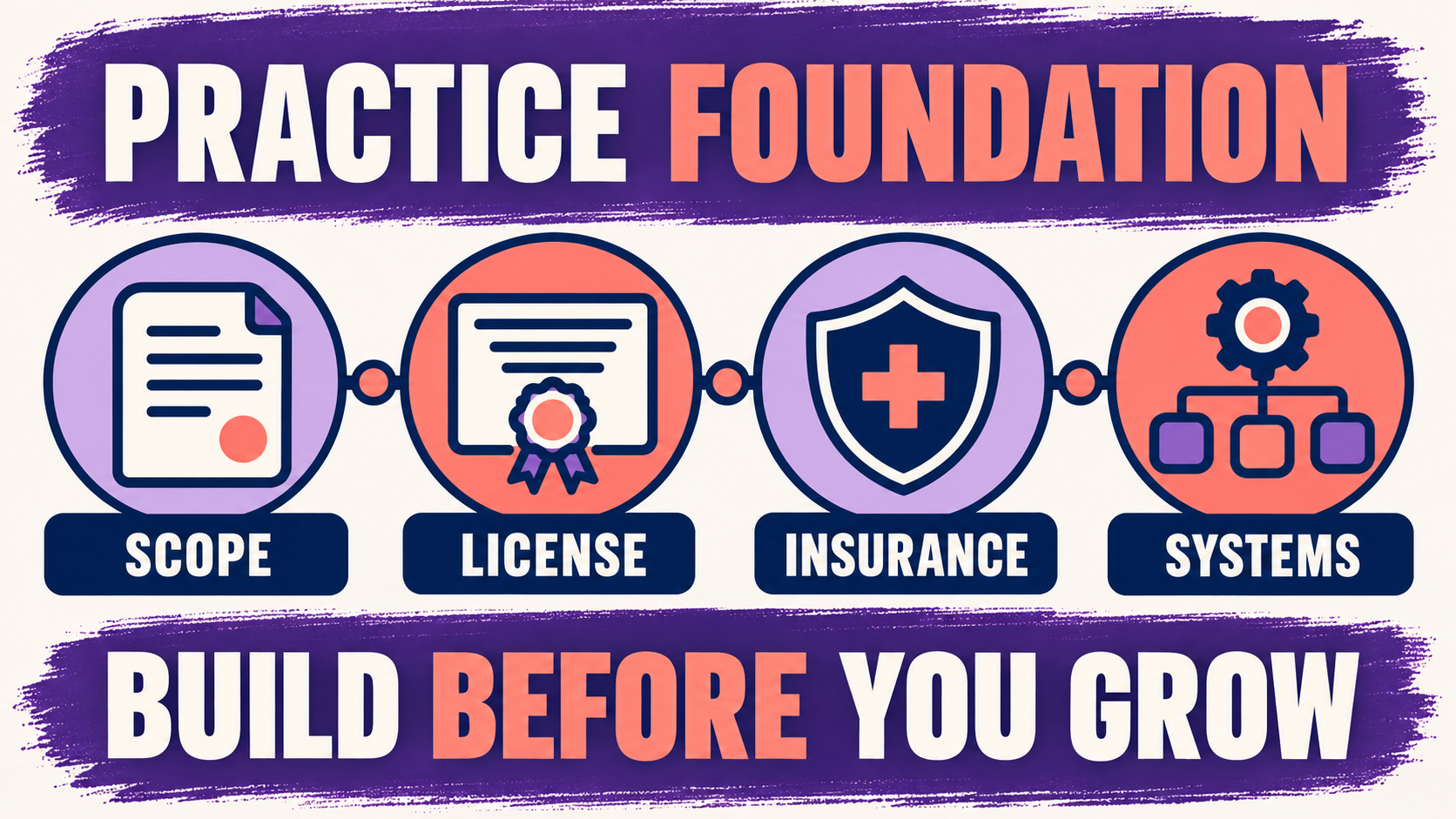
The first question is not “What software should I buy?” It is what services will I provide, to whom, in which setting, and under which authority? A solo BCBA who offers direct assessment and caregiver consultation has a different risk profile from a clinic that employs RBTs, bills multiple payers, and serves clients in homes, schools, and community settings.
Write a one-page scope statement before choosing a name or signing a lease. Include the population, referral types, service settings, assessment methods, intervention boundaries, supervision responsibilities, emergency escalation path, and services you will refer out. The BACB describes BCBAs as graduate-level practitioners who provide behavior-analytic services, but certification does not replace a jurisdiction’s licensing or business requirements. A useful launch sequence has four gates:
- Authority: you are qualified and legally authorized for the work you plan to offer.
- Clinical safety: assessment, consent, treatment, supervision, crisis, and referral procedures are documented.
- Operational control: records, scheduling, payroll, billing, privacy, and incident reporting work in a test case.
- Financial resilience: the practice can pay people and maintain care while claims, credentialing, or referrals are delayed.
Which ABA Practice Model Fits the Work?
Choose the smallest model that can safely meet the referral need. Common models include:
- Solo BCBA practice: direct behavior-analytic assessment, consultation, caregiver training, or supervision with a small caseload.
- Consulting practice: school, organization, health, or caregiver consultation without a clinic or technician workforce.
- Home or community agency: a BCBA supervises technicians who implement plans across natural settings.
- Clinic model: a physical site with multiple employees, scheduling capacity, safety procedures, facility requirements, and higher fixed costs.
- Hybrid practice: a combination of telehealth, home, school, clinic, or consultation services.
The model affects everything downstream: staffing, credentialing, space, equipment, liability coverage, client transportation, data systems, and supervision. Do not advertise a full-service clinic while operating with the systems of a solo consultancy. Start with a defined service promise and expand only when the clinical and administrative controls are ready.
How Do You Confirm Scope, License, and Authority?
Behavior analysis is regulated differently across jurisdictions. Some places require a behavior-analyst license in addition to certification; others regulate the facility, payer enrollment, or particular clinical claims. The BCBA Handbook is an important certification reference, but it is not a substitute for the law where services are delivered. Before launch, verify:
- the active BCBA certification and any renewal or continuing-education obligations;
- state, provincial, or territorial behavior-analyst licensure and supervision rules;
- business, professional, facility, zoning, and local permits;
- the allowed use of titles, certification marks, and claims in public advertising;
- prescriber, diagnostic, mental-health, crisis, or medical boundaries that require collaboration or referral; and
- employment, contractor, wage, background-check, and workplace-safety requirements for the team.
Document the source and date for each answer. Rules change, and “a colleague told me” is not a compliance system. Keep a dated evidence file for each decision, renewal, change, and jurisdictional check so the practice can explain why it acted.
What Business and Financial Systems Are Needed?
The U.S. Small Business Administration’s startup guide treats market research, business structure, registration, licenses, insurance, finances, and tax planning as separate decisions. Use that as a general business checklist, then ask professionals how it applies to a health or human-services practice in your jurisdiction. At minimum, decide how the practice will handle:
- Entity and ownership: choose a structure with professional and tax advice; do not assume an LLC solves every professional-practice question.
- Tax identity and banking: obtain the identifiers and accounts required for the entity, keep business and personal funds separate, and define who approves payments.
- Insurance: review professional liability, general liability, workers’ compensation, cyber coverage, property, vehicle, and any payer requirements.
- Cash flow: budget payroll, credentialing delays, denied claims, cancellations, software, rent, supervision, and unpaid administrative time.
- Contracts: use reviewed agreements for clients, employees, contractors, landlords, vendors, referral partners, and payer participation.
The goal is not to make the practice look large. It is to make responsibilities, money, records, and risk visible before the first case creates pressure.
How Do You Build Clinical Governance?
A practice needs clinical controls even when it has only one BCBA. Create templates and decision rules for referral screening, records review, assessment, treatment planning, consent, assent, progress review, discharge, incident reporting, restrictive procedures, crisis response, and referral. The BACB Ethics Code emphasizes competence, client welfare, informed consent, confidentiality, accurate public statements, and responsible practice. Clinical governance should answer:
- Who decides whether a referral is appropriate?
- How are goals selected with the client and stakeholders rather than for convenience?
- How are assent, refusal, privacy, dignity, and cultural context respected?
- What data trigger a plan review, consultation, pause, discharge, or referral?
- How will the practice respond to a safety event outside routine session procedures?
Do not copy a treatment-plan template without understanding its assumptions. A form can standardize documentation, but it cannot establish competence or clinical necessity.
What About NPI, Credentialing, and Billing?
If the practice will bill health plans, payer setup is often a separate project from business formation. The Centers for Medicare & Medicaid Services explains the National Provider Identifier standard, but an NPI is an identifier—not a license, credentialing approval, network contract, or guarantee of payment. Build a payer matrix that records:
| Area | Question to document | Owner |
|---|---|---|
| Identity | Which individual and organization identifiers, licenses, and taxonomy details are required? | Owner or credentialing lead |
| Contract | Is the practice in network, and which settings, codes, and providers are covered? | Credentialing lead |
| Authorization | What requires prior authorization, what documents are needed, and when does approval expire? | Clinical and billing leads |
| Claims | Who checks eligibility, units, notes, modifiers, denials, appeals, and payment reconciliation? | Billing lead |
Never tell a family that an NPI or submitted claim guarantees coverage. Confirm benefits and authorization with the payer and explain the family’s financial responsibility in writing.
Which Privacy and Record Systems Should Be Ready?
Choose a secure record system before collecting protected health information. The U.S. Department of Health and Human Services HIPAA resources are a starting point for covered entities and business associates, but the practice must determine which rules apply to its model and jurisdiction.
Test the entire record lifecycle: intake, consent, releases, assessment, progress notes, data export, caregiver access, correction requests, incident logs, retention, secure messaging, staff offboarding, and destruction. Give each worker the minimum access needed for the role. A convenient app is not automatically compliant because it has a password.
How Do You Hire and Supervise the Team?
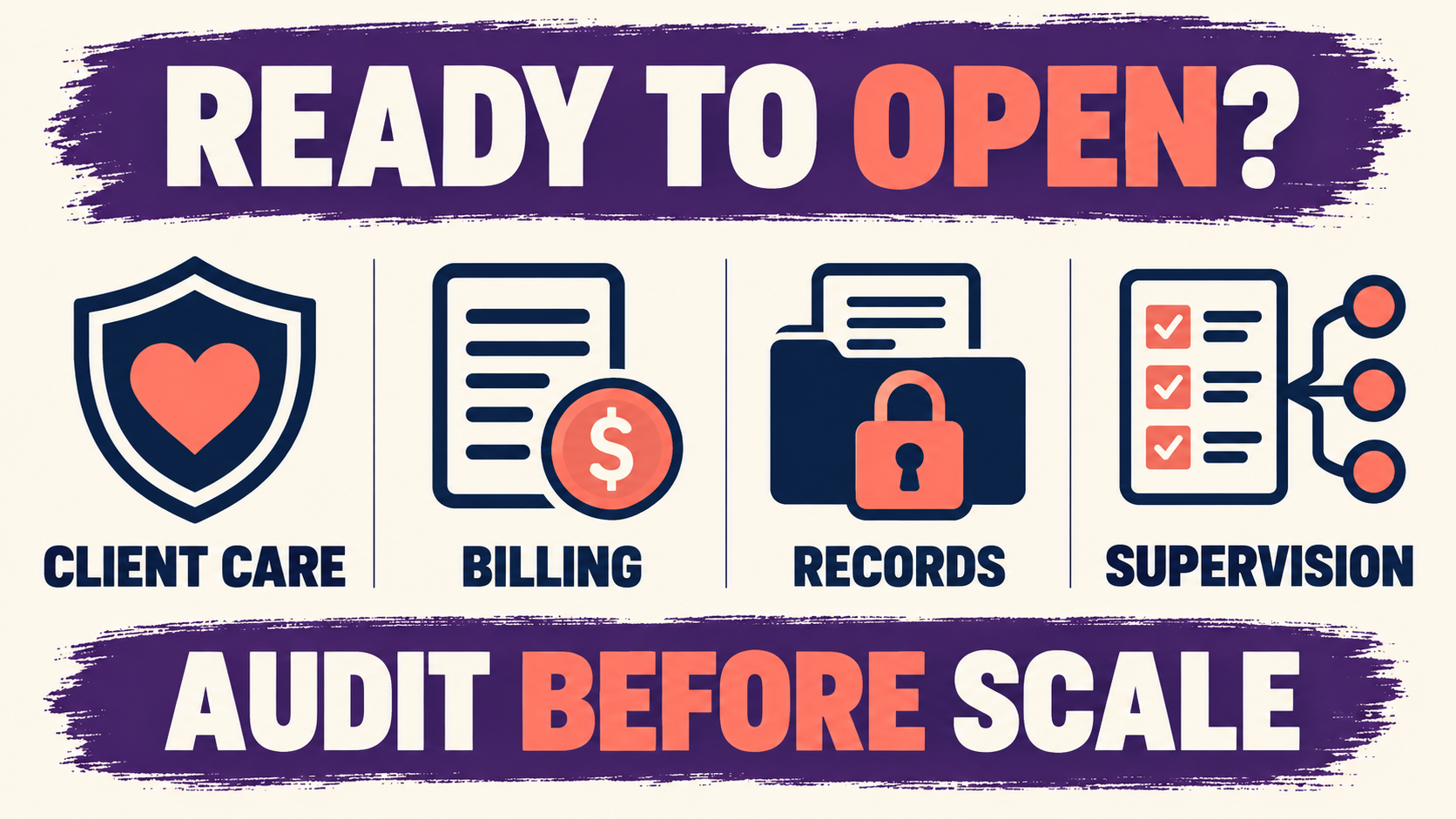
When the practice employs or contracts with RBTs, BCaBAs, technicians, administrators, or other professionals, define responsibility before the first shift. The BACB’s supervision and training guidance distinguishes roles and supervision requirements. The BCBA who signs the plan remains responsible for decisions that cannot be delegated merely because a task is inconvenient. Prepare:
- role descriptions and competency checks;
- orientation to client dignity, consent, assent, privacy, safety, and reporting;
- supervision frequency, observation, feedback, and documentation rules;
- coverage plans for illness, turnover, vacations, and emergencies; and
- a process for escalating clinical, ethical, billing, or safety concerns.
Do not grow the caseload faster than the practice can supervise, review data, answer families, and maintain records. Capacity is a clinical variable.
How Should Marketing and Referrals Work?
Use marketing language that describes the service accurately. Do not promise a cure, guaranteed independence, a fixed outcome, or a service outside the provider’s license. Explain the population and setting you can actually serve, the referral information you need, the expected response time, and the situations that require another professional.
Build a referral map rather than relying on one source. Identify pediatric, medical, mental-health, school, speech, occupational, and crisis partners where appropriate. Obtain permission before sharing information, and do not accept a referral that the practice cannot staff or supervise safely. A full waitlist is not a reason to lower screening standards.
How Is Practice Setup Tested on the BCBA Exam?
The BCBA exam is not a business-license exam, but practice setup can appear through ethics, scope, supervision, documentation, assessment, and public-statement scenarios. Use the BCBA Test Content Outline as the controlling exam reference. In a practice-setup question, ask:
- What decision protects client welfare right now?
- Does the analyst have the training, competence, authorization, and resources to provide the service?
- Which task can be delegated, and which responsibility must remain with the qualified professional?
- Is the public statement accurate, supportable, and consistent with the actual service?
- What documentation, consultation, referral, or corrective action is required?
For scenario practice, the free BCBA mock exam can help you rehearse ethics, supervision, assessment, and scope decisions. It is a study aid, not official BACB material or business advice.
ABA Practice Launch Checklist
Before accepting the first referral, confirm that you have:
- a defined population, setting, service scope, and referral-out boundary;
- verified certification, licensure, permits, entity, contracts, and insurance;
- a tested assessment, consent, treatment-plan, progress-review, incident, discharge, and referral workflow;
- secure records, communication, data, access-control, backup, and retention procedures;
- a payer, NPI, credentialing, authorization, billing, denial, and cash-flow plan;
- role, supervision, competency, scheduling, and emergency coverage systems; and
- marketing language that is accurate, person-centered, and within scope.
The bottom line is that setting up an ABA practice is a clinical-governance project as much as a business project. Form the entity, verify authority, build client-protection systems, test billing and records, and grow only as fast as the practice can supervise and deliver good care. When a rule is jurisdiction-specific, document the question and obtain qualified local advice before treating it as settled.
Take the Free BCBA Mock Exam
If you want a low-pressure way to check your recall, use the free practice resource below. Take the Free BCBA Mock Exam