

The best questions to ask during BCBA interview conversations help you evaluate the job, not just impress the interviewer. A role can sound attractive because of its title, salary range, or flexible schedule, yet still provide weak clinical support, unrealistic productivity expectations, or little opportunity to make data-based decisions. Your questions should reveal how the organization serves clients, supports BCBAs, develops staff, and handles the responsibilities that come with behavior-analytic practice.
Table of Contents
- Questions to Ask During BCBA Interview: What to Learn Before You Accept
- What Should You Ask About the Clinical Model?
- What Should You Ask About Caseload and Schedule?
- What Should You Ask About Data and Decision-Making?
- What Should You Ask About Team Support?
- What Should You Ask About Ethics and Client Dignity?
- What Should You Clarify About the Job Terms?
- What Are Interview Red Flags?
- How Should You Prepare Your Own Questions?
- Frequently Asked Questions
- Sources for Further Study
- Take the Free BCBA Mock Exam
Use this guide to prepare questions before the interview. You do not need to ask every question in one conversation. Choose the ones that match the role, then listen for specific answers, examples, and follow-up details. A thoughtful interviewer should be able to explain the clinical model, caseload expectations, supervision structure, documentation process, and ethical escalation path without treating reasonable questions as a problem.
Questions to Ask During BCBA Interview: What to Learn Before You Accept
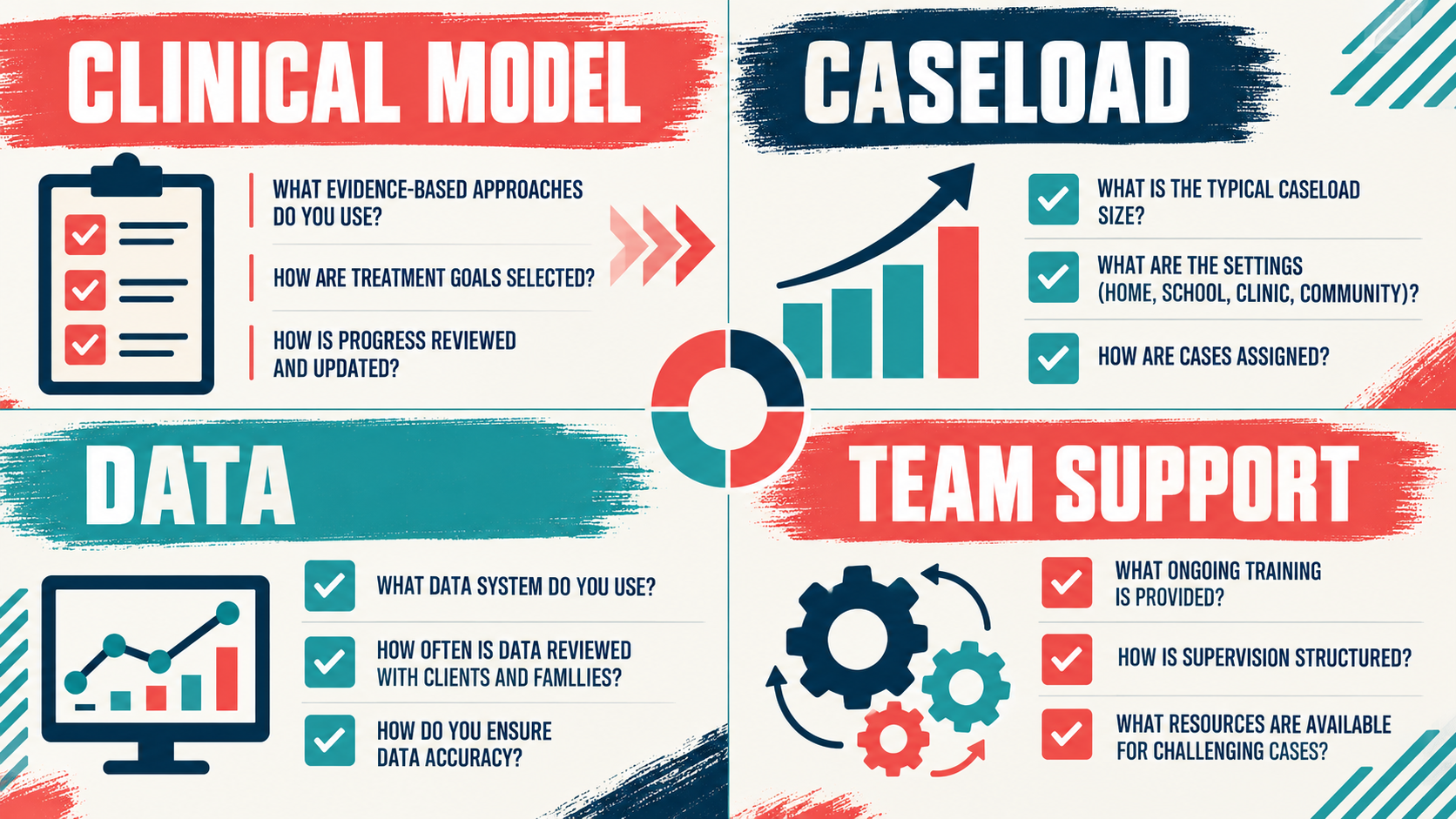
Start with questions that connect the job description to daily clinical work. Ask what you would actually be responsible for, how success is measured, who makes treatment decisions, and what support is available when a case becomes complex. The table below is a quick menu; select the questions that matter most for the role rather than reading it as a script.
| Interview area | Question to ask | What to listen for |
|---|---|---|
| Clinical model | How are assessment and treatment decisions made? | Specific examples of data review, individualized plans, and clinical consultation |
| Caseload | How many clients and direct reports would I support? | A realistic range, ramp-up plan, travel expectations, and coverage for absences |
| Team | What support is available for difficult cases? | Scheduled consultation, behavior-specific feedback, and an escalation pathway |
| Quality | How is clinical quality evaluated? | Client outcomes, treatment integrity, caregiver collaboration, ethics, and documentation—not only billable units |
What Should You Ask About the Clinical Model?
Ask how the organization moves from assessment to intervention. You are looking for a description of clinical reasoning, not a slogan such as “we are evidence-based.” Ask which assessments are commonly used, how operational definitions are reviewed, how stakeholders participate, and how plans change when data do not show progress. Useful prompts include:
- How are functional behavior assessments and skill assessments reviewed before a plan is approved?
- Who can modify a treatment plan, and what data are required before a change is made?
- How does the team build goals that are socially meaningful and individualized?
- How are generalization, maintenance, assent, caregiver priorities, and cultural context addressed?
- Can you describe a recent case where data led the team to change its approach?
The last question is especially useful. A strong answer includes a concrete example, what was measured, what decision was made, and how the team checked whether the change helped. An answer that treats every protocol as fixed may indicate that the BCBA role is primarily administrative rather than clinical.
What Should You Ask About Caseload and Schedule?
Caseload language can be vague, so ask for the structure behind the number. “How many clients?” is only a starting point. The workload also depends on client complexity, direct reports, travel, caregiver training, assessments, authorizations, documentation, meetings, and on-call expectations. Ask:
- What is the expected caseload at 30, 60, and 90 days?
- How many RBTs, caregivers, or other staff would I supervise?
- How much time is protected for assessment, graph review, treatment-plan writing, and supervision?
- How are cancellations, staff call-outs, school closures, and urgent cases handled?
- How much travel is typical, and how are travel time and mileage handled?
- What happens when a caseload exceeds the stated range?
Ask how productivity is calculated and what happens when clinical quality conflicts with a quota. Ethical practice sometimes requires a slower assessment, additional consultation, caregiver training, or a pause while safety is reviewed. The interviewer should be able to explain how the organization balances access, documentation, client needs, and sustainable workload.
What Should You Ask About Data and Decision-Making?
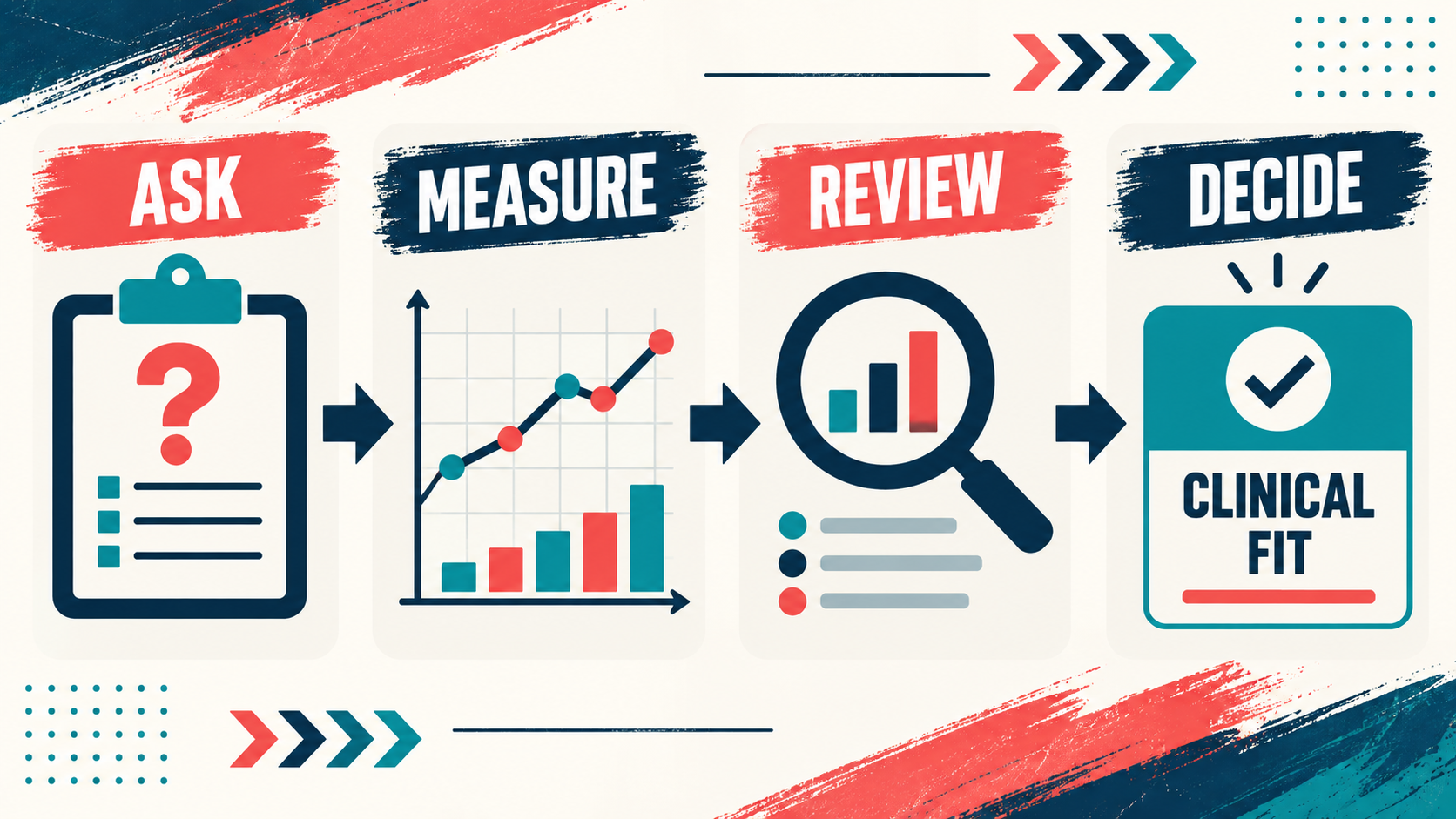
A BCBA interview should give you an opportunity to learn how the organization uses data. Ask which measurement systems are common, how graphs are reviewed, how treatment integrity is checked, and whether clinicians can access the information needed to make decisions. The point is not to demand one “correct” graphing system; it is to understand whether decisions are tied to observable outcomes.
- How often are client graphs reviewed by the BCBA and the treatment team?
- What happens when a goal plateaus, regresses, or shows high variability?
- How is interobserver agreement or another data-quality check used?
- How do you assess treatment integrity when progress is poor?
- Who has access to raw data, session notes, and caregiver feedback?
Ask for an example of a data-based decision that changed a program. If the response focuses only on collecting more data without explaining how the data inform the next step, ask a follow-up question: “What would make you keep the plan, modify it, or discontinue it?” A data system is valuable when it supports decisions, not merely when it produces graphs.
What Should You Ask About Team Support?
Find out how new BCBAs are supported and how experienced BCBAs consult with one another. Ask who you report to clinically, who evaluates your performance, and who is available for urgent questions. In some organizations, a clinical director, regional director, lead BCBA, and payer team may all influence a case. You should know how those responsibilities fit together. Good questions include:
- What does onboarding look like, and who reviews my first cases?
- Are there regular peer-consultation meetings or case conferences?
- How are staff trained and retrained when treatment integrity is low?
- What happens when the family, school, technician, and BCBA disagree?
- How does the organization support continuing education and ethical consultation?
Ask what kind of feedback you can expect. “Open door” is useful only if it is paired with time, access, and a clear process. Specific feedback after observing performance is usually more informative than a general annual review. The organization should also be able to explain how it supports staff without shifting every difficult decision to one BCBA working alone.
What Should You Ask About Ethics and Client Dignity?
Ask how the organization handles consent, assent, confidentiality, restrictive procedures, conflicts of interest, caregiver disagreement, and safety concerns. You do not need to accuse the employer of an ethical problem. You are learning whether the organization has a process for recognizing and addressing one. Try questions such as:
- Who do I contact if I believe a plan is unsafe or inconsistent with the client’s needs?
- How are client dignity, assent, and stakeholder priorities included in treatment decisions?
- What is the process for reporting a documentation, billing, or privacy concern?
- How are conflicts between productivity expectations and clinical judgment reviewed?
- How does the organization protect client information in home, school, telehealth, and shared-document settings?
Listen for a calm, specific answer. A mature organization can explain who provides consultation, how concerns are documented, and how the client’s interests remain central. Be cautious if the interviewer discourages questions about ethics, tells you to “just follow the template,” or implies that raising a concern is a sign that you are not a team player.
What Should You Clarify About the Job Terms?
Save compensation and benefits questions for the appropriate part of the interview, but ask them clearly. Clarify whether the position is salaried, hourly, fee-based, or a combination; what happens during cancellations; how travel is treated; and whether administrative work is included in the paid schedule. Ask for the written offer rather than relying on an informal statement. Also clarify:
- What are the expected work hours and availability windows?
- Are evenings, weekends, or on-call coverage required?
- How are supervision, meetings, documentation, and training time scheduled?
- What resources are provided for assessment materials, data systems, and staff training?
- What are the performance-review criteria during the first year?
- How does the organization handle a transition if the caseload or employment arrangement changes?
These questions are not only about money. They help you calculate whether the role gives you enough time and resources to do ethical, high-quality work. A job that pays well but leaves no protected time for analysis or supervision may not be sustainable.
What Are Interview Red Flags?
One unusual answer is not automatically disqualifying. Look for patterns and ask a follow-up question before drawing a conclusion. Potential red flags include:
- The interviewer cannot describe a realistic caseload or gives different numbers to different people.
- The organization measures success almost entirely through billable units, with no discussion of outcomes or treatment integrity.
- The role expects you to solve complex clinical problems without scheduled consultation.
- There is pressure to use identical goals, templates, or procedures for every client.
- The employer is vague about cancellation pay, travel, documentation time, or on-call expectations.
- Questions about ethics, privacy, assent, or safety are dismissed as negativity.
- The position description, interview answers, and written offer do not match.
Ask yourself whether the interviewer answered the question, gave an example, and explained who owns the decision. If you still cannot obtain clarity, treat the uncertainty as information. You can request a second conversation with the clinical director or ask for the relevant policy in writing before accepting.
How Should You Prepare Your Own Questions?
Prepare a short list in three groups: questions you must ask, questions that help you compare offers, and questions that depend on the role. Read the job description and mark every phrase that is vague, such as “fast-paced,” “flexible,” “highly collaborative,” or “manage a full caseload.” Turn each phrase into an observable question.
Bring examples of your own work that show how you define behavior, measure progress, respond to data, collaborate with caregivers, and seek consultation. If the interviewer asks a scenario question, explain your reasoning instead of rushing to a procedure. Name the information you would collect, the stakeholders you would consult, and the ethical or safety constraint you would check.
After the interview, write down what you learned while it is fresh. Compare the answers with the written offer, current BACB guidance, and your own learning goals. A second conversation is reasonable when the job is clinically complex or the answers affect licensure, privacy, compensation, or professional responsibility.
Frequently Asked Questions
What are the most important questions to ask during a BCBA interview?: Ask how assessment and treatment decisions are made, what the caseload and schedule look like, how data and treatment integrity are reviewed, what clinical consultation is available, and how ethics and client privacy concerns are handled. Then clarify the written job terms.
Should I ask about caseload during a BCBA interview?: Yes. Ask for the expected range, client complexity, direct reports, travel, documentation time, ramp-up plan, cancellation policy, and what happens when the caseload grows. A single client number does not describe the full workload.
How can I tell whether a BCBA employer values data?: Ask for a recent example of a decision changed by client data. A strong answer explains the measurement, the pattern, the decision, and how the team evaluated the outcome. Simply saying “we collect graphs” is not enough.
Is it appropriate to ask about ethics in an interview?: Yes. Ask how the organization handles safety, consent, assent, confidentiality, restrictive procedures, billing, and clinical disagreement. The answer helps you evaluate whether the employer has a clear consultation and escalation process.
The best questions to ask during BCBA interview conversations help you decide whether the organization’s promises match its systems. Look for specific answers about clinical reasoning, realistic workload, feedback, data quality, ethics, client dignity, and written job terms. You are interviewing the organization too. When you want to practice the assessment, ethics, measurement, and supervision scenarios that may arise in the next step of your career, try the free BCBA mock exam. It is a study aid, not a BACB protocol or certification guarantee.
Sources for Further Study
- BACB Supervision, Assessment, Training, and Oversight — official supervision and professional-resource hub.
- BACB Ethics Codes — official ethics resources for professional conduct.
- BCBA Interview Questions 2026 — recent interview-preparation result for comparison.
- BCBA Interview Guide — interview question prompts and preparation reference.
For targeted review, use our questions to ask during bcba interview practice questions to apply the concept in exam-style scenarios.
Take the Free BCBA Mock Exam
If you want a low-pressure way to check your recall, use the free practice resource below. Take the Free BCBA Mock Exam



