
Intensive behavioural intervention usually describes a structured, data-informed program that provides a high level of teaching and support over time. In autism and ABA discussions, the phrase often points to early intensive behavioral intervention (EIBI), but the label is not a universal prescription, a guaranteed outcome, or a substitute for an individualized clinical plan.
Table of Contents
- What is intensive behavioural intervention?
- How is IBI different from ABA and EIBI?
- What makes an intervention intensive?
- What should an individualized plan include?
- What does the research say?
- How can you evaluate the quality of a plan?
- What are common mistakes?
- How does this topic appear in BCBA exam reasoning?
- Intensive behavioural intervention FAQ
- Quick Review Checklist
- Take the Free BCBA Mock Exam
The practical question is not simply “How many hours?” A sound plan defines socially meaningful outcomes, measures a learner’s starting point, uses procedures that match the target, includes family input, and changes when the data show that the plan is not helping. The word intensive should describe the level and organization of support—not make a promise about a child.
This guide explains what the term means, how it relates to ABA and EIBI, what the evidence can and cannot establish, and how BCBA candidates can reason through an intensive-intervention question without treating a dosage number as the answer. Table of Contents
What is intensive behavioural intervention?
Intensive behavioural intervention is a broad description of a planned behavior-change service that delivers substantial, coordinated teaching or support. The intervention may target communication, adaptive behavior, social participation, learning readiness, safety, or other outcomes that matter in the person’s daily life. It is usually organized around observable goals and ongoing measurement rather than a fixed package that is identical for everyone.
In many autism services, “intensive” refers to an intervention that occurs frequently, addresses several developmental or adaptive domains, involves multiple people or settings, and continues long enough to evaluate meaningful change. Those features can occur together, but they are not automatically present just because a provider uses the word. Ask what is being taught, how it is measured, who participates, and how the plan will be adjusted.
For BCBA study purposes, keep the definition functional: intensity is a feature of the service arrangement and teaching plan; it is not itself a behavior-analytic procedure such as prompting, shaping, differential reinforcement, or extinction. The procedure still has to fit the target behavior, learner, context, and ethical requirements.
How is IBI different from ABA and EIBI?
These labels are related, but they are not interchangeable. Applied behavior analysis is a science and professional practice that uses behavioral principles and measurement to address behavior of social significance. EIBI is a more specific early intervention model or set of practices based on ABA principles. IBI is often used as a shorter or regional label for intensive behavioral intervention, but the exact service can vary by provider, health system, and country.
| Term | What it tells you | What it does not tell you |
|---|---|---|
| ABA | A scientific and professional framework for analyzing and changing behavior using measurement and behavioral principles. | That every ABA service is intensive or that one protocol is appropriate for every learner. |
| EIBI | An early, often comprehensive intervention approach based on ABA principles, frequently studied with young autistic children. | A guarantee of a specific developmental outcome, intensity level, or response to treatment. |
| IBI or intensive behavioural intervention | A description of substantial, organized behavioral teaching or support. | The exact procedures, hours, goals, providers, or evidence quality unless those details are stated. |
What makes an intervention intensive?
Hours per week are one possible dimension, but they are not the whole definition. An intervention can be intensive because it has a high frequency of learning opportunities, a broad set of functional goals, close coordination across caregivers and providers, repeated data review, or a plan for generalization across people and settings. The relevant dimension depends on the question being asked.
A number should therefore be interpreted as part of a treatment plan, not as a stand-alone prescription. The Cochrane review of EIBI describes studies that delivered intervention for multiple years and often reported 20 to 40 hours per week, but it also rated the overall evidence low or very low because the studies were small and most were not randomized. That finding does not justify telling every family to select the same schedule.
Intensity also has to be sustainable. A plan that produces many sessions but leaves no time for sleep, school, family routines, communication, or meaningful choice may not be the best plan for that learner. A BCBA should define the socially important outcome, coordinate with the relevant people, and monitor whether the service is producing useful change without unnecessary burden.
What should an individualized plan include?
A responsible plan begins with assessment and collaboration. The team should identify the learner’s strengths, preferences, communication needs, current skills, barriers, and priorities. It should define targets in observable terms, select a measurement system, and specify what counts as progress. The plan should also say how caregivers will participate and how skills will be used outside the teaching session.
For example, “improve communication” is too broad to evaluate by itself. A more useful target might define a functional request, the context in which the learner can use it, the level of prompting allowed, and the criterion for independent use across people or settings. The target is not better because it sounds technical; it is better because the team can observe it, measure it, and decide whether it matters.
Ongoing review is part of the intervention, not an optional administrative step. If data show no meaningful improvement, the team should examine the teaching arrangement, reinforcers, task difficulty, prompting, response effort, measurement quality, and environmental variables. “More intensity” is not a replacement for functional analysis of why progress is limited.
What does the research say?
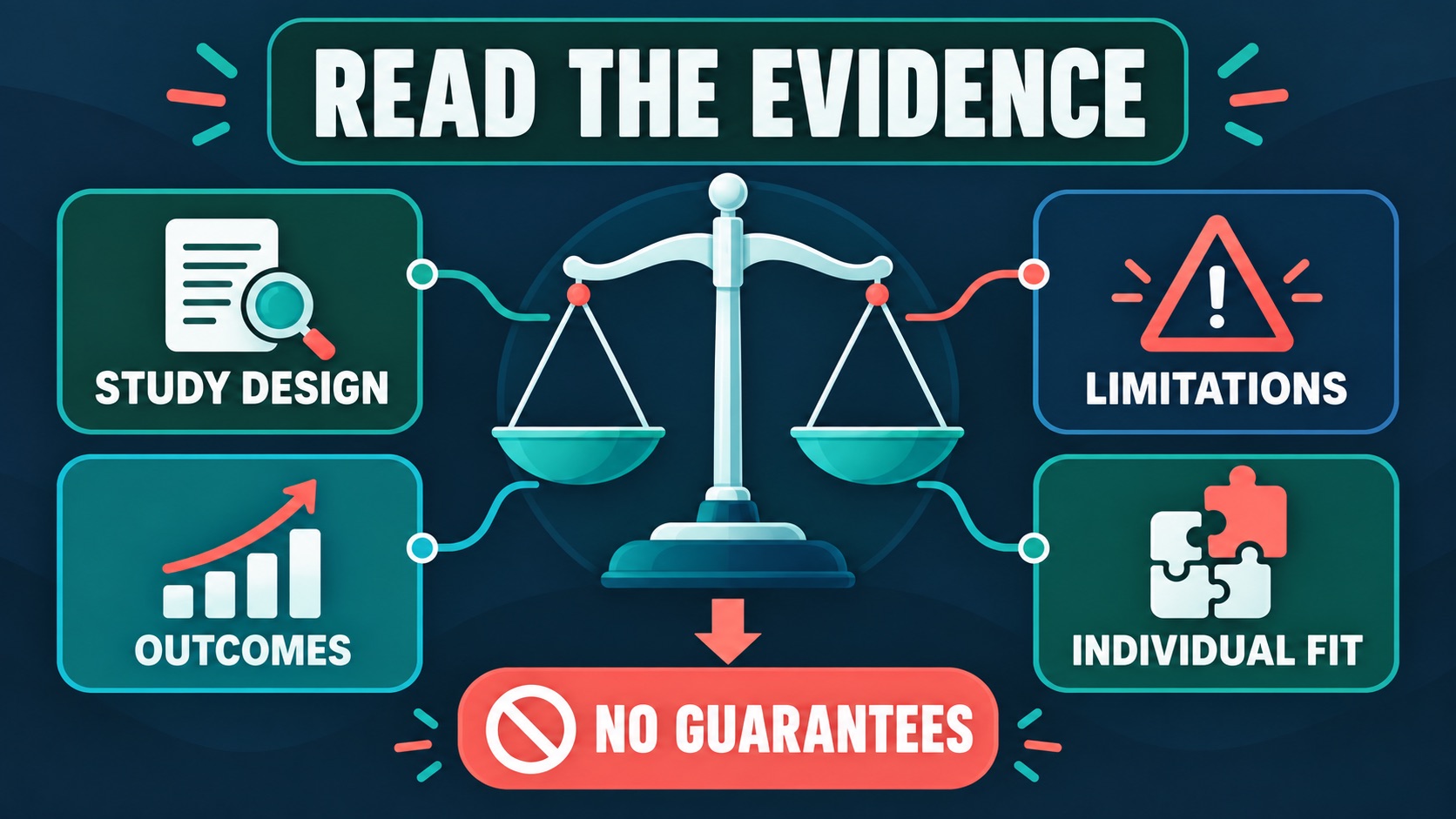
The evidence is more nuanced than a simple claim that intensive behavioral intervention always works. The Cochrane review of EIBI included five studies with 219 young children. It reported weak evidence of improvement in some adaptive behavior, IQ, and language outcomes compared with treatment as usual, while finding no clear evidence for improvement in autism symptom severity or problem behavior. The review rated the evidence low or very low quality because of small samples, non-randomized designs, and risk of bias.
A later international individual-participant-data meta-analysis also emphasized modest, short-term effects and substantial variation among interventions, participants, and outcomes. Read that kind of result as an invitation to improve decision-making, not as a promise that a named program will produce the same result for every child. The meaningful outcome should be defined with the family and learner, and the data should be reviewed over time.
The American Academy of Pediatrics clinical report describes comprehensive ABA-based treatment models as one part of the evidence landscape for young children, but a clinical report is not a reason to ignore individual assessment or family priorities. Evidence, clinical judgment, learner preference, feasibility, and ongoing outcomes all belong in the decision.
How can you evaluate the quality of a plan?
Use a short evidence-and-implementation checklist. A strong plan should make it possible for another qualified professional or caregiver to understand what is being taught, how change will be measured, and what happens if the plan is not working.
| Question | What to look for |
|---|---|
| What is the target? | An observable, socially meaningful behavior with a clear context and outcome. |
| How will progress be measured? | A defined measurement system, baseline, criterion, and schedule for reviewing data. |
| Who is involved? | Roles for the qualified provider, caregivers, educators, and other relevant professionals, with consent and communication boundaries. |
| What happens if progress stalls? | A plan to check measurement accuracy, adjust procedures, consult the team, and reduce or change support when appropriate. |
What are common mistakes?
- Equating intensity with a fixed number of hours. Hours are only one feature and should not replace assessment or individualized decision-making.
- Assuming ABA, IBI, and EIBI mean the same thing. Ask what model, procedures, goals, and outcome measures the provider actually uses.
- Promising a cure or identical outcome. Research findings are estimates for groups, not a guarantee for an individual learner.
- Measuring attendance instead of meaningful change. A full schedule does not prove that communication, independence, participation, or safety is improving.
- Ignoring learner and family input. Feasibility, dignity, preferences, assent, and daily routines affect whether a plan is acceptable and sustainable.
- Failing to revise the plan. If the data do not support progress, the next step is analysis and adjustment—not automatically adding more sessions.
How does this topic appear in BCBA exam reasoning?
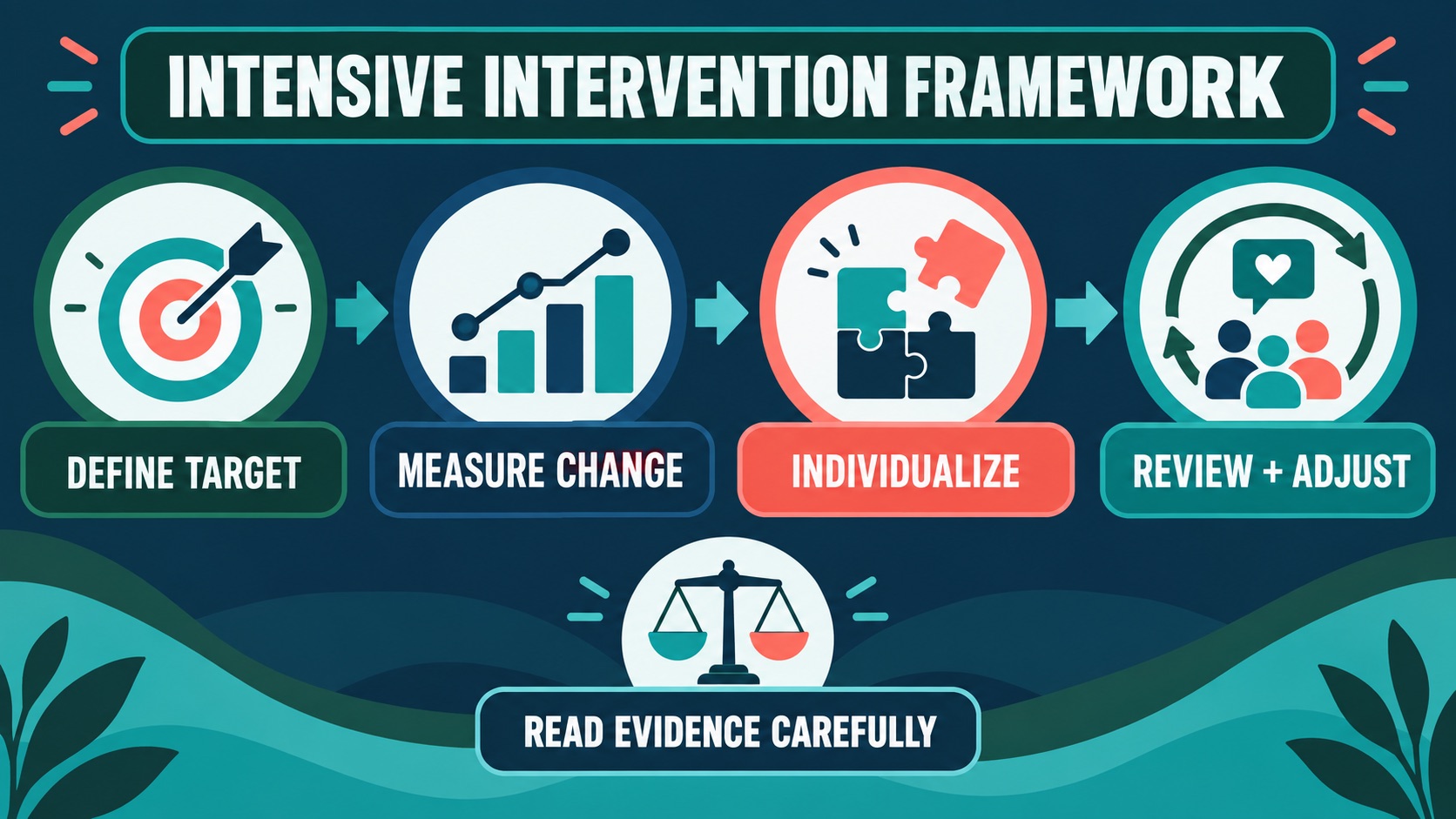
On an exam question, “intensive” may be a distractor that sounds persuasive but does not answer the functional question. First identify the target behavior and the measurement dimension. Then ask whether the proposed intervention is based on assessment, uses an appropriate behavior-change procedure, includes data collection, and respects the learner’s context and ethical requirements. A useful reasoning sequence is:
- Define what behavior or skill is expected to change.
- Check whether the baseline and measurement system can detect meaningful change.
- Match the intervention to the function, learner, setting, and goal.
- Look for ongoing data review and a plan to generalize and maintain skills.
- Reject claims that use hours, brand names, or intensity alone as proof of effectiveness.
For practice, use the free BCBA mock exam as an unofficial checkpoint. It cannot assess a learner, select a clinical treatment, or replace supervision. Its role is to help you practice distinguishing a precise, data-based answer from an attractive but unsupported claim about “more intensive” intervention.
Intensive behavioural intervention FAQ
Is intensive behavioural intervention the same as ABA?: No. ABA is a broader science and professional practice. Intensive behavioral intervention describes a level or organization of behavioral support, and EIBI is one more specific early-intervention approach based on ABA principles.
Does intensive mean 40 hours per week?: Not automatically. Some EIBI studies reported schedules in that range, but a research schedule is not a universal prescription. The appropriate plan depends on goals, learner needs, family priorities, feasibility, and data.
Does intensive intervention guarantee better outcomes?: No. Reviews report potential benefits for some outcomes but also limitations in study quality, variation among interventions, and uncertainty about which conditions produce the best results. Progress must be measured for the individual learner.
What should a BCBA candidate remember?: Remember the distinction between a label and evidence. “Intensive” does not identify the target, function, procedure, or outcome. The strongest answer defines the behavior, uses appropriate measurement, considers context and ethics, and changes the plan when data require it.
The most useful definition of intensive behavioural intervention is therefore practical: a coordinated, substantial, and measurable support plan that is individualized, reviewed with data, and interpreted with appropriate caution. The goal is not intensity for its own sake; it is meaningful change that can be demonstrated, maintained, and used in real life.
Quick Review Checklist
Use this final checklist to turn intensive behavioural intervention into exam-ready reasoning. The goal is not to memorize a label in isolation; it is to identify the relevant evidence and explain why the best answer fits the scenario. Key ideas to review:
- State the central definition or decision point for intensive behavioural intervention in your own words.
- Identify the detail that makes intensive behavioural intervention different from its closest related ABA term.
- Separate the observable facts in a scenario from assumptions that are not supported by the facts.
- Write one example and one nonexample so you can recognize the concept in a new setting.
Exam application checks:
- Ask what the question is actually requesting before comparing the answer choices.
- Mark the antecedent, response, consequence, or other evidence that supports the selected answer.
- Look for a distractor that describes a related process but does not answer the specific question.
Final self-check:
- Explain how you would verify the interpretation with clear observations or data.
- Change one detail in the scenario and decide whether your answer should change.
- Give a one-sentence rationale that a supervisor or study partner could evaluate.
Take the Free BCBA Mock Exam
When you are ready to apply the idea, use the free practice resource below for additional feedback. Take the Free BCBA Mock Exam



