

When can a BCBA become a supervisor? There is no single wait period that applies to every supervision role. Under the BACB’s published 2027 BCBA requirements, a supervisor for certification fieldwork must be an active BCBA with no current disciplinary sanctions and either have been certified for at least one year while meeting the ongoing supervision CEU requirement, or be certified for less than one year and receive monthly consultation from a qualified consulting supervisor. The BACB also lists an 8-hour supervision training requirement for supervisors in defined roles.
Table of Contents
- When can a BCBA become a supervisor?
- Which supervision role are you asking about?
- What does the BACB require for fieldwork supervisors?
- What should a BCBA verify before supervising?
- Supervisor-readiness decision table
- Can a BCBA supervise before one year of certification?
- When is the 8-hour supervision training required?
- How do the 2027 BCBA requirements change planning?
- What can states, funders, and employers add?
- What mistakes should a new supervisor avoid?
- How should BCBA candidates study this topic?
- BCBA supervisor timing FAQ
- Take the Free BCBA Mock Exam
That answer is intentionally role-specific. Supervising a trainee’s BCBA fieldwork, supervising an RBT, supervising a BCaBA, and managing a workplace team are related activities but not identical pathways. State licensure, funder contracts, and employer policies may add requirements. This guide shows how to identify the applicable role before deciding whether a BCBA is ready to supervise. Table of Contents
When can a BCBA become a supervisor?
The short answer is: when the BCBA meets the requirements for the specific supervision role, not simply when the examination result arrives. For 2027 BCBA certification fieldwork, the BACB lists two supervisor-qualification routes:
- an active BCBA with no current disciplinary sanctions, certified for at least one year, and meeting the ongoing supervision CEU requirement; or
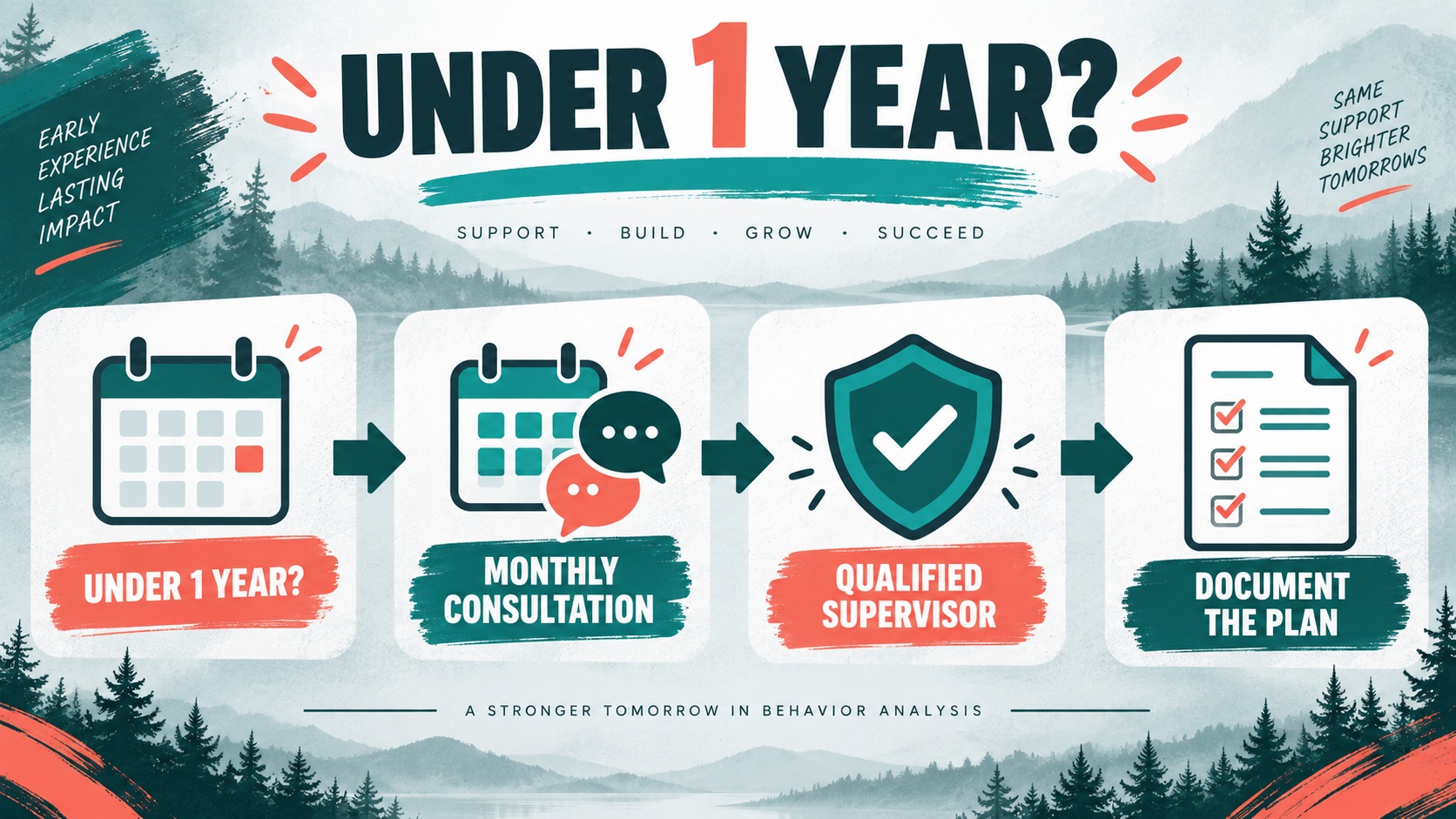
- an active BCBA with no current disciplinary sanctions, certified for less than one year, and receiving monthly consultation from a qualified consulting supervisor.
The published requirement answers a narrow question: who may supervise fieldwork used toward BCBA or BCaBA certification under the applicable BACB rules? It does not mean that every BCBA must wait one year before providing any supervision, nor does it mean that a BCBA can supervise every role immediately after certification. Check the role, effective date, handbook, and additional rules.
A new BCBA should also confirm that the certification is active, the required supervision training is complete, the proposed supervision falls within the person’s competence, and the documentation system is ready. “I passed the exam” is an important milestone, but it is not a complete supervisor-readiness checklist.
Which supervision role are you asking about?
Many confusing answers come from treating the word supervisor as one job. The BACB’s current supervision resource separates several roles:
- Supervising future behavior analysts: overseeing trainees who are accruing fieldwork toward BCBA or BCaBA certification.
- Supervising BCaBAs: providing ongoing supervision to an existing certificant under the BCaBA rules.
- Supervising RBTs: meeting the RBT Handbook and ongoing-supervision requirements.
- Assessing or training RBTs: completing the role-specific competency or training requirements, including any required supervision training.
- Workplace leadership: managing staff, reviewing performance, or assigning tasks under an employer’s policy, which may not be the same as BACB certification supervision.
The first step is therefore to name the person being supervised and the purpose of the relationship. A BCBA who is qualified to supervise a trainee’s fieldwork may still need to check separate rules before serving as an RBT supervisor, supervising a BCaBA, or signing a payer-required plan.
What does the BACB require for fieldwork supervisors?
The 2027 BCBA Requirements page lists supervisor qualifications as part of the fieldwork overview. It distinguishes supervised fieldwork from concentrated supervised fieldwork, but the supervisor-qualification routes are described together. The page also lists the amount of supervision, the fieldwork period, observations, individual supervision, and unrestricted activities. Read the full handbook for the details that apply to a real application.
In addition to qualification status, the BACB’s supervision resource says supervisors who oversee individuals acquiring BCBA or BCaBA certification must complete an 8-hour supervision training based on the Supervisor Training Curriculum Outline (2.0) before providing supervision. This is a separate readiness item from the number of months a person has held certification.
The current BCBA Handbook also makes the responsibility broader than a title. It describes supervisor qualifications, fieldwork documentation, and additional requirements that must be met and documented. A candidate should not assume that a supervisor’s signature alone fixes an incomplete fieldwork record. The supervisor and trainee need a structure that can show what happened, when it happened, and how the work met the applicable requirements.
What should a BCBA verify before supervising?
Use a readiness check with five layers:
- Credential: confirm the BCBA certification is active and free of a current disciplinary sanction that would affect the role.
- Time or consultation route: identify whether the applicable rule uses the one-year route or the under-one-year route with monthly consultation.
- Training: complete the required 8-hour supervision training before providing supervision in a role covered by the BACB resource.
- Competence and capacity: supervise only within your knowledge and skill, and accept a number of supervisees that allows effective supervision.
- Documentation: prepare contracts, schedules, observations, feedback records, and verification forms before the first fieldwork period begins.
The fifth layer is often overlooked. A person can technically meet a credential condition and still lack the time, systems, or competence to provide effective supervision. The Ethics Code says behavior analysts take on only the number of supervisees or trainees that allows effective supervision and training. A “can” answer is not automatically a “should” answer.
Supervisor-readiness decision table
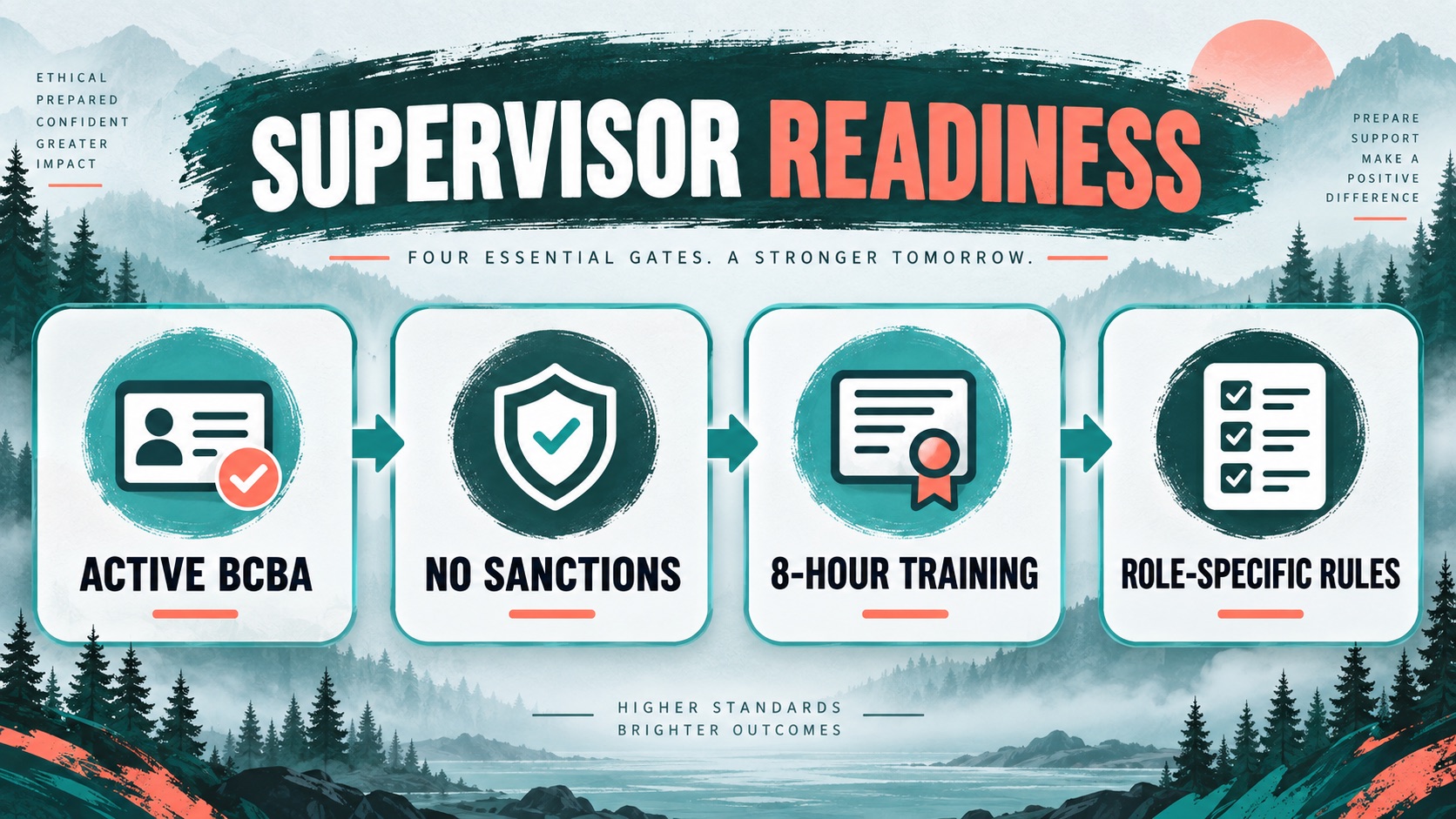
This table helps you identify what to verify. It is a planning aid, not a substitute for the current BACB Handbook, state rule, or contract.
| Readiness layer | Question to answer | Evidence to keep |
|---|---|---|
| Active credential | Is the BCBA certification active, and are there any restrictions relevant to supervision? | Current credential record and required verification. |
| Qualification route | Does the role require one year of certification, or can the newer-BCBA consultation route apply? | Certification date, consultation arrangement, and current rule version. |
| Training | Has the required 8-hour supervision training been completed before supervision starts? | Training certificate and provider details. |
| System capacity | Can the supervisor provide observation, feedback, meetings, and documentation reliably? | Schedule, supervision plan, feedback log, and escalation process. |
| External rules | Does a state, funder, employer, or service contract add a stricter condition? | Current law, payer manual, contract, and policy acknowledgement. |
Can a BCBA supervise before one year of certification?
For the 2027 BCBA fieldwork-supervisor route, the BACB page describes a path for an active BCBA certified for less than one year who receives monthly consultation from a qualified consulting supervisor. This means “less than one year” is not automatically “never,” but it is also not permission to begin without the consultation structure. Before relying on that route, confirm four details in the current materials:
- the person is an active BCBA and has no current disciplinary sanction;
- the consultation is with a qualified consulting supervisor;
- the monthly consultation is arranged and documented for the applicable period; and
- the 8-hour supervision training and other role requirements are satisfied.
Do not improvise what “monthly consultation” means. The consulting relationship, meeting dates, topics, records, and responsibility should be clear before the BCBA accepts the trainee. If the trainee’s school, employer, state, or funder has an additional condition, that condition still has to be checked.
When is the 8-hour supervision training required?
The BACB’s Supervision, Assessment, Training, and Oversight page says supervisors who oversee individuals acquiring BCBA or BCaBA certification, and current BCaBA or RBT certificants who are required to have ongoing supervision, must complete an 8-hour supervision training based on the Supervisor Training Curriculum Outline (2.0) before providing supervision. The page also identifies roles involving RBT assessment and training.
“Before” is the key operational word. A BCBA should not schedule the first covered supervision meeting and then plan to finish the training later. Save the completion record, verify that the course addresses the required curriculum, and confirm that any state or employer training standard is also met.
Training is not the same as competence. The Ethics Code requires supervisors to work within their identified scope of competence and continually evaluate their supervision skills. Use the training as a starting point, then build a feedback and consultation system.
How do the 2027 BCBA requirements change planning?
The BACB says significant BCBA and BCaBA eligibility and maintenance changes take effect on January 1, 2027. A complete application, including payment and required documents, must be received by December 31, 2026 to be reviewed under the current 2022 requirements. That transition date may change which handbook, fieldwork form, and supervisor rule applies to a candidate.
The 2027 BCBA page lists 2,000 hours for supervised fieldwork or 1,500 hours for concentrated supervised fieldwork, along with 5% or 7.5% supervision, fieldwork-period limits, observations, individual-supervision limits, and unrestricted-activity requirements. It also lists the two supervisor-qualification routes described above. Use the page as a starting point and then read the current handbook and forms for the candidate’s application date.
The practical lesson is not that every BCBA becomes a supervisor on a particular calendar date. The lesson is to match the supervisor’s qualification, the trainee’s requirements, and the effective version of the rule. Keep a copy of the page or handbook version used when the supervision relationship begins.
What can states, funders, and employers add?
BACB certification is national, but practice often occurs under other authorities. A state licensing board may define who can practice or supervise under a license. A payer may require a particular provider credential, observation frequency, or signature. An employer may require more frequent supervision meetings, a specific form, or an internal clinical review.
The BACB Ethics Code says behavior analysts must comply with all applicable supervisory requirements, including BACB rules, licensure requirements, funder requirements, and organization policies. Therefore, a BCBA who meets the national qualification route should still ask:
- Where will the service occur?
- What license or exemption applies?
- Who will pay for the service?
- What does the employment or supervision contract require?
- Does the supervisee’s role have its own handbook or competency process?
If the requirements conflict, pause and obtain a documented answer from the responsible board, payer, employer, or qualified consultant. Do not solve a legal or contractual conflict by selecting whichever rule is easiest to follow.
What mistakes should a new supervisor avoid?
- Using the exam date as the only readiness test: certification timing is only one layer of qualification.
- Applying a fieldwork rule to every supervision role: RBT, BCaBA, trainee, and workplace supervision can have different requirements.
- Starting before required training: complete the 8-hour training before providing supervision in a covered role.
- Ignoring the consultation route: a newer BCBA who relies on monthly consultation must document the arrangement.
- Accepting too many supervisees: effective supervision requires time for observation, feedback, documentation, and follow-up.
- Forgetting state and payer rules: national certification does not cancel other applicable requirements.
- Keeping weak records: supervision decisions should be reconstructable from contracts, dates, observations, feedback, and forms.
How should BCBA candidates study this topic?
Turn “when can a BCBA become a supervisor?” into a source-matching exercise. For each practice question, write down the role, the authority named in the scenario, the effective date, and the requirement that controls the answer. Then write one answer that is too broad and correct it with a narrower, source-based sentence.
For example, replace “a BCBA can supervise after one year” with “the applicable 2027 fieldwork-supervisor route lists one year plus ongoing supervision CEU requirements, or a less-than-one-year route with monthly consultation; other roles may have different conditions.” That sentence is longer, but it is safer because it preserves the scope of the rule.
After reviewing the handbook and supervision resources, use the free BCBA mock exam as a timed checkpoint. Review not just whether the answer was correct, but which authority and qualifier made it correct. The practice resource is study support, not BACB approval, legal advice, licensure advice, or a guarantee of a passing result.
BCBA supervisor timing FAQ
Can a BCBA supervise immediately after passing the exam?: Not automatically. The BCBA must meet the requirements for the specific supervision role, including active certification, any applicable time or consultation route, required training, competence, and state, payer, or employer conditions.
Does every BCBA have to wait one year to supervise?: No universal one-year rule should be applied to every role. The published 2027 fieldwork requirements include a one-year route and a less-than-one-year route with monthly consultation for the defined fieldwork-supervisor context.
What if a new BCBA has a qualified consulting supervisor?: The 2027 BCBA requirements describe monthly consultation with a qualified consulting supervisor for an active BCBA certified for less than one year. Confirm the current rule, document the consultation, and satisfy the separate training and role requirements.
Is the 8-hour training enough to make someone a supervisor?: No. The training is one requirement for defined supervision roles. The BCBA must also meet the relevant credential, consultation or timing, competence, capacity, documentation, and external-rule requirements.
Can an employer allow supervision before the BACB requirement is met?: An employer policy does not erase a requirement that applies to the certification or service context. When requirements conflict, pause and obtain clarification from the applicable authority rather than relying on a verbal permission.
The best answer to “when can a BCBA become a supervisor?” is therefore source-specific: after meeting the requirements for the role, the effective rule version, and the setting. Check active status, sanctions, timing or consultation, 8-hour training, competence, capacity, documentation, and external requirements before accepting responsibility.
Take the Free BCBA Mock Exam
When you are ready to apply the idea, use the free practice resource below for additional feedback. Take the Free BCBA Mock Exam



