
A current Indiana roadmap for BACB certification, supervised fieldwork, the BCBA exam, and the state’s Licensed Behavior Analyst process If you are asking how to become a BCBA in Indiana, plan for two connected but separate systems. The Behavior Analyst Certification Board (BACB) controls the national BCBA credential: education, behavior-analytic coursework, supervised fieldwork, the application, and the certification examination. Indiana has its own behavior-analyst licensing system, administered through the Indiana Professional Licensing Agency (PLA), so a national BCBA credential is not automatically the same thing as state permission to practice.
Table of Contents
- How to Become a BCBA in Indiana: The Short Answer
- Complete the National BCBA Requirements
- Plan Around the 2027 BACB Transition
- Build Qualifying Indiana Fieldwork
- Apply for and Pass the BCBA Exam
- Understand Indiana LBA Licensing
- Indiana BCBA Planning Table
- Use a Program and Supervisor Checklist
- Turn Eligibility Into Exam Practice
- Take the Free BCBA Mock Exam
The safest plan is to keep two checklists. One proves that you can apply for BCBA certification. The other confirms what Indiana expects from a Licensed Behavior Analyst (LBA), including the current application and status requirements. This guide is for planning and exam preparation, not legal advice. Recheck the official sources before you submit an application or begin regulated practice.
Important date note: BACB eligibility requirements change on January 1, 2027. Indiana’s state licensing documents and fees can also change. Use the version of the BACB Handbook and Indiana PLA instructions that apply to your own application date.
How to Become a BCBA in Indiana: The Short Answer
The national pathway is the foundation whether you study in Indianapolis, Fort Wayne, Bloomington, or online. You generally need a qualifying graduate-level education and behavior-analytic coursework, qualifying supervised fieldwork, a complete BACB application, and a passing BCBA examination. After that, you must check Indiana’s separate licensing and practice rules before you provide services under the state’s regulated behavior-analyst framework.
- Choose a BACB eligibility pathway. Confirm the degree, coursework, and program evidence that match the route you intend to use.
- Arrange supervised fieldwork. Work with a qualified supervisor and document hours, activities, supervision, observations, and verification forms.
- Apply to the BACB. Submit the current application, transcripts, fieldwork evidence, payment, and any requested follow-up documents.
- Pass the BCBA examination. Study from the current 6th Edition Test Content Outline and the current BCBA Handbook.
- Complete the Indiana check. Review PLA instructions for the Licensed Behavior Analyst route, current forms, background-check steps, and any applicable exemptions.
That sequence matters because Indiana does not replace the national certification process. A university can help you with coursework, and an employer can help you find fieldwork, but neither marketing language nor a job title is proof that your BACB application or Indiana license will be approved.
Complete the National BCBA Requirements
Start with the BACB’s 2027 BCBA requirements and the current BCBA Handbook. They are the controlling sources for the national credential. The broad requirements are not simply “earn a master’s and take a test.” You must connect your education, coursework, fieldwork, documentation, application, and exam eligibility.
For the 2027 framework, the BACB describes Pathway 1 and Pathway 2. Pathway 1 is based on a qualifying graduate degree from an appropriately accredited or recognized behavior-analysis program. Pathway 2 combines a qualifying graduate degree in any field with behavior-analytic coursework that meets the BACB’s requirements. The route that looks easiest from a school webpage may not be the route that fits your transcript, so ask for written details before enrolling. Before you commit to a program, verify:
- Which BACB pathway the degree and coursework are intended to support.
- Who verifies coursework or provides the required attestation and transcripts.
- Whether fieldwork is embedded, coordinated, or entirely your responsibility.
- Whether the program explains how its students are handling the 2027 requirements.
- How the program separates national certification from Indiana’s LBA licensing process.
Plan Around the 2027 BACB Transition
Application timing is one of the most important planning issues for an Indiana candidate. The BACB’s transition materials distinguish applicants who submit a complete application under the current requirements from applicants who apply under the requirements that take effect January 1, 2027. “I finished most of my classes” is not the same as “the BACB has received a complete, payable application with the required evidence.”
If your plan depends on the current requirements, read the BACB’s transition guidance carefully and verify the complete-application boundary. If you will apply in 2027, plan from the new requirements instead of trying to patch an old checklist. Save a dated copy of the handbook, the fieldwork forms, your transcripts, and your supervisor records so you can explain which rules your evidence was built under.
Do not let the Indiana licensing question create a false shortcut. A state LBA application cannot replace BACB education, fieldwork, or the national examination. Conversely, passing the BCBA exam does not tell you whether an Indiana application, background check, or state practice requirement still needs attention.
Build Qualifying Indiana Fieldwork
Indiana fieldwork must satisfy the BACB rules that apply to your certification application. It is not enough to work in an ABA clinic, observe a BCBA occasionally, or collect a large number of hours without matching documentation. Your experience should be organized around a supervision contract, qualifying client-related activities, the applicable supervision percentage, observations, monthly verification, and a record that another reviewer can understand.
The BACB’s 2027 overview lists 2,000 hours for supervised fieldwork or 1,500 hours for concentrated supervised fieldwork. It also lists different supervision percentages, monthly hour boundaries, observation expectations, individual-supervision limits, and an unrestricted-activity threshold. Those numbers are easy to misremember, and they are not interchangeable with older forms. Confirm every number in the current handbook before you calculate your remaining hours. A practical Indiana fieldwork file should answer these questions:
- Who is the responsible supervisor, and how will you verify current BACB standing and required qualifications?
- Which activities are restricted, unrestricted, supervised, independent, individual, or group?
- How will you record monthly totals, supervision contacts, observations, and signatures?
- What is your backup plan if a client, supervisor, site, or employer changes?
- Which monthly and final verification forms match the requirements under which you will apply?
Keep your own contemporaneous records and reconcile them with the supervisor’s record every period. A spreadsheet or tracking app can organize your work, but it does not replace the official BACB forms, a valid supervision relationship, or your responsibility to preserve evidence.
Apply for and Pass the BCBA Exam
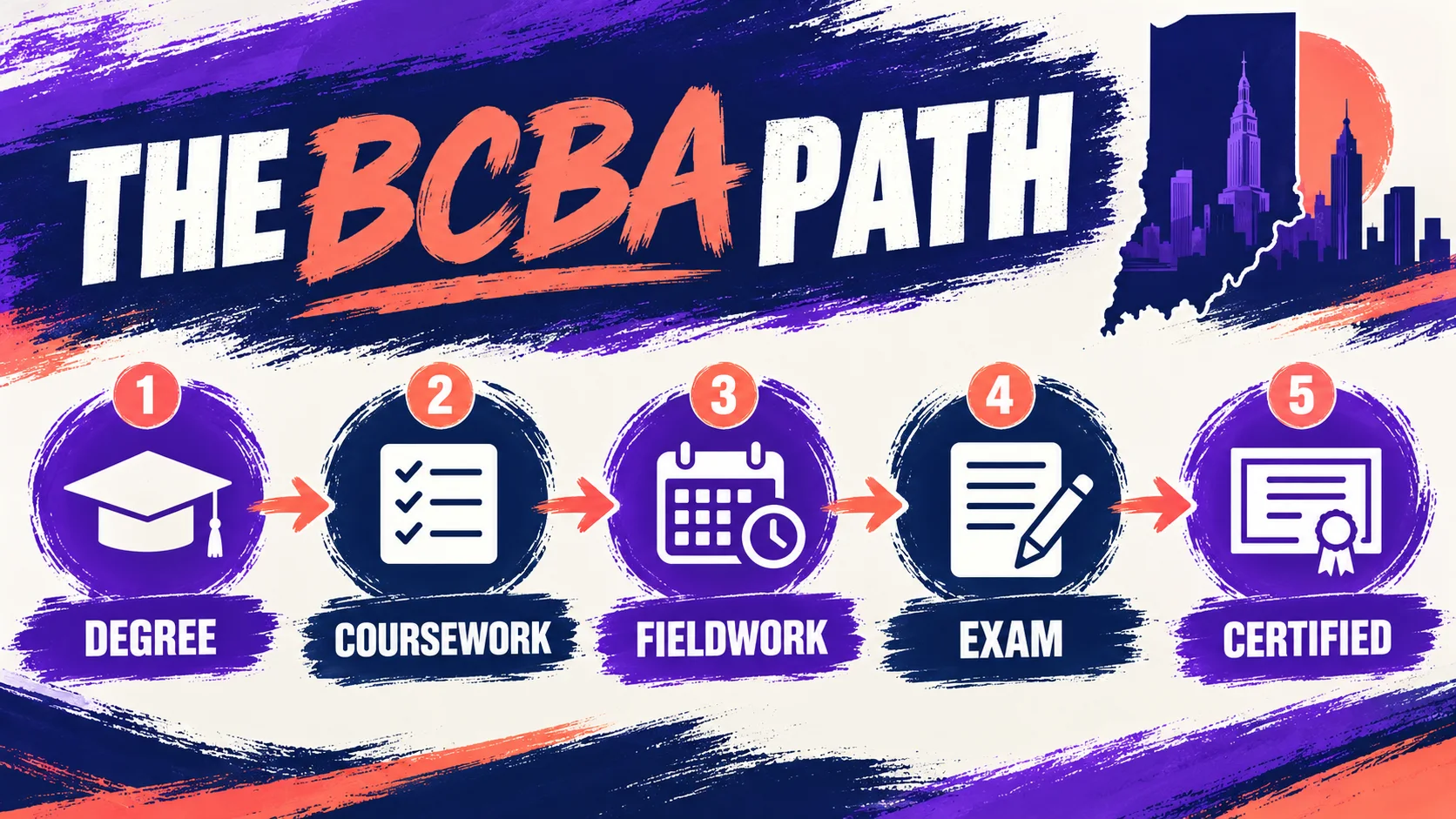
When your education and fieldwork evidence are ready, follow the BACB application process in the current handbook. Submit official transcripts and fieldwork verification in the format requested, then respond to action items rather than assuming that silence means approval. The BACB’s examination information explains that candidates schedule through Pearson VUE after the certification application has been approved.
The current BCBA examination is built around the 6th Edition Test Content Outline. A useful study plan mirrors how the exam asks you to reason: identify the relevant dimension, choose the best measurement or intervention, protect client rights, and reject answers that skip a necessary assessment or ethical step. Use the result of each practice set to decide what to review next instead of treating one percentage as a final prediction.
For Indiana candidates, keep the exam plan separate from the license plan. You can be preparing for the BACB test while also collecting the state documents you may need later. That separation reduces the risk of waiting until after your exam to discover that your name, certification number, background-check record, or application evidence needs attention.
Understand Indiana LBA Licensing
Indiana’s official behavior-analyst licensing page provides the state-specific source layer. The PLA licensing instructions include a route for applicants who are certified as a BCBA in good standing. The current page lists an application fee, a criminal background check, BCBA certification verification, and additional documentation if an applicant answers “yes” to certain history questions or has a name mismatch.
Because state instructions can change, treat the exact fee and document list as a dated snapshot rather than a permanent promise. Before filing, confirm the current application portal, fee, background-check instructions, certification number format, name consistency, positive-response documentation, and any separate rules for the services you plan to provide. If you will work through an employer, ask which state credential and payer documents the employer expects, but verify the legal requirement with Indiana’s official sources. The practical distinction is simple:
- BACB certification: the national credential earned through the applicable education, coursework, fieldwork, application, and exam requirements.
- Indiana licensure: the state process that may authorize regulated behavior-analytic practice in Indiana and may require its own application, verification, renewal, and compliance steps.
Do not use an old state guide, a school brochure, or a social-media post as the final authority. Indiana’s PLA page links to the governing statutes and administrative rules, and the BACB maintains a separate state-licensure reference. Use both sources when your question crosses from “Can I become certified?” to “Can I practice this service in Indiana?”
Indiana BCBA Planning Table
Use the table as a working map. The dates represent different checkpoints, not three versions of the same credential.
| Checkpoint | What to verify | Evidence to keep |
|---|---|---|
| 2026 planning | Current BACB pathway, application timing, fieldwork documentation, and Indiana PLA instructions | Dated handbook, transcripts, supervision contract, forms, and state source |
| Jan. 1, 2027 | New BACB eligibility, fieldwork, coursework, and verification requirements | The current 2027 requirements and BCBA Handbook |
| After BCBA approval | Exam authorization, Pearson VUE appointment, and 6th Edition preparation | BACB messages, candidate information, study-error log, and appointment details |
| Indiana filing | PLA application, BCBA good-standing verification, background check, and any responsive documents | Current PLA checklist, receipt, certification number, and application correspondence |
Use a Program and Supervisor Checklist
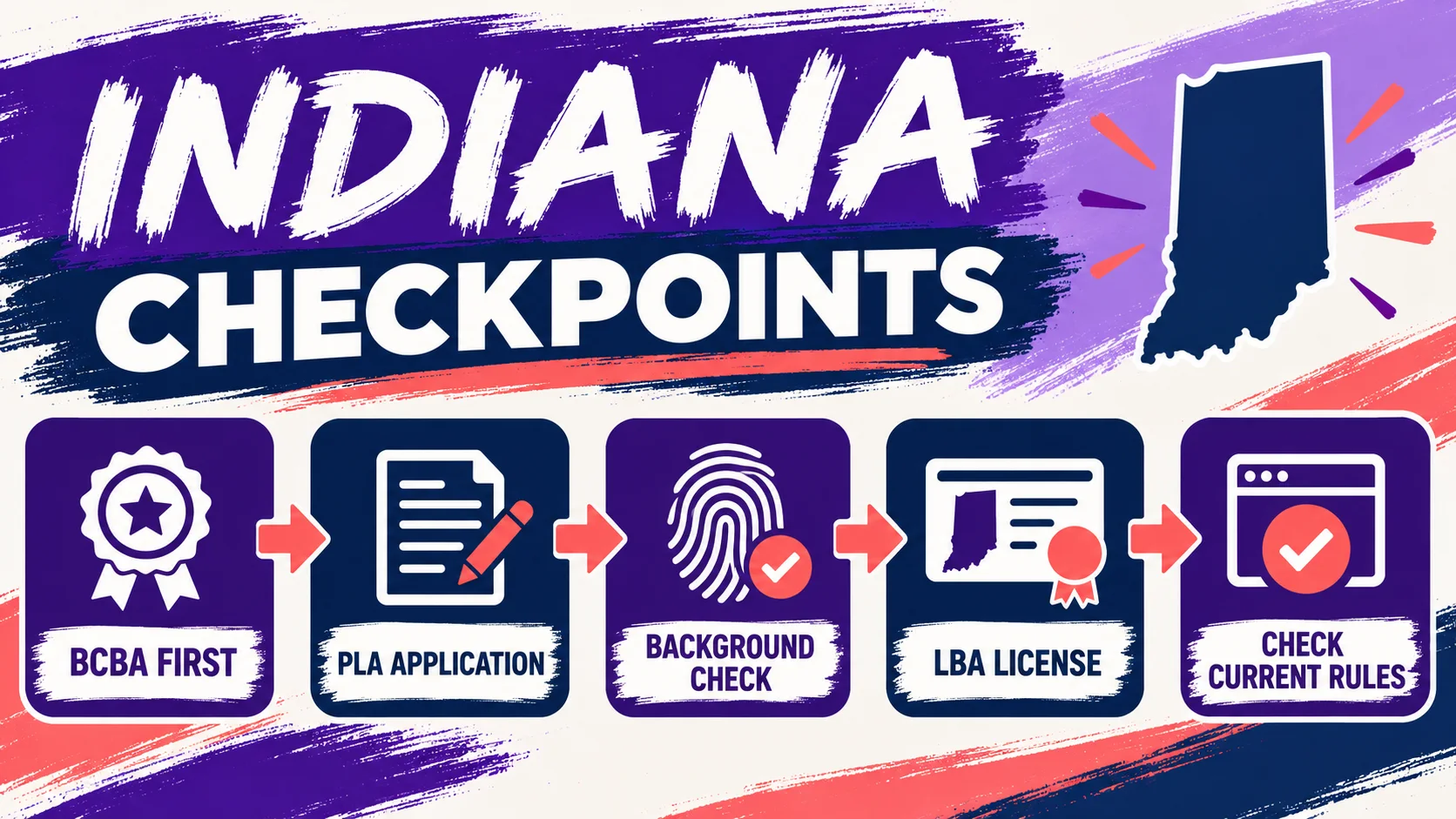
Before you choose a program or fieldwork site, ask questions that expose the real path rather than the label:
- Which BACB pathway is this program designed to support, and what document proves it?
- Who finds and supervises fieldwork, and what happens if the placement ends?
- How are unrestricted activities, client observations, individual supervision, and monthly signatures reviewed?
- Will the program help you reconcile older records with the 2027 requirements, or do you need an independent plan?
- Does the employer distinguish BCBA certification, Indiana licensure, payer credentialing, and internal competency?
Common avoidable mistakes include counting every ABA job hour as qualifying fieldwork, using an old form because it is easy to download, assuming an online degree automatically satisfies the BACB pathway, and waiting until after the exam to check Indiana’s application requirements. The fix is not a bigger spreadsheet. It is a dated source checklist reviewed with the right supervisor and state office.
Turn Eligibility Into Exam Practice
Once your Indiana roadmap is clear, use practice to identify the reasoning errors that could cost you points on the BCBA exam. A good practice session should tell you whether you missed the concept, misread the scenario, chose an answer before checking the function, or overlooked an ethical or measurement boundary.
When you are ready, try the Free BCBA Mock Exam as a readiness check. It cannot replace BACB eligibility review or Indiana licensure, but it can show which 6th Edition topics deserve your next focused study block. The sequence is: verify the pathway, protect fieldwork evidence, complete the application, practice the exam decisions, and then complete the Indiana licensing check from the current PLA instructions. Official sources to recheck: BACB 2027 BCBA Requirements, BCBA Handbook, and Indiana PLA Behavior Analyst Licensing Information.
Take the Free BCBA Mock Exam
A useful next step is to apply this idea in a fresh set of BCBA-style practice questions and review the feedback. Take the Free BCBA Mock Exam



