
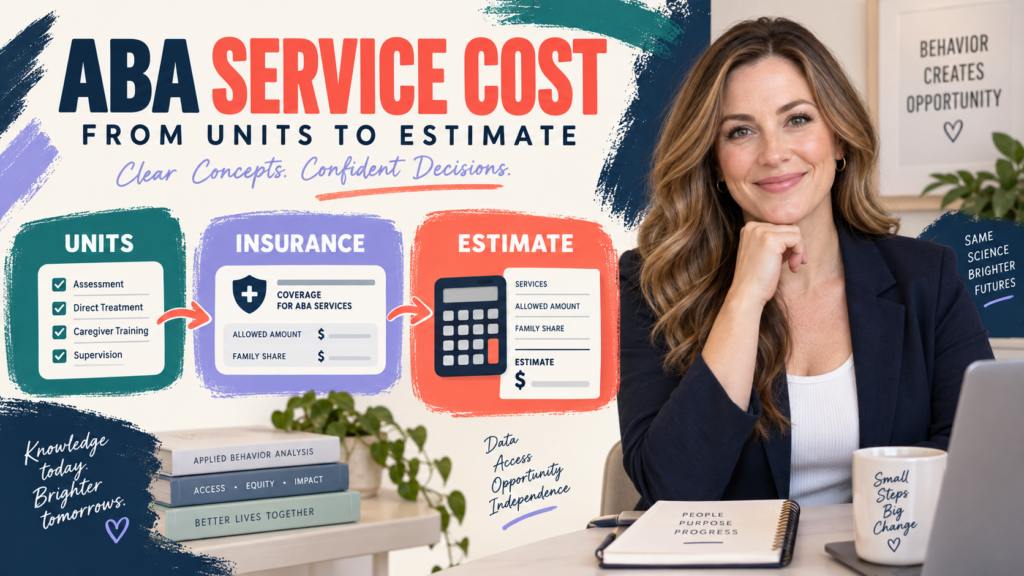
How much do ABA services cost? There is no single national price. The amount a family sees can include a provider’s charge, a payer’s allowed amount, insurance payment, and the family’s deductible, copay, coinsurance, or private-pay responsibility. This guide shows how to separate those numbers and request a current estimate.
Table of Contents
- How Much Do ABA Services Cost?
- What Changes the Cost of ABA Services?
- Which ABA Cost Number Are You Looking At?
- How Do You Build a Real ABA Cost Estimate?
- What Should an ABA Cost Worksheet Include?
- How Do Insurance and Medicaid Change the Family Cost?
- What If ABA Is Private Pay or Not Authorized?
- How Do You Estimate Weekly, Monthly, and Yearly Cost?
- What Should You Ask Before Starting Services?
- What Are the BCBA Exam Clues?
- What Cost Mistakes Should You Avoid?
- How Much Do ABA Services Cost FAQ
- Sources and Date Check
- Take the Free BCBA Mock Exam
Families usually ask this question because they need to plan for care, compare providers, understand an insurance estimate, or decide what to do while authorization is pending. A broad online range may feel helpful, but it can combine different CPT codes, credentials, settings, states, and payer rules. That is why two apparently reasonable “hourly rates” can describe completely different financial situations.
How Much Do ABA Services Cost?
ABA service costs vary with the service being delivered, the professional providing it, the setting, the number of authorized units, the geographic area, the payer, and the family’s benefit design. A clinic’s billed charge is not automatically the amount the plan allows, the amount the insurer pays, or the amount the family owes. Those are separate fields in the estimate.
The safest short answer is: ask for a payer-specific, code-specific written estimate rather than relying on one national hourly number. The estimate should identify the service codes, units, provider level, setting, authorization period, network status, allowed amount, and cost-sharing rules. It should also say what happens if the service is denied, out of network, not covered, or delivered before authorization.
What Changes the Cost of ABA Services?
“ABA services” can describe assessment, direct treatment, protocol modification, caregiver training, supervision, parent consultation, or other work. The people involved may include a BCBA, assistant behavior analyst, technician, or another qualified professional under a payer’s rules. Each combination can have a different code, unit rule, documentation requirement, and allowed amount.
The setting also matters. Center-based, in-home, school-related, community, and telehealth services may have different authorization and place-of-service rules. Travel, staffing, caregiver participation, cancellations, and whether the provider is in network can change the practical estimate even when the clinical goal sounds similar.
- Service and code: assessment, direct implementation, supervision, caregiver training, and protocol work are not interchangeable billing rows.
- Unit and schedule: many ABA billing codes are organized in time units, often 15-minute units, but the payer’s code description and unit rule control.
- Provider and setting: credential, place of service, network status, and telehealth or travel conditions may change payment.
- Authorization and benefit: a covered service can still require prior authorization, medical-necessity review, or a valid date range.
- Family cost sharing: deductible, copay, coinsurance, non-covered services, and out-of-network rules affect what the family pays.
Which ABA Cost Number Are You Looking At?
A cost conversation becomes clearer when every number is labeled. HealthCare.gov describes an allowed amount as the maximum a plan will pay for a covered service, sometimes called an eligible expense, payment allowance, or negotiated rate. That concept is different from a provider’s list charge and from the family’s final responsibility.
For example, a provider might list a charge for a 15-minute unit, an insurer might determine a lower allowed amount for an in-network claim, and the family might owe a copay or coinsurance on the allowed amount after the deductible. A service that is not covered, not authorized, or out of network can follow a different rule. Never copy one field into another.
How Do You Build a Real ABA Cost Estimate?
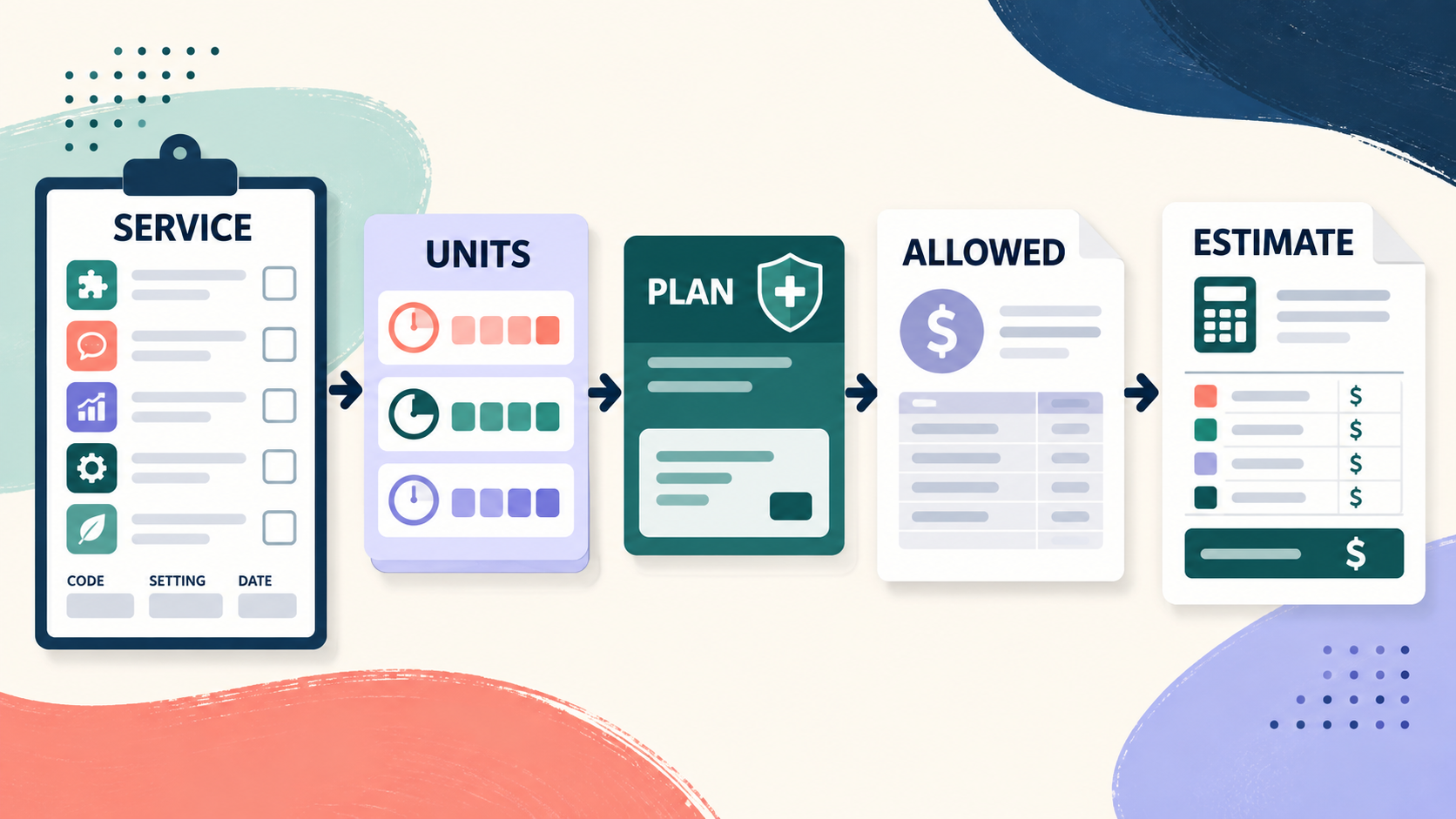
Build the estimate from the treatment plan and the payer documents. Start with the number of requested or authorized units, then connect each unit to the code, provider level, setting, and rate source. Next, apply the member’s benefit design and confirm whether the estimate is based on an in-network allowed amount, a self-pay quote, or an assumption that still needs verification.
Do not treat an online cost guide as a benefit determination. A current estimate is strongest when it names the member’s plan or payer, the service dates, the provider’s network status, and the authorization number or pending-authorization status. If a provider cannot yet give a final amount, ask for the assumptions and the event that will change the estimate.
What Should an ABA Cost Worksheet Include?
A simple worksheet prevents the common mistake of comparing a provider’s gross charge with another provider’s family responsibility. Use one row for each service type or code, and record the source and effective date rather than relying on memory or a generic internet range.
| Cost field | What to record | Who or what controls it |
|---|---|---|
| Provider charge | Quoted charge, service description, code, unit, setting, and whether it is a standard or negotiated quote. | The provider’s fee policy or self-pay agreement. |
| Allowed amount | Payer-allowed amount per unit or service, effective date, network status, and code or modifier. | The plan, contract, fee schedule, or applicable payer rule. |
| Authorization | Approved units, dates, service types, provider, review status, and reauthorization deadline. | The payer’s clinical review and authorization record. |
| Family responsibility | Deductible remaining, copay, coinsurance, out-of-pocket limit, exclusions, and any non-covered amount. | The member’s benefit documents and claim adjudication. |
| Estimate assumptions | Expected weekly units, attendance, cancellations, location, network status, and service dates. | The treatment plan, provider, member, and payer conditions together. |
How Do Insurance and Medicaid Change the Family Cost?
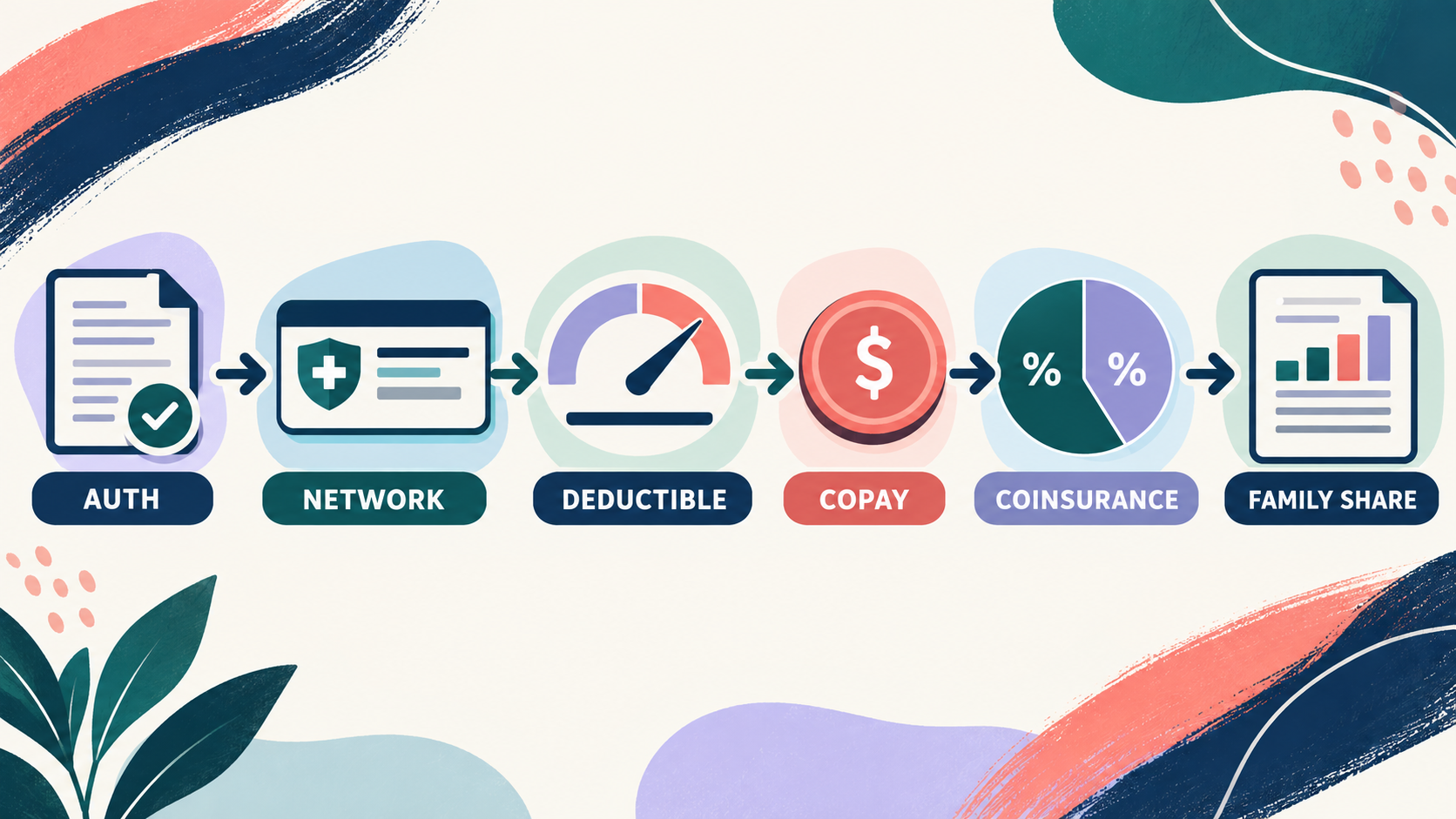
For a private health plan, the family’s responsibility may depend on whether the provider is in network, whether the deductible has been met, and whether the service is covered and authorized. HealthCare.gov explains that deductibles, copayments, and coinsurance contribute to total health-care costs, while an out-of-pocket maximum generally limits what a member pays for covered in-network services during the plan year. The member’s own plan documents still control.
Medicaid is not one national fee schedule. CMS maintains autism and Medicaid guidance, including state resources, but the final coverage and payment path can depend on the state, eligibility category, managed-care organization, fee-for-service pathway, authorization, and provider enrollment. A Medicaid rate page can help locate a source, but it cannot replace the current state or plan document for a specific claim.
Ask the payer to distinguish these questions: Is the service a covered benefit? Is it medically necessary under this plan? Has it been authorized for this member and date range? Is the provider enrolled and in network? What is the allowed amount, and what portion is the member responsible for? A “yes” to the first question does not automatically answer the others.
What If ABA Is Private Pay or Not Authorized?
When services are private pay, the provider’s written agreement usually becomes the starting point. Ask whether the quote is per hour, per 15-minute unit, per assessment, per visit, or per treatment-plan period. Clarify whether caregiver meetings, travel, materials, cancellations, record requests, and report writing are included or billed separately.
If insurance is pending or a claim is denied, ask before beginning or continuing chargeable services. A provider may offer a temporary self-pay agreement, but the family should understand whether later insurance payment will be credited, whether the plan prohibits balance billing, and what documentation is required for an appeal. Do not assume that submitting a claim later will convert a private-pay charge into an authorized covered service.
How Do You Estimate Weekly, Monthly, and Yearly Cost?
Use clearly labeled assumptions. The following is an illustration, not a market quote or a promise of what a payer will allow: suppose a fictional plan allows $45 per 15-minute unit, and the authorization contains 32 units per week. The gross allowed amount would be 32 × $45 = $1,440 per week, before considering attendance, claim rules, or family cost sharing.
For a four-week planning month, the same illustration would be $1,440 × 4 = $5,760 in allowed charges. If a fictional member had already met the deductible and owed 20% coinsurance on covered in-network services, the simple cost-sharing estimate would be $5,760 × 20% = $1,152. The actual claim can differ because units, codes, authorization, adjustments, non-covered services, and the plan year all matter.
For annual planning, do not multiply a weekly estimate by 52 without checking the authorization period, holidays, cancellations, school schedules, benefit-year reset, and clinical changes. Ask whether the plan uses a calendar year or another benefit year, and whether the authorization can be reduced, renewed, or denied after review. A monthly budget is a planning tool, not a final explanation of benefits.
What Should You Ask Before Starting Services?
Send the provider and payer the same facts so their answers can be compared. Keep the response in writing, including the date, representative or department, reference number, and the assumptions used. If the answers conflict, ask which document controls and whether a pre-service estimate or formal authorization decision is available.
- Which service codes, provider levels, modifiers, units, and settings are expected?
- Is the provider in network for this exact plan and location, and is the service covered?
- What authorization is required, how many units are approved, and when does it expire?
- What are the allowed amount, deductible remaining, copay, coinsurance, and out-of-pocket limit?
- Are caregiver training, supervision, travel, cancellations, assessments, or reports priced separately?
- What happens if a claim is denied, a unit is adjusted, or the family changes providers?
What Are the BCBA Exam Clues?
Cost questions can appear in BCBA-style scenarios as ethical or decision-making distractors rather than as a demand to memorize a national ABA price. The current BCBA Test Content Outline emphasizes measurement, assessment, intervention selection, ethics, and supervision. A payer’s number does not replace client-centered assessment or evidence-based decision making.
- If the stem gives two prices: identify whether each is a charge, allowed amount, payer payment, or family responsibility.
- If the stem gives an authorization: check the dates, units, code, provider, and setting before assuming the service is payable.
- If cost pressure conflicts with care: use the current BACB ethics resources, client welfare, competence, data, assent, and professional judgment as the anchors.
- If the question asks for a clinical change: do not reduce or increase treatment solely because a generic online price looks high or low; evaluate goals, progress, risk, participation, and the full plan.
For scenario practice, the free BCBA mock exam is an independent study aid. It is not an official BACB product and does not determine coverage, authorization, or the family’s final responsibility.
What Cost Mistakes Should You Avoid?
- Publishing one national hourly rate as if every ABA service and payer used the same number.
- Comparing a provider’s gross charge with another family’s out-of-pocket amount.
- Ignoring the CPT code, time unit, modifier, provider level, place of service, or authorization period.
- Assuming “covered” means authorized, in network, payable, or free to the family.
- Using a Medicaid, Kaiser, or another payer’s rate as a private-insurance or self-pay quote.
- Forgetting that deductibles, benefit-year resets, non-covered services, and out-of-network rules can change the estimate.
How Much Do ABA Services Cost FAQ
Is there an average hourly cost for ABA services? Public guides often publish ranges, but an average can mix different codes, staff credentials, locations, and payer arrangements. Use a code-specific provider quote and payer allowed amount when you need a decision-ready estimate.
How much does ABA cost with insurance? The family may owe a deductible, copay, coinsurance, or non-covered amount, depending on the plan and authorization. Ask for the allowed amount, network status, remaining deductible, cost-sharing rule, and out-of-pocket limit rather than relying on the provider’s charge.
How much does ABA cost without insurance? Private-pay pricing is set by the provider agreement and can vary by service, code, credential, setting, frequency, assessment, and cancellation policy. Request a written schedule that explains units and all separately billable items.
Does Medicaid pay for ABA services? CMS publishes autism and Medicaid guidance, but a specific member’s coverage and payment path can depend on state rules, eligibility, managed care or fee-for-service, medical necessity, authorization, and provider enrollment. Verify the current state or plan source.
Can I calculate the yearly ABA cost from weekly hours? You can create a planning estimate by multiplying authorized units by the documented allowed or self-pay amount, but attendance, holidays, benefit-year rules, authorization changes, claim adjustments, and family cost sharing can change the final total.
Sources and Date Check
This article was reviewed on September 30, 2026 against HealthCare.gov total-cost guidance, the official explanations of coinsurance and the out-of-pocket maximum, and CMS autism-services guidance. The BCBA exam and ethics links point to current BACB resources. Payer documents, authorization decisions, provider contracts, and member benefits can change; verify the controlling source before beginning services or relying on a cost estimate.
Take the Free BCBA Mock Exam
If you want a low-pressure way to check your recall, use the free practice resource below. Take the Free BCBA Mock Exam



