
The Foundation: Understanding the FBA-BIP Link
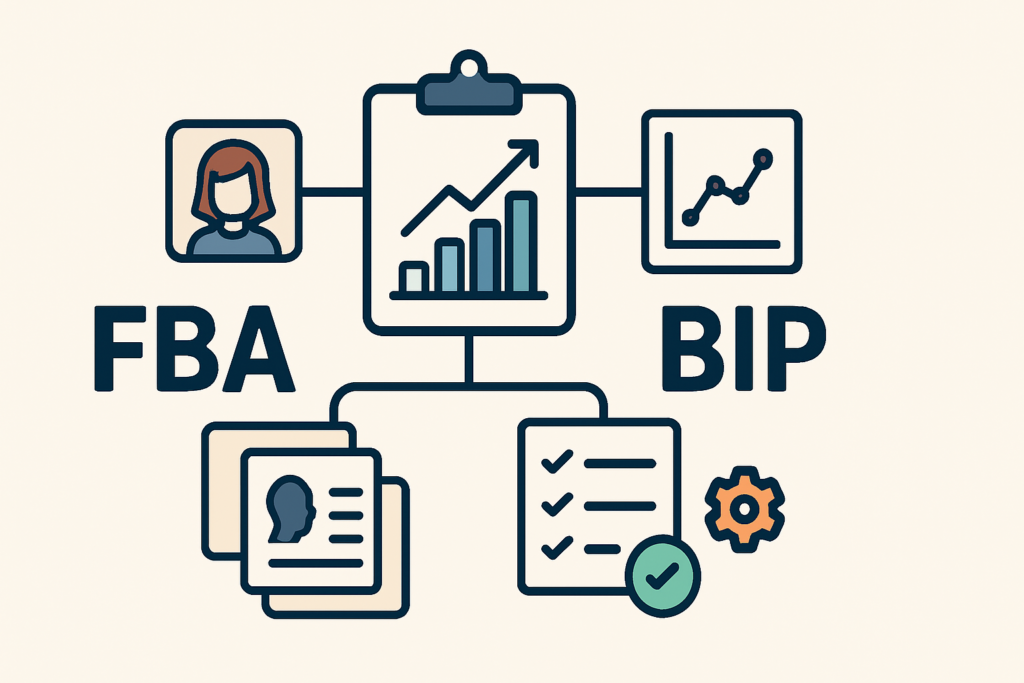
Every effective behavior intervention plan begins with a thorough understanding of why behavior occurs. The FBA to BIP connection represents the core of ethical, evidence-based practice in applied behavior analysis.
Table of Contents
- The Foundation: Understanding the FBA-BIP Link
- The Step-by-Step Process: Translating FBA into BIP
- FBA to BIP in Action: Worked Examples
- BCBA Exam Focus: Common Traps and Must-Knows
- Your BIP Implementation Checklist
Defining the Core Components: FBA and BIP
A Functional Behavior Assessment (FBA) is a systematic process for identifying the environmental variables that maintain problem behavior. It answers the critical question: “Why does this behavior occur?” The assessment yields a hypothesis of function that guides intervention development.
A Behavior Intervention Plan (BIP) is the direct product of the FBA. This document outlines specific strategies to teach appropriate behaviors while reducing problem behaviors. The BIP translates assessment findings into actionable procedures that address the identified function.
Why the Link is Non-Negotiable: Ethics and Effectiveness
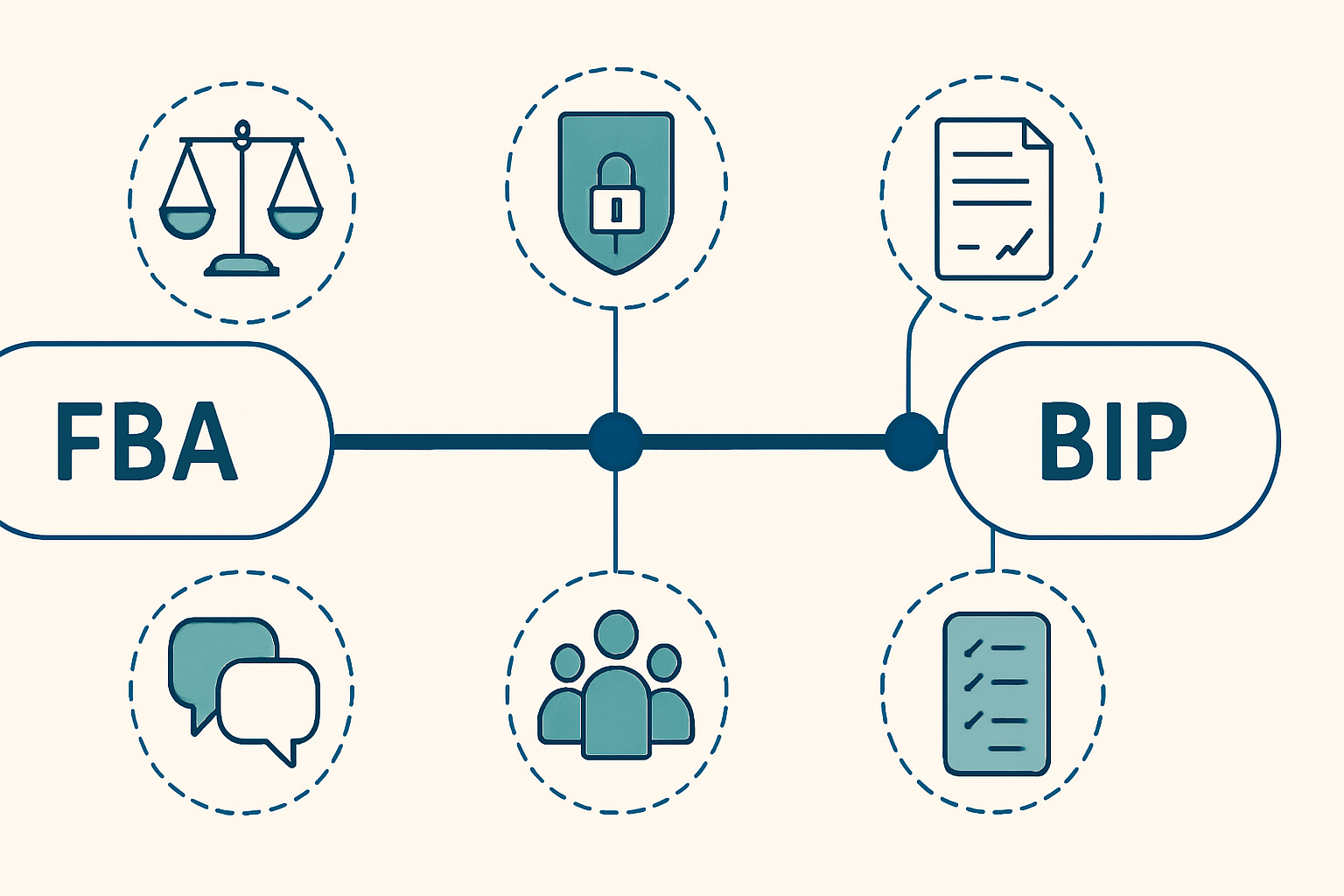
The BACB Ethics Code explicitly requires that interventions be based on assessment data and address the identified function. Section 2.01 mandates that behavior analysts base their practice on scientific knowledge, while Section 4.07 requires that interventions be conceptually consistent with assessment findings.
Interventions not matched to function risk being ineffective or even harmful. For example, using time-out for escape-maintained behavior may inadvertently reinforce the very behavior you’re trying to reduce. This ethical and practical connection is a major theme on the BCBA exam.
The Step-by-Step Process: Translating FBA into BIP
Moving from assessment to intervention requires a systematic approach. Follow these three essential steps to ensure your BIP is both effective and ethically sound.
Step 1: Summarizing FBA Findings into a Clear Hypothesis
Begin by crafting a precise hypothesis statement that includes all critical components. A well-written hypothesis should specify the antecedent conditions, target behavior, and maintaining consequence.
- Setting events: Contextual factors that increase likelihood
- Antecedent triggers: Immediate events preceding behavior
- Operational definition: Clear, observable description
- Maintaining function: Identified reinforcement
Step 2: Selecting Function-Matched Intervention Strategies
Choose interventions that directly address the identified function. Each strategy should target one of three areas: antecedent modifications, teaching replacement behaviors, or consequence adjustments.
- Escape-maintained behaviors: Modify task demands, teach break requests
- Attention-maintained behaviors: Schedule attention, teach appropriate bids
- Tangible-maintained behaviors: Teach waiting, use visual schedules
- Automatic reinforcement: Provide competing stimuli, teach alternative responses
Step 3: Building the Complete BIP Document
A comprehensive BIP includes more than just intervention strategies. Ensure your document contains all essential components for implementation and monitoring.
- Operational definitions of target and replacement behaviors
- Measurement procedures for data collection
- Crisis management plan for safety concerns
- Stakeholder responsibilities and training requirements
- Procedural integrity checklist for implementation fidelity
- Data review schedule for ongoing evaluation
FBA to BIP in Action: Worked Examples
Seeing the process applied to real scenarios helps solidify understanding. These examples demonstrate the direct line from assessment data to intervention plan.
Example 1: Escape-Maintained Behavior in the Classroom
ABC data shows Jason engages in work refusal and elopement during independent math work. The maintaining consequence is removal from the task area.
Hypothesis statement: “When presented with independent math worksheets (antecedent), Jason engages in work refusal and elopement (behavior) to escape difficult academic demands (function).”
The BIP includes three key components:
- Antecedent strategies: Task choice, modified worksheets, visual timer
- Teaching FERB: “I need help” card, break request system
- Consequence strategies: Honor breaks contingent on appropriate requests, continue task after elopement
Example 2: Attention-Maintained Behavior During Social Play
Observation data indicates Maya engages in property destruction during group play when peers are not attending to her. The behavior consistently results in peer attention.
Hypothesis statement: “During unstructured play with limited adult attention (antecedent), Maya engages in property destruction (behavior) to access peer attention (function).”
The intervention plan addresses this function:
- Antecedent modifications: Scheduled attention, structured play activities
- FERB instruction: “My turn” requests, shoulder taps for attention
- Consequence procedures: Immediate attention for appropriate bids, planned ignoring for destructive behavior

BCBA Exam Focus: Common Traps and Must-Knows
The FBA to BIP sequence appears frequently on the BCBA exam. Understanding common pitfalls and key concepts is essential for success.
Top 3 Exam Traps in the FBA-BIP Sequence
Candidates often stumble on questions testing the logical connection between assessment and intervention. Watch for these common errors:
- Function mismatch: Selecting interventions that address the wrong maintaining variable
- FERB omission: Failing to plan for teaching a functionally equivalent replacement behavior
- Fidelity neglect: Overlooking procedural integrity measures for BIP implementation
Key Terms and Concepts You Must Define
Master these essential terms for both exam success and clinical practice:
- Function vs. topography: Why vs. what the behavior looks like
- Functionally Equivalent Replacement Behavior (FERB): Appropriate behavior serving same function
- Procedural integrity/fidelity: Degree to which procedures are implemented as designed
- Crisis plan vs. behavior plan: Safety procedures vs. teaching strategies
- Stakeholder: Anyone involved in or affected by the intervention
Your BIP Implementation Checklist
Use this concise checklist to ensure your behavior intervention plans are complete, ethical, and ready for implementation.
- Verify hypothesis is based on assessment data
- Match interventions to identified function
- Include FERB teaching procedures
- Specify measurement and data collection methods
- Develop crisis plan if safety concerns exist
- Outline stakeholder roles and training needs
- Create fidelity checklist for implementation monitoring
- Schedule regular data review for plan evaluation
Remember that effective behavior change requires more than just reducing problem behaviors. The ultimate goal is teaching functional skills that improve quality of life. For more on ethical considerations in behavior analysis, see our guide to ethics in ABA practice.
When developing interventions, always consider the seven dimensions of ABA to ensure your plans are comprehensive and effective. For additional resources on assessment procedures, review our article on functional behavior assessment.
For authoritative guidance on ethical standards, consult the BACB Ethics Code and research on function-based interventions in peer-reviewed journals like the Journal of Applied Behavior Analysis.
Complete BCBA Exam Prep
Turn this topic into exam-day practice
Practice concepts in context with five full-length 6th Edition mock exams, two bonus practice exams, a 6th Edition study guide, and key-term flashcards—all in one $120 USD package.
Get the $120 All-in-One Prep Pack
Review everything included on the product page before ordering. No pass guarantee is implied.



