

Functional Analysis ABA: What is a Functional Analysis in ABA? Definition and Core Purpose
A functional analysis is an experimental assessment method that systematically manipulates environmental variables to identify the maintaining contingencies of problem behavior. Unlike descriptive assessments that merely observe, functional analysis demonstrates functional control by showing that behavior changes when specific antecedents and consequences are manipulated.
Table of Contents
- Functional Analysis ABA: What is a Functional Analysis in ABA? Definition and Core Purpose
- Conducting a Functional Analysis: Iwata’s Methodology and Conditions
- Functional Analysis in Practice: Worked Examples for BCBA Candidates
- Ethical and Safety Considerations in Functional Analysis
- Functional Analysis on the BCBA Exam: Common Traps and Study Tips
- Final Summary: Mastering Functional Analysis for Effective Practice
- References
The primary purpose is to establish a cause-effect relationship between environmental variables and behavior. This experimental validation allows practitioners to develop precise, function-based interventions rather than relying on hypotheses alone.
Functional Analysis vs. Functional Behavior Assessment: A Critical Distinction
Many candidates confuse these terms on assessments. A Functional Behavior Assessment (FBA) is an umbrella term encompassing various assessment methods, while functional analysis refers specifically to the experimental component.
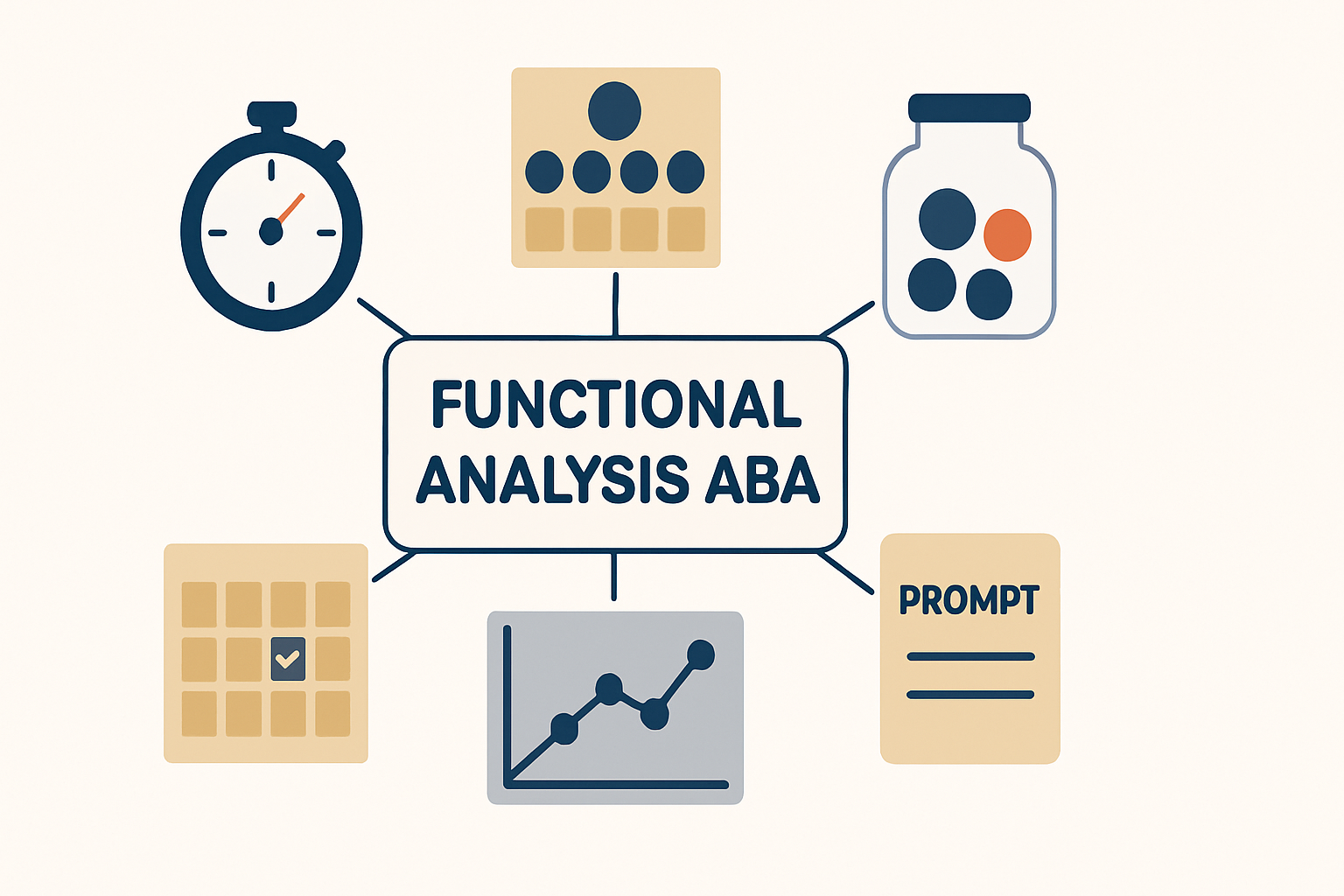
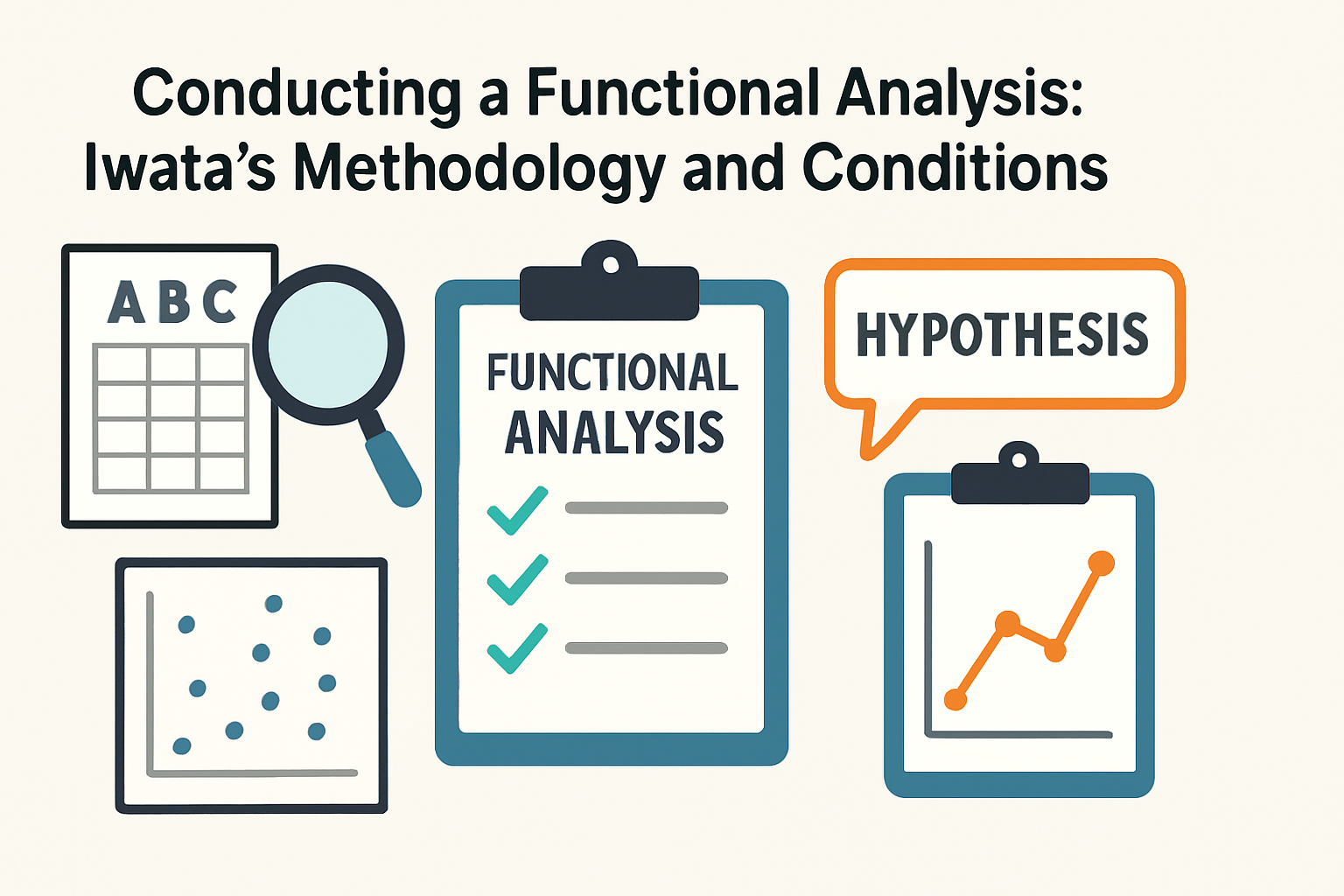
- FBA methods include indirect assessments (interviews, rating scales), descriptive assessments (ABC recording, scatter plots), and experimental analysis
- Functional analysis is the only method that involves systematic manipulation of variables to demonstrate functional control
- This distinction is crucial for exam questions about assessment methodology selection
Conducting a Functional Analysis: Iwata’s Methodology and Conditions
The standard analog functional analysis methodology, developed by Iwata and colleagues, uses four test conditions to systematically evaluate potential behavioral functions. Each condition manipulates specific antecedents and consequences to test different hypotheses about why behavior occurs.
Breaking Down the Four Common Test Conditions
Each condition tests for a specific behavioral function through controlled environmental arrangements:
- Alone condition: The client is in a room without toys or social interaction. This tests for automatic reinforcement – behavior maintained by its own sensory consequences
- Attention condition: The therapist pretends to work while ignoring the client, then provides attention contingent on problem behavior. This tests for social positive reinforcement
- Demand condition: The therapist presents instructional demands using a least-to-most prompting hierarchy, allowing escape contingent on problem behavior. This tests for negative reinforcement (escape)
- Play condition: The client has free access to preferred items and noncontingent attention. This serves as the control condition where reinforcement is freely available
Interpreting FA Data: Reading the Graphs and Identifying Function
Functional analysis data are typically presented in multielement design graphs. Clear patterns emerge when behavior occurs predominantly in specific conditions:
- Attention function: High rates in attention condition, low in other conditions
- Escape function: High rates in demand condition, low in other conditions
- Automatic reinforcement: High rates in alone condition, similar rates across all conditions
- Multiple control: High rates in two or more conditions, indicating multiple maintaining variables
For more on experimental designs, see our guide to single-subject experimental designs.
Functional Analysis in Practice: Worked Examples for BCBA Candidates
Understanding theoretical concepts is essential, but applying them to real scenarios is what separates competent practitioners. These examples illustrate how functional analysis translates to clinical decision-making.
Example 1: Identifying Escape-Maintained Aggression
Marcus is a 9-year-old who engages in hitting during math tasks. A functional analysis was conducted with the following results:
- Alone condition: 0.2 responses per minute
- Attention condition: 0.5 responses per minute
- Demand condition: 4.8 responses per minute
- Play condition: 0.3 responses per minute
The data show a clear escape function – aggression occurs primarily during demand conditions when escape is available. This pattern suggests Marcus uses aggression to avoid difficult academic tasks. The intervention would focus on teaching alternative escape responses or modifying task demands.
Example 2: Differentiating Attention from Automatic Reinforcement
Sophia is a 14-year-old who engages in hand flapping throughout the day. Initial hypotheses suggested attention-seeking behavior, but functional analysis revealed:
- Alone condition: 3.2 responses per minute
- Attention condition: 0.8 responses per minute
- Demand condition: 1.1 responses per minute
- Play condition: 2.9 responses per minute
The elevated rates across all conditions, particularly in alone, suggest automatic reinforcement. The behavior appears maintained by its sensory consequences rather than social variables. This has important implications for intervention selection and automatic reinforcement strategies.
Ethical and Safety Considerations in Functional Analysis
Conducting functional analysis requires careful ethical consideration. The BACB Ethics Code emphasizes using the least restrictive alternative and obtaining informed consent before implementing any assessment procedure.
When is an FA Necessary? The Risk-Benefit Analysis
Functional analysis is not always the first assessment choice. Consider these factors:
- Severity of behavior: FA may be justified for dangerous behaviors where precise function identification is critical
- Assessment clarity: When indirect and descriptive assessments yield unclear or conflicting results
- Treatment resistance: When previous interventions based on hypothesized functions have failed
- Complex cases: When multiple functions are suspected or when automatic reinforcement is a possibility
Always implement safety protocols including protective equipment, crisis intervention plans, and immediate access to medical support if needed. For comprehensive ethical guidance, review our ethics in ABA practice resource.
Functional Analysis on the BCBA Exam: Common Traps and Study Tips
Functional analysis questions test both conceptual understanding and practical application. Watch for these common exam traps:
- Confusing functional analysis with functional behavior assessment (remember: FA is experimental, FBA is the umbrella)
- Misidentifying conditions (alone tests automatic, not escape)
- Overlooking safety and ethical considerations in scenario-based questions
- Failing to recognize when multielement versus reversal designs are appropriate
Quick-Reference Checklist: Key FA Facts to Memorize
Keep these essential points at your fingertips:
- Functional analysis demonstrates experimental control through systematic manipulation
- The four standard conditions test for attention, escape, automatic reinforcement, with play as control
- Data are typically displayed using multielement designs for visual analysis
- Clear functional control shows high rates in specific test conditions
- Always consider ethical safeguards and risk-benefit analysis
- FA is part of comprehensive assessment, not a standalone procedure
Final Summary: Mastering Functional Analysis for Effective Practice
Functional analysis represents the gold standard in behavioral assessment because it provides experimental evidence of behavioral function rather than relying on correlation or hypothesis. Mastering this methodology requires understanding both the technical procedures and the clinical judgment needed to implement them ethically and effectively.
Successful practitioners use functional analysis as part of a comprehensive assessment approach, integrating findings with other assessment data to develop precise, function-based interventions. Remember that the ultimate goal is not just to identify function, but to use that information to improve the client’s quality of life through effective, individualized treatment.
For additional study resources and practice questions, explore our BCBA exam preparation materials and consider reviewing the original research by Iwata and colleagues to deepen your understanding of this critical assessment methodology.
References
Next step for BCBA exam prep
Turn this topic into exam-day practice
Use this topic as a focused review, then test it in exam-style conditions with a free mock before deciding whether five full-length mocks are the right next step.
Start the Free BCBA Mock ExamContinue with Five Full-Length Mocks — $99
Review the included materials and access details before ordering. No pass guarantee is implied.



