
Measurement Bias ABA: What is Measurement Bias in Applied Behavior Analysis?
Measurement bias represents a systematic error that consistently skews behavioral data in one direction. Unlike random fluctuations, this type of error threatens both the validity and reliability of your measurement system.
Table of Contents
- Measurement Bias ABA: What is Measurement Bias in Applied Behavior Analysis?
- Measurement Bias in Action: Worked ABA Examples
- Measurement Bias and the BCBA Exam
- A Practitioner’s Checklist to Minimize Measurement Bias
- Key Takeaways for Candidates and Clinicians
In ABA practice, measurement bias occurs when observers consistently overestimate or underestimate target behaviors due to preconceptions, operational definition flaws, or procedural inconsistencies.
A Formal Definition and Key Characteristics
Measurement bias is defined as a consistent deviation from true values that affects all measurements in the same direction. This differs from random error, which varies unpredictably and averages out over time.
The key characteristic is its predictable pattern – if you’re consistently stopping timers early or marking intervals based on expectations rather than actual behavior, you’re introducing bias.
How Measurement Bias Differs from Other Measurement Threats
Several measurement threats can compromise data quality, but each has distinct features:
- Observer drift: Gradual changes in how observers apply definitions over time
- Reactivity: Behavior changes because participants know they’re being observed
- Instrumentation: Changes in measurement tools or procedures during data collection
- Measurement bias: Systematic error present from the start due to flawed definitions or observer expectations
Measurement Bias in Action: Worked ABA Examples
Understanding measurement bias requires seeing it in realistic clinical scenarios. These examples demonstrate how subtle biases can dramatically affect intervention decisions.
Example 1: Bias in Duration Recording During Demand Sessions
An RBT expects high rates of elopement during math work based on previous sessions. They start timing when the client leaves the chair but stop the timer as soon as the client approaches the table, even if they haven’t fully returned to work.
The biased data shows 2-minute elopement durations, while accurate timing would show 3-minute durations. This 25% underestimation could lead to premature fading of supports or incorrect conclusions about intervention effectiveness.
Example 2: Expectancy Bias in Partial-Interval Recording
A BCBA hypothesizes that hand-flapping increases during transitions. An observer marks ‘yes’ for any interval containing arm movements resembling flapping, even when the topography differs significantly.
This expectancy bias inflates the perceived frequency from 3 intervals to 7 intervals per session. Such distortion could misguide a functional analysis and lead to inappropriate intervention targeting.
Example 3: Cultural/Linguistic Bias in Operational Definitions
Defining ‘non-compliance’ as not responding within 3 seconds, without considering a client’s cultural processing norms or language delay, creates systematic bias.
A client from a culture where thoughtful pauses are valued, or one with expressive language delays, will consistently appear non-compliant. This biases data toward overestimation of problem behavior and could lead to unnecessary behavior reduction programs.
Measurement Bias and the BCBA Exam
Understanding measurement bias is crucial for both clinical practice and exam success. The BCBA exam frequently tests your ability to identify and address measurement threats.
Link to the BCBA Task List (C-8: Measurement)
The relevant Task List item states: ‘Evaluate the validity and reliability of measurement procedures.’ Identifying measurement bias is a core component of evaluating validity, as systematic errors directly threaten whether you’re measuring what you intend to measure.
This connects to broader concepts in applied behavior analysis and ensures your data supports ethical decision-making.
Common Exam Question Formats and Traps
The BCBA exam typically presents measurement bias questions in several formats:
- Scenario-based identification: Given a data collection description, identify the threat to validity
- Distinction questions: Differentiate between bias, drift, and reactivity
- Solution-focused items: Select the best corrective action (e.g., refine operational definitions, recalibrate observers)
Common traps include confusing measurement bias with observer drift or selecting interventions before addressing measurement validity. Remember that bias requires systematic correction, not just retraining.
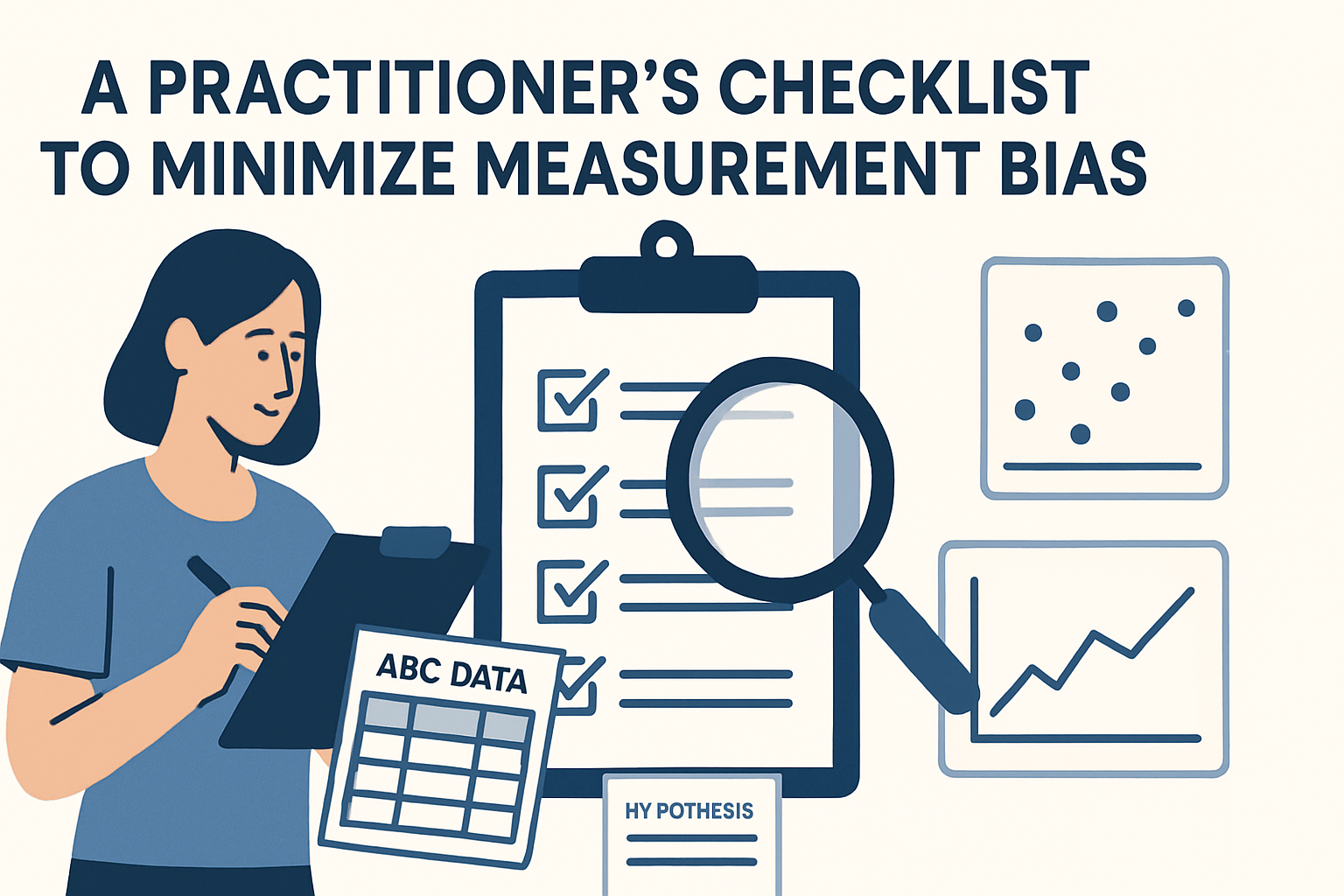
A Practitioner’s Checklist to Minimize Measurement Bias
Use this actionable checklist to audit your measurement systems and reduce systematic errors in data collection.
- Review operational definitions for cultural, linguistic, and contextual appropriateness
- Conduct regular observer training with clear examples and non-examples
- Implement periodic reliability checks to detect and correct systematic errors
- Use objective measurement tools like timers and counters rather than subjective judgments
- Blind observers to hypotheses when possible to reduce expectancy effects
- Document measurement procedures thoroughly for replication and review
- Analyze data patterns for consistent directional trends that suggest bias
These steps align with best practices in data collection methods and support ethical decision-making.
Key Takeaways for Candidates and Clinicians
Measurement bias represents a systematic threat to data validity that requires proactive management. Unlike random error, it consistently skews results in one direction, potentially leading to incorrect clinical decisions.
For BCBA exam preparation, focus on distinguishing measurement bias from other threats like observer drift and reactivity. Remember that bias often stems from flawed operational definitions or observer expectations.
In practice, regular reliability checks and clear operational definitions are your best defenses. Consult the BACB Task List for comprehensive measurement requirements and ensure your procedures meet professional standards.
By understanding and addressing measurement bias, you enhance both your exam performance and your effectiveness as a behavior analyst committed to data-driven decision making and ethical practice.



