

The effective dimension of ABA asks whether an intervention produces a behavior change that is large enough, useful enough, and meaningful enough to matter in the learner’s real life. A graph can show a numerical change without showing a practically valuable change. Effective is the dimension that makes you ask what the change means for the person, the people around them, and the context in which the behavior matters.
Table of Contents
- Effective Dimension of ABA: The Short Answer
- Use Practical Value as the Decision Test
- Compare Effective with Applied, Analytic, and Generality
- Audit Magnitude, Social Validity, and Durability
- BCBA Exam Distinctions and FAQ
- Sources for Further Study
- Quick Review Checklist
- Take the Free BCBA Mock Exam
For BCBA exam questions, keep four questions separate. Applied asks whether the target behavior has social importance. Behavioral asks whether the behavior is directly and measurably defined. Analytic asks whether the intervention caused the change. Effective asks whether the change is strong enough to have practical value. Generality asks whether the change lasts, transfers, or spreads. One result can satisfy one dimension without automatically satisfying all five.
Effective Dimension of ABA: The Short Answer
In the classic seven-dimensions framework, an application is effective when it produces a sufficiently strong change to have practical value. “Strong” does not mean that every intervention must create a dramatic percentage change or that a single numerical cutoff defines effectiveness. The relevant question is whether the outcome meaningfully improves the selected goal under the conditions that matter to the learner and stakeholders.
Imagine a learner whose target is independently requesting a break during difficult tasks. A program that increases requests from one to two per day may be statistically or visually noticeable, but it may not yet reduce distress, improve participation, or give the learner a reliable way to communicate. If the same program produces a smaller-looking change in the graph but allows the learner to request across classes, caregivers, and community routines, the practical value may be greater. The decision requires context, not just arithmetic.
Effective is therefore not a synonym for “the line moved.” It is a judgment grounded in measurement, stakeholder priorities, functional relevance, and the size and quality of the outcome. A BCBA should still use data and experimental reasoning, but the final question is whether the behavior change is worth the effort and whether it improves the situation in a meaningful way.
Use Practical Value as the Decision Test
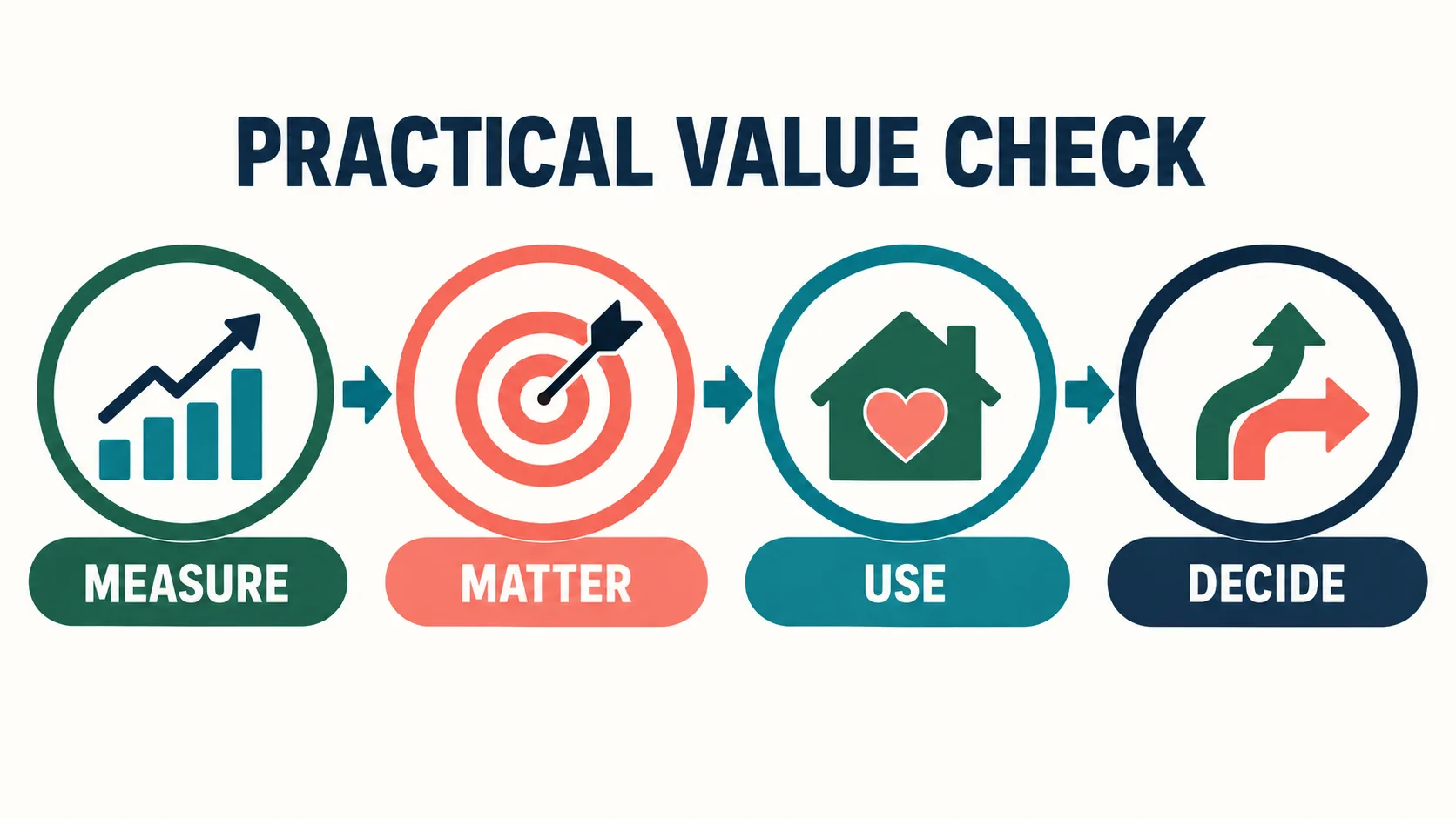
Start with the outcome that matters, not with the procedure that was selected. Ask what the learner can do now that was difficult or unavailable before, what barriers have been reduced, and whether the change is visible in the environments where the behavior matters. A target can be measurable and socially important while still requiring revision if the intervention effect is too small, too fragile, too costly, or too dependent on conditions that will not be available.
| Question | Evidence to review | Why it matters |
|---|---|---|
| Did the target change? | Reliable direct measures with a clear baseline and intervention timeline. | A practical claim still needs an observable outcome. |
| Is the change meaningful? | Effect on communication, safety, independence, participation, learning, or quality of life. | Magnitude is interpreted against the person’s goals and daily context. |
| Is the change usable? | Performance across relevant routines, people, materials, and levels of support. | A change that works only in a contrived session may have limited practical value. |
| Is the cost reasonable? | Time, effort, resources, acceptability, side effects, and treatment integrity. | A strong effect must be interpreted alongside feasibility and social validity. |
This is where stakeholder input matters. The learner’s preferences, the family’s priorities, teacher observations, and the client’s actual opportunities can reveal whether a numerical improvement is translating into a better daily outcome. Stakeholder input does not replace direct measurement or causal analysis. It helps define the practical question that the measurement should answer.
Do not reduce social significance to whether an adult thinks a target looks typical. A behavior can be meaningful because it increases access, autonomy, safety, communication, choice, or participation. The relevant standard is whether the target and outcome matter to the person and the environments they use. The Effective dimension is about practical benefit, not conformity for its own sake.
Compare Effective with Applied, Analytic, and Generality
Seven-dimensions questions often present several plausible answers. The quickest way to separate them is to identify the question being asked. If the prompt emphasizes why the target was selected, think Applied. If it emphasizes direct measurement, think Behavioral. If it asks whether the procedure caused the change, think Analytic. If it asks whether the skill transfers or persists, think Generality. If it asks whether the outcome is large enough and useful enough, think Effective.
| Dimension | Core question | Common clue in a vignette |
|---|---|---|
| Applied | Does the target address a problem of social importance? | The target was selected because it affects safety, independence, communication, learning, or participation. |
| Behavioral | Is the behavior observable and measured directly? | The question emphasizes an operational definition, count, rate, duration, latency, or another direct measure. |
| Analytic | Did the intervention produce the observed change? | A design or data pattern demonstrates a functional relation between procedure and behavior. |
| Effective | Is the change strong enough to have practical value? | The outcome improves a meaningful goal enough to matter in the learner’s life. |
| Generality | Does the change last, transfer, or spread? | The skill persists over time, appears with new people or settings, or extends to related behaviors. |
The dimensions can work together. For example, a BCBA may select an applied communication target, define it behaviorally, use an analytic design to evaluate a functional relation, obtain an effective improvement, and program generality. A scenario can test any one of those steps. Do not select Effective just because the question mentions an intervention, and do not select Generality just because the intervention produced a large change in one setting.
Audit Magnitude, Social Validity, and Durability
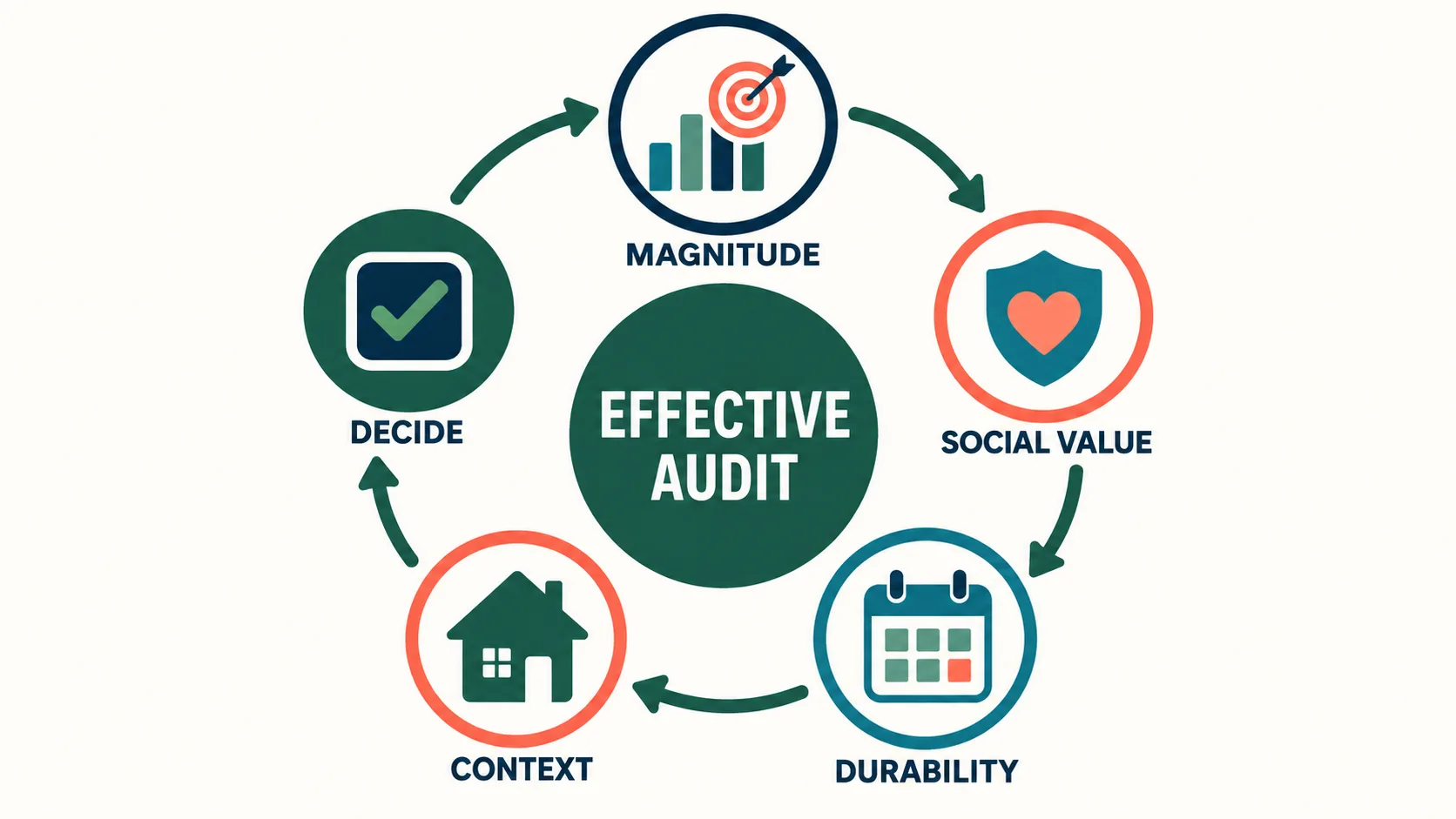
An Effective claim becomes weaker when the team measures only a convenient proxy, ignores the learner’s priorities, or stops at the end of the teaching session. A lower rate of problem behavior may be valuable, but the team should also check whether the learner has an acceptable alternative, whether participation improved, and whether the reduction holds under relevant conditions. Similarly, a higher test score may not be sufficient if the learner cannot use the skill outside the teaching format.
| Weak claim | What may be missing | Better audit question |
|---|---|---|
| “The percentage increased.” | The size and functional meaning of the change. | What does the increase allow the person to do in daily life? |
| “The behavior stopped in therapy.” | Generalization, maintenance, and an acceptable replacement response. | Does the outcome persist and support the learner across relevant routines? |
| “Adults approved the plan.” | The learner’s experience, preferences, and observable outcome. | Did the learner gain meaningful choice, access, safety, or participation? |
| “The procedure worked once.” | Replication, treatment integrity, and causal interpretation. | Is the effect reliable enough to support a data-based decision? |
Social validity and effectiveness overlap, but they are not identical. Social validity asks whether goals, procedures, and outcomes are acceptable and important to stakeholders. Effective asks whether the behavior change is large enough to produce practical value. A plan can be acceptable but too weak to solve the problem, or it can create a large numerical effect while failing to respect the learner’s priorities. Strong practice considers both.
Durability matters because a short-lived change may not solve the problem that led to intervention. Maintenance and generality are formally distinct dimensions, but they help reveal whether an apparently effective change is useful beyond the original session. A practical evaluation therefore includes follow-up, new contexts, and a plan for continuing or thinning support when appropriate.
For targeted practice applying the seven dimensions to scenario questions, the Free BCBA Mock Exam can help you separate Applied, Behavioral, Analytic, Effective, and Generality clues. It is a study diagnostic, not a clinical effectiveness judgment or a guarantee of passing.
BCBA Exam Distinctions and FAQ
What is the Effective dimension of ABA?: Effective means that an applied behavior-change effort produces a sufficiently strong and meaningful result to have practical value. The dimension is not satisfied merely because a graph changes or a statistical calculation is significant.
Is Effective the same as Applied?: No. Applied concerns the social importance of the behavior selected for intervention. Effective concerns whether the intervention produced a meaningful improvement. A target can be socially important without the intervention yet producing a sufficient effect.
Is Effective the same as Analytic?: No. Analytic asks whether the intervention caused the change. Effective asks whether the resulting change is strong enough and useful enough to matter. A well-controlled design can show a small causal effect that still needs improvement before it has practical value.
How is Effective different from Generality?: Effective focuses on the practical strength and value of the change. Generality focuses on whether the change lasts over time, transfers across settings or people, or spreads to related behaviors. A large effect in one setting is not automatically generalized.
Does “statistically significant” mean “effective” in ABA?: No. Statistical or visual evidence can help describe change, but practical significance asks whether the outcome matters to the learner and stakeholders. The size, context, feasibility, acceptability, and daily impact of the change all matter.
What should I verify before using this for BCBA exam study?: Check the current BACB task-list and examination materials for the version that applies to your exam. The seven-dimension framework is associated with Baer, Wolf, and Risley, but exam outlines and policies can change.
Sources for Further Study
- Behavior Analyst Certification Board: Task Lists for BACB Certifications
- Behavior Analyst Certification Board: BCBA Task List
- Baer, Wolf, and Risley: Some Current Dimensions of Applied Behavior Analysis
- Behavior Analysis Association of Michigan: Seven Dimensions of ABA
- The Fuzzy Concept of Applied Behavior Analysis Research
This article is for educational and BCBA exam-preparation purposes. Whether an intervention is effective for a specific person requires individualized assessment, direct measurement, stakeholder input, treatment-integrity review, safety consideration, and ongoing professional judgment.
Quick Review Checklist
Use this final checklist to turn effective dimension of aba into exam-ready reasoning. The goal is not to memorize a label in isolation; it is to identify the relevant evidence and explain why the best answer fits the scenario. Key ideas to review:
- State the central definition or decision point for effective dimension of aba in your own words.
- Identify the detail that makes effective dimension of aba different from its closest related ABA term.
- Separate the observable facts in a scenario from assumptions that are not supported by the facts.
- Write one example and one nonexample so you can recognize the concept in a new setting.
Exam application checks:
- Ask what the question is actually requesting before comparing the answer choices.
- Mark the antecedent, response, consequence, or other evidence that supports the selected answer.
- Look for a distractor that describes a related process but does not answer the specific question.
Final self-check:
- Explain how you would verify the interpretation with clear observations or data.
- Change one detail in the scenario and decide whether your answer should change.
- Give a one-sentence rationale that a supervisor or study partner could evaluate.
Take the Free BCBA Mock Exam
When you are ready to apply the idea, use the free practice resource below for additional feedback. Take the Free BCBA Mock Exam



