

If you ask does insurance cover ABA, the safest short answer is: sometimes, but coverage is not decided by the word “ABA” alone. The answer can change with the payer, state, plan design, diagnosis, medical-necessity criteria, provider network, prior authorization, service codes, visit or hour limits, and your deductible or coinsurance.
Table of Contents
- Does Insurance Cover ABA? Start With the Payer
- What Changes by Payer Type?
- What Does “Covered” Actually Mean?
- Call Your Plan: Questions That Produce a Usable Answer
- When Covered Does Not Mean Approved
- Document, Appeal, and Recheck
- For BCBA Candidates and Providers
- Quick Review Checklist
- Take the Free BCBA Mock Exam
Federal resources provide useful context, but they do not turn every plan into the same benefit. Medicaid.gov explains that state Medicaid agencies determine medically necessary services for eligible individuals, while Marketplace guidance describes behavioral-health benefits at a general level. Your plan’s written benefit and authorization decision still control the practical answer for a specific service.
This guide gives you a verification workflow rather than a coverage promise. It is educational information, not individualized insurance, medical, legal, or financial advice. Ask the plan, provider, and responsible state agency for a current answer, and save the reference number and documents behind that answer.
Does Insurance Cover ABA? Start With the Payer
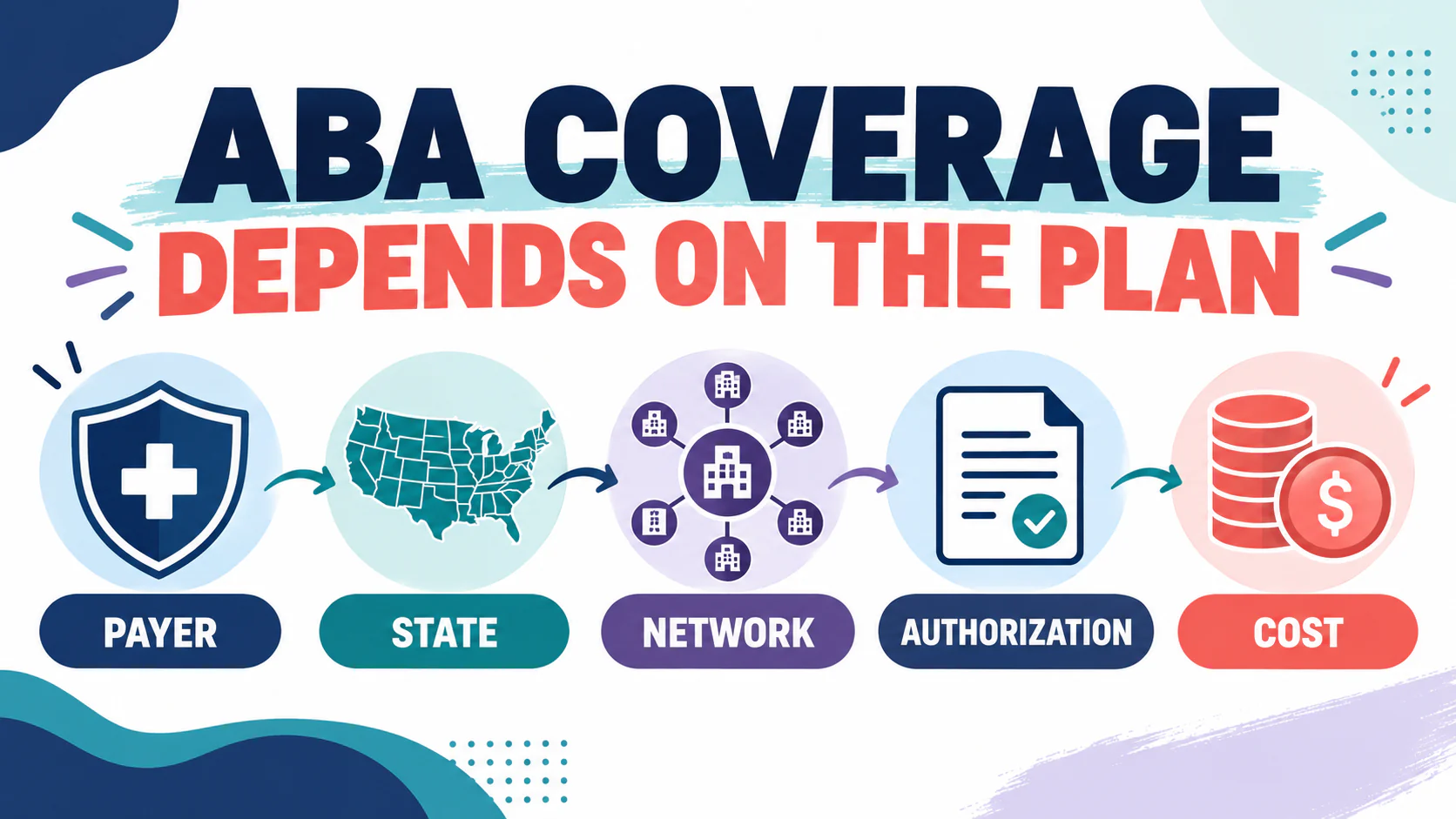
Begin by identifying the payer and the exact plan. “Insurance” may mean Medicaid, CHIP, a Marketplace plan, employer-sponsored commercial insurance, a self-funded employer plan, or another arrangement with different rules. Even two plans using the same insurer brand can have different networks, exclusions, authorization pathways, and cost sharing.
For Medicaid and CHIP, the federal Medicaid autism-services resource page now links to a State Medicaid and Children’s Health Insurance Program ABA Toolkit released in 2026. That toolkit is an oversight and implementation resource; CMS says it does not establish a universal new federal requirement, endorse one treatment approach, or direct states to limit medically necessary autism services. State implementation and the member’s plan still matter.
For Marketplace plans, HealthCare.gov says plans cover mental and behavioral health services as essential health benefits, but the specific benefits and limits depend on the state and plan. That general statement should not be converted into an automatic promise that a particular ABA program, provider, intensity, or code will be paid.
What Changes by Payer Type?
Use the payer type to decide where to start the verification. The table is a routing tool, not a coverage determination. A “yes” in a benefit summary can still be conditioned on medical necessity, network status, authorization, plan limits, or documentation.
| Payer or plan type | What to verify first | Why a general answer may fail |
|---|---|---|
| Medicaid or CHIP | State benefit pathway, eligibility, medical necessity, managed-care plan, provider enrollment, and authorization. | State agencies and plans administer benefits differently, and federal guidance does not answer every service-level question. |
| Marketplace plan | Summary of benefits, behavioral-health benefit, habilitative or rehabilitative language, network, and prior authorization. | Essential-benefit context is broad; the plan’s covered service, limits, and utilization rules are specific. |
| Employer commercial plan | Certificate or benefit booklet, behavioral-health administrator, network rules, exclusions, and authorization contact. | Employer plans can use different documents, vendors, exclusions, and cost-sharing designs. |
| Self-funded plan | Plan administrator, written plan document, claims administrator, and applicable appeal route. | The insurer brand on the card may administer claims without being the plan sponsor or final decision-maker. |
If the member has more than one payer, ask which plan is primary, which is secondary, and how coordination of benefits works. Do not schedule a high-intensity service based only on a verbal sentence that “ABA is a covered benefit.” The service-level conditions are where cost and access problems usually appear.
What Does “Covered” Actually Mean?
Coverage has several layers. A representative can confirm that a category exists in the plan while still saying that a specific service needs prior authorization or that a provider must be in network. Treat each layer as a separate question so your notes do not turn a partial answer into a guarantee.
- Benefit: Does the plan include a behavioral, habilitative, rehabilitative, autism, or ABA-related benefit that could apply?
- Eligibility: Is the member enrolled on the date of service, and are there age, diagnosis, or plan-status conditions?
- Medical necessity: What clinical criteria and documentation must be met for the requested service?
- Provider: Is the BCBA, organization, or other rendering provider enrolled and in network for this plan?
- Authorization: Is prior authorization, a treatment plan, a referral, or concurrent review required before services begin?
- Payment: What deductible, copay, coinsurance, out-of-pocket maximum, unit limit, or balance-billing risk applies?
A “covered benefit” can therefore mean only that the plan may consider a claim under certain conditions. It does not mean the plan will approve every requested hour or pay every provider at the same rate. Ask for the plan’s definition of the service and write down the conditions attached to the answer.
Call Your Plan: Questions That Produce a Usable Answer
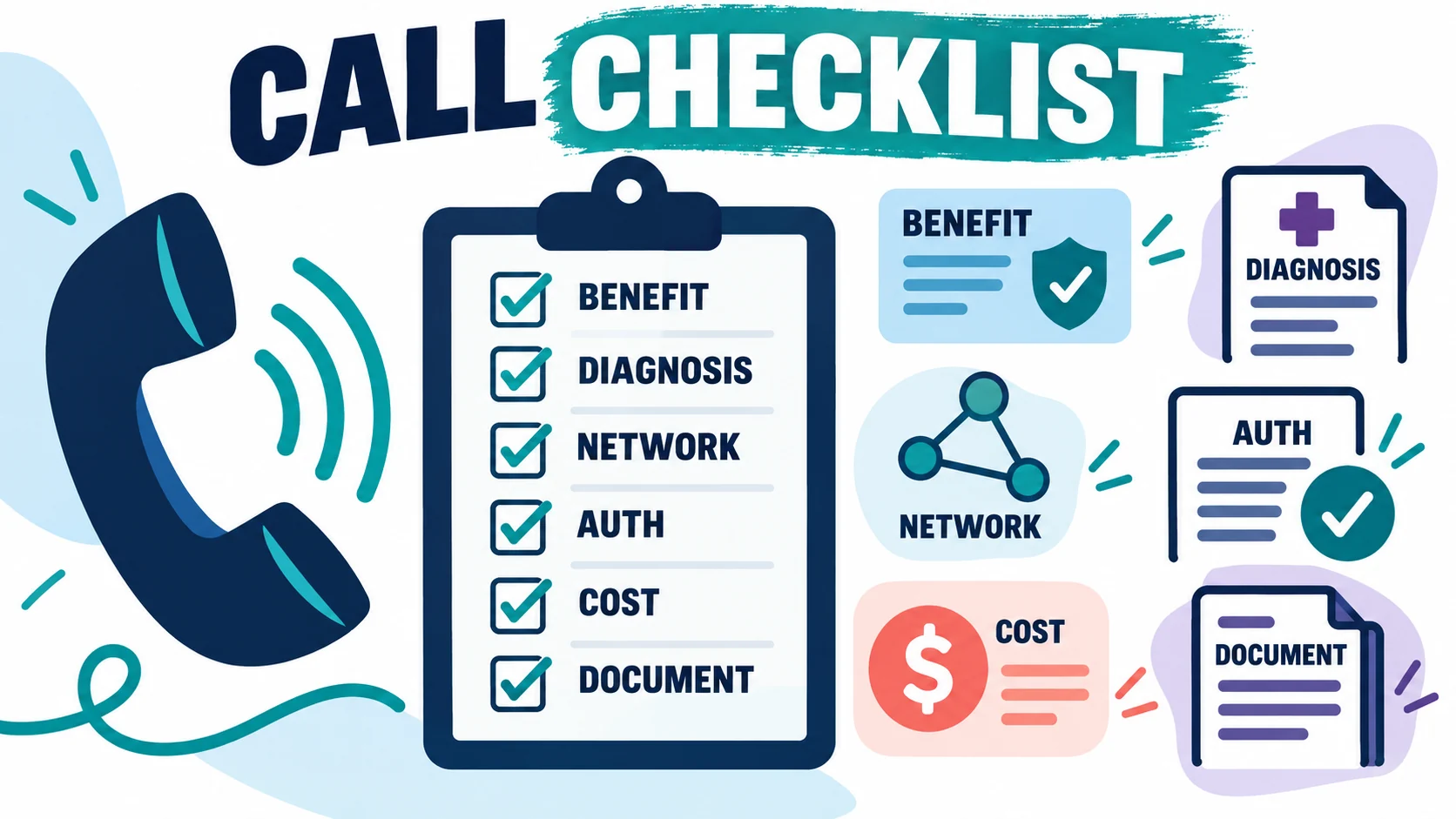
Have the member ID, group number, diagnosis information if appropriate, provider NPI or organization details, and the proposed service description available. Ask the representative to answer about the actual service and provider—not only the general word “ABA.” Request the call reference number and the name or identifier of the department that handled the question.
| Question | Write down |
|---|---|
| Is ABA or the proposed behavioral-health service a covered benefit under this exact plan? | Benefit name, plan document or page, exclusions, and effective date. |
| Does the diagnosis or eligibility category meet the plan’s criteria for this service? | Required diagnosis, clinical records, age or eligibility conditions, and documentation list. |
| Is the provider or organization in network and enrolled for the service? | Network status, rendering provider, billing entity, and effective date. |
| Is prior authorization required, and who submits the request? | Authorization phone, form, review timeline, reference number, and start condition. |
| What cost sharing, limits, and review rules apply? | Deductible, copay, coinsurance, units or hours, out-of-pocket rules, and concurrent review. |
| Can you send the answer in writing or identify the controlling document? | Document title, web link, mailing or portal instructions, and call reference. |
If the representative says “yes,” repeat the conditions back: “So this applies only after authorization, with this provider network, for this service, subject to these limits—is that correct?” That read-back can reveal whether the first answer was about a general benefit rather than an approved plan of care.
When Covered Does Not Mean Approved
A request can be denied or delayed even when a plan lists ABA or behavioral-health treatment as a benefit. Common reasons include missing records, an incomplete treatment plan, an out-of-network provider, a diagnosis or eligibility mismatch, missing prior authorization, a limit that has been reached, or a reviewer’s medical-necessity decision.
Those are different problems and need different next steps. A network issue may require a different provider or an exception request. A missing-document issue may require the provider to submit records. A medical-necessity denial may require a clinical review, peer-to-peer process, or appeal. A cost-sharing surprise may require the plan’s estimate and a written explanation rather than a clinical appeal.
Do not tell a family that a denial proves ABA is never covered. Do not tell a provider that one approval guarantees future claims. Keep the language precise: “The plan denied this request for this stated reason on this date.” Then use the plan’s written notice to identify the deadline and route for reconsideration or appeal.
Document, Appeal, and Recheck
Build a small coverage file before services begin. Include the member card, plan documents, benefit summary, provider network confirmation, authorization request and decision, treatment-plan records, call reference numbers, explanation of benefits, denial letters, and appeal deadlines. Protect personal information and share it only through the plan’s approved channel.
- Document the answer: record who answered, when, what service and provider were discussed, and which conditions were named.
- Request the controlling notice: ask for the written benefit, authorization decision, explanation of benefits, or denial reason rather than relying on a verbal summary.
- Match the response to the problem: correct missing documentation, resolve network or billing details, or follow the plan’s reconsideration or appeal route.
- Watch the date: note the authorization period, renewal requirement, appeal deadline, and any change in plan year or eligibility.
- Recheck after a change: call again if the plan, provider, diagnosis documentation, service intensity, or state program changes.
HealthCare.gov describes a right to appeal a health-plan decision, but the steps, deadlines, and documents depend on the coverage type. Use the notice and plan instructions, and seek qualified insurance or legal help when the issue is disputed or financially significant.
For BCBA Candidates and Providers
BCBA candidates and providers may encounter insurance scenarios in which the real test is not “Does insurance cover ABA?” but “What should be verified before recommending, documenting, or beginning services?” Separate clinical judgment, medical necessity, payer policy, authorization, scope, and billing claims. A credential does not remove the need to verify the plan or communicate uncertainty. For certification questions, use the official BACB resource hub as the current starting point. BACB certification guidance and an insurance plan’s coverage decision are separate authorities: one does not replace the other.
For broader site context, review the existing ABA health insurance guide as a read-only companion. After you organize the coverage questions, the Free BCBA Mock Exam can serve as a separate diagnostic for exam-study topics such as ethics, documentation, assessment, and supervision. It cannot predict coverage or guarantee certification.
Does insurance always cover ABA for autism?: No. Coverage and approval vary by state, payer, plan, diagnosis, medical necessity, provider network, authorization, service limits, and cost-sharing rules. Federal guidance may provide context without deciding whether a particular member’s plan will pay a particular request.
Does Medicaid cover ABA?: Medicaid programs can cover autism-related services, but state agencies and plans determine eligibility, medical necessity, provider, authorization, and benefit details. Start with the state Medicaid or managed-care plan and ask for the current written service and authorization rules.
What is the first question to ask the insurance company?: Ask whether the exact plan covers the proposed ABA or behavioral-health service for the member and provider being discussed, then ask what diagnosis, medical-necessity, network, prior-authorization, documentation, and cost-sharing conditions apply. Record the representative, date, and reference number.
What if the plan says ABA is covered but the provider is out of network?: Ask whether an in-network provider is available, whether an out-of-network exception or single-case agreement exists, and how the authorization and cost-sharing rules change. Do not assume that a benefit summary sets the final rate or member responsibility.
Quick Review Checklist
Use this final checklist to turn does insurance cover aba into exam-ready reasoning. The goal is not to memorize a label in isolation; it is to identify the relevant evidence and explain why the best answer fits the scenario. Key ideas to review:
- State the central definition or decision point for does insurance cover aba in your own words.
- Identify the detail that makes does insurance cover aba different from its closest related ABA term.
- Separate the observable facts in a scenario from assumptions that are not supported by the facts.
- Write one example and one nonexample so you can recognize the concept in a new setting.
Exam application checks:
- Ask what the question is actually requesting before comparing the answer choices.
- Mark the antecedent, response, consequence, or other evidence that supports the selected answer.
- Look for a distractor that describes a related process but does not answer the specific question.
Final self-check:
- Explain how you would verify the interpretation with clear observations or data.
- Change one detail in the scenario and decide whether your answer should change.
- Give a one-sentence rationale that a supervisor or study partner could evaluate.
Take the Free BCBA Mock Exam
When you are ready to apply the idea, use the free practice resource below for additional feedback. Take the Free BCBA Mock Exam



