ABA Terms

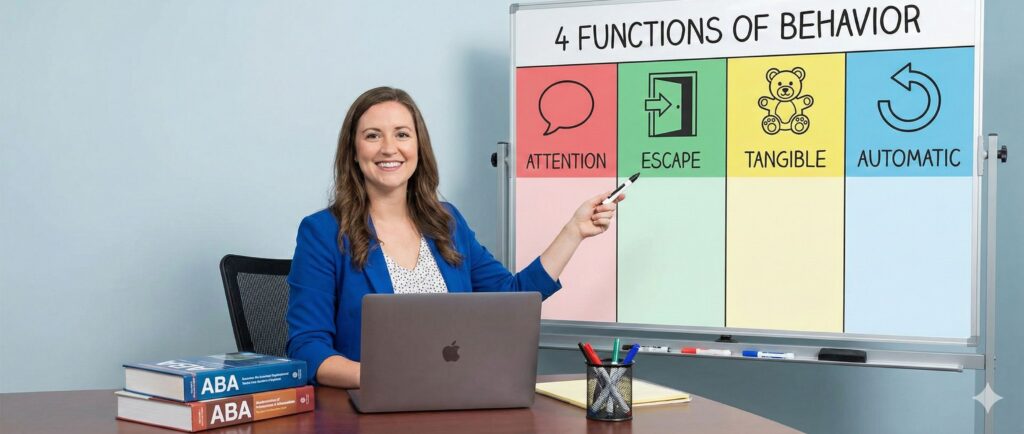
Using the 4 Functions of Behavior to Analyze BCBA® Exam Scenarios Step by Step

Using the 4 Functions of Behavior to Analyze BCBA® Exam Scenarios Step by Step By BCBA Mock Exam Introduction If you’re preparing for the BCBA® exam, you already know that functions of behavior are everywhere: In task list items In mock exams In real clinical decision-making But on the exam, the challenge isn’t just memorizing […]

Using the 4 Functions of Behavior to Analyze BCBA® Exam Scenarios Step by Step Read More »
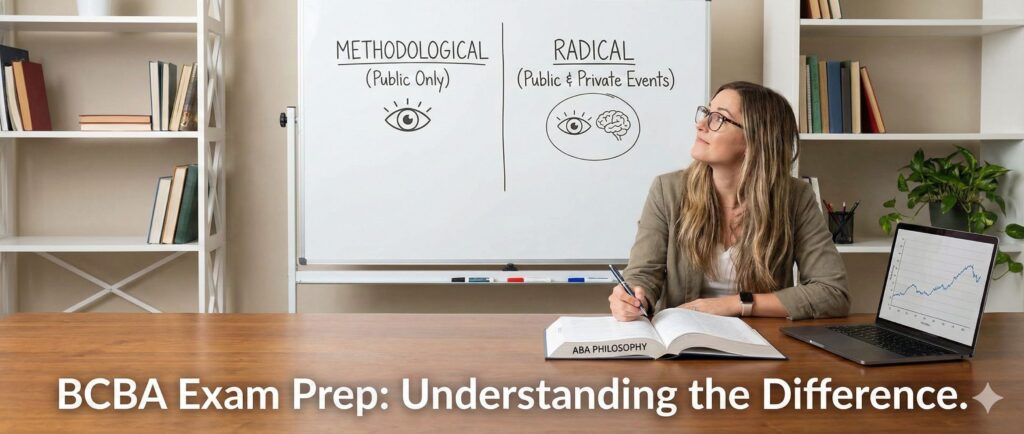
Radical Behaviorism vs Methodological Behaviorism: What’s the Difference and Why It Matters for the Exam

Radical Behaviorism vs Methodological Behaviorism: What’s the Difference and Why It Matters for the Exam By BCBA Mock Exam Introduction If you’re preparing for the BCBA® exam, you’ll see references to radical behaviorism and methodological behaviorism—especially in questions about philosophy, private events, and how ABA views “thoughts” and “feelings.” Good news: you don’t need to

Radical Behaviorism vs Methodological Behaviorism: What’s the Difference and Why It Matters for the Exam Read More »

Reflexivity, Symmetry, and Transitivity: Understanding Stimulus Equivalence for the BCBA® Exam

Reflexivity, Symmetry, and Transitivity: Understanding Stimulus Equivalence for the BCBA® Exam By BCBA Mock Exam Introduction Stimulus equivalence is a foundational concept tested frequently on the BCBA® exam. Although the terms reflexivity, symmetry, and transitivity may sound abstract, they follow a predictable logic once you understand the relationships they describe. This article breaks down each

Reflexivity, Symmetry, and Transitivity: Understanding Stimulus Equivalence for the BCBA® Exam Read More »

Punishment in ABA: Ethical Use, Side Effects, and How It’s Tested on the BCBA® Exam

Punishment in ABA: Ethical Use, Side Effects, and How It’s Tested on the BCBA® Exam By BCBA Mock Exam Introduction Punishment in ABA is one of the most sensitive and heavily tested topics on the BCBA® exam. In everyday language, “punishment” usually means something harsh or morally wrong. In ABA, punishment has a very specific,

Punishment in ABA: Ethical Use, Side Effects, and How It’s Tested on the BCBA® Exam Read More »

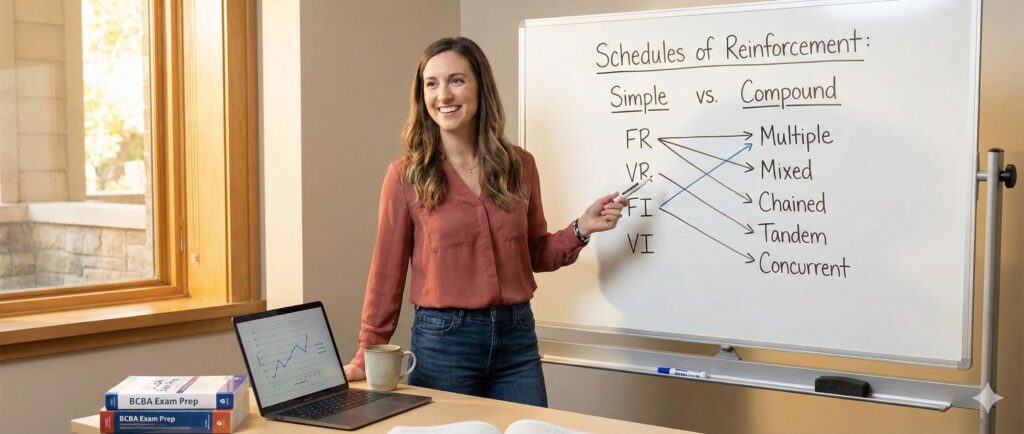
Compound vs Simple Schedules of Reinforcement: How to Read Exam Questions Without Getting Lost

Compound vs Simple Schedules of Reinforcement: How to Read Exam Questions Without Getting Lost By BCBA Mock Exam Introduction If you’re preparing for the BCBA® exam, schedules of reinforcement can feel like alphabet soup: FR, VR, FI, VI, multiple, mixed, chained, tandem, concurrent, alternative, conjunctive… The good news? Most exam questions aren’t asking you to

Compound vs Simple Schedules of Reinforcement: How to Read Exam Questions Without Getting Lost Read More »

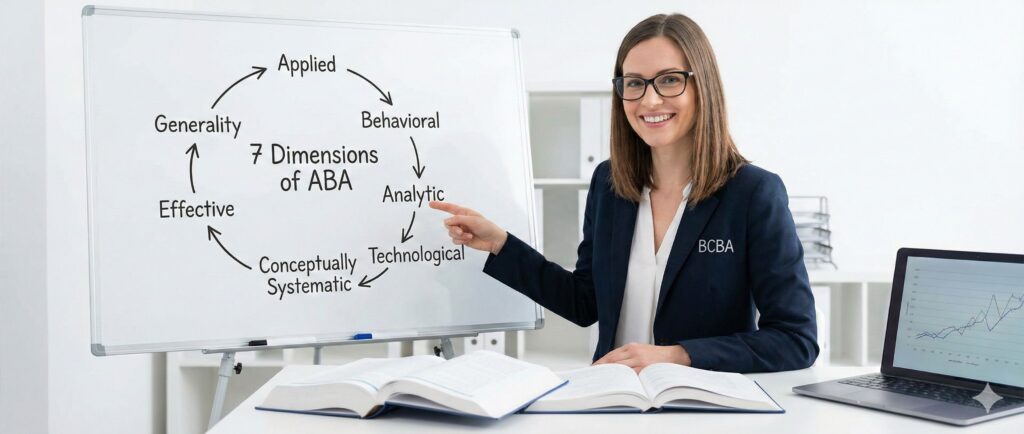
7 Dimensions of ABA in Real-Life Cases: How to Recognize Them in BCBA® Exam Scenarios

7 Dimensions of ABA in Real-Life Cases: How to Recognize Them in BCBA® Exam Scenarios By BCBA Mock Exam Introduction If you have spent any time with the Cooper book or BCBA® exam prep materials, you have seen the 7 dimensions of applied behavior analysis: Applied, Behavioral, Analytic, Technological, Conceptually Systematic, Effective, and Generality. They

7 Dimensions of ABA in Real-Life Cases: How to Recognize Them in BCBA® Exam Scenarios Read More »

Reflexivity, Symmetry, and Transitivity: Understanding Stimulus Equivalence for the BCBA® Exam

Reflexivity, Symmetry, and Transitivity: Understanding Stimulus Equivalence for the BCBA® Exam By BCBA Mock Exam Introduction Stimulus Equivalence BCBA Exam questions are very common because stimulus equivalence is a foundational concept tested frequently on the BCBA® exam. Although the terms reflexivity, symmetry, and transitivity may sound abstract, they follow a predictable logic once you understand

Reflexivity, Symmetry, and Transitivity: Understanding Stimulus Equivalence for the BCBA® Exam Read More »

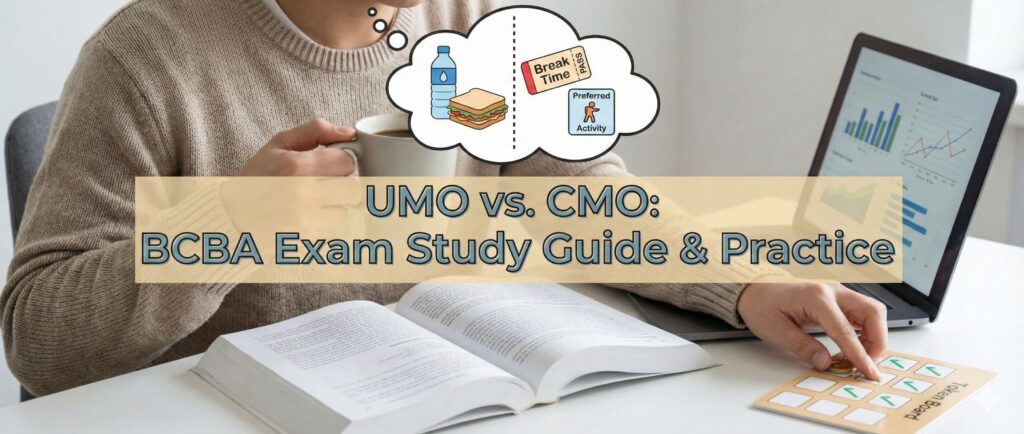
Motivating Operations ABA: UMOs vs CMOs Explained

Motivating Operations ABA: UMOs vs CMOs Explained If you’re preparing for the BCBA® exam, you’ll see motivating operations ABA questions everywhere: task-list items, mock exam vignettes, and treatment-planning scenarios. Many of those items quietly test whether you can tell the difference between unconditioned motivating operations (UMOs) and conditioned motivating operations (CMOs). On the exam, motivating

Motivating Operations ABA: UMOs vs CMOs Explained Read More »

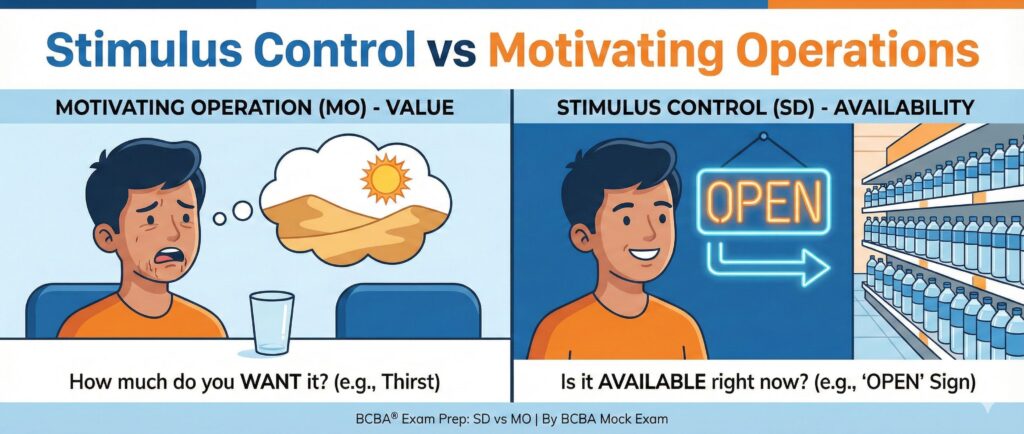
Stimulus Control vs Motivating Operations: Key Differences Every BCBA® Candidate Must Know

Stimulus Control vs Motivating Operations: Key Differences Every BCBA® Candidate Must Know By BCBA Mock Exam If you’re preparing for the BCBA® exam, SD vs MO is one of those pairs that shows up again and again: “Is this an SD or an EO?” “Is deprivation a discriminative stimulus?” “When the teacher is in the

Stimulus Control vs Motivating Operations: Key Differences Every BCBA® Candidate Must Know Read More »

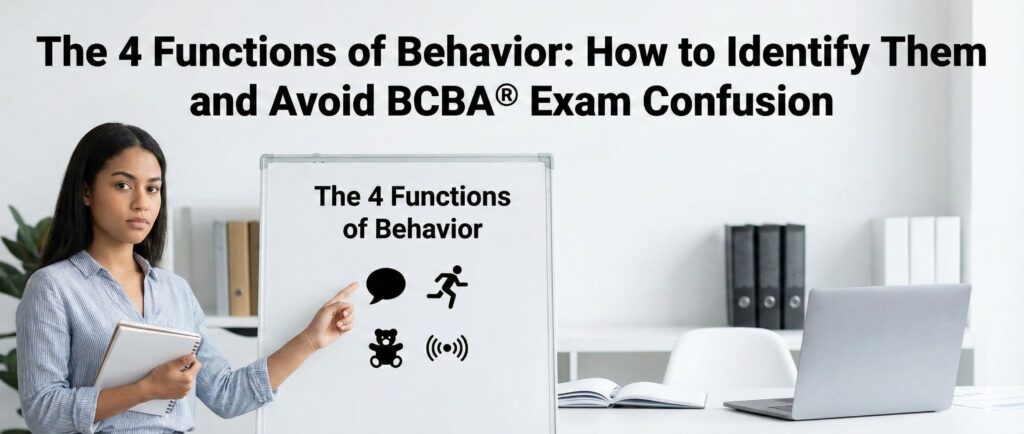
The Four Functions of Behavior: How to Identify Them and Avoid BCBA® Exam Confusion

The Four Functions of Behavior ABA: How to Identify Them and Avoid BCBA® Exam Confusion If you’re studying for the BCBA® exam, you’ve probably heard this sentence a hundred times: “Behavior is maintained by its function, not its form.” Understanding the four functions of behavior ABA is one of the fastest ways to read exam

The Four Functions of Behavior: How to Identify Them and Avoid BCBA® Exam Confusion Read More »