
Online BCBA pathway and certification planning If you are searching for board certified behavior analyst certification online, start with one important distinction: an online format describes how a program delivers instruction, not whether the program by itself makes you eligible for BCBA certification. Your decision should connect four separate pieces—education, behavior-analytic coursework, supervised fieldwork, and the BACB examination—then account for the requirements that apply when you submit your application.
Table of Contents
- Board Certified Behavior Analyst Certification Online: What It Means
- Compare the BACB Pathways Before Choosing a Program
- Why the 2027 Transition Matters for Online Candidates
- Online BCBA Program Comparison Matrix
- Treat Fieldwork and Supervision as a Separate Project
- Questions to Ask an Online Program Before You Enroll
- How to Study While Completing an Online Pathway
- Common Mistakes in Online BCBA Certification Planning
- Online BCBA Certification FAQ
- Take the Free BCBA Mock Exam
The Behavior Analyst Certification Board (BACB) controls the national BCBA certification process. A university, graduate certificate, continuing-education provider, or exam-prep company may support one part of your plan, but none should be treated as a substitute for the current BACB handbook or formal application review. Before enrolling, compare the program’s claims with the BACB 2027 BCBA requirements, the BACB university training guidance, and the current BCBA Handbook.
Board Certified Behavior Analyst Certification Online: What It Means
An online BCBA pathway can be a practical option for a working professional, a career changer, or a student who needs geographic flexibility. The word online, however, does not answer the questions that determine whether the pathway fits your certification plan. You still need to identify the education route, confirm the coursework documentation, arrange qualifying fieldwork, submit the correct application, and prepare for the current examination.
Think of online delivery as one feature inside a larger decision. A program might be a graduate degree, a graduate certificate, a sequence of behavior-analytic courses, or an exam-preparation product. Those are not interchangeable. A master’s program may supply a degree and coursework while you arrange fieldwork separately. A certificate may be useful for a person who already has the required degree but may not solve every education or documentation question. A mock exam can measure study readiness, but it cannot replace coursework, supervision, or BACB review.
- Education: Does the program fit the degree or education pathway you intend to use?
- Coursework: Who verifies that the behavior-analytic courses meet the current pathway documentation rules?
- Fieldwork: Where will you obtain supervised experience, and who will supervise and document it?
- Application: Which current BACB materials govern your application date and pathway?
- Examination: Are your study materials aligned with the current BCBA examination content?
This distinction protects you from a common marketing shortcut: treating “online BCBA program” as if it were a complete certification guarantee. Use the program page to learn what it offers. Use BACB materials to determine what the certification process requires. If the two descriptions do not line up clearly, pause before paying a deposit.
Compare the BACB Pathways Before Choosing a Program
The BACB’s 2027 guidance describes two BCBA eligibility pathways. Pathway 1 is built around a qualifying accredited or recognized program. Pathway 2 is built around qualifying graduate-level behavior-analytic coursework and the associated documentation. The practical point for an online candidate is not to memorize a pathway label from a brochure; it is to prove how the program’s curriculum and records connect to the current BACB requirements.
For Pathway 1, ask whether the exact program—not merely the university or department—has the accreditation or recognition status the current BACB materials require. Confirm the effective dates and the credential you will receive. “The university offers ABA courses” is not the same statement as “this specific program fits the pathway I plan to use.” Save the program’s official catalog language and verify the status again before applying.
For Pathway 2, ask how the coursework is documented and who is authorized to complete or support the required attestation process. The BACB’s university guidance discusses the Pathway 2 Program Contact and coursework documentation. That makes the contact person and the recordkeeping process important questions for distance learners, especially when courses are taken across departments or through more than one institution.
Also separate the program’s admission standard from the BACB’s certification review. A school may admit you based on its own academic rules, while the BACB later reviews whether your degree, coursework, fieldwork, and documents meet certification requirements. Admission is a useful starting point; it is not an individualized certification decision.
Before you choose, create a one-page pathway note with five lines: target pathway, degree status, coursework source, fieldwork plan, and application timing. If any line is blank, the program is not yet a complete plan. This small exercise often reveals that the real question is not “Which online program is cheapest?” but “Which missing requirement will this program actually solve?”
Why the 2027 Transition Matters for Online Candidates
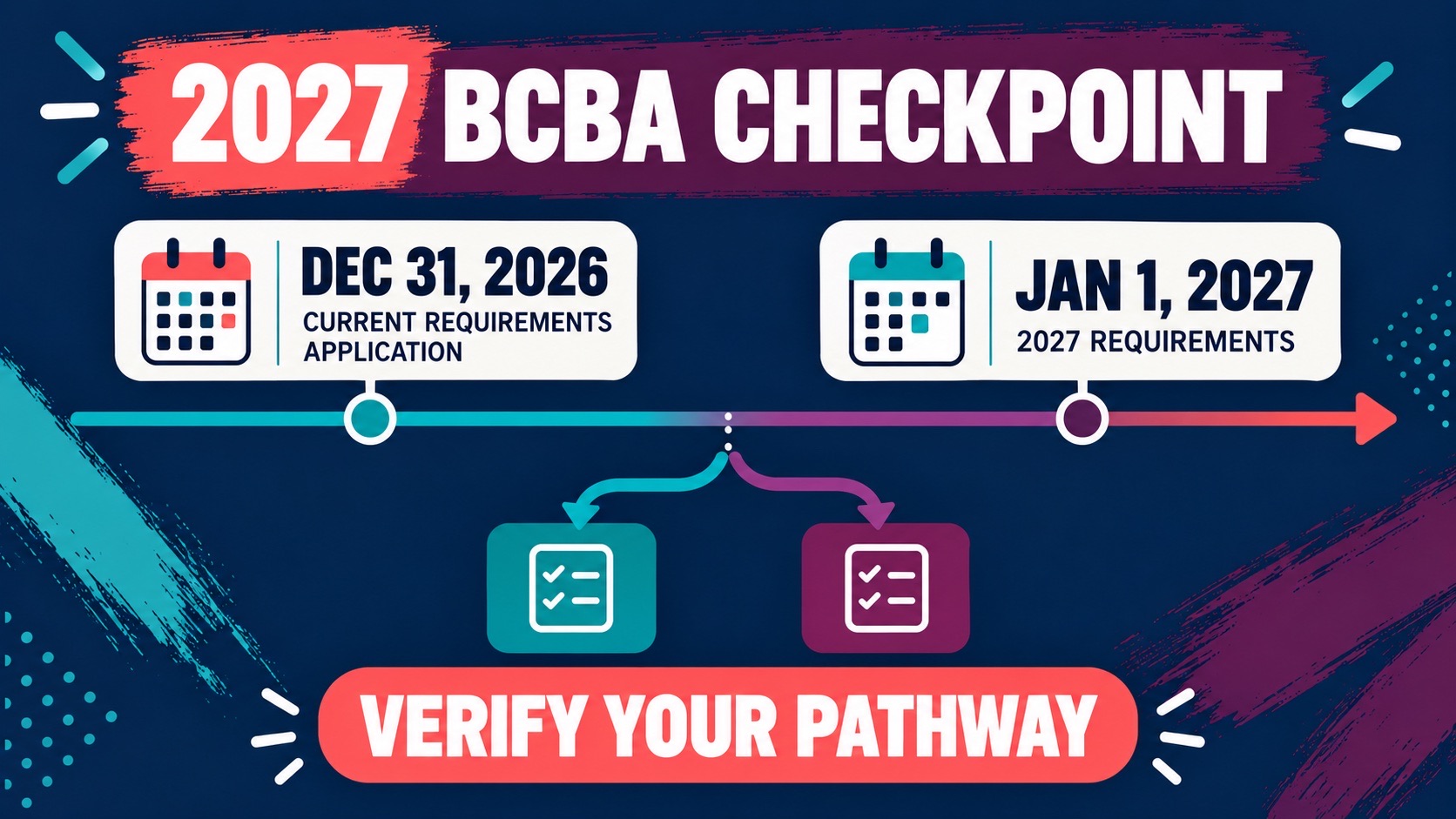
The BACB has announced major BCBA requirement changes effective January 1, 2027. The transition is especially relevant to online candidates because programs may have different completion dates, documentation systems, cohort calendars, and fieldwork arrangements. A course that starts under one set of expectations does not automatically answer which rules will govern a later application.
The BACB’s transition guidance says that applicants who want their complete current-requirements application reviewed under the pre-2027 rules must meet the applicable deadline described in the official materials. The practical lesson is simple: do not use a social-media summary or a program sales page to decide whether you are “grandfathered.” Read the current BACB 2027 requirements explanation and the official BCBA 2027 requirements transition document, then compare the dates with your own records. For a candidate planning an online route, the transition checklist should include:
- Program completion: when will the degree or qualifying coursework actually be complete and documented?
- Fieldwork completion: when will supervision forms and experience records be ready for submission?
- Application completeness: when can the BACB receive a complete application, rather than an unfinished account or inquiry?
- Pathway evidence: which current handbook section explains your route and who can confirm the paperwork?
- Exam timing: which examination content and authorization rules apply after your application is reviewed?
Use the official source pages as living documents. Save a dated copy for your own records, but revisit the live page before enrolling, before submitting, and before scheduling the examination. Requirements change, and online content can remain visible long after a program has changed its curriculum.
Online BCBA Program Comparison Matrix
Use the following table while speaking with admissions teams. The goal is to expose missing answers, not to rank programs by marketing language. Ask for a written response when an answer affects your eligibility plan.
| Decision question | Evidence to request | Why it matters |
|---|---|---|
| Which BACB pathway does this program support? | Exact program name, current status, and pathway-specific explanation. | A university’s general ABA offering may not answer the program-level question. |
| How is coursework documented? | Course list, transcript language, contact person, and current attestation process. | Online learners often need a clear record trail across departments or institutions. |
| Where will fieldwork happen? | Placement model, supervisor requirements, schedule, and documentation responsibilities. | A remote class does not make supervised practical experience automatically remote. |
| What happens if BACB rules change? | Update policy, advising process, and the official source used by the program. | A current transition plan is more useful than an undated promise. |
| What is included in tuition? | Fees, technology, supervision support, exam preparation, and any separate services. | A low advertised price may exclude the part of the pathway you still need to buy. |
Treat Fieldwork and Supervision as a Separate Project
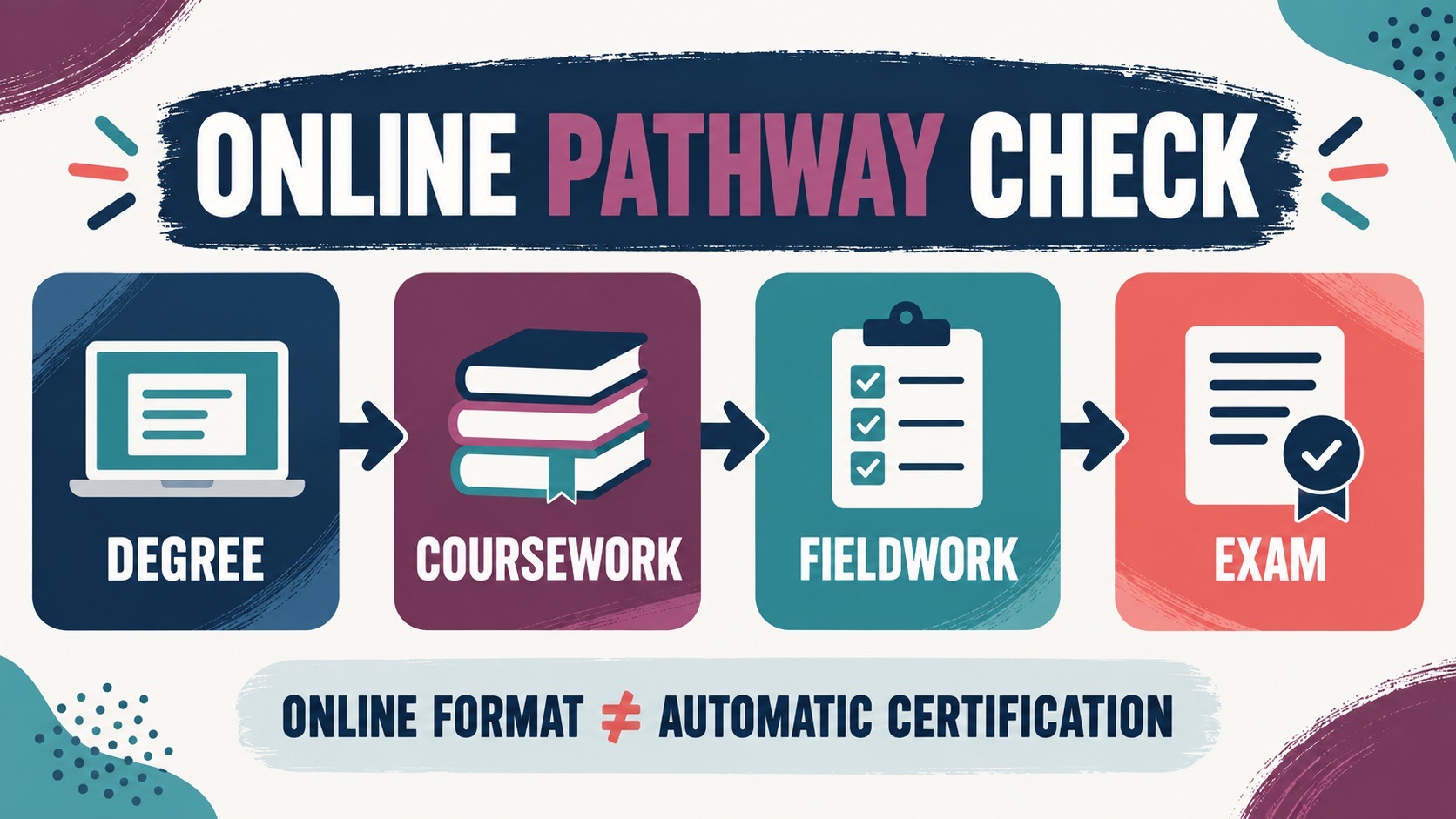
Online instruction can reduce travel, but it does not remove the practical and supervisory parts of behavior analysis training. Fieldwork requires a real plan for activities, supervision, documentation, feedback, and ethical practice. The exact requirements depend on the current BACB materials and your pathway. Ask the program whether it places students, helps them locate a supervisor, or simply provides classes while the student is responsible for everything else.
Before you enroll, identify the setting in which you can obtain appropriate experience and the person who will supervise it. Clarify the expected schedule, how supervision meetings occur, which forms are used, and who keeps the original records. If you work full time, calculate whether the proposed fieldwork schedule is realistic rather than assuming that an evening online class solves the whole time problem.
Do not let an “online” label hide a local access issue. A student may be able to complete lectures from home but still need an in-person or site-based role, a qualified supervisor, and reliable data and documentation systems. Put those constraints into your budget and timeline before comparing tuition.
Questions to Ask an Online Program Before You Enroll
Use a short written question set so that answers from different programs are comparable:
- Which current BACB pathway is the program designed to support, and where is that status documented?
- Does the program include a qualifying degree, coursework only, or both?
- Who is the current Pathway 2 contact or equivalent documentation contact, if relevant?
- How does the program explain the 2027 requirements change to students who finish at different times?
- Does the school arrange fieldwork and supervision, provide a directory, or leave placement to the student?
- Which costs are separate from tuition, including supervision, application, examination, and study materials?
- What will appear on the transcript, and what records will the student receive after completion?
Be cautious when the answer relies on a guarantee. The most credible answer usually has a source, a date, a named process, and a clear boundary around what the program cannot decide. That boundary is useful: it tells you which question belongs to the BACB and which belongs to the school.
How to Study While Completing an Online Pathway
Do not wait until the last course to build exam habits. Once your education plan is clear, use the current BACB examination content materials to organize review. Short, consistent practice is often more useful than rereading every lecture without feedback. Mix concept checks with scenario questions so you learn both definitions and application.
A useful study loop is: choose one content area, answer a small set of questions without notes, review every option, classify each miss, and schedule a targeted follow-up. A miss may come from a knowledge gap, confusing two variables, overlooking a qualifying word, or rushing through a long scenario. Those causes require different fixes.
When you are ready for a baseline, try the free practice for board certified behavior analyst certification online as an unofficial practice checkpoint. Use the result to plan review; do not treat it as evidence of certification eligibility or as a substitute for the BACB examination. Keep your study score, program documents, and fieldwork records in separate folders so one type of progress does not hide another.
For online learners, calendar the study block just as you calendar a live class. Reserve time for active recall, mixed practice, and error review. If you are still deciding between pathways, focus first on the decision documents and current source pages. A higher practice score cannot compensate for an incomplete education or fieldwork record.
Common Mistakes in Online BCBA Certification Planning
- Equating online with automatic eligibility: delivery format is not a BACB pathway.
- Choosing by tuition alone: compare what is included and what remains your responsibility.
- Ignoring fieldwork logistics: remote coursework does not guarantee remote supervision or placement.
- Using an old pathway chart: check the live BACB handbook and transition guidance before relying on dates.
- Confusing program admission with certification review: the school and the BACB answer different questions.
- Studying from an undated outline: tie practice resources to the current examination content information.
The safest plan is a source-aware plan. Write down the claim, the official source that supports it, the document you have, and the date you last verified it. This takes less time than rebuilding your application after discovering that a program description answered a different question.
Online BCBA Certification FAQ
Can I become a BCBA entirely online?: You may be able to complete some or much of the education component online, but “entirely online” is not a universal certification category. You still need to satisfy the current BACB pathway, coursework, fieldwork, application, and examination requirements. Ask the program which parts are online and which practical or supervised components require a separate setting.
Is an online BCBA certificate the same as a master’s degree?: No. A graduate certificate, a master’s degree, a coursework sequence, and an exam-prep course can have different purposes. Compare the credential, transcript, pathway documentation, fieldwork support, and current BACB requirements before deciding that a certificate solves your whole plan.
Will the 2027 changes affect my online program?: They may, depending on your program, pathway, documentation, application timing, and the transition rules that apply to your situation. Use the current BACB 2027 requirements page, transition guidance, and handbook. Ask the program how it communicates updates, but use the BACB as the final authority for certification requirements.
Take the Free BCBA Mock Exam
When you are ready to apply the idea, use the free practice resource below for additional feedback. Take the Free BCBA Mock Exam



