
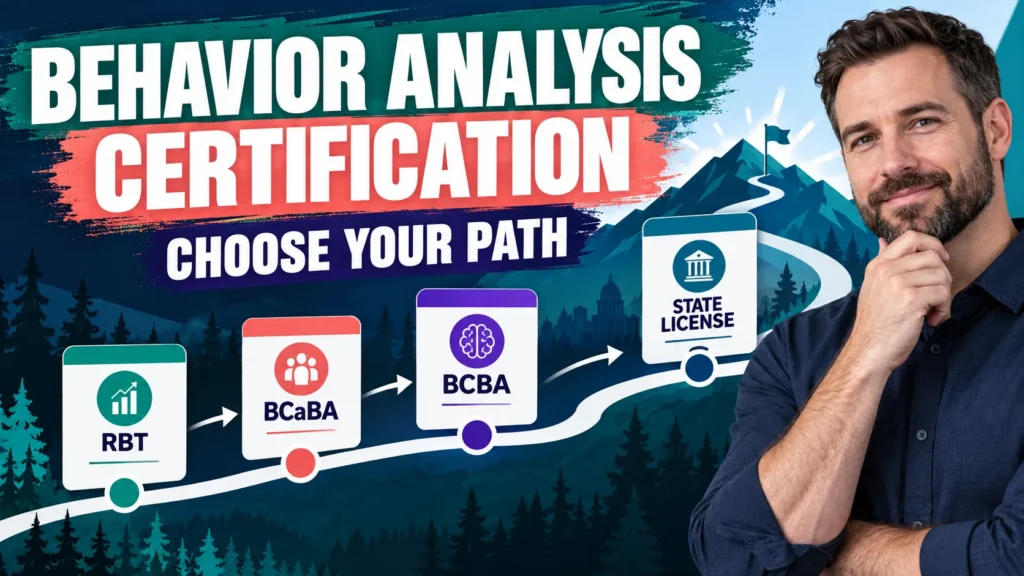
A decision guide for choosing the right behavior analysis certification path without confusing BACB credentials with state licensure or job titles. Behavior analysis certification can mean several different things depending on what you want to do, how much education you have, and where you plan to practice. A person looking for entry-level work may be asking about RBT certification. Someone with a bachelor’s degree may be considering BCaBA. A graduate student may need a BCBA pathway. A practicing professional may also need a separate state license even after earning a BACB credential.
Table of Contents
- Behavior Analysis Certification: What Does It Mean?
- BCBA, BCaBA, and RBT: Match the Credential to the Scope
- BACB Certification Is Not the Same as State Licensure
- How the 2027 Changes Affect Your Choice
- Choose Your Next Certification Step
- Common Certification-Planning Mistakes
- Frequently Asked Questions
- Quick Review Checklist
- Take the Free BCBA Mock Exam
The first decision is therefore not “Which certification course should I buy?” It is “What scope of work am I trying to enter, and which authority controls that scope?” The BACB describes RBT, BCaBA, and BCBA as different certification levels. State licensing boards, however, control licensure requirements in the jurisdictions that regulate behavior-analytic practice. Treating those as interchangeable can send you into the wrong program or leave a compliance gap after graduation.
Important scope note: This article is an orientation and planning guide, not an eligibility determination or legal opinion. BACB handbooks, official transition documents, and the relevant state licensing authority control. Verify the current requirements before enrolling, applying, accepting a role, or practicing.
Behavior Analysis Certification: What Does It Mean?
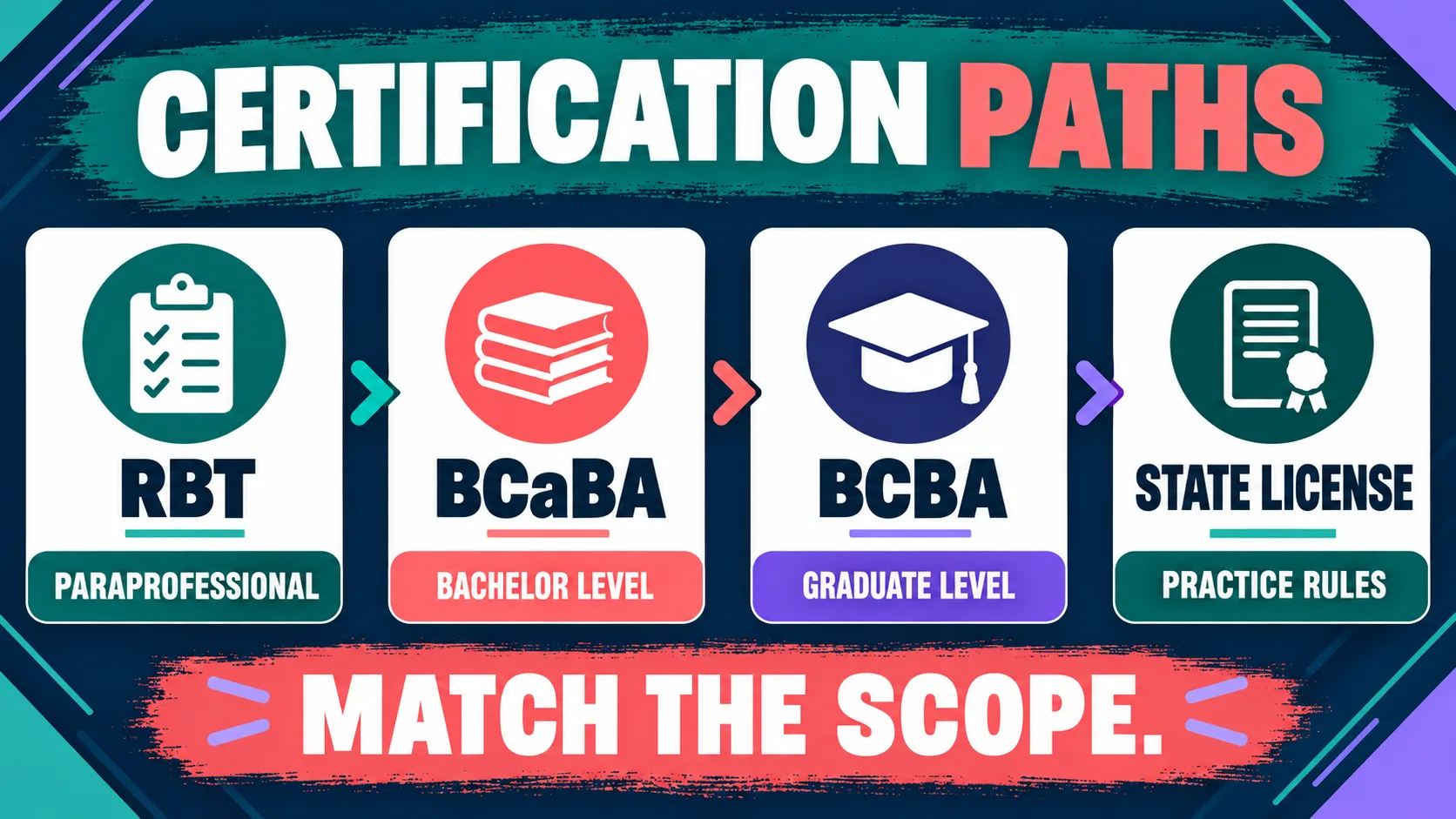
In the United States, the most visible behavior-analysis credentials are issued by the Behavior Analyst Certification Board. The BACB’s public overview describes:
- RBT: a paraprofessional certification. RBTs assist in delivering behavior-analytic services and practice under close, ongoing supervision.
- BCaBA: an undergraduate-level certification. BCaBAs provide services under the supervision of a BCBA or another supervisor permitted by the applicable rules.
- BCBA: a graduate-level certification. BCBAs can practice independently within the professional and jurisdictional rules that apply and can supervise BCaBAs and RBTs.
These are not three names for the same job. They represent different education, examination, supervision, and scope expectations. A short online course may introduce ABA concepts, but it does not automatically create one of these certifications. A university degree may be relevant and still require a separate BACB application, fieldwork, examination, and other documentation.
Start by writing one sentence: “I want to ____ under ____ level of supervision in ____ state.” The blank forces you to name the desired work, the credential level, and the jurisdiction. Only then should you compare programs.
BCBA, BCaBA, and RBT: Match the Credential to the Scope
The following table is a planning map, not a substitute for the current handbooks. It helps you avoid choosing a graduate-level path when you need an entry-level role, or choosing an entry-level course when your goal is independent BCBA practice.
| Credential or check | Best fit for | Key boundary |
|---|---|---|
| RBT certification | Entry-level behavior-analytic service delivery under close supervision | It is not independent practice and does not make the person a behavior analyst. |
| BCaBA certification | Bachelor’s-level behavior analysis work within the permitted supervision structure | BCaBAs practice under the supervision required by BACB and applicable jurisdictional rules. |
| BCBA certification | Graduate-level practice, case responsibility, and supervision roles within the rules | The credential still does not answer every state-license or employer requirement. |
| State licensure check | Anyone who will practice in a jurisdiction that regulates behavior-analytic services | The state board, not a generic course page, controls the local license requirements. |
If your goal is BCBA, begin with the official BCBA Handbook and the current BCBA requirements page. If your goal is BCaBA, use the BCaBA Handbook. If your goal is RBT, use the RBT Handbook and current RBT requirements. The correct starting document changes with the credential.
BACB Certification Is Not the Same as State Licensure
This distinction is one of the most important parts of behavior analysis certification planning. The BACB issues professional certifications, but it does not regulate the ability to practice in every jurisdiction. The BACB’s consumer resources explain that many, but not all, U.S. states require behavior analysts to be licensed and direct readers to verify both the practitioner’s BACB credential and the relevant state licensure status. Think of the two checks as separate columns:
| Question | BACB certification check | State practice check |
|---|---|---|
| Who controls it? | The Behavior Analyst Certification Board | The relevant state board, department, or statutory authority |
| What is checked? | Credential eligibility, application, examination, ethics, and maintenance requirements | Local scope, title, application, supervision, renewal, and other legal requirements |
| When should you check? | Before choosing a degree or coursework path and before applying | Before accepting a role or practicing in the jurisdiction |
| What can go wrong? | A program or application does not fit the certification pathway | A certified professional assumes certification alone authorizes local practice |
Licensure is especially important when you move, work across state lines, provide telehealth, or change the population and setting in which you practice. The answer may depend on the exact role, not just the letters after your name. Ask the state authority directly and retain the date of the information you used.
How the 2027 Changes Affect Your Choice
The BACB has announced significant changes to BCBA and BCaBA certification requirements beginning January 1, 2027. For BCBA applicants, the official 2027 requirements describe two pathways: an accredited or recognized program pathway and a behavior-analytic coursework pathway, each paired with practical fieldwork and an examination. The transition resources also explain that older pathways must be completed under the relevant current rules before the transition date if an applicant wants to use them. This does not mean every person should rush into the first available program. It means your program choice must be date-aware. Ask:
- Which credential am I actually pursuing: RBT, BCaBA, or BCBA?
- Which BACB requirements will govern my application date?
- Does the degree or coursework provider understand the 2027 changes?
- Which official handbook and transition document will I use to track fieldwork and forms?
- Which state-license rules will apply when I practice?
The official transition announcement says that significant changes take effect January 1, 2027 and explains that a complete application with payment and required documents must be received by December 31, 2026 to be reviewed under the current 2022 requirements. Verify the current official wording before using that date in a personal plan.
Choose Your Next Certification Step
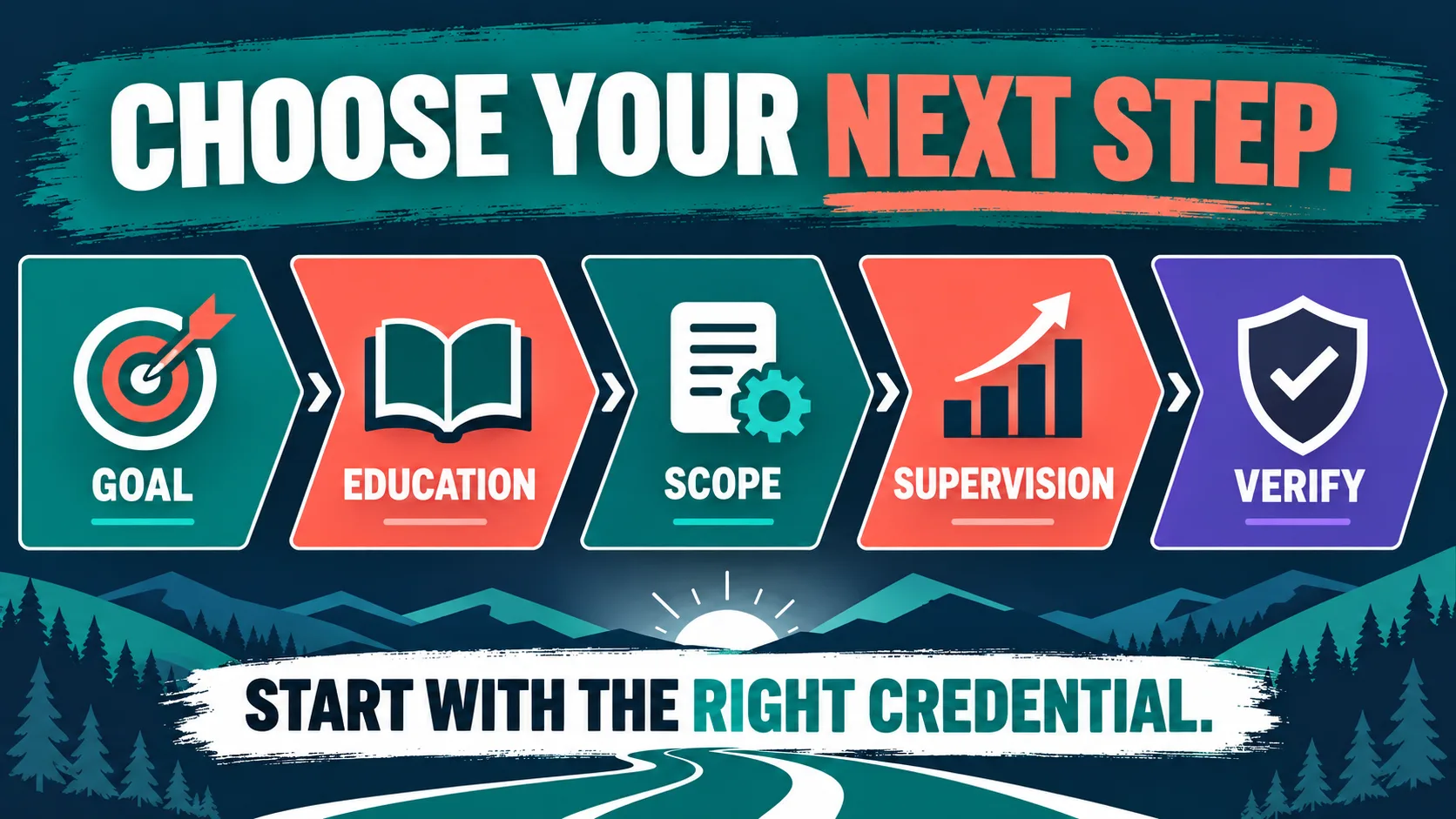
Use a decision sequence instead of searching for a universally “best” certification. Your next step should be the smallest verified step that moves you toward the scope of work you want.
| If your goal is… | Your next planning step | Verification evidence |
|---|---|---|
| Enter ABA service delivery quickly | Compare RBT eligibility and employer supervision structures. | Current RBT Handbook and employer role description |
| Use bachelor’s-level training | Review the BCaBA pathway, degree/coursework, fieldwork, and examination requirements. | Current BCaBA Handbook and official requirements |
| Practice at the graduate level | Map the BCBA pathway, degree, coursework, fieldwork, application, and exam plan. | Current BCBA Handbook, 2027 resources, and program evidence |
| Practice in a regulated state | Run a separate state-license check before accepting the role. | State board or department source, current on the date checked |
For a prospective BCBA, the next step may be a transcript and program review rather than another generic certification course. For an RBT applicant, the next step may be confirming the employer’s supervision and assessment process. For a current BCBA moving states, the next step may be the state board—not another national exam.
Common Certification-Planning Mistakes
Mistake 1: treating “ABA certification” as one universal credential. The phrase may describe RBT, BCaBA, BCBA, a university certificate, continuing education, or a state license conversation. Ask the provider to name the exact credential and authority. Mistake 2: choosing by title alone. “Behavior analyst,” “ABA specialist,” and “behavior technician” can be used differently by employers and jurisdictions. Read the scope, supervision, and legal requirements behind the title.
Mistake 3: ignoring the application date. The 2027 transition can change the requirements that apply to a BCBA or BCaBA application. Put an official-resource checkpoint in your plan instead of relying on a program brochure from a prior year. Mistake 4: confusing certification with permission to practice. Verify state licensure, employer rules, payer requirements, and any setting-specific conditions separately.
Mistake 5: buying preparation before choosing the target. BCBA exam preparation is useful only if BCBA is actually your target credential. First choose the scope; then select the handbook, program, supervisor, and study resources that match it.
If BCBA is your chosen path, the Free BCBA Mock Exam can serve as a diagnostic after you have confirmed the pathway you are pursuing. Use the result to identify content areas for review, not as proof of eligibility or a guarantee of a passing score.
Frequently Asked Questions
What is the best behavior analysis certification?: There is no single best credential for everyone. RBT, BCaBA, and BCBA serve different education and supervision levels. The best fit is the credential that matches your desired scope, education, schedule, supervision structure, and jurisdiction.
Is a BCBA certification the same as a behavior analyst license?: No. BACB certification and state licensure are separate checks. Some states regulate behavior-analytic practice and require a license; others may use different structures. Verify the state rule before practicing.
Can I become a BCBA with an online certificate?: An online certificate by itself does not answer BCBA eligibility. You must evaluate the degree, coursework, fieldwork, application, examination, and the requirements that apply to your application date. Use the current BACB materials and program documentation.
Should I choose RBT or BCaBA first?: That depends on your education and intended role. RBT is a paraprofessional certification under close supervision. BCaBA is an undergraduate-level certification with different eligibility and supervision expectations. Compare the official handbooks and the actual job scope you want.
Will the 2027 changes affect my certification plan?: If you are pursuing BCBA or BCaBA, the January 1, 2027 changes may affect the pathway, coursework, fieldwork, maintenance, or transition planning that applies to you. Check the official 2027 requirements and transition resources at each major decision point.
Bottom line: Start behavior analysis certification planning with the scope of work, not a course advertisement. Match RBT, BCaBA, or BCBA to your education and supervision level, run a separate state-license check, and use the current BACB handbook and 2027 resources before you commit.
Quick Review Checklist
Use this final checklist to turn behavior analysis certification into exam-ready reasoning. The goal is not to memorize a label in isolation; it is to identify the relevant evidence and explain why the best answer fits the scenario. Key ideas to review:
- State the central definition or decision point for behavior analysis certification in your own words.
- Identify the detail that makes behavior analysis certification different from its closest related ABA term.
- Separate the observable facts in a scenario from assumptions that are not supported by the facts.
- Write one example and one nonexample so you can recognize the concept in a new setting.
Exam application checks:
- Ask what the question is actually requesting before comparing the answer choices.
- Mark the antecedent, response, consequence, or other evidence that supports the selected answer.
- Look for a distractor that describes a related process but does not answer the specific question.
Final self-check:
- Explain how you would verify the interpretation with clear observations or data.
- Change one detail in the scenario and decide whether your answer should change.
- Give a one-sentence rationale that a supervisor or study partner could evaluate.
Take the Free BCBA Mock Exam
When you are ready to apply the idea, use the free practice resource below for additional feedback. Take the Free BCBA Mock Exam



