

The Behavior Dynamics System (BDS) Modules represent the official training program developed by the Behavior Analyst Certification Board (BACB) to prepare candidates for board certification. These computer-based modules provide systematic instruction in the foundational principles outlined in the BCBA Task List. Understanding how to leverage this training system effectively can significantly enhance your preparation strategy.
Table of Contents
- What Are the BDS Modules? Defining the Official Training System
- Applying BDS Module Principles: From Training to Exam Questions
- Strategic Study with BDS Modules: Maximizing Your Exam Readiness
- BDS Modules Checklist and Final Takeaways
What Are the BDS Modules? Defining the Official Training System
BDS Modules serve as a comprehensive training platform designed specifically for behavior analyst certification candidates. Unlike general study materials, this system offers structured, competency-based learning aligned with BACB standards.
Core Purpose and Development by the BACB
The BACB developed the BDS Modules to ensure consistent, high-quality training across certification programs. This system focuses on building conceptual fluency rather than simple memorization. It operates as a separate training tool from the actual certification examination, though content directly corresponds to Task List requirements.
Key objectives include establishing baseline knowledge, promoting accurate application of principles, and developing analytical thinking skills essential for professional practice.
Key Components and Module Structure
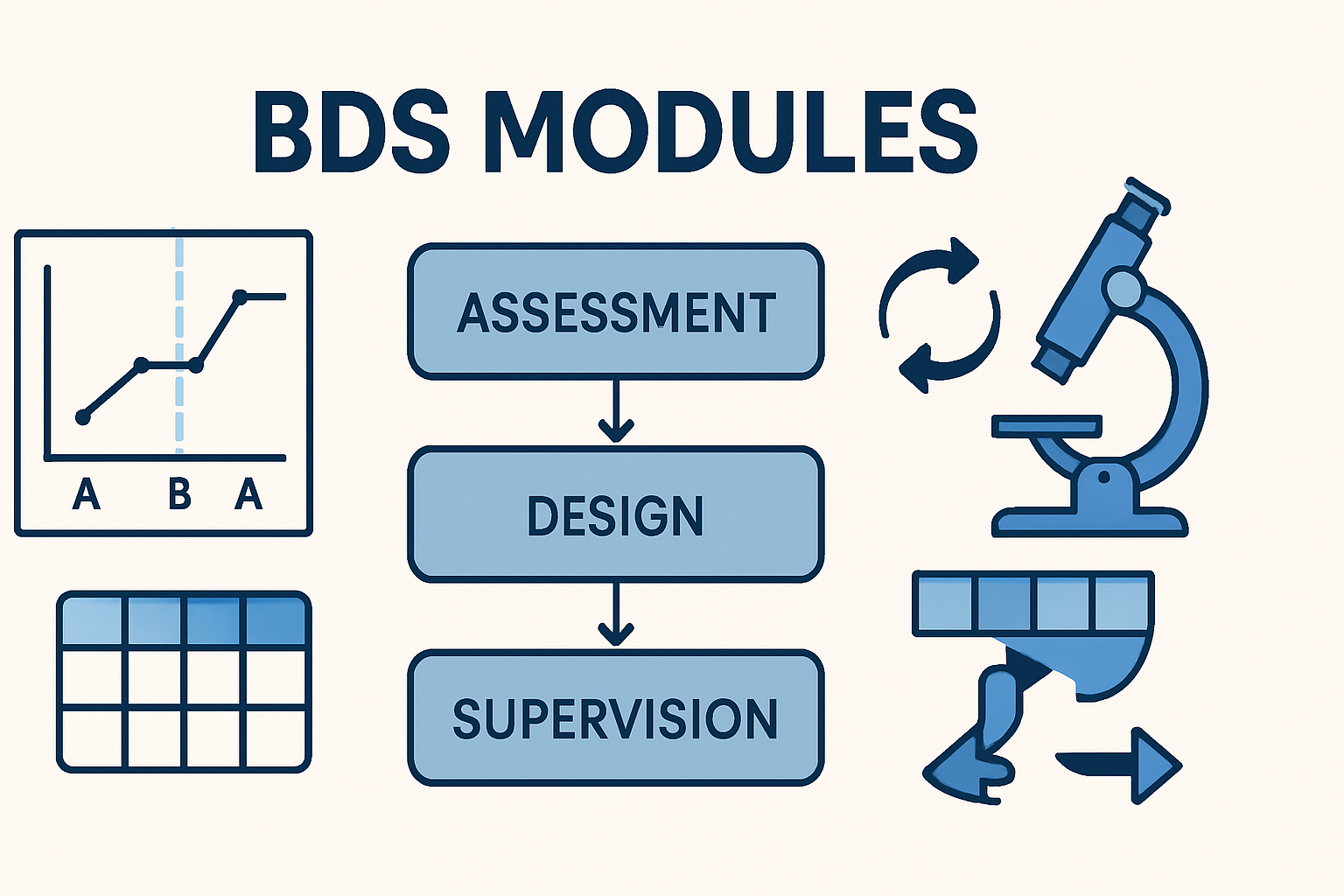
Each module targets specific Task List sections, such as measurement, experimental design, or ethical considerations. The training employs fluency-based instruction methods that require rapid, accurate responses to build automaticity.
- Discrete content modules covering individual Task List items
- Multiple-choice questions with immediate corrective feedback
- Performance tracking to monitor progress and identify areas needing improvement
- University integration often used within approved coursework sequences
- Mastery criteria requiring specific accuracy and speed benchmarks
Applying BDS Module Principles: From Training to Exam Questions
The transition from module exercises to actual exam questions requires strategic application of learned concepts. BDS Modules build foundational knowledge that must be adapted to complex, scenario-based questions.
Example 1: Mastering Measurement Definitions
BDS Modules typically begin with measurement concepts like count, rate, duration, and latency. Module exercises might present simple identification tasks: “Which measurement procedure records the number of times a behavior occurs?”
Exam questions transform this basic knowledge into applied scenarios: “A teacher records how long it takes a student to begin math work after the instruction is given. Which measurement dimension is being used?” The correct answer requires recognizing this as latency measurement, not just recalling definitions.
This demonstrates how module fluency must translate to applied analysis in context-rich situations.
Example 2: Analyzing Experimental Designs
Modules systematically train identification of single-subject designs including reversal, multielement, and multiple baseline arrangements. Basic exercises might show simple graphs and ask for design classification.
Advanced exam questions present complex vignettes: “A researcher implements an intervention across three different settings sequentially, collecting baseline data in each before introducing the intervention. Which design provides the strongest demonstration of experimental control?”
The correct analysis requires understanding that this describes a multiple baseline across settings design, recognizing its advantages for demonstrating functional relationships while considering ethical and practical constraints.
Strategic Study with BDS Modules: Maximizing Your Exam Readiness
Effective use of BDS Modules requires intentional integration into a broader study plan. These tools work best when combined with other preparation methods.
Effective Integration into Your Study Plan
Begin by using modules to establish foundational fluency early in your preparation. Target specific Task List areas where you need basic concept mastery before tackling complex applications.
- Complete relevant modules before attempting practice exams on those topics
- Pair module work with scenario-based practice from mock exams
- Use modules to shore up weaknesses identified in performance assessments
- Schedule regular fluency maintenance sessions for previously mastered content
Consider exploring our comprehensive BCBA exam study framework for additional strategies that complement BDS Module training.
Common Pitfalls and How to Avoid Them
Many candidates encounter specific challenges when using BDS Modules that can hinder exam preparation effectiveness.
- Answer memorization without conceptual understanding leads to poor application skills
- Confusing module fluency with exam readiness—modules test basic recognition, not complex analysis
- Over-reliance on modules at the expense of comprehensive study materials
- Neglecting time management practice—modules don’t simulate exam timing pressures
- Skipping corrective feedback review, missing valuable learning opportunities
To avoid these traps, regularly test your knowledge with free BCBA mock exam questions that simulate actual exam conditions.
BDS Modules Checklist and Final Takeaways
A systematic approach to BDS Modules ensures maximum benefit from this official training resource. Follow this structured checklist to optimize your learning experience.
Quick-Reference Study Checklist
- Achieve established fluency targets in each module before moving forward
- Supplement module work with practice exam vignettes requiring applied analysis
- Use modules specifically to address weak Task List areas identified in mock exams
- Create concept maps connecting module content to real-world applications
- Schedule regular review sessions to maintain fluency across all mastered content
- Track progress using module performance metrics alongside mock exam scores
Summary: Their Role in Your Certification Journey
BDS Modules serve as a valuable foundational training tool within a comprehensive preparation strategy. They excel at building basic concept fluency and ensuring accurate understanding of core principles. However, they represent just one component of effective exam preparation.
Successful candidates combine module training with extensive scenario-based practice, ethical case analysis, and time management development. The modules provide the building blocks, but you must construct the complete analytical framework needed for certification success.
For additional authoritative information about certification requirements, consult the official BACB website and review current Task List specifications. Remember that while BDS Modules offer excellent training, they work best when integrated with diverse study approaches that develop both knowledge and application skills essential for professional practice.
Ready to test what you just learned?
Put it into practice with a free, full-length BCBA mock exam — real exam-style questions, instant scoring, and answer explanations.
Next step for BCBA exam prep
Build a focused BCBA exam practice plan
If you are actively planning your exam preparation, use five full-length practice exams to find timing and domain gaps. Choose the all-in-one system when you also want the study guide and flashcards.
Start Five Full-Length Mocks — $99
Get the $120 All-in-One Study System
Use the option that matches your current preparation stage. No pass guarantee is implied.



