

A BCBA internship can be a useful route into supervised fieldwork, but the word “internship” alone does not prove that the hours will count. Before accepting an offer, check the supervisor, contract, activities, client observation, documentation system, and current BACB requirements.
Table of Contents
- What Does BCBA Internship Usually Mean?
- Will a BCBA Internship Count as Fieldwork?
- How Do You Evaluate an Internship Opportunity?
- What Should You Ask Before Accepting?
- How Do You Protect Your Documentation?
- How Does an Internship Support Exam Preparation?
- What Are Common Internship Red Flags?
- BCBA Internship FAQ
- Take the Free BCBA Mock Exam
Job boards and provider pages often use intern, practicum student, behavior technician, and fieldwork trainee interchangeably. They are not automatically interchangeable for certification purposes. The value of an opportunity comes from what you actually do, who supervises you, what is documented, and whether the arrangement follows the current requirements.
This guide gives you a practical way to compare opportunities. It is not a promise that any employer, university, or supervisor will produce qualifying hours. Use the current BACB handbook, the relevant fieldwork forms, and your supervisor’s judgment for the final decision. Table of Contents
What Does BCBA Internship Usually Mean?
In everyday recruiting language, a BCBA internship is a student or trainee role that combines applied work with learning and supervision. It may be housed in an ABA provider, school, university clinic, hospital, community program, or another setting. Some placements are paid; others are attached to a course or practicum. The label tells you where to ask questions, not what the arrangement guarantees.
| Term | What it may describe | What you still must verify |
|---|---|---|
| Internship | A structured trainee role with work, learning, and some supervision. | Whether the supervisor and activities meet the current fieldwork rules. |
| Practicum | A university-connected course or placement that may include applied experience. | Whether the practicum has the required supervision, documentation, and qualifying activities. |
| Behavior technician job | Paid implementation work under a clinical team. | Whether the employer supports your trainee status and gives you enough unrestricted learning opportunities. |
| Supervised fieldwork | The certification-related experience category governed by current BACB requirements. | The exact current handbook rules, supervisor qualifications, forms, activity mix, and observation requirements. |
One person may hold all four labels at different times. The safe habit is to ask what the arrangement produces, not what it is called.
Will a BCBA Internship Count as Fieldwork?
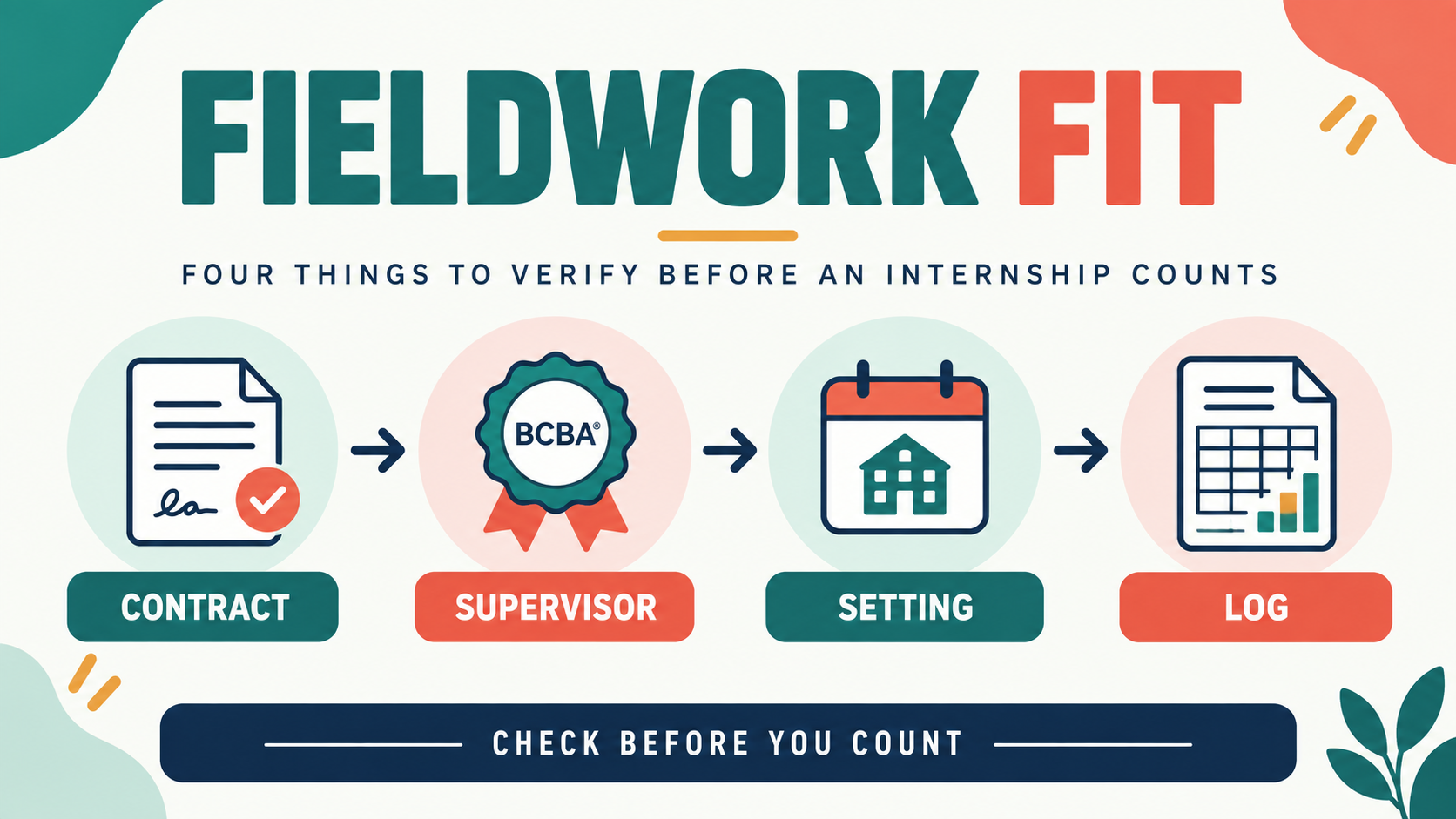
It might, but the answer is conditional. The BACB’s fieldwork FAQ directs trainees to review the acceptable-activities list in the current handbook and ask the supervisor whether a specific activity meets the requirements. A paid position, university course, or internship title is not enough by itself. Screen the opportunity across five dimensions:
- Qualified supervision: Is the supervisor eligible under the current handbook, available for the required contacts, and willing to sign the relevant forms?
- Signed arrangement: Will you and the supervisor establish the required supervision contract before counting hours?
- Activity mix: Will the role include meaningful behavior-analytic work rather than only routine implementation or unrelated administrative tasks?
- Client observation: Does the structure allow the supervisor to observe you working with clients when the current requirements call for it?
- Documentation: Can both parties track hours, activities, contacts, signatures, and progress in a system that can survive an audit?
If one of these pieces is vague, treat the internship as unverified. You can still learn from the job, but you should not build your certification timeline on an assumption.
How Do You Evaluate an Internship Opportunity?
Use the job description as a starting document, then request details in writing. A strong opportunity makes the learning structure visible before you accept it.
- Population and setting: Who receives services, where does work occur, and what outcomes are important?
- Schedule: How many hours are available, and can the schedule support regular supervision and observation?
- Learning plan: What assessments, data systems, treatment planning, caregiver or staff training, and clinical meetings will you observe or practice?
- Supervisor capacity: How many trainees does the supervisor already support, and how often will you receive direct feedback?
- Compensation and costs: Is the role paid, unpaid, or tied to tuition? Are supervision, training, travel, or materials charged separately?
- Exit plan: What happens if the supervisor leaves, the caseload changes, or the placement cannot provide the promised activities?
Do not evaluate an internship only by the speed at which it promises hours. A slower placement with varied activities, clear feedback, and accurate records may prepare you better than a fast placement that produces narrow implementation experience.
What Should You Ask Before Accepting?
Bring these questions to an interview or supervision conversation. Clear answers are more valuable than impressive slogans.
| Ask | Why it matters |
|---|---|
| Who is the responsible supervisor, and what is the supervision structure? | You need to know who reviews the work, signs forms, and owns the quality of the arrangement. |
| Which activities will I complete, observe, and discuss? | A list of tasks reveals whether the role includes assessment, data, intervention, supervision, and other meaningful learning opportunities. |
| How are restricted and unrestricted activities distinguished? | The distinction affects whether the experience builds the broader competencies expected of a future BCBA. |
| How will hours and supervision contacts be documented each month? | A reliable process protects both the trainee and supervisor if the record is reviewed later. |
How Do You Protect Your Documentation?
Documentation is not an administrative afterthought. It is the evidence that connects your hours to the experience you actually received. Keep a personal record that can be reconciled with the organization’s system, while protecting confidential client information.
At minimum, track the date, setting, activity category, time, supervisor contact, observation, feedback, and any issue that needs follow-up. Review the record regularly rather than discovering at the end of a semester that the hours were classified incorrectly.
- Keep copies of signed contracts and verification forms in a secure location.
- Use consistent definitions for hours, activities, contacts, and observations.
- Record what you did and learned without copying protected client details into a personal spreadsheet.
- Ask questions promptly when the activity or supervision structure changes.
- Compare your log with the current handbook before submitting an application.
The BACB’s fieldwork documentation guidance and current forms should control over an old template shared in a student group.
How Does an Internship Support Exam Preparation?
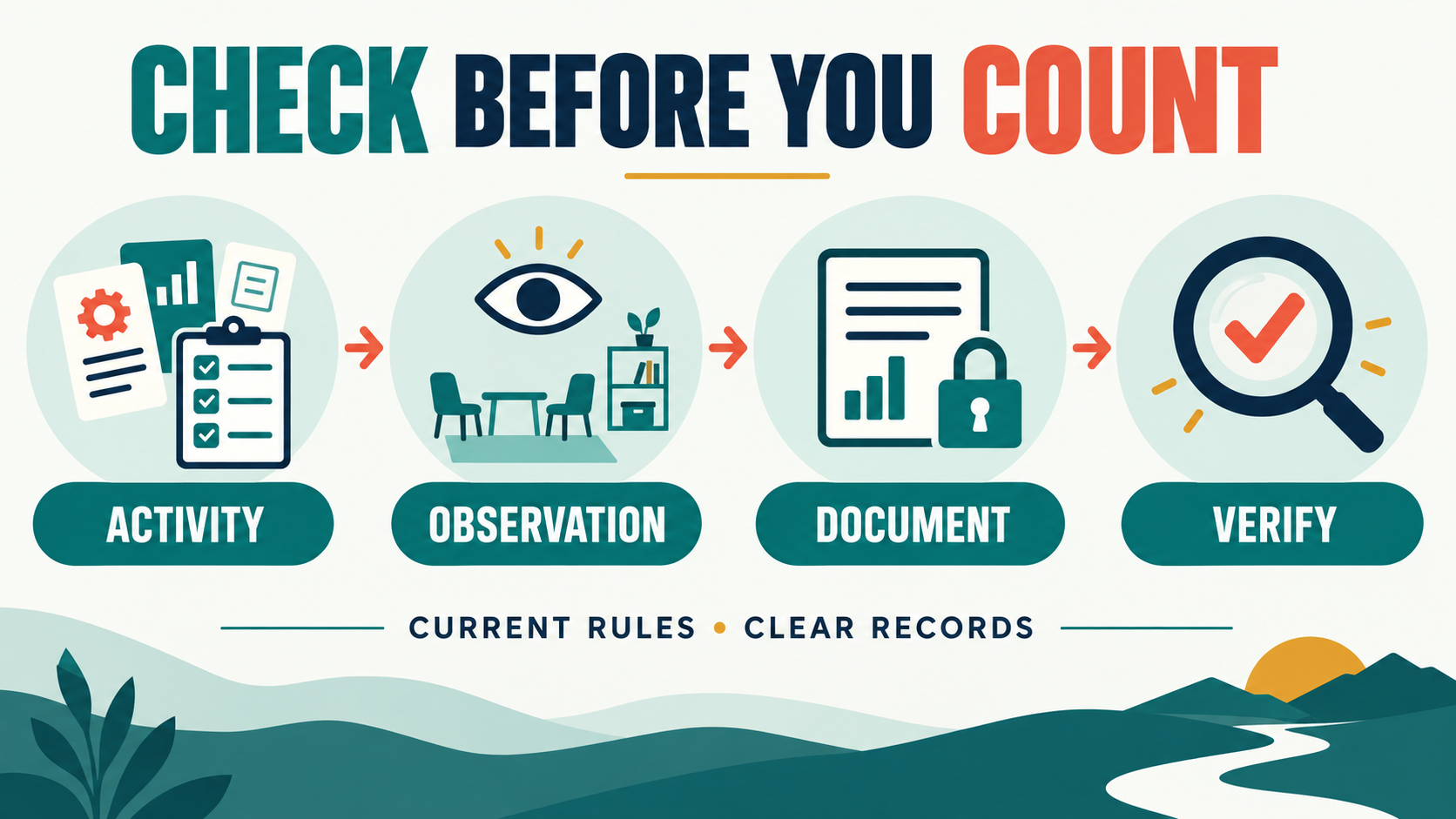
A good internship can turn abstract exam concepts into repeated decision practice. When you review a case, do not only ask whether the client improved. Ask what was measured, how the behavior was defined, what assessment supported the plan, which ethical safeguards were present, and how a supervisor evaluated the decision. Build a study note after meaningful supervision meetings:
- Concept: Which BCBA content area did the situation illustrate?
- Evidence: What data, observation, or assessment result supported the decision?
- Alternative: What other explanation or intervention did the team consider?
- Generalization: Would the plan work with another person, setting, material, or routine?
- Ethics: How were assent, dignity, confidentiality, culture, and least-intrusive practice addressed?
This approach makes fieldwork and exam study reinforce each other without pretending that a single internship covers the entire test. Review the current BCBA Test Content Outline and use your experience to create examples, not to replace deliberate study.
What Are Common Internship Red Flags?
A red flag does not automatically prove that an organization is unethical, but it does mean you need more information before counting hours or paying money.
- The recruiter promises a fixed number of qualifying hours without asking about your coursework, supervisor, or activities.
- No one can identify the responsible supervisor or explain who will sign verification forms.
- The role is almost entirely direct implementation, with no plan for broader learning or feedback.
- You are asked to count hours before a contract, supervision plan, or required coursework is in place.
- The organization discourages you from keeping your own records or asking how hours are classified.
- The arrangement depends on a single person with no contingency plan if that person leaves.
When a placement cannot answer basic questions, pause. Ask the current BACB guidance and a qualified supervisor rather than relying on a social-media promise.
BCBA Internship FAQ
Do I have to be an RBT to complete a BCBA internship?: Not necessarily. A trainee’s route depends on the current eligibility pathway, fieldwork rules, setting, and supervision arrangement. An RBT job can be one way to obtain applied experience, but the title alone does not settle whether the hours qualify.
Can an online BCBA internship count?: It depends on the activities, supervision, client contact, documentation, and current requirements. Remote meetings may support supervision or learning, but do not assume that simulated work or every telehealth activity is automatically qualifying.
Should I choose an internship that offers the most hours?: Choose the opportunity that offers a defensible combination of quality supervision, meaningful activities, a workable schedule, and accurate records. More hours are not helpful if they cannot be verified or if they leave major competencies unpracticed.
Where can I find a BCBA internship?: Look through graduate-program practicum offices, ABA providers, schools, hospitals, community programs, professional networks, and carefully screened job listings. Ask each opportunity the same questions so that you compare structure rather than marketing language.
The best BCBA internship is not simply the one with the fastest start date. It is an arrangement in which the supervisor, activities, contract, observations, documentation, and learning goals are clear enough to support both responsible fieldwork and real professional growth. After you verify the route, use the free BCBA mock exam as independent practice for applying the concepts you are seeing in the field.
Take the Free BCBA Mock Exam
If you want a low-pressure way to check your recall, use the free practice resource below. Take the Free BCBA Mock Exam



