
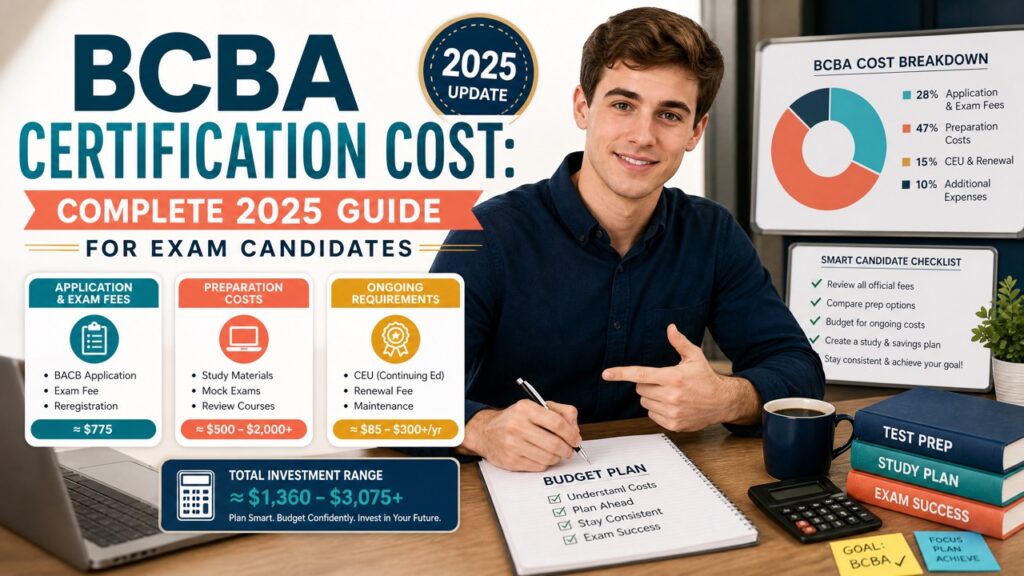
Introduction: The Real Investment Behind the BCBA Credential
Becoming a Board Certified Behavior Analyst (BCBA) is a significant professional milestone that opens doors to leadership roles in applied behavior analysis. However, the journey comes with a substantial financial commitment. Understanding the BCBA certification cost is essential for anyone planning to enter this field, yet many candidates underestimate the full scope of expenses.
Table of Contents
- Introduction: The Real Investment Behind the BCBA Credential
- What Makes Up the BCBA Certification Cost?
- How to Budget for BCBA Certification: A Step-by-Step Approach
- Exam Relevance: How Knowing Costs Helps You on the BCBA Exam
- Quick Financial Checklist for BCBA Candidates
- Final Summary: Investing in Your BCBA Career
- Take the Free BCBA Mock Exam
In this guide, we break down every cost component you will encounter—from graduate coursework to supervision hours and exam fees. You’ll also get a realistic example, common hidden costs, and practical budgeting strategies. Whether you’re just starting your master’s program or preparing for the exam, this guide helps you plan financially without surprises.
What Makes Up the BCBA Certification Cost?
The total investment for BCBA certification is not a single fee; it’s a combination of several major expense categories. Each component varies based on your educational path, location, and personal choices. By understanding these categories, you can create an accurate budget and avoid unexpected financial strain. Here are the primary cost areas you need to consider:
- University coursework – tuition, fees, and books for your master’s or doctoral program.
- Supervision hours – fees paid to supervisors for the required 1,500 hours of fieldwork.
- Exam and application fees – charges by the BACB for processing and taking the certification exam.
- Ongoing maintenance – recertification fees, continuing education units (CEUs), and professional memberships.
University Coursework and Degree Requirements: Most BCBA candidates must complete a graduate degree from an accredited university. The cost of this degree varies widely: in-state public universities may charge around $10,000 to $20,000 per year, while out-of-state or private institutions can exceed $40,000 annually. Online programs offer flexibility but may have similar or higher tuition rates.
Additionally, you may need prerequisite coursework in behavior analysis if your master’s degree is in a related field but not specifically ABA. These courses can cost an extra $3,000 to $8,000. Financial aid, scholarships, and employer tuition reimbursement can significantly reduce this burden, so it’s worth exploring these options early.
Supervision and Fieldwork Expenses: The BACB requires candidates to complete 1,500 hours of supervised fieldwork (or 750 hours in concentrated format). Most candidates pay for supervision out of pocket. Typical rates range from $20 to $50 per hour, depending on the supervisor’s experience and your region. If you need 1,500 hours, that translates to supervision costs between $3,000 and $15,000.
Hidden costs in this category include travel to supervision meetings, materials for data collection, and possible administrative fees charged by supervision agencies. Some employers offer in-house supervision as a benefit, which can drastically reduce your expenses. Always clarify the supervision fee structure when accepting a position.
Exam Application and Examination Fees: The Behavior Analyst Certification Board (BACB) charges an application processing fee and an exam registration fee. As of 2025, the BCBA exam fee is approximately $500, plus a $50 application fee. These fees are subject to change, so always check the official BACB website for the latest amounts. If you need to reschedule or retake the exam, additional fees apply.
It’s also wise to budget for study materials, such as exam prep courses, practice tests, and textbooks. These can cost anywhere from $200 to $1,000, depending on the resources you choose. Investing in quality preparation is often worth the cost to avoid multiple exam attempts.
Ongoing Maintenance Costs: Once certified, you must maintain your credential by meeting recertification requirements every two years. The BACB renewal fee is around $145, and you must earn continuing education units (CEUs). CEUs can be obtained through webinars, conferences, or online courses, with costs ranging from $0 to $200 per unit. Many BCBAs also join professional organizations like the Association for Behavior Analysis International (ABAI), which has annual membership fees.
How to Budget for BCBA Certification: A Step-by-Step Approach
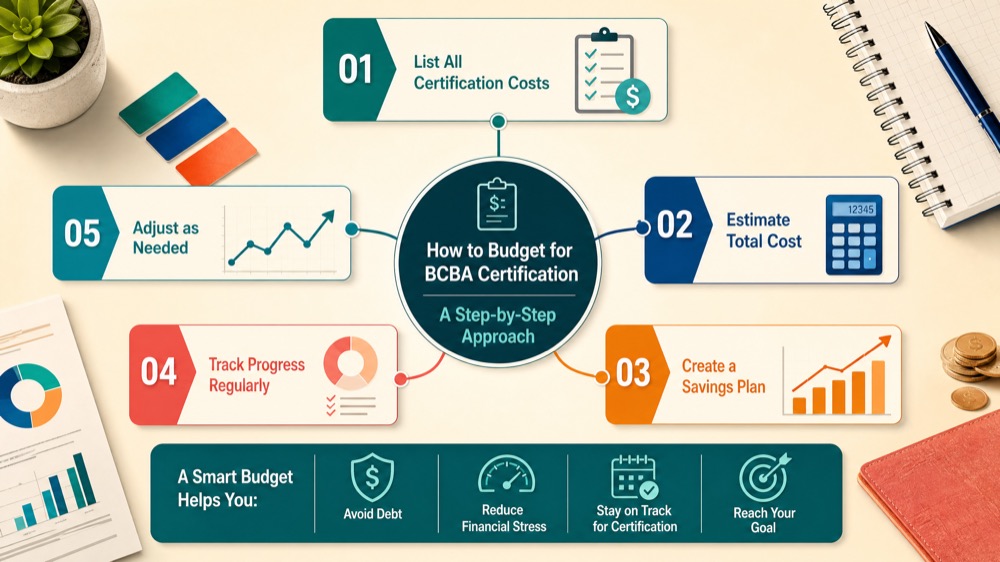
Budgeting for BCBA certification is more than just adding up numbers; it requires planning for the long haul. A well-structured budget helps you avoid debt and reduces financial stress during your studies and fieldwork. Here’s a practical approach to estimating and managing your costs.
Realistic Example: Total Cost for a Typical Candidate: Let’s look at a hypothetical candidate named Sarah. She attends a public university and pays $15,000 per year for a two-year master’s program, totaling $30,000. She completes her supervision with a certified BCBA at $25 per hour for 1,500 hours, costing $37,500—but she has employer support covering half, so she pays $18,750. Her exam fees, study materials, and background check add another $1,000.
In total, Sarah’s out-of-pocket BCBA certification cost is roughly $49,750. However, if she had in-state tuition, scholarships, and employer-funded supervision, her total could drop below $25,000. This example shows the wide range of possible costs. Common Hidden Costs You May Overlook: Beyond the obvious expenses, several hidden costs can catch candidates off guard. Being aware of them helps you build a more accurate budget:
- Textbooks and software – You may need to purchase behavior analytic software for data collection or assessment tools.
- Background checks – Some fieldwork sites require a background screening, which can cost $50–$100.
- Travel to exam centers – If the nearest test center is far, factor in transportation and possibly overnight lodging.
- Lost income – If you reduce work hours to complete fieldwork, calculate the opportunity cost.
- Application and transcript fees – Universities charge fees for sending official transcripts to the BACB.
Ways to Reduce Financial Burden: Fortunately, many candidates find ways to lower their costs. Explore these strategies to make your certification journey more affordable:
- Employer tuition reimbursement – Many ABA agencies offer tuition support in exchange for a commitment to work with them.
- Scholarships and grants – Look for professional organizations and universities offering financial aid for ABA students.
- In-state or online programs – Choosing a more affordable program can save thousands.
- Payment plans – Some universities and supervision providers allow monthly installments.
- Group supervision – Sharing supervision hours with other candidates can reduce per-hour costs.
Exam Relevance: How Knowing Costs Helps You on the BCBA Exam
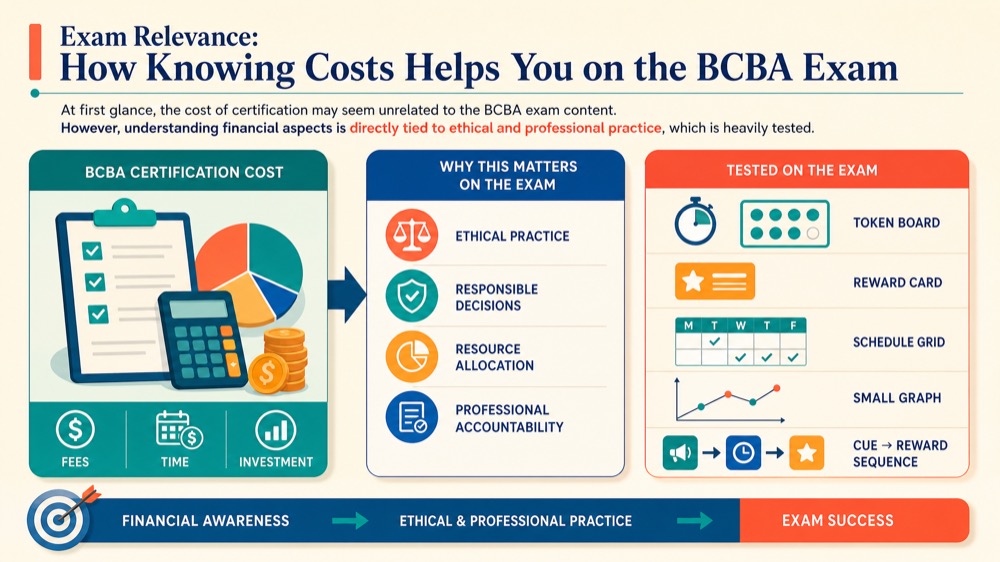
At first glance, the cost of certification may seem unrelated to the BCBA exam content. However, understanding financial aspects is directly tied to ethical and professional practice, which is heavily tested. Knowledge of fee structures, supervision requirements, and ethical billing practices can help you answer exam questions accurately.
Ethical Considerations in Billing and Fees: The BACB Ethics Code includes guidelines on billing practices, transparency, and avoiding conflicts of interest. For example, you must ensure that fees are fair and clearly communicated to clients. You also need to understand the difference between billable and non-billable activities in supervision. Exam questions often present scenarios where a behavior analyst must decide how to handle a fee dispute or a supervisor charging for unprovided hours.
Common Exam Traps Around Supervision Requirements: Supervision is a core topic on the BCBA exam, and candidates often confuse the two types of supervision hours: concentrated and non-concentrated. Concentrated hours require less total time (750 vs. 1,500) but must meet stricter criteria. Cost-related documentation, such as tracking hours and verifying supervisor qualifications, is also tested. Be aware of these common pitfalls:
- Incorrect hour calculations – Exaggerating or misunderstanding how to count hours is a violation of the ethics code.
- Not verifying supervisor credentials – Your supervisor must be a BCBA or BCBA-D at the time of supervision.
- Ignoring retroactive supervision rules – Hours cannot be backdated, and this is a frequent source of exam scenarios.
- Overlooking the 10% supervision requirement – At least once per month, supervision must be one-on-one (or with 2 trainees).
Practice Question: Budget Scenario: Let’s try an exam-style question to see how cost knowledge ties into decision-making: Question: A behavior analyst is hiring a new BCBA candidate to supervise. The candidate requests a discount on supervision fees in exchange for performing extra administrative work. What should the analyst do?
Answer options: A) Accept the trade to help the candidate. B) Decline because it may violate the ethics code on fee arrangements. C) Accept if the work is documented as supervision hours. D) Refer the candidate to another supervisor.
The correct answer is B. Accepting a trade of services for supervision could create a conflict of interest and violates the ethics code’s provision on fee arrangements. This question illustrates how understanding ethical billing practices is crucial for exam success.
Quick Financial Checklist for BCBA Candidates
Use this checklist to stay on track financially as you move through your certification journey. Print it out or keep it digital, and revisit it at each stage to ensure you’re not missing any expenses.
- Research tuition fees – Compare programs and factor in books, fees, and living expenses.
- Identify supervision costs – Get written agreements on rates and payment terms.
- Set aside funds for exam fees – Save for application and exam registration costs.
- Plan for study materials – Budget for prep courses, practice exams, and textbooks.
- Track all expenses – Use a spreadsheet to monitor spending and avoid surprises.
- Explore financial aid – Apply for scholarships and check if your employer offers tuition reimbursement.
- Remember renewal costs – Set aside money for recertification fees and CEUs.
Final Summary: Investing in Your BCBA Career
Becoming a BCBA is an investment in your future, but it requires careful financial planning. From tuition to supervision and exam fees, the BCBA certification cost can vary widely. By understanding each component and preparing for hidden expenses, you can avoid financial strain and focus on what truly matters: passing your exam and becoming a skilled practitioner.
Remember that costs are not just numbers—they affect your professional decisions, ethical practices, and long-term career satisfaction. Use the budgeting strategies and checklist in this guide to build a solid financial plan. For more information on BCBA exam preparation, check out our guide to BCBA exam question distribution to see how your study time aligns with the exam blueprint. Also, visit the BACB website for the latest fee updates and requirements. With the right plan, you can confidently navigate the costs and achieve your BCBA certification in 2025.
Take the Free BCBA Mock Exam
Ready for more practice? Use the free mock exam to keep testing your accuracy with realistic BCBA-style items. Take the Free BCBA Mock Exam



