

If you are comparing BACB CEU courses, do not start with the lowest price or the most attractive topic. Start by asking whether the provider is currently authorized, whether the specific course fits your credential and CE category, and whether the records will prove what you completed. A course page can look professional and still leave you with the wrong type of credit, incomplete documentation, or a course that does not fit your current certification cycle.
Table of Contents
- In This Guide
- BACB CEU Courses: What Makes One Worth Considering?
- How to Verify the Provider Before Enrolling
- Match the Course to Your Credential and CE Category
- What to Save as Proof of Completion
- A Practical Course-Comparison Checklist
- Common BACB CEU Course Mistakes
- Frequently Asked Questions
- Take the Free BCBA Mock Exam
The safest approach is to treat course selection as a short verification process: confirm the provider, read the course details, check the audience and category, calculate the time, save the certificate, and record the course in your own tracker. The BACB ACE Provider resource page, current registry, and handbook should remain the authority when a provider’s marketing copy is unclear.
In This Guide
BACB CEU Courses: What Makes One Worth Considering?
A useful BACB CEU course has more than a behavior-analytic title. It has a verifiable provider, a clearly described learning objective, an audience that includes your credential, a stated CE category when one applies, a defined duration, and documentation you can retain. Those details allow you to decide whether the course is relevant before you spend money or time.
It is also important to use the right language. The BACB authorizes ACE Providers; that does not mean the BACB has personally reviewed or endorsed every course in a provider’s catalog. A provider’s authorization is one verification step. You still need to inspect the individual event or course and confirm that it is offered for the audience and category you need.
For exam preparation, separate continuing education from studying for the BCBA examination. CE courses are used to maintain a credential; they are not automatically exam-preparation resources. If your immediate goal is the exam, use the current BACB examination materials and a separate practice plan.
How to Verify the Provider Before Enrolling
Begin with the current BACB ACE Provider Verification Registry. Search the provider’s exact legal or public name and compare it with the name shown on the course page. If a catalog uses a brand name, confirm that the organization behind the brand is the same entity listed in the registry. A logo or sentence that says “BACB approved” is not a substitute for this check.
Next, check the provider’s status and the audience it is authorized to serve. BACB continuing-education resources distinguish learning opportunities for behavior analysts from professional development for RBTs. Do not assume that a course designed for one credential automatically supplies credit for another. If the provider’s status is hard to find, the course page does not identify the event, or support cannot answer a basic documentation question, pause before purchasing.
Finally, open the current ACE Provider Handbook or the applicable BACB handbook. Requirements and forms can change. A saved screenshot from an old course page may help your records, but it should not replace checking the current source when you are deciding what to count. Important distinction: the registry answers “Is this provider authorized?” It does not, by itself, answer “Is this exact course relevant to my cycle, category, credential, and professional-development goal?” That second decision remains yours. Before checkout, record these four details from the course page:
- the provider name exactly as shown in the registry;
- the course title, instructor, and learning objectives;
- the credential audience, CE category, and stated duration; and
- the certificate, assessment, attendance, and record-retention process.
Match the Course to Your Credential and CE Category
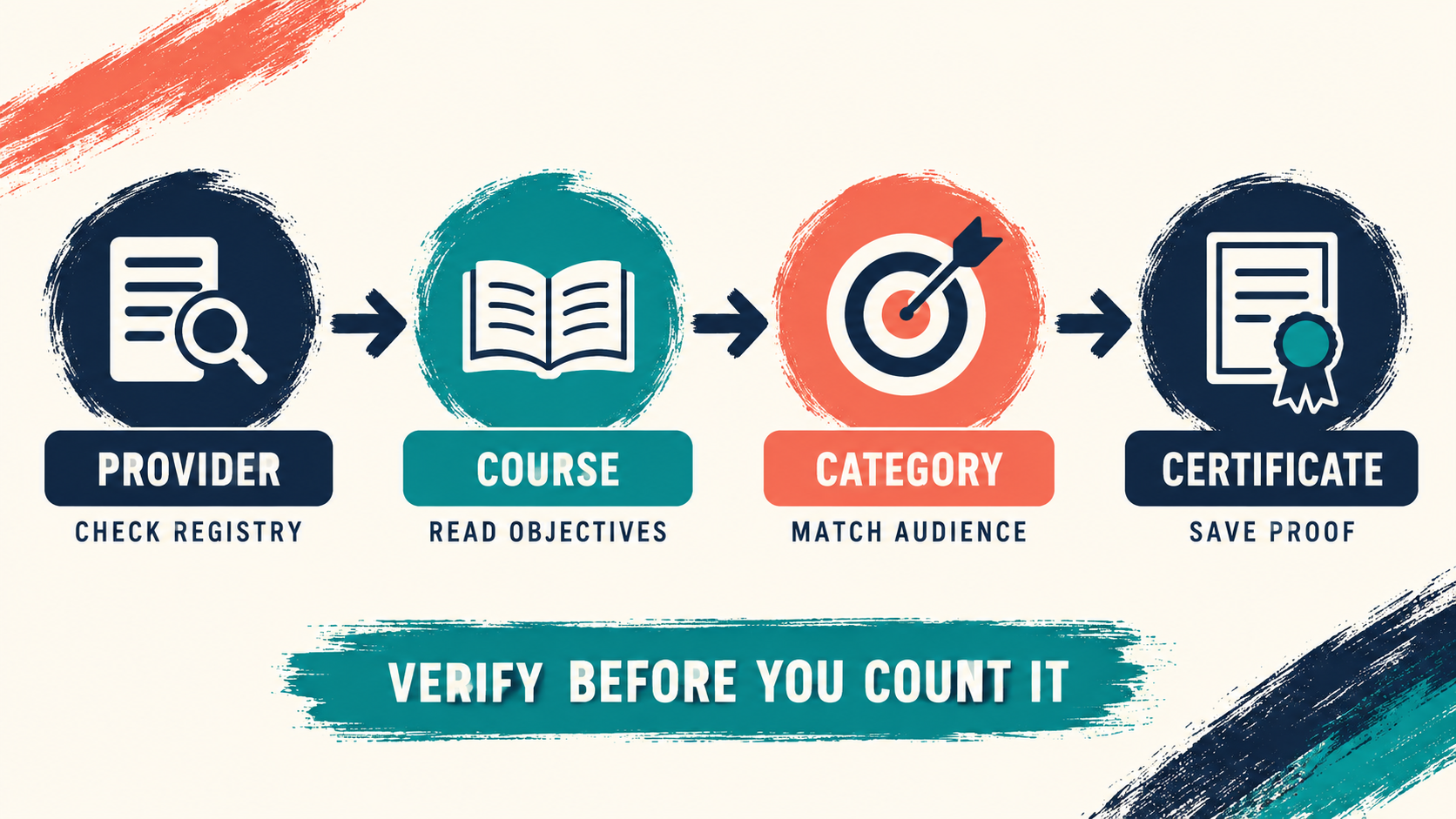
Before you register, write down four facts: your credential, your certification-cycle dates, the amount and type of credit you still need, and any specific category you are trying to satisfy. Then compare those facts with the course description. The course should state enough information for you to identify the intended audience and the type of learning event.
| Check | What to look for | Why it matters |
|---|---|---|
| Credential audience | BCBA/BCaBA learning audience, RBT professional development, or another clearly stated audience | A course intended for a different credential may not solve your renewal need. |
| Content relevance | Objectives connected to behavior-analytic practice, ethics, supervision, assessment, intervention, or another useful topic | A recognizable title is not enough; the learning objective should explain the professional value. |
| CE category | The category named by the provider and any required ethics or supervision designation | Category-specific needs are easy to miss when you only track a total number. |
| Duration | A defined event length and the credit calculation explained by the provider | Do not assume a short video or a rounded-up time automatically equals a full unit of credit. |
| Cycle fit | Completion date inside the applicable cycle and enough time to keep the record | A valid course completed at the wrong time may not solve the current renewal problem. |
The ACE handbook is especially useful when you need to understand how event time and documentation are handled. For example, its duration guidance distinguishes a 25-minute learning event from a 50-minute event and does not make it safe to round an incomplete event up simply because the difference is small. Use the current handbook’s wording rather than copying a conversion from an older blog post.
What to Save as Proof of Completion
Make a folder or digital record before you take the course. Save the registration or receipt, course description, learning objectives, completion screen, certificate, and any evaluation or attendance confirmation. The certificate should make it possible to connect you, the provider, the course, the date, and the amount or category of credit. If one of those links is missing, ask the provider for clarification while the event is still easy to verify. At minimum, look for:
- your name or another reliable participant identifier;
- the provider’s name and ACE identification information when supplied;
- the exact course or event title;
- the completion date;
- the amount of credit or event duration;
- the relevant category or audience designation; and
- the provider’s confirmation that you completed the required activity.
Keep the record for the period required by the current BACB guidance and your own policy. A course dashboard may disappear when a subscription ends, so download the certificate and supporting details instead of relying on a login that you may not have later.
A Practical Course-Comparison Checklist
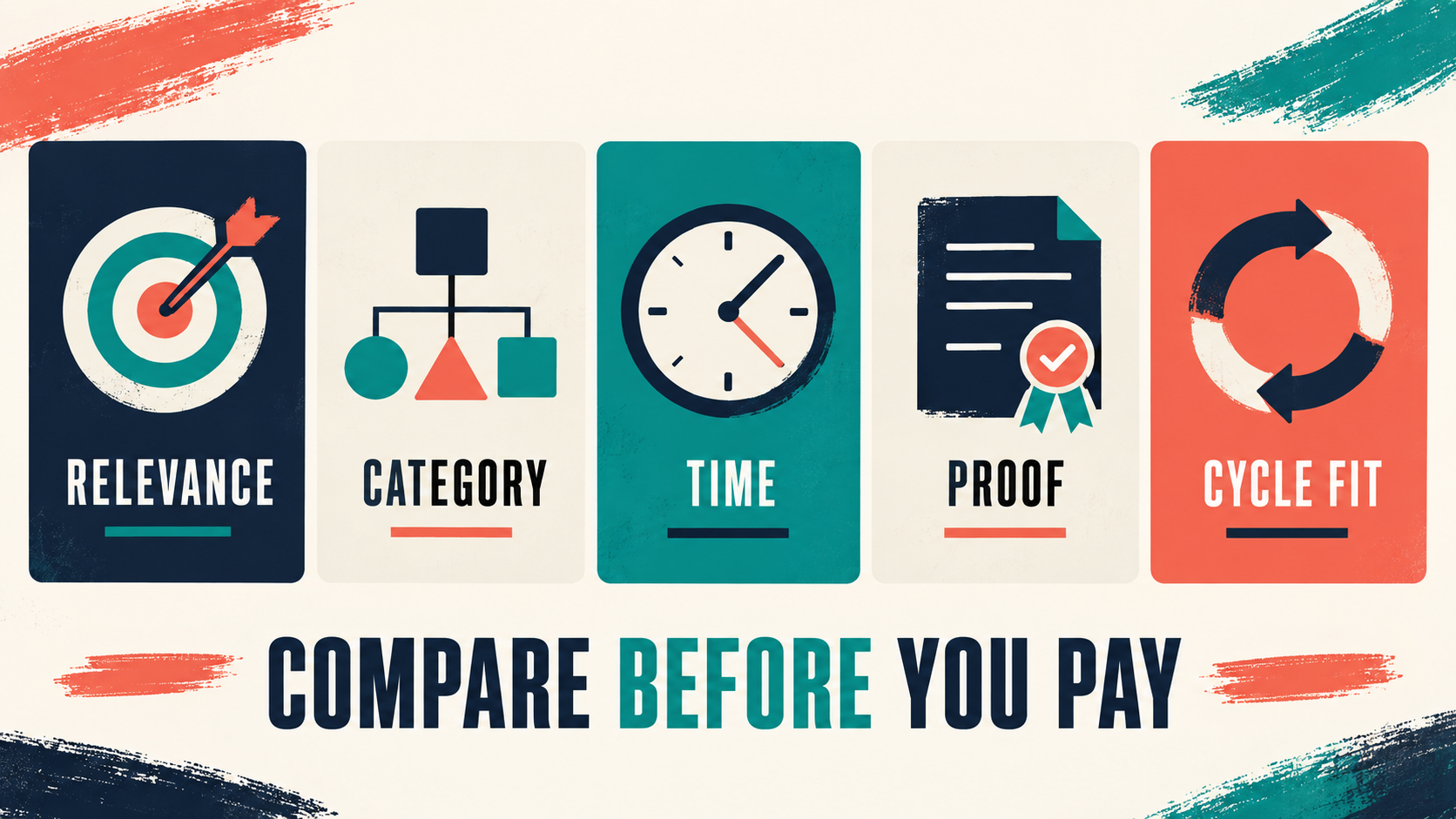
When two BACB CEU courses cover similar subjects, compare them with the same questions. This prevents a polished sales page from winning simply because it uses more confident language.
- Is the provider verifiable today? Check the current BACB registry, not only the provider’s own badge.
- Does the course solve your actual learning need? Read the objectives and instructor information. “ABA” in the title is not a learning objective.
- Does the audience match your credential? Confirm whether the event is for BCBA/BCaBA learning, RBT professional development, or another group.
- Does the category match your remaining requirement? Record the category before checkout if you need ethics, supervision, or another defined type.
- Is the time calculation transparent? Look for event length, participation requirements, assessment rules, and the credit amount.
- Will the proof be usable later? Check what the certificate includes, how it is delivered, and how long the provider keeps the record.
- Does the completion date fit the cycle? A course can be professionally useful and still be the wrong item to count in the current renewal window.
Use a simple tracker with columns for provider, course title, audience, category, completion date, credit, certificate location, and cycle. This also helps you notice a problem early: for example, a tracker can show that you have enough total hours but are still missing a required category.
If you are specifically comparing online delivery, our guide to BCBA CEUs online covers the extra questions created by on-demand and virtual formats. If price is the main concern, see the separate guide to free BACB CEUs. Those are adjacent decisions; they should not replace the provider, category, and documentation checks in this guide.
Common BACB CEU Course Mistakes
- Calling a course “BACB approved” without checking the provider: use the precise authorization language supported by the current source.
- Counting a certificate without reading the audience: a certificate proves participation in something, not necessarily that it satisfies your particular requirement.
- Choosing by total price only: a cheap course that does not fit your credential or category can cost more when you have to replace it.
- Relying on a provider list from a search result: status, names, and catalogs can change; return to the current registry.
- Waiting until renewal week: missing certificates, category gaps, and unclear completion records are harder to fix at the deadline.
- Using CE content as a substitute for exam preparation: continuing education and BCBA exam practice have different goals.
Frequently Asked Questions
Is every course from an ACE Provider automatically valid for my BCBA renewal?: No. ACE Provider authorization is an important provider-level check, but you still need to verify the individual course’s audience, category, duration, completion evidence, and fit with your current cycle. When in doubt, use the current BACB handbook or contact the BACB before relying on the credit.
Can a free BACB CEU course count?: Price alone does not decide whether credit counts. A free course still needs an appropriate provider, activity, audience, documentation, and completion record. The same verification process applies whether the course costs nothing or is part of a paid membership.
Do online BACB CEU courses count differently?: Online delivery does not remove the need to verify the provider or documentation. Check whether the format requires attendance, progress tracking, an assessment, or a completion evaluation, and save the records that show you met those conditions.
How do I know how many CEUs I still need?: Check your current certification-cycle dates, credential handbook, portal record, and any category-specific requirement that applies to you. Do not copy a number from a general article when your cycle or credential may be governed by a newer rule.
What should I do if a provider’s status or certificate is unclear?: Pause before counting the course. Save the course page, ask the provider for the missing information, compare the provider with the BACB registry, and use the current BACB contact or handbook resources if the question remains unresolved.
Once your continuing-education record is organized, keep exam preparation as a separate activity. If you are studying for the BCBA exam, you can use our free BCBA mock exam for scenario-based practice; it is not a CEU event and does not replace BACB documentation. Try the Free BCBA Mock Exam For targeted review, use our bacb ceu courses practice questions to apply the concept in exam-style scenarios.
Take the Free BCBA Mock Exam
If you want a low-pressure way to check your recall, use the free practice resource below. Take the Free BCBA Mock Exam



