

If you are comparing aba online data collection tools, do not begin by asking which app has the longest feature list. Begin by asking whether your team can collect representative data, protect client information, recover when connectivity fails, and show that the workflow is reliable across users. A short pilot with explicit acceptance criteria usually tells you more than a polished product demo.
Table of Contents
- What Should ABA Online Data Collection Prove?
- Start With Measurement Fit
- Define the Minimum Data Set
- Run a Small Pilot Before Migration
- Test Offline Recovery and Auditability
- Check Privacy, Access, and Contracts
- Protect Procedural Integrity During Rollout
- Use an Online Data Collection Acceptance Scorecard
- Decide: Adopt, Repair, or Reject
- ABA Online Data Collection FAQ
- Use Practice to Review Measurement Decisions
- Take the Free BCBA Mock Exam
This guide owns the implementation decision after you have identified the general tool category. For a broad software-evaluation framework, keep the site’s ABA data collection software guide nearby. For a format comparison, see the digital-versus-paper data collection guide. This page focuses on whether an online workflow is ready for your team’s real measurement, privacy, and recovery conditions.
Important boundary: a platform can support a workflow, but it does not choose the correct measurement procedure, make a provider HIPAA-compliant, or prove procedural integrity by itself. The behavior, environment, organization, contracts, and applicable law still control. Use the current BCBA Handbook, your organization’s policies, and qualified compliance advice for decisions that affect clients or protected information.
What Should ABA Online Data Collection Prove?
The answer is not “that data can be entered on a phone.” An online ABA data-collection workflow should prove that the selected measurement matches the target behavior, the required fields are easy to complete at the point of service, records remain attributable and reviewable, and the team can continue safely when the network or device is unavailable. It should also make errors visible before they become clinical decisions.
| Capability | What to prove in the pilot | Evidence to save |
|---|---|---|
| Measurement fit | The form captures the critical dimension of the behavior in the actual setting. | Operational definition, measurement choice, sample records, and reviewer notes. |
| Usability | A trained user can complete the required fields without guessing or delaying care. | Timed practice, error log, and user feedback. |
| Integrity | Entries show who recorded them, when, and what changed. | Audit trail, edit history, and supervisor review. |
| Continuity | The team has a defined safe process for offline work, sync, correction, and escalation. | Offline test record, recovery log, and exception procedure. |
The BACB’s current BCBA Test Content Outline treats measurement selection, validity and reliability, representative data, graphing, and procedural integrity as separate professional skills. Your platform pilot should respect those distinctions instead of treating every field as an interchangeable click.
Start With Measurement Fit
Write the operational definition and critical dimension before you configure a form. Frequency, rate, duration, latency, interval recording, permanent product, and other procedures answer different questions. The online interface should make the correct response easy, but it cannot decide which procedure is valid for your target behavior.
| Measurement need | Online-field test | Failure signal |
|---|---|---|
| Occurrence or rate | The form records events and the relevant observation time or opportunities. | The system shows a count without a denominator or observation window. |
| Temporal dimension | Start, stop, or response-time fields are practical at the point of service. | Users estimate duration or enter times from memory after the session. |
| Discontinuous measurement | Intervals, prompts, and response options match the written procedure. | The app defaults to a convenient interval that changes the measurement rule. |
| Procedural integrity | The reviewer can see whether the planned steps were implemented. | Outcome data look complete, but implementation fidelity cannot be checked. |
- Define the behavior in observable terms before building the digital form.
- Name the dimension that matters and the observation context that gives it meaning.
- Decide which fields are required, optional, calculated, or supervisor-only.
- Test the form with realistic session conditions, not only at a desk.
Define the Minimum Data Set
Online forms become harder to use when every possible detail is mandatory. Create a minimum data set that supports the clinical question and the required review. Extra fields can be available when justified, but they should not hide the fields needed for reliable decision-making.
| Field group | Minimum question | Owner |
|---|---|---|
| Context | Where, when, and under what relevant condition was the observation made? | Recorder, with supervisor-defined options. |
| Measure | What value, count, interval result, or product was recorded? | Recorder, using the approved operational definition. |
| Procedure | Were the planned measurement and intervention steps followed? | Recorder and reviewer, with role separation where appropriate. |
| Exception | What happened if the device, network, definition, or session plan did not fit? | Recorder documents; supervisor sets the follow-up path. |
Keep the minimum data set stable during the pilot. If the team changes the definition, interval, required fields, or calculation halfway through, mark the change and analyze the before-and-after records separately. Otherwise, a software change can look like a behavior change.
Run a Small Pilot Before Migration
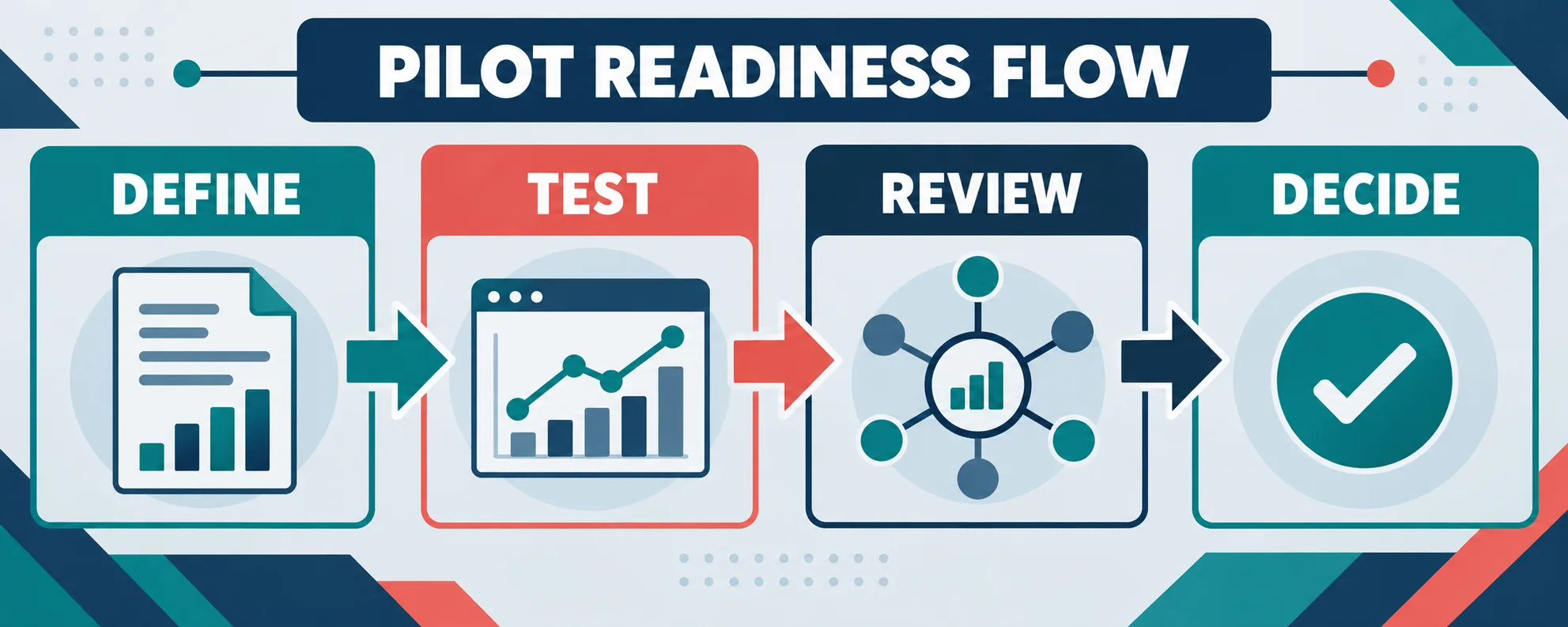
Choose a small, representative pilot rather than migrating every client at once. Include the settings, users, devices, and measurement procedures that create the most realistic constraints. A good pilot is not a sales demonstration; it is a controlled test with a stop rule.
- Define: select one or two measurement workflows, their operational definitions, and the records required for review.
- Test: have trained users enter the same scenario or session data under normal and difficult conditions.
- Review: compare the digital record with the approved procedure, not merely with another user’s entry.
- Decide: adopt, repair the configuration, or stop the pilot when a critical control fails.
- Include at least one low-connectivity or device-switch scenario.
- Ask a reviewer who did not build the form to interpret the resulting graph or summary.
- Log every workaround, missing field, duplicate entry, delayed sync, and permission problem.
- Set a pilot owner and a date for the go/no-go decision before collecting the first test record.
Test Offline Recovery and Auditability
“Online” should not mean “no plan when the connection disappears.” Ask the vendor and your internal administrator exactly what happens when a user loses connectivity, closes the app, changes devices, or submits a correction. The answer should be testable in your environment, not a general promise.
| Failure scenario | Question to test | Accept only when |
|---|---|---|
| Network drops mid-session | Can the user continue or switch to a defined fallback without losing time context? | The recovery path is documented and the final record identifies any interruption. |
| Duplicate or late sync | Can a reviewer identify the original, the duplicate, and the accepted correction? | The system preserves an understandable history rather than silently overwriting data. |
| Device replacement | Can access be revoked and restored without sharing credentials or exporting unnecessary records? | The administrator can show the access and recovery steps. |
| Correction request | Who can correct an entry, and can the reviewer see why it changed? | Correction roles and audit history are defined before rollout. |
Do not call a system “reliable” because data eventually appears in a dashboard. Reliability includes the path from observation to entry, sync, correction, review, graphing, and decision. Preserve a test record for each failure scenario so a future team member can repeat the check.
Check Privacy, Access, and Contracts
Privacy review should happen before real client information enters the pilot. HHS explains that the HIPAA Privacy Rule’s minimum-necessary standard generally limits uses, disclosures, and requests of protected health information to what is needed for the intended purpose. The Security Rule focuses on safeguards for the confidentiality, integrity, and availability of electronic protected health information. Whether a particular organization, vendor, or workflow falls within those rules depends on facts and contracts, so do not treat a vendor badge as a legal conclusion.
| Control | Question for the pilot | Evidence or owner |
|---|---|---|
| Access | Can each user receive an individual role with only the access needed for the job? | Administrator’s role map and access test. |
| Transmission and storage | Where is data stored, transferred, backed up, and deleted? | Vendor documentation, organization policy, and compliance review. |
| Contract | If applicable, is the required business-associate or data-processing agreement in place? | Contract owner and qualified privacy/compliance reviewer. |
| Minimum necessary | Does each field and export have a defined purpose? | Data map, export review, and policy owner. |
- Use test or de-identified records until the organization approves real-data use.
- Ask how a user is offboarded, how a device is lost, and how an export is secured.
- Confirm whether state, payer, school, employer, or contract rules add requirements beyond HIPAA.
- Document the person who can answer a privacy question; do not delegate that decision to a sales page.
For the regulatory starting points, read HHS guidance on the minimum-necessary requirement and the purpose of Security Rule safeguards. These sources help frame questions; they do not determine your organization’s legal status.
Protect Procedural Integrity During Rollout
A digital form can standardize prompts, but it can also standardize the wrong procedure. Train users on the behavior definition, measurement rule, device workflow, and exception path together. Then observe whether the implemented procedure matches the written plan.
| Rollout check | What the reviewer compares | Repair action |
|---|---|---|
| Definition | Written definition versus the behavior users are recording. | Clarify examples, nonexamples, and decision rules. |
| Prompt | Form prompt versus the approved measurement procedure. | Change the form only after the supervisor confirms the procedure. |
| Summary | Dashboard calculation versus the raw record and observation context. | Validate the calculation and label missing denominators or intervals. |
Use an Online Data Collection Acceptance Scorecard
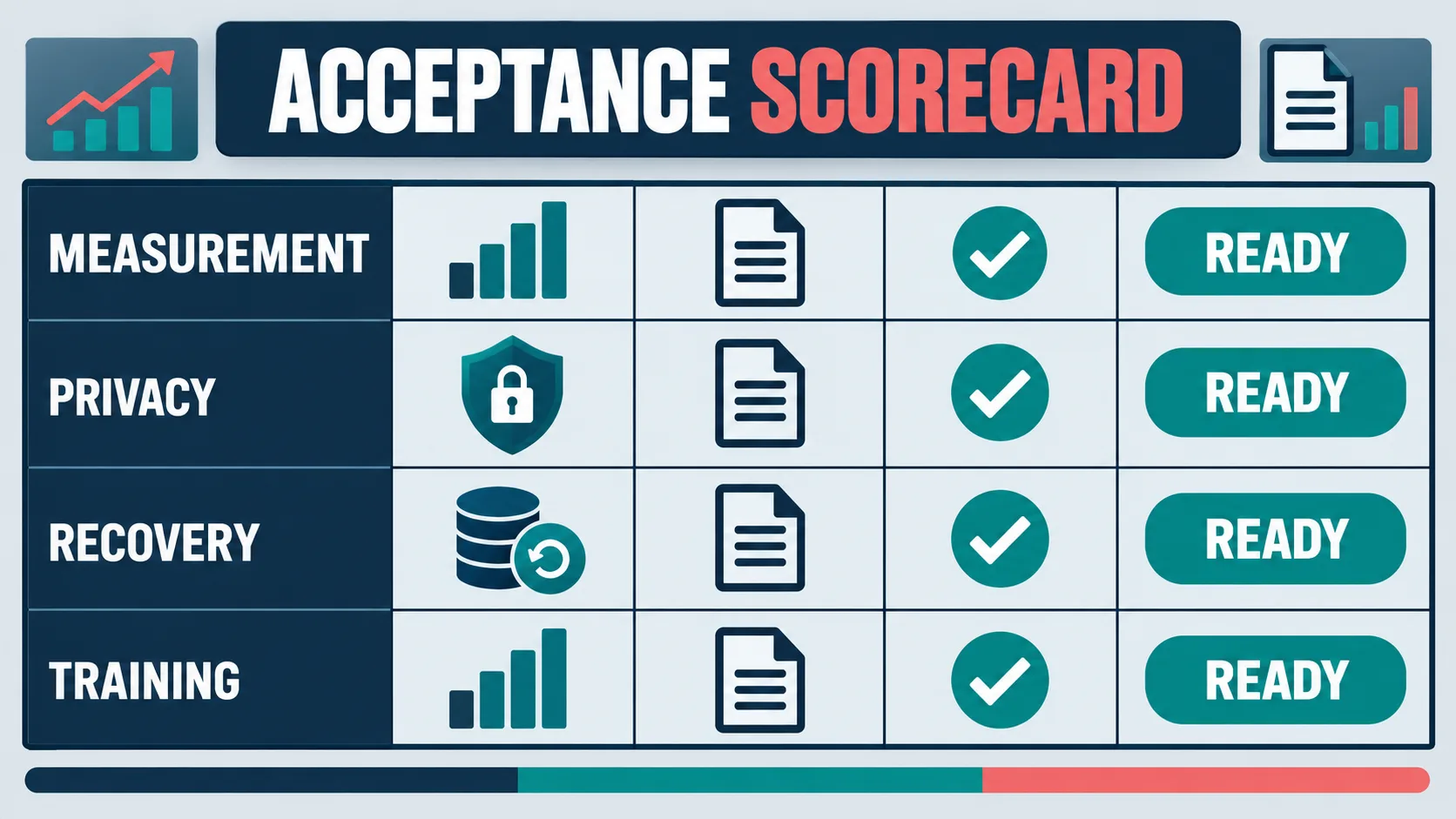
Turn the pilot into a decision rather than a collection of impressions. Score each control as ready, repair, or verify. A critical failure in privacy, data loss, measurement fit, or auditability should pause adoption even if users like the interface.
| Scorecard area | Ready means | Verify before go-live |
|---|---|---|
| Measurement | The form captures the approved critical dimension and context. | Supervisor sign-off and sample-record comparison. |
| Recovery | Offline, sync, correction, and device-loss procedures are repeatable. | Test evidence and a named escalation owner. |
| Privacy | Access, storage, contract, and export questions have documented answers. | Compliance or privacy review where required. |
| Training | Users can follow the procedure without hidden workarounds. | Observed practice and error log. |
| Review | A reviewer can trace raw entry to graph, correction, and decision. | Audit-trail demonstration and retained test record. |
- Adopt: all critical controls pass and the remaining repairs have owners and dates.
- Repair: the workflow is useful, but a configuration or training issue must be corrected and retested.
- Reject or pause: a critical control cannot be demonstrated or the measurement does not fit the clinical question.
Decide: Adopt, Repair, or Reject
Make the decision from evidence, not from a feature checklist. A low-cost workflow that loses context or cannot show corrections may create more work than it removes. A sophisticated system that users cannot operate during a real session may also fail. Keep the pilot record, scorecard, configuration version, training notes, and final decision together so the next review starts with evidence.
| Decision | Use it when | Next record |
|---|---|---|
| Adopt | Measurement, recovery, privacy, training, and review controls pass. | Implementation plan and scheduled post-launch audit. |
| Repair and retest | A noncritical gap has a clear owner and a testable fix. | Issue, owner, due date, retest result. |
| Pause or reject | Data loss, wrong measurement, unsafe access, or untraceable edits remain. | Escalation decision and safe interim workflow. |
ABA Online Data Collection FAQ
Is online ABA data collection automatically better than paper? No. It can reduce transcription and make review faster, but only if the measurement, training, access, and recovery controls work in the real setting. Does an app choose the correct ABA measurement? No. A BCBA or qualified clinical team must select and define the measurement procedure. The app should faithfully support that decision. Does a vendor saying “HIPAA compliant” finish privacy review? No. Ask about scope, contracts, access, storage, deletion, exports, and your organization’s obligations. A marketing label is not a complete compliance analysis. What should I test first? Test one high-value measurement workflow, one low-connectivity scenario, one correction, one permission change, and one supervisor review before broad migration.
Use Practice to Review Measurement Decisions
After the pilot checklist is clear, practice questions can help you review measurement selection, data display, validity, reliability, and procedural-integrity reasoning. Use missed questions to identify whether the problem was choosing the wrong dimension, ignoring context, confusing continuous and discontinuous measurement, or accepting a graph without checking the raw record.
For a focused study checkpoint, try the site’s free BCBA mock exam. It is independent preparation content, not a software certification, privacy review, clinical decision, official BACB assessment, or guarantee of a passing result.
Bottom line: the strongest ABA online data collection workflow is the one your team can explain, operate, audit, and recover. Define the measurement first, pilot the smallest useful workflow, test privacy and offline recovery, and adopt only when the evidence supports the decision. Reviewed October 11, 2026. Confirm current BACB, HHS, organizational, payer, and state requirements before using real client information or changing a clinical documentation workflow.
Take the Free BCBA Mock Exam
A useful next step is to apply this idea in a fresh set of BCBA-style practice questions and review the feedback. Take the Free BCBA Mock Exam



