
An “ABA fraud directory” can sound like a simple search for a list of bad providers. In practice, credential status, state licensing, payer findings, and ethical allegations are different records handled by different authorities. A safe search starts with verification—not an unofficial blacklist.
Table of Contents
- What People Mean by an ABA Fraud Directory
- Verify the Person, Provider, and Payer Separately
- How to Check a BACB Credential Safely
- How to Document a Concern Without Defaming Anyone
- Choose the Reporting Authority With Jurisdiction
- Red Flags Are Not the Same as Proof
- Use the Ethics Boundary as a BCBA Study Skill
- Frequently Asked Questions
- Official Sources and Verification Notes
- Quick Review Checklist
- Take the Free BCBA Mock Exam
If you searched for aba fraud directory, you may be trying to check whether someone is really a BACB certificant, understand a suspicious billing issue, find a disciplinary record, or report a concern. This guide gives you a careful path for each task. It does not name alleged offenders, publish unverified accusations, or call conduct “fraud” without an official finding. This is general educational information, not legal, medical, insurance, or ethics advice. Reporting deadlines, privacy rules, licensing requirements, and payer procedures vary. Use the current official source for the jurisdiction and issue involved.
What People Mean by an ABA Fraud Directory
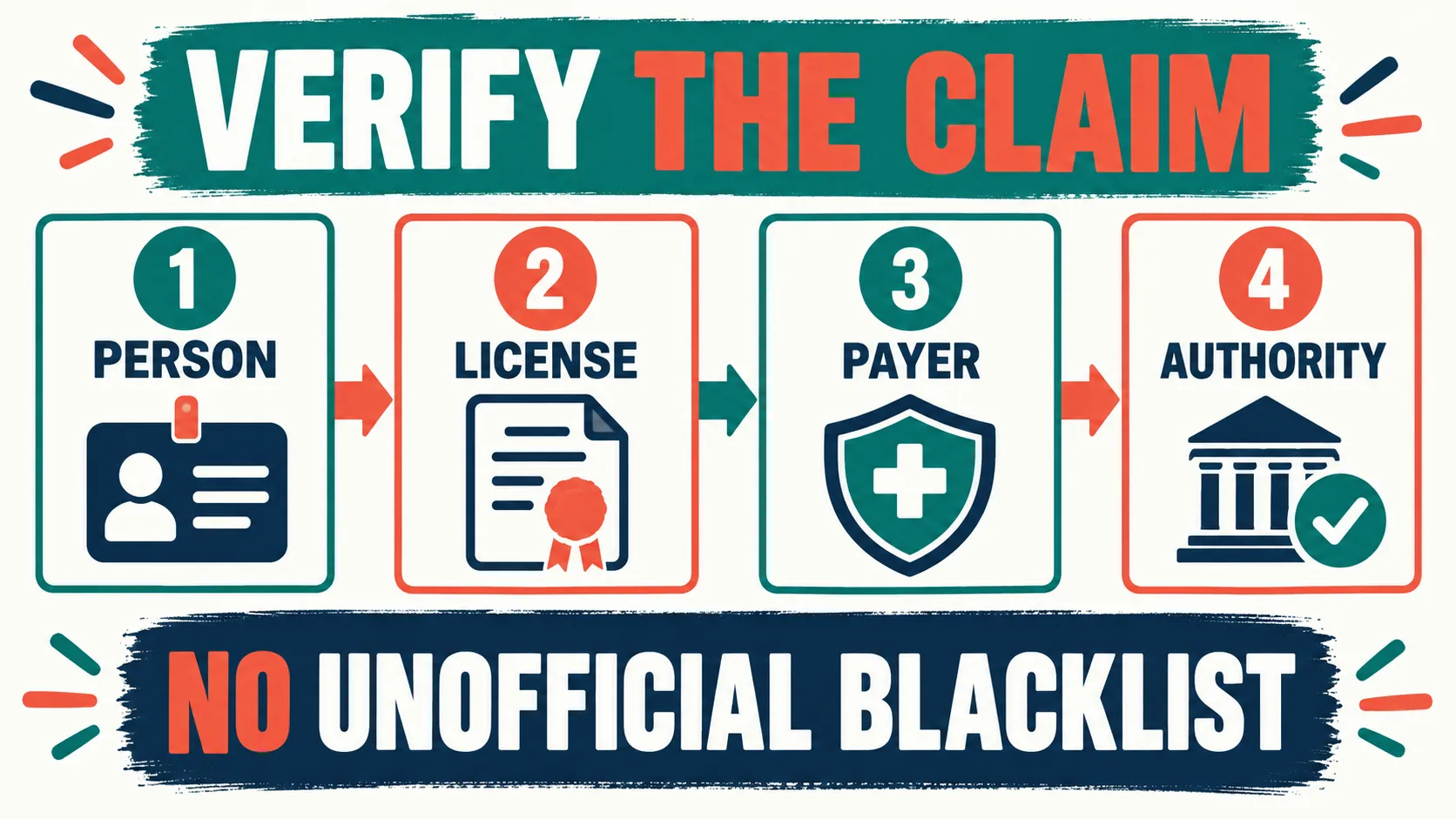
There is no single official, universal “ABA fraud directory” that can tell a reader that every person, clinic, or claim is legitimate or illegitimate. The phrase may combine several different searches:
- Credential verification: Is an individual currently listed as a BCBA, BCaBA, or RBT, and does the official registry show reportable disciplinary information?
- Provider verification: Is an organization properly registered, licensed, enrolled with a payer, or authorized to provide the service it advertises?
- Billing or program integrity: Is there a documented concern involving a government health program, third-party payer, or licensing agency?
- Ethics reporting: Does the available evidence support a report to the BACB, a state regulator, an employer, or another authority?
Those are not interchangeable. A credential can be expired or inactive without proving fraud. A business can have a complaint without a final finding. A billing error can be serious without allowing an online reader to determine intent. Keep the wording accurate: “I found a discrepancy,” “the credential needs verification,” or “a complaint was submitted” is different from “this provider is fraudulent.”
Verify the Person, Provider, and Payer Separately
Do not treat one search result as proof of everything. Verify the claim at the level where it was made and save the date of the check.
| What you are checking | Use the source with authority | What the result means | Do not overclaim |
|---|---|---|---|
| Individual BACB credential | BACB Certificant Registry or an official verification letter. | The listed name, credential status, and any reportable registry information can be checked as of the search date. | A registry result does not verify every service, claim, or billing event. |
| State license or regulated practice | The relevant state licensing or regulatory board. | The state agency’s record controls questions about state authorization and disciplinary action. | BACB certification and state licensure are separate checks. |
| Organization or clinic | The organization’s state registration, accreditation body, payer, or contract authority, depending on the claim. | You learn whether the organization has the authorization or enrollment it represents. | BACB certifies people, not companies; an employee’s credential does not certify the whole organization. |
| Billing or payer concern | The payer’s fraud, waste, and abuse channel or the appropriate government program office. | The program receives and evaluates the information under its own process. | A submitted tip is not the same as a confirmed finding or conviction. |
How to Check a BACB Credential Safely
BACB identifies its online Certificant Registry as the primary resource for quickly verifying an individual’s certification status and determining whether reportable disciplinary actions are associated with the certification. BACB also says the registry is updated daily. Use the registry rather than relying on a logo, a social-media bio, a screenshot, or a search-engine snippet.
- Use the exact name. Search the person’s professional name and compare the result with the name used on the provider’s website or paperwork. Watch for similar names and spelling differences.
- Record the credential and date. Save the credential type, certification number if displayed, status, expiration information, and the date you checked. A later status change does not make your dated record a current verification.
- Compare the claim. If a website says “BCBA-owned,” identify whether it means the owner, a clinical director, a supervisor, or another employee. One person’s credential does not establish every employee’s credentials.
- Check the right regulator. If the person practices in a state with behavior-analyst licensure, check that state authority too. BACB guidance explains that it may not have jurisdiction over non-certificants or organizations.
- Ask the provider a neutral question. Request the information needed to verify the service, authorization, or billing statement. Keep the communication factual and avoid threatening public exposure.
Use “not found in the registry” carefully. It may mean a name was entered differently, the person is not a BACB certificant, or the search is being performed in the wrong record system. It is a reason to verify, not a complete finding about a person’s character or practice.
How to Document a Concern Without Defaming Anyone
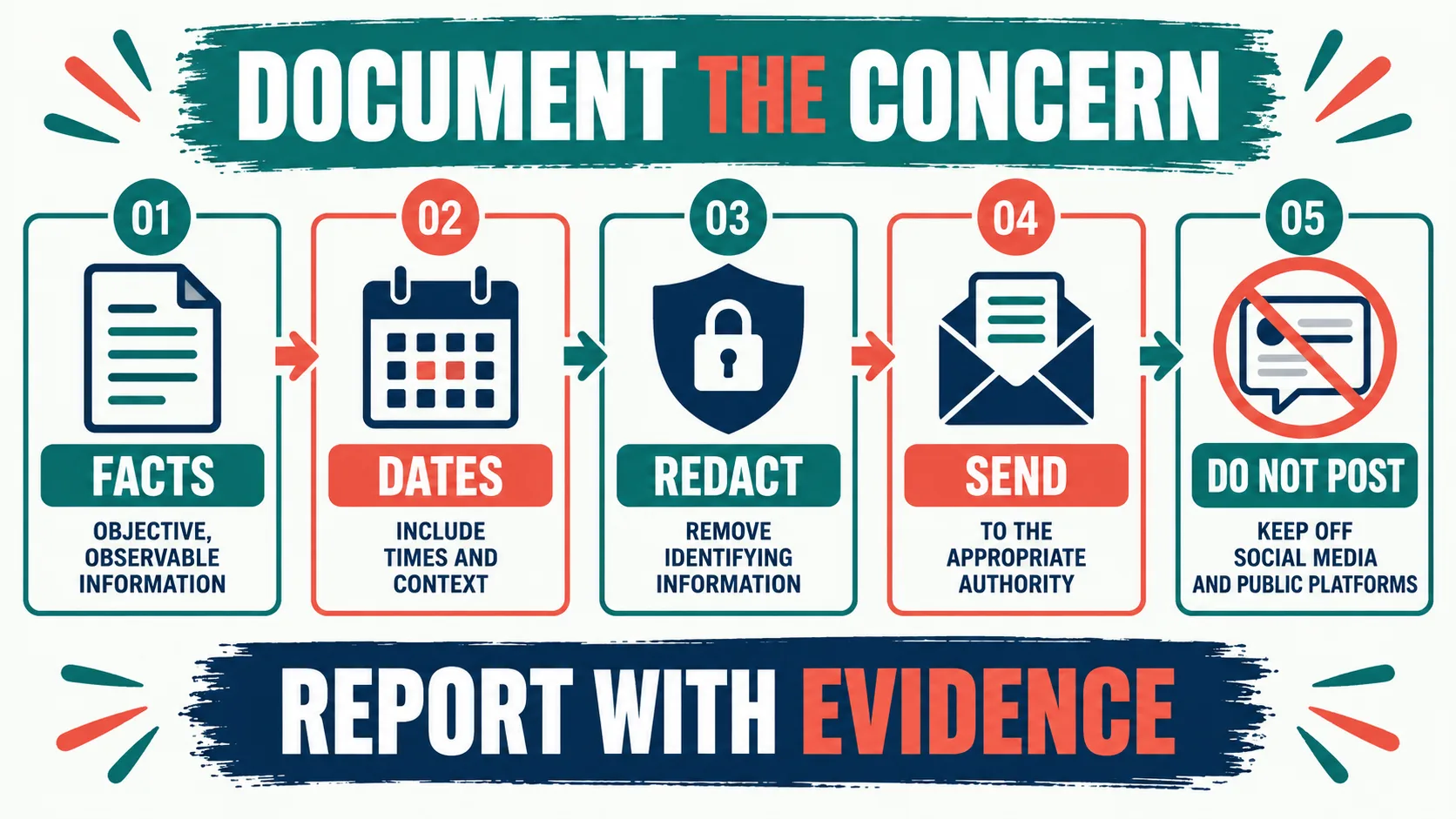
If the concern remains after verification, create a neutral evidence packet for the authority that may have jurisdiction. Keep the packet focused on observable facts, dates, documents, and the exact question you want reviewed.
- Write a timeline. Note when the service, statement, bill, or conversation occurred and when you discovered the discrepancy.
- Quote the representation accurately. Save the page, invoice, email, or form that made the claim. Do not paraphrase a statement in a more dramatic way than the original.
- Describe the mismatch. Separate “the claim says X” from “the registry or payer record shows Y.” Let the reviewing authority decide what the difference means.
- Preserve original files. Keep the original document separately from a redacted copy. Screenshots should include the page address and capture date when possible.
- Redact protected information. Remove client names, dates of birth, addresses, medical details, session data, and other identifying information unless the receiving authority specifically instructs you otherwise.
- Use the official form. BACB guidance for publicly available documentation asks for supporting material and directs reporters to state regulators when the subject lives or practices in a state with behavior-analyst licensure.
Never publish a client record, private employee message, or allegation as a warning post. Public posting can harm the people receiving services, interfere with a review, and create a second privacy or defamation problem. Send the relevant evidence to the authority designed to evaluate it.
Choose the Reporting Authority With Jurisdiction
The correct destination depends on the subject, the conduct, and the program involved. The table below is a routing aid, not a substitute for the agency’s current instructions.
| Situation | Possible first authority | What to prepare |
|---|---|---|
| Possible ethics violation by a BCBA, BCaBA, applicant, or certificant | BACB Ethics Department, unless a state authority must act first. | A factual description, dates, relevant standard if known, and redacted supporting documentation. |
| Practice or conduct regulated by a state | The state licensing or regulatory board. | State, license or credential information, timeline, and documents requested by that board. |
| Possible billing issue involving Medicaid, Medicare, or another payer | The payer’s fraud, waste, and abuse channel or the program’s integrity office. | Claim identifiers, dates, service description, billing records, and a clear explanation of the discrepancy. |
| Possible fraud, waste, or abuse in an HHS program | HHS Office of Inspector General, or emergency/law-enforcement channels when appropriate. | Only information you are authorized to share, organized by date and program, with protected information handled safely. |
BACB’s own guidance states that it certifies individuals, not companies, and that it does not have jurisdiction over non-certificants or organizations. That boundary is important: a complaint about a clinic’s contract or billing may belong with a payer, state regulator, accreditor, or government program even if a BCBA works there.
Red Flags Are Not the Same as Proof
Some observations justify a careful check but do not prove fraud. Examples include a credential number that is missing from an advertisement, a website that uses “board certified” without naming the person, a bill that does not match your records, pressure to sign a form you do not understand, or repeated changes to a service description. Record what happened and ask the relevant authority to review it.
Do not treat a negative online review, a disagreement about treatment, a credential that recently expired, or an unexplained delay as a confirmed ethical or billing violation. Avoid collecting or sharing more client information than necessary. If a person may be in immediate danger or a client may be experiencing abuse or neglect, follow emergency and mandated-reporting rules in your jurisdiction before using a professional ethics form.
Use the Ethics Boundary as a BCBA Study Skill
This topic also appears in BCBA-style scenarios. The strongest answer usually identifies the relevant authority, protects confidentiality, avoids an unsupported conclusion, and documents enough information for a competent review. “Post the provider’s name publicly” is rarely a safe first step; neither is treating a registry search as a complete investigation.
Use the Free BCBA Mock Exam to practice separating ethics, documentation, client safety, supervision, and reporting scenarios. After each missed question, write down what is known, what is only alleged, who has jurisdiction, and what privacy step comes first.
Frequently Asked Questions
Is there an official ABA fraud directory?: There is not one universal directory that decides whether every ABA person, organization, and claim is fraudulent. Use the BACB Certificant Registry for individual credential verification, state regulators for licensed practice, and payer or government-program channels for billing and program-integrity concerns.
How do I verify that someone is a BCBA?: Use BACB’s official Certificant Registry and compare the result with the person’s name and representation. Record the status and date checked. If the issue involves state licensure, verify the state record separately.
Can I report an ABA company to the BACB?: BACB says it certifies people, not companies. If the concern involves a BACB applicant or certificant, review the BACB reporting process. If it concerns an organization, contract, payer, or state-regulated practice, contact the authority with jurisdiction.
What should I do with a suspected billing problem?: Keep a factual timeline and the relevant claim or invoice, redact protected information, and use the payer’s fraud, waste, and abuse channel or the appropriate government program office. A submitted report is not the same as a confirmed finding.
Official Sources and Verification Notes
Start with BACB’s Verify BACB Certification page and its Reporting to the Ethics Department guidance. For a public-documentation report, review BACB’s public-documentation instructions and the current Ethics Codes. For potential HHS-program fraud, see the HHS-OIG reporting resource. These authorities control over this summary if procedures or jurisdiction change.
Bottom line: Use an ABA fraud-directory search as a starting point for verification, not as permission to publish accusations. Check the person, organization, license, and payer separately; preserve redacted evidence; and send the concern to the authority that can actually review it.
Quick Review Checklist
Use this final checklist to turn aba fraud directory into exam-ready reasoning. The goal is not to memorize a label in isolation; it is to identify the relevant evidence and explain why the best answer fits the scenario. Key ideas to review:
- State the central definition or decision point for aba fraud directory in your own words.
- Identify the detail that makes aba fraud directory different from its closest related ABA term.
- Separate the observable facts in a scenario from assumptions that are not supported by the facts.
- Write one example and one nonexample so you can recognize the concept in a new setting.
Exam application checks:
- Ask what the question is actually requesting before comparing the answer choices.
- Mark the antecedent, response, consequence, or other evidence that supports the selected answer.
- Look for a distractor that describes a related process but does not answer the specific question.
Final self-check:
- Explain how you would verify the interpretation with clear observations or data.
- Change one detail in the scenario and decide whether your answer should change.
- Give a one-sentence rationale that a supervisor or study partner could evaluate.
Take the Free BCBA Mock Exam
When you are ready to apply the idea, use the free practice resource below for additional feedback. Take the Free BCBA Mock Exam



