
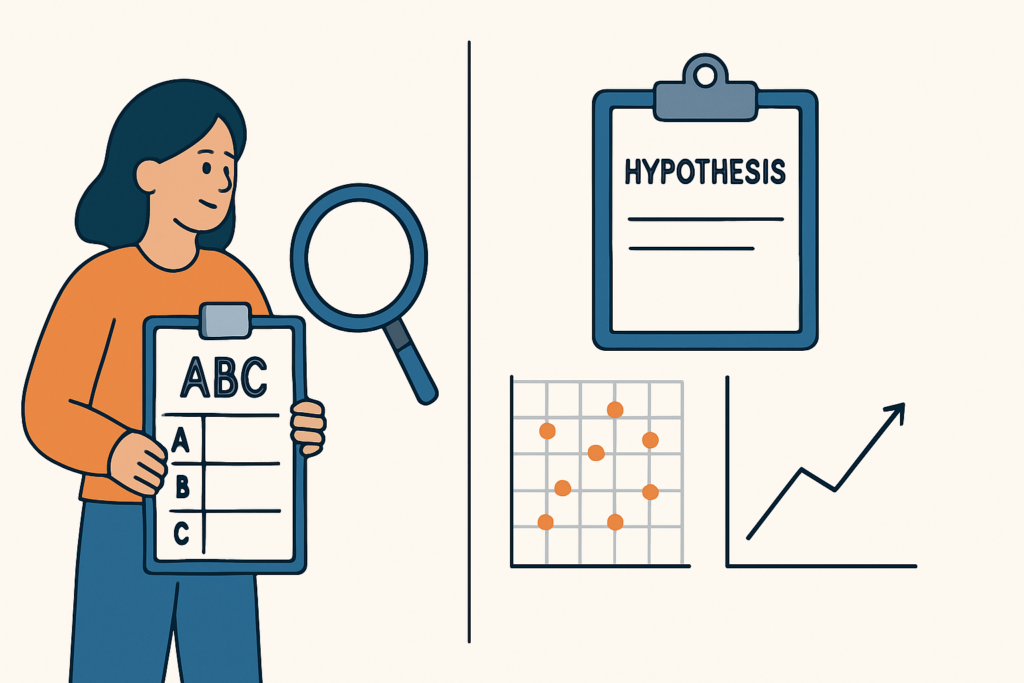
Understanding descriptive assessment is crucial for any behavior analyst preparing for certification. This indirect assessment method forms the foundation of hypothesis development in functional behavior assessment, yet many candidates struggle with its proper application and limitations.
Table of Contents
- Descriptive Assessment ABA: What is a Descriptive Assessment in ABA?
- Conducting a Descriptive Assessment: Worked Examples
- Descriptive Assessment and the BCBA Exam
- Quick-Reference Implementation Checklist
- Summary and Next Steps for Your Studies
Descriptive Assessment ABA: What is a Descriptive Assessment in ABA?
A descriptive assessment is an observational method used within a comprehensive functional behavior assessment (FBA) process. Unlike experimental methods that manipulate variables, descriptive assessments document what naturally occurs in the environment.
Definition and Core Purpose
The primary purpose of descriptive assessment is to identify correlations between environmental events and behavior. Practitioners systematically observe and record antecedent-behavior-consequence (ABC) sequences in natural settings to form initial hypotheses about potential functions.
This method serves as a critical first step in understanding behavior patterns before potentially moving to more controlled analyses.
Descriptive vs. Functional Analysis: A Critical Distinction
This distinction represents one of the most important exam points. Descriptive assessments identify correlation—what typically happens before and after behavior. In contrast, functional analysis demonstrates causation by systematically manipulating variables.
Remember: Descriptive data shows patterns; functional analysis proves function.
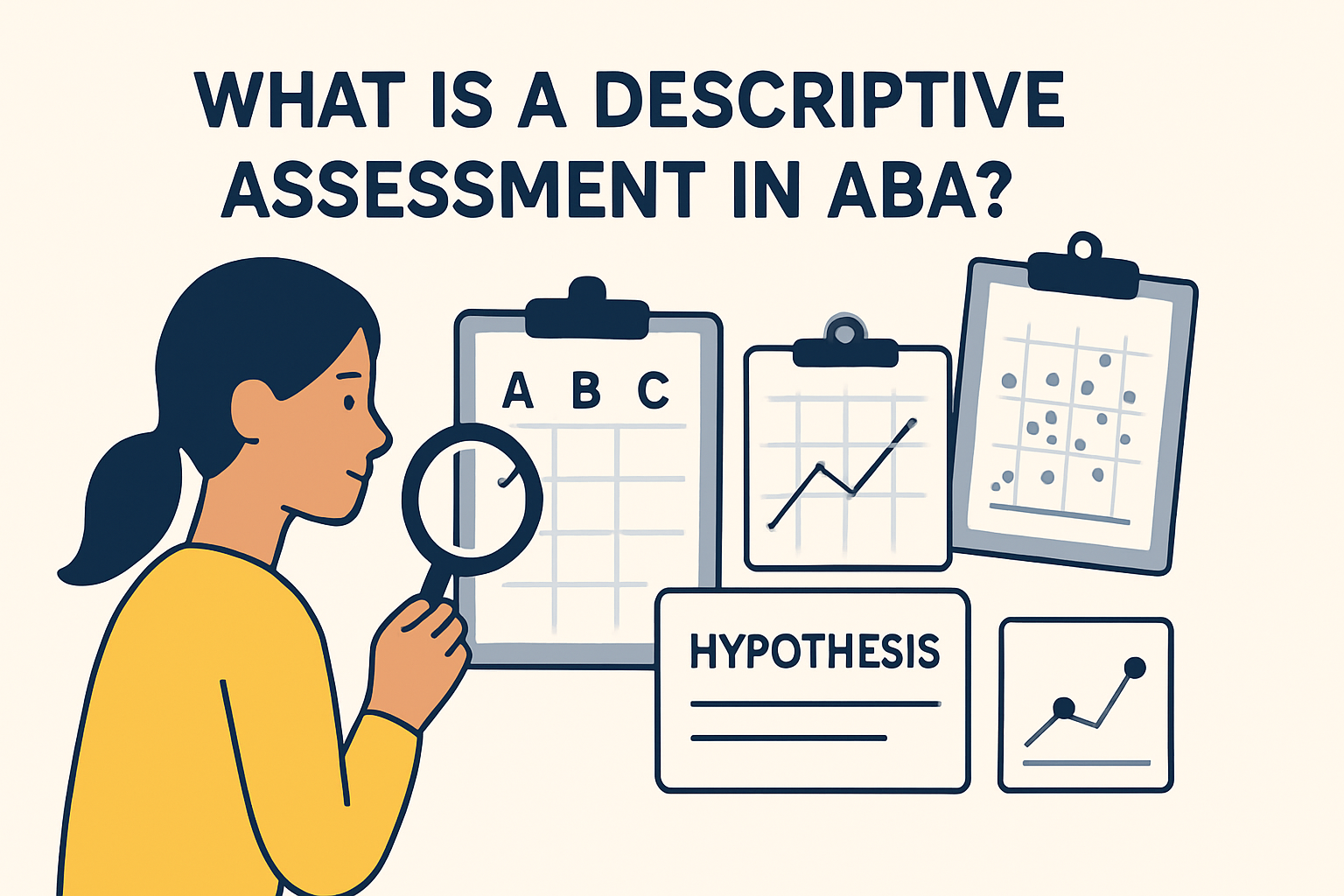
Conducting a Descriptive Assessment: Worked Examples
Let’s examine two practical examples that demonstrate how descriptive assessments work in real scenarios.
Example 1: Elopement in the Classroom
Target behavior: Leaving designated instructional area without permission during independent work time.
ABC data collected over five observations:
- Antecedent: Math worksheet presented, teacher attending to other student
- Behavior: Student stands up and walks toward door
- Consequence: Teacher redirects to seat, offers help with worksheet
Hypothesized function: Escape from difficult academic tasks. The pattern suggests the behavior consistently occurs when challenging work is presented and results in task removal or assistance.
Example 2: Vocal Stereotypy During Play
Target behavior: Repetitive humming and vocalizations during unstructured play time.
ABC observations reveal:
- Antecedent: Alone during free play, no social bids from peers
- Behavior: Sustained humming and repetitive sounds
- Consequence: No observable social consequences, behavior continues uninterrupted
Hypothesized function: Automatic reinforcement. The behavior appears maintained by the sensory stimulation it produces, with no clear social mediation. This differs from socially-mediated functions where behavior produces attention or tangible items.
Descriptive Assessment and the BCBA Exam
Exam questions frequently test your understanding of when to use descriptive assessment versus other assessment methods. Knowing the limitations and proper applications is essential.
Common Exam Traps and Misconceptions
Several predictable traps appear regularly:
- Confusing correlation with causation—assuming descriptive data proves function
- Selecting descriptive assessment when functional analysis is ethically required or mandated
- Forgetting that descriptive assessment is only one component of a comprehensive FBA
- Over-interpreting limited data without sufficient observation periods
- Failing to recognize when descriptive data suggests multiple possible functions
Key Terminology You Must Know
Master these essential terms:
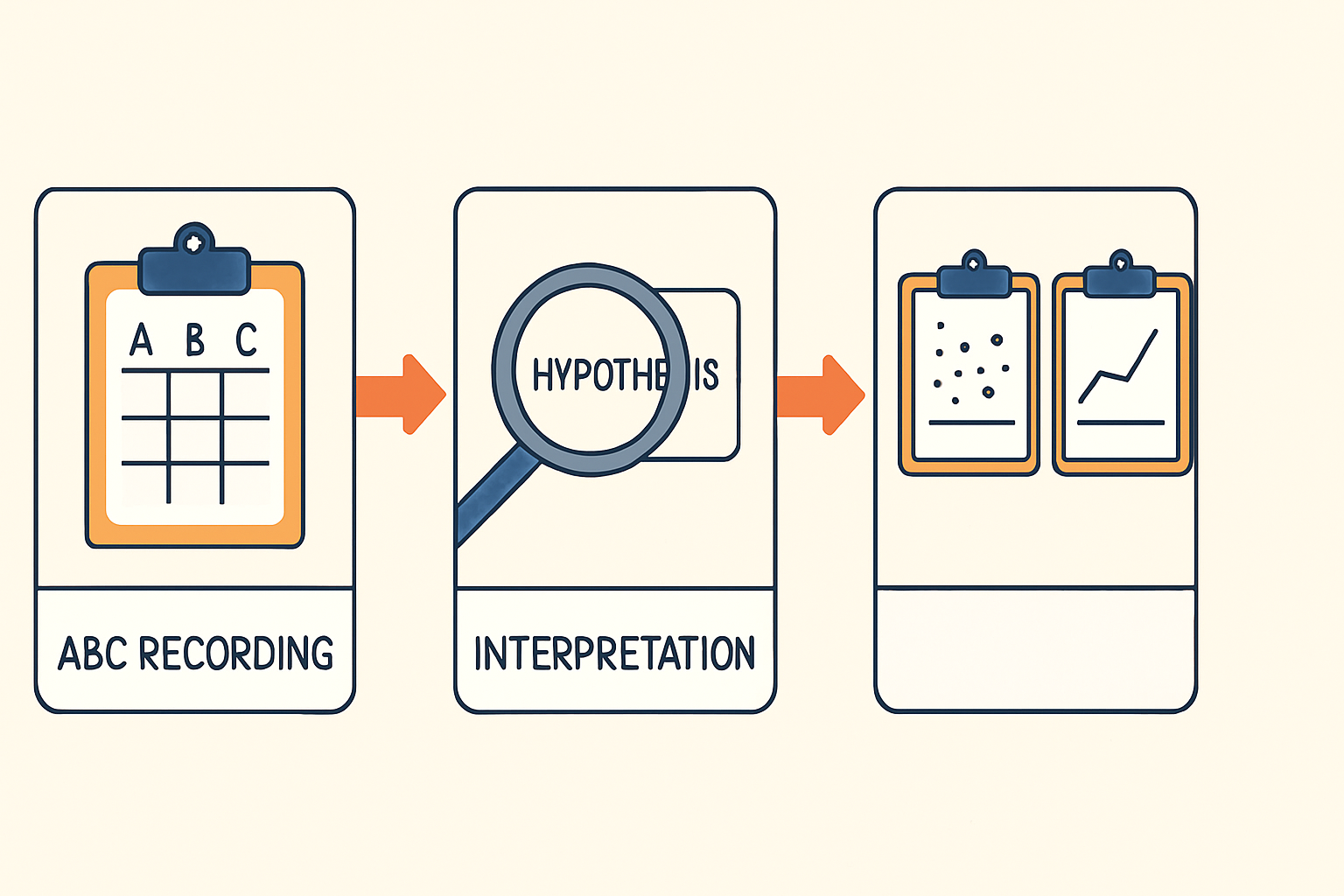
- ABC recording: Systematic documentation of antecedents, behaviors, and consequences
- Scatterplot: Visual display showing behavior frequency across time periods
- Hypothesis statement: Testable prediction about behavior function
- Indirect assessment: Methods that don’t involve direct observation (interviews, checklists)
- Direct observation: Watching and recording behavior as it occurs
Quick-Reference Implementation Checklist
Follow these steps when conducting a descriptive assessment:
- Clearly define the target behavior using observable, measurable terms
- Select appropriate data collection methods (ABC recording, scatterplot, etc.)
- Conduct observations across multiple settings and times to capture patterns
- Record antecedent events immediately preceding behavior
- Document consequences that follow behavior
- Look for consistent patterns and correlations in the data
- Formulate testable hypotheses about potential functions
- Use findings to guide further assessment or intervention planning
Summary and Next Steps for Your Studies
Descriptive assessment serves as a foundational component of functional behavior assessment, providing valuable observational data about behavior patterns. Remember its key limitation: it identifies correlations, not causes.
For exam preparation, focus on understanding when descriptive assessment is appropriate versus when functional analysis is needed. Practice analyzing ABC data to form reasonable hypotheses, and always consider the ethical implications of assessment selection.
Continue your studies by exploring related topics like functional analysis procedures, experimental designs, and comprehensive FBA processes. The BACB’s Ethics Code provides essential guidance on assessment selection and implementation.


