
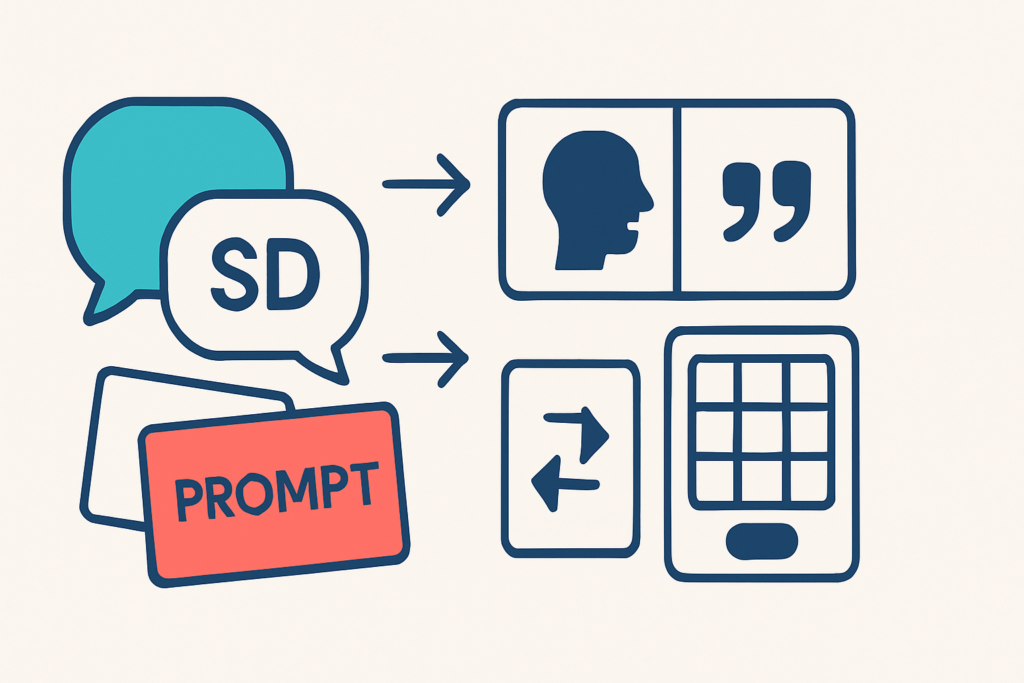
In applied behavior analysis, accurately identifying verbal operants is essential for effective assessment and intervention. The SD for a vocal echoic response represents a fundamental concept that often appears on the BCBA exam. This guide breaks down the precise definition, provides practical examples, and offers strategies to avoid common mistakes.
Table of Contents
- SD for vocal echoic response: Defining the Discriminative Stimulus for an Echoic
- Applied Examples: Identifying the SD in Practice
- Exam Relevance and Common Points of Confusion
- Quick-Reference Checklist and Summary
SD for vocal echoic response: Defining the Discriminative Stimulus for an Echoic
Understanding the discriminative stimulus for echoic responses requires precision. This concept sits at the intersection of verbal behavior theory and practical application.
The Core Definition: What Exactly is the SD?
The discriminative stimulus for a vocal echoic response is a vocal verbal stimulus that has both point-to-point correspondence and formal similarity with the response. This means the antecedent is a spoken word or sound that physically matches what the learner is expected to produce. The SD evokes an identical vocal imitation from the listener.
Echoics in the Verbal Operant Framework
Within B.F. Skinner’s verbal operant framework, echoics differ from other verbal behaviors in their controlling variables. While a mand is controlled by motivating operations and a tact by nonverbal stimuli, the echoic is controlled specifically by a vocal antecedent. The reinforcement for an echoic is typically socially mediated and often non-specific, such as praise or attention from the listener.

Applied Examples: Identifying the SD in Practice
Moving from theory to application helps solidify understanding. These concrete examples demonstrate how to pinpoint the SD in real scenarios.
Example 1: Early Learner Imitation Training
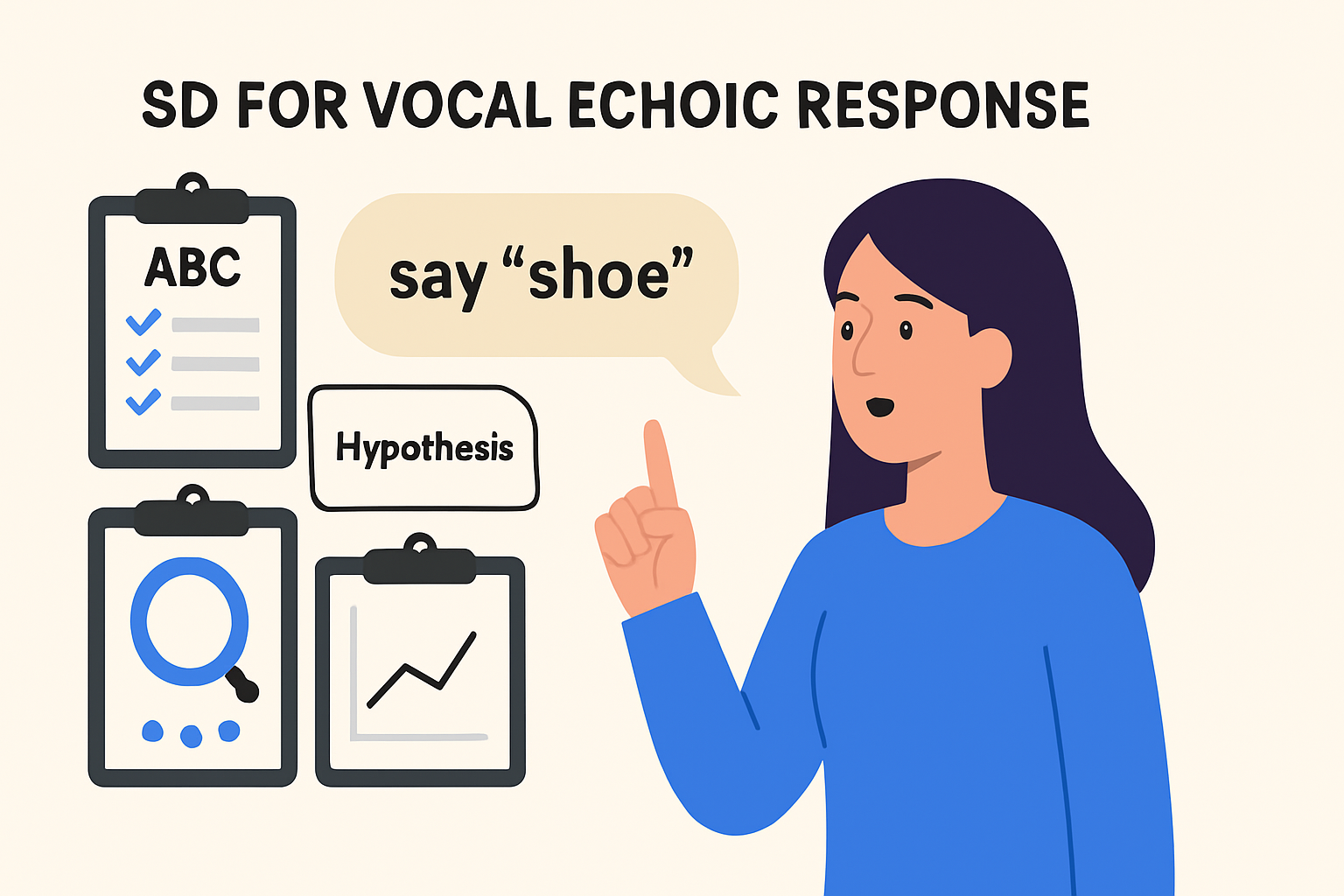
In discrete trial training, a therapist presents the antecedent: “Say ‘bah’.” The child responds with “bah,” and the therapist delivers praise and a token. Here, the vocal stimulus “bah” serves as the SD, while the consequence involves social reinforcement mediated by the therapist.
Example 2: Echoic SD in Natural Environment Teaching
A parent holds a ball and says “Ball!” The child echoes “Ball,” and the parent smiles and gives the ball. The SD is the vocal sound “Ball,” not the visual stimulus of the ball. This distinction is crucial for accurate verbal operant classification.
Example 3: A Common Misapplication (Non-Example)
When a therapist shows a picture of a dog and asks “What is this?” and the child says “dog,” this is a tact, not an echoic. The SD is the nonverbal stimulus (picture), not a vocal model. Understanding this difference prevents misclassification in assessment and intervention planning.
Exam Relevance and Common Points of Confusion
This concept appears frequently on the BCBA exam because it tests fundamental discrimination skills essential for ethical practice.
Why the BCBA Exam Tests This Concept
Precise identification of verbal operants relates directly to BACB Task List items, particularly those addressing verbal behavior and assessment. Accurate classification informs appropriate intervention selection and data collection methods. For more on verbal operants, see our comprehensive verbal operants guide.
Frequent Exam Traps and How to Avoid Them
- Confusing echoic with tact SDs: Remember echoics require vocal antecedents; tacts involve nonverbal stimuli
- Over-relying on consequences: Verbal operants are defined by their antecedents, not just their consequences
- Missing point-to-point correspondence: The response must physically match the antecedent stimulus
- Ignoring formal similarity: Both stimulus and response must be in the same sensory mode (vocal-vocal)
Quick-Reference Checklist and Summary
This actionable summary provides a systematic approach for identifying echoic SDs in practice and on exams.
Echoic SD Identification Checklist
- Is the antecedent a vocal sound or word?
- Would the response physically match the antecedent if recorded?
- Is there point-to-point correspondence between stimulus and response?
- Does the reinforcement appear to be socially mediated by a listener?
- Are stimulus and response in the same sensory mode (vocal-vocal)?
Key Takeaways for Your Study Notes
The discriminative stimulus for a vocal echoic is always a vocal verbal antecedent with formal similarity to the response. This distinguishes it from other verbal operants like mands and tacts. Mastery of this concept supports accurate assessment and ethical intervention design. For additional exam preparation strategies, explore our BCBA exam prep guide and the official BACB Task List.


