
Quick answer: A parametric analysis systematically varies the value or amount of one independent variable (for example, different reinforcer magnitudes, durations, or schedule values) to find how much of it produces the best effect. It answers “how much?” rather than simply “does it work?”
In applied behavior analysis, determining the most effective treatment parameters is crucial for both ethical practice and client success. Parametric analysis provides a systematic approach to answering the question of ‘how much’ rather than ‘what.’ This experimental design helps behavior analysts identify optimal levels of intervention components, ensuring treatments are both effective and efficient.
Table of Contents
- What is Parametric Analysis? Definition and Purpose
- Parametric Analysis in Action: Worked ABA Examples
- Parametric Analysis on the BCBA Exam: Relevance and Common Traps
- Quick-Study Checklist and Summary
- References
What is Parametric Analysis? Definition and Purpose
Parametric analysis represents a specific type of experimental design used in behavior analysis research and practice. It systematically examines how different quantitative levels of an intervention component affect behavior change.
The Core Definition: Testing the ‘Dose’
A parametric analysis involves systematically manipulating the amount or magnitude of an independent variable to measure its effect on a dependent variable. Unlike other designs that test presence versus absence, this approach specifically answers ‘how much’ questions about treatment parameters.
The design compares different quantitative levels of the same intervention component while holding all other variables constant. This allows practitioners to identify the optimal ‘dose’ of treatment that produces meaningful behavior change without unnecessary excess.
Purpose in Research and Practice
In both research and clinical settings, parametric analysis serves several critical functions. First, it helps identify the most effective duration, frequency, or intensity of intervention components. Second, it supports evidence-based practice by providing data on what works best for specific clients.
This approach aligns with the ethical principle of using the least intrusive effective intervention. By finding the optimal parameter level, practitioners can maximize treatment effectiveness while minimizing client burden and resource expenditure.
Parametric Analysis in Action: Worked ABA Examples
Understanding parametric analysis becomes clearer when examining concrete scenarios from behavior analysis practice. These examples demonstrate how the design works in real-world applications.
Example 1: Determining Effective Praise Duration
A BCBA wants to identify the most efficient duration of behavior-specific praise to maintain on-task behavior for a student with attention difficulties. The independent variable is praise duration, tested at three levels: 5 seconds, 15 seconds, and 30 seconds. The dependent variable is percentage of on-task intervals during independent work.
The analysis reveals that 15-second praise produces the highest levels of on-task behavior, while 30-second praise shows no additional benefit. This demonstrates how parametric analysis identifies the optimal parameter without wasting instructional time.
Example 2: Optimizing Break Duration in a DRA Procedure
Consider a client who engages in escape-maintained tantrums during difficult tasks. The practitioner implements a differential reinforcement procedure where appropriate task engagement earns breaks. The parametric analysis tests break durations of 1 minute, 3 minutes, and 5 minutes.
Data show that 3-minute breaks effectively reduce tantrums while maintaining task completion. One-minute breaks show insufficient reinforcement value, while 5-minute breaks disrupt instructional flow without additional benefit. This example illustrates how parametric analysis helps balance reinforcement effectiveness with instructional efficiency.
Parametric Analysis on the BCBA Exam: Relevance and Common Traps
Understanding parametric analysis is essential for BCBA exam success, as questions frequently test your ability to identify different experimental designs. Recognizing this design requires careful attention to how variables are manipulated.
How It’s Tested: Question Formats
Exam questions typically present scenarios where researchers or practitioners manipulate treatment parameters. Common question stems include: ‘Which experimental design is being used?’ or ‘The researcher is manipulating…’ You’ll need to distinguish parametric analysis from other designs like component analysis or alternating treatments.
Answer choices often contrast parametric analysis with comparative or component analyses. The key distinction is whether the manipulation involves quantitative levels of the same variable versus qualitatively different procedures.
Common Exam Traps and How to Avoid Them
Several common mistakes can lead to incorrect answers on exam questions about parametric analysis. First, confusing it with component analysis, which tests presence versus absence of intervention parts rather than amount. Second, misidentifying it when the independent variable represents qualitatively different procedures.
To avoid these traps, ask yourself: Is the manipulation about ‘how much’ versus ‘what’? Are different levels of the same variable being compared? Does the goal involve finding an optimal parameter level rather than testing different components?
Quick-Study Checklist and Summary
For efficient review and exam preparation, use this structured approach to identify and understand parametric analysis in various contexts.
Parametric Analysis Quick-Check
- Check the independent variable: Is it a quantitative amount or level being manipulated?
- Compare manipulation types: Are different levels of the SAME variable being tested?
- Examine the research question: Is the goal to find an optimal ‘dose’ or parameter?
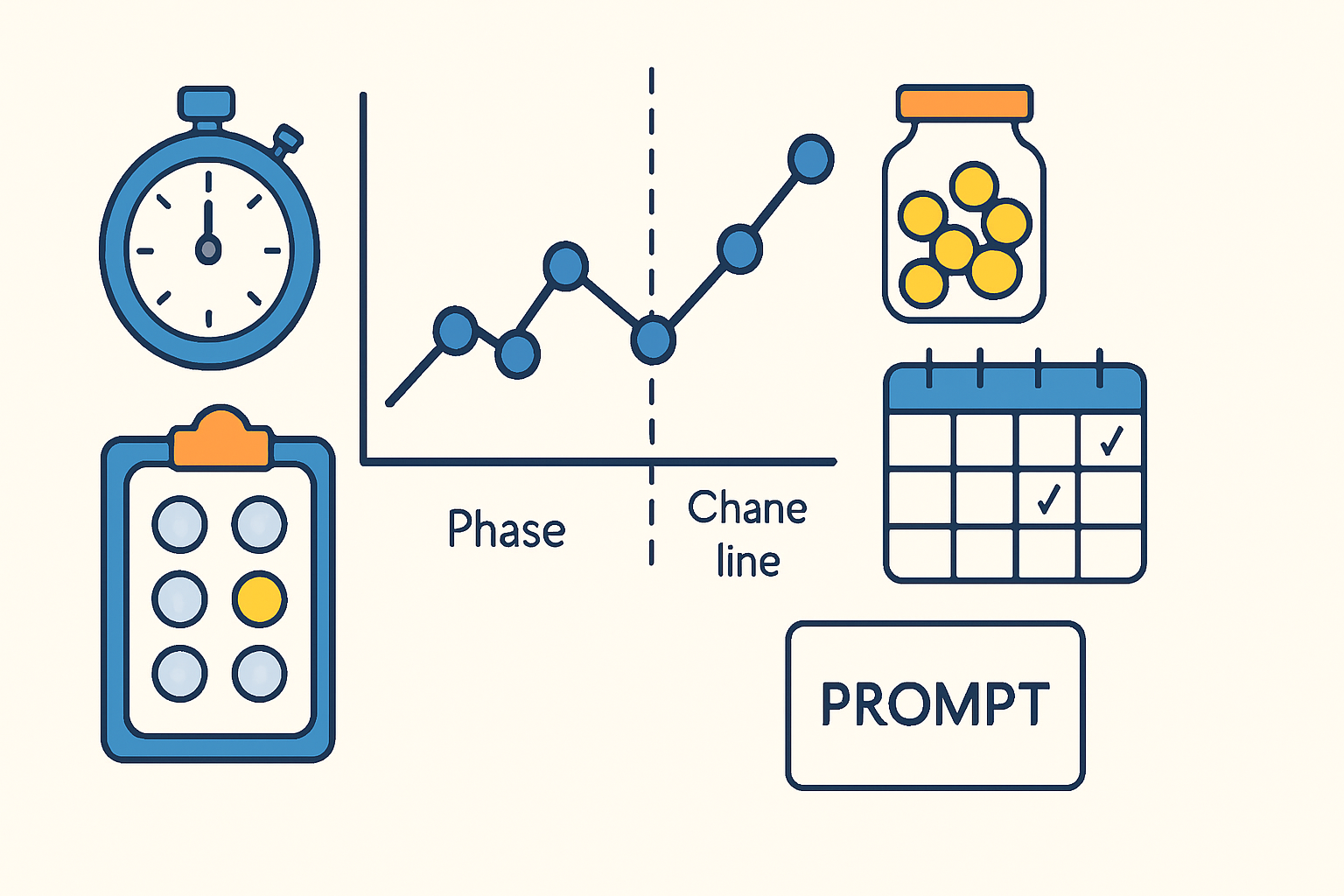
- Review the data presentation: Does the graph show different quantitative levels across phases?
- Consider alternatives: Could this be confused with component or comparative analysis?
Key Takeaways for Your Exam
Parametric analysis focuses specifically on ‘how much’ questions in behavior analysis. It systematically tests different quantitative levels of intervention parameters to identify optimal treatment doses. This design is essential for developing efficient, effective interventions that respect client time and resources.
On the BCBA exam, focus on the nature of the variable manipulation. Remember that parametric analysis compares amounts of the same thing, while other designs compare different things. For more information on related experimental designs, see our guide on single-subject experimental designs.
Understanding parametric analysis connects to broader principles of evidence-based practice in behavior analysis. For additional study resources, explore our comprehensive BCBA exam preparation guide.
Parametric Analysis Example
Suppose a team wants to know the best magnitude of reinforcement for on-task behavior. They compare conditions of 1 token, 3 tokens, and 5 tokens while holding everything else constant, then graph on-task behavior at each value. The condition that produces the strongest, most efficient effect identifies the optimal parameter. That is a parametric analysis — varying the level of one variable across a range.
Parametric vs Component Analysis
Students often confuse the two: a parametric analysis varies how much of a single variable is used; a component analysis tests which parts of a treatment package are responsible for the effect. Different questions, different designs.
Put this to the test
Practice items like this under real exam conditions with our free BCBA mock exam — instant scoring and rationales.



