
Procedures include extinction: Defining Extinction in Applied Behavior Analysis
In Applied Behavior Analysis, extinction has a precise technical meaning that differs from everyday usage. It’s not simply ignoring behavior or making it disappear. Instead, extinction refers to the process of withholding reinforcement for a previously reinforced behavior, leading to a decrease in that behavior’s frequency over time.
Table of Contents
- Procedures include extinction: Defining Extinction in Applied Behavior Analysis
- Procedures That Formally Include Extinction
- Worked Examples: From ABC Data to Procedure Selection
- Exam Relevance and Common Traps
- Summary and Key Takeaways for Your Study
This definition is crucial because extinction is always function-based. You must first identify what maintains the behavior before you can implement extinction effectively.
Extinction is a Function-Based Procedure
Extinction means withholding the reinforcer that maintains a behavior. If a child’s screaming is maintained by attention, extinction involves planned ignoring. If escape maintains tantrums during demands, extinction means continuing the demand rather than allowing escape.
This distinction separates extinction from simple ignoring. Ignoring only works when attention is the maintaining reinforcer. For other functions, different extinction procedures are needed.
Extinction vs. Punishment: A Critical Distinction
Many exam questions test your ability to distinguish extinction from punishment. Extinction weakens behavior by removing its reinforcing consequence. Punishment weakens behavior by adding an aversive stimulus or removing a positive one.
The key difference lies in what happens after the behavior. In extinction, the reinforcer no longer follows the behavior. In punishment, an aversive consequence follows the behavior.
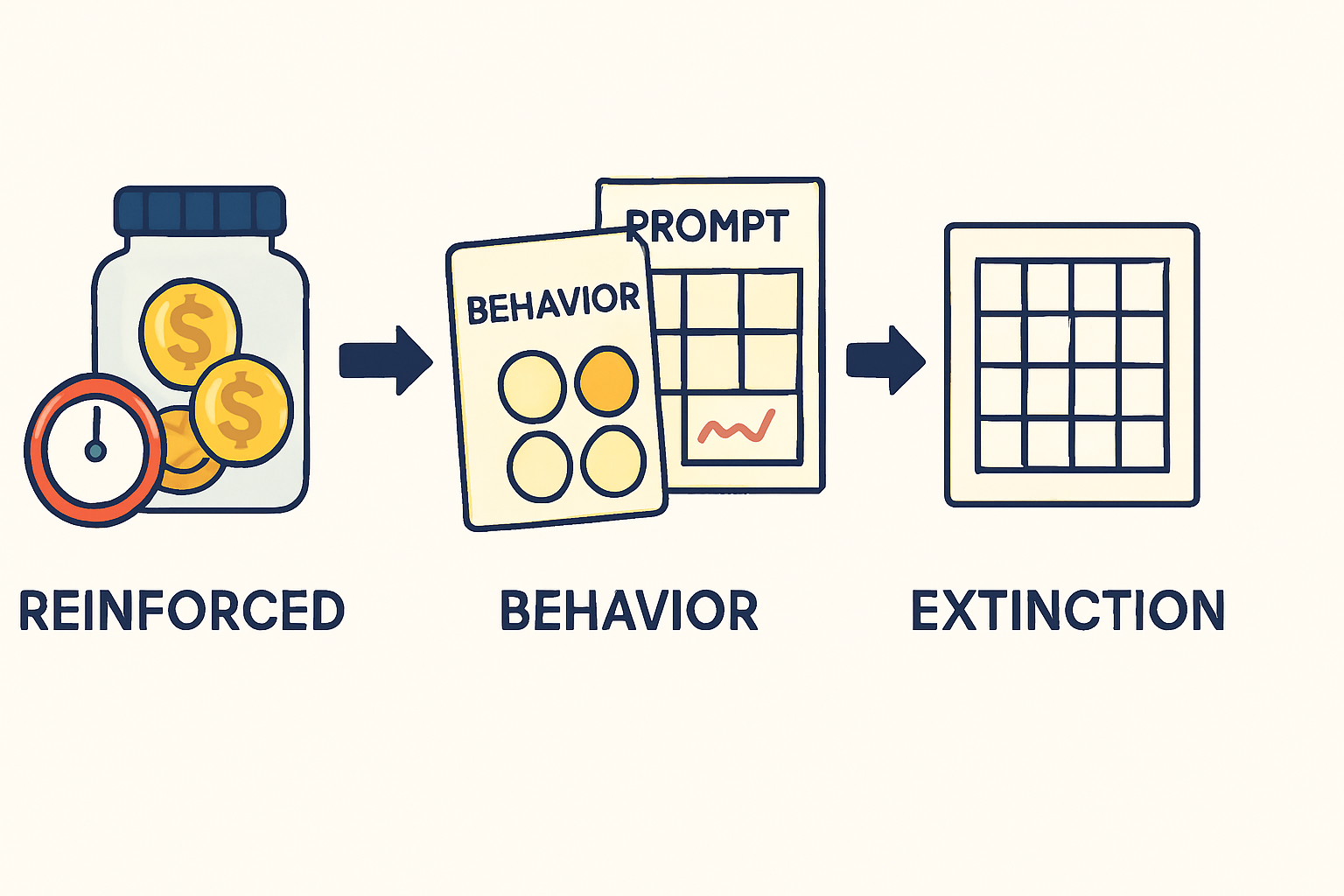
Procedures That Formally Include Extinction
Several behavior reduction procedures have extinction built into their standard implementation. Understanding which procedures include extinction is essential for both clinical practice and exam success.
Differential Reinforcement of Alternative Behavior (DRA) + Extinction
DRA alone reinforces an alternative behavior while the problem behavior continues to receive reinforcement. When combined with extinction, it becomes a powerful intervention. The extinction component involves withholding reinforcement for the problem behavior while reinforcing the alternative.
For example, if a child hits to get toys, DRA+extinction teaches asking appropriately while no longer providing toys for hitting.
Differential Reinforcement of Incompatible Behavior (DRI) + Extinction
Similar to DRA, DRI reinforces a behavior that cannot occur simultaneously with the problem behavior. The extinction component is essential for effectiveness. For instance, reinforcing hands in pockets (incompatible with hitting) while extinguishing hitting behavior.
Differential Reinforcement of Other Behavior (DRO) + Extinction
DRO delivers reinforcement for the absence of the problem behavior during specific intervals. Extinction is typically applied concurrently to the problem behavior. This combination makes DRO+extinction a complete intervention package.
Procedures That Do NOT Automatically Include Extinction
Several procedures may be used with extinction but aren’t defined by it:
- Noncontingent Reinforcement (NCR): Provides reinforcement independent of behavior
- Time-out procedures: Remove access to reinforcement temporarily
- Response cost: Removes a positive reinforcer contingent on behavior
- Overcorrection: Requires restitution or positive practice
These procedures can incorporate extinction but don’t require it by definition.
Worked Examples: From ABC Data to Procedure Selection
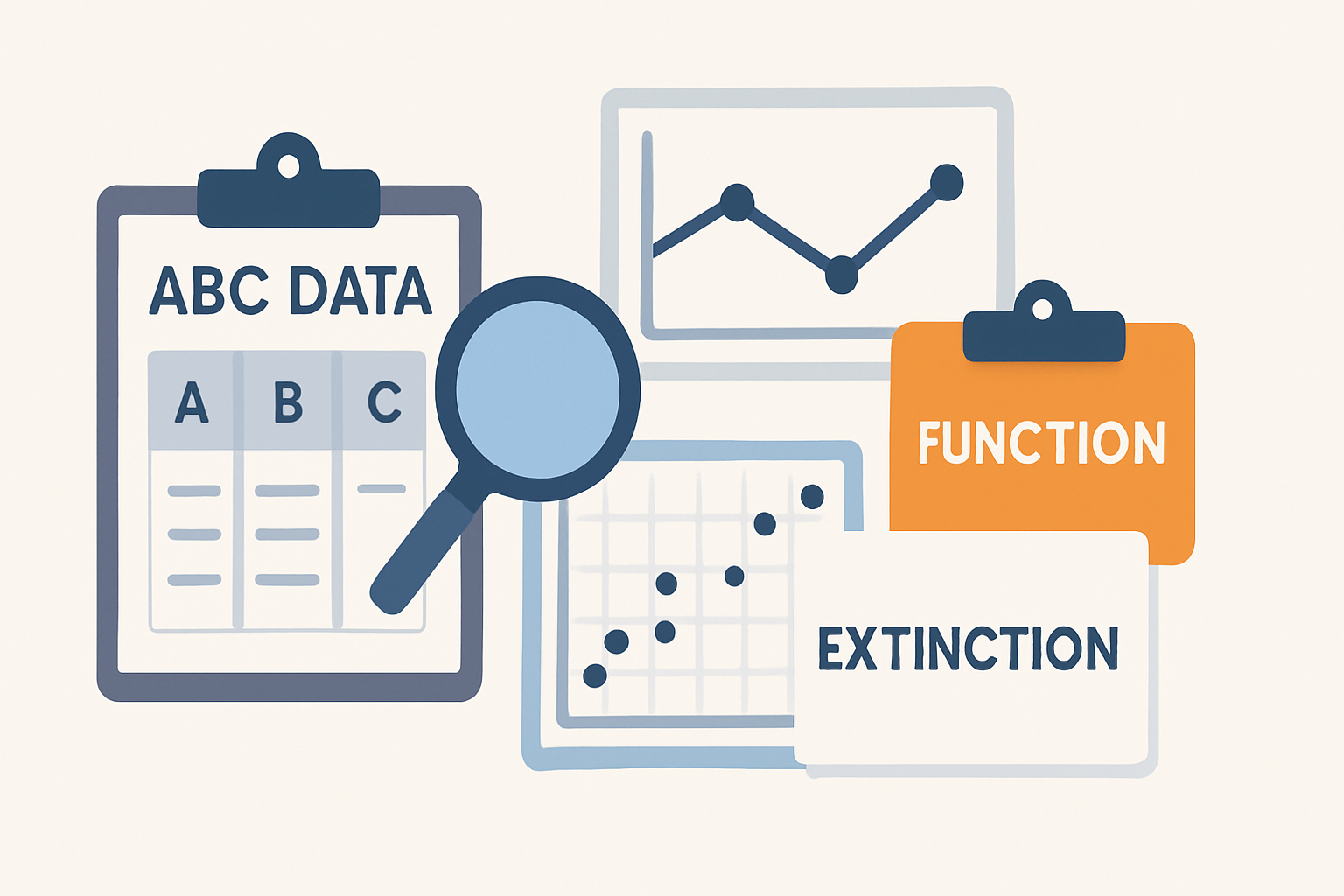
Let’s apply these concepts to practical scenarios. Analyzing ABC data helps identify function and select appropriate procedures that include extinction.
Example 1: Attention-Maintained Behavior
Scenario: Child yells during quiet work time. ABC data shows yelling consistently followed by teacher attention. Function: attention-maintained behavior.
Procedure: DRA+extinction. Teach appropriate attention-seeking (raising hand) while implementing planned ignoring for yelling. The extinction component means no attention follows yelling.
Example 2: Escape-Maintained Behavior
Scenario: Student tears worksheets during math. ABC data shows worksheet tearing leads to task removal. Function: escape-maintained behavior.
Procedure: DRA+extinction with Functional Communication Training (FCT). Teach break request while continuing demands during tearing (extinction). The extinction component means escape no longer follows destructive behavior.
Exam Relevance and Common Traps
The BCBA exam frequently tests your understanding of which procedures include extinction. Recognizing common traps can prevent costly mistakes.
How the BCBA Exam Tests This Concept
Exam questions often present scenarios asking which procedure includes extinction. Common formats include:
- “Which component is essential for DRA to be effective?”
- “What procedure involves withholding reinforcement while reinforcing an alternative behavior?”
- “Which intervention package includes extinction as a defined component?”
The ‘Extinction Burst’ and ‘Spontaneous Recovery’ Trap
Questions may describe behavior increasing after intervention implementation. Candidates must distinguish between:
- Extinction burst: Temporary increase in behavior during extinction
- Spontaneous recovery: Reappearance of extinguished behavior after time
- Procedure failure: Intervention isn’t working as intended
Quick-Reference Checklist: Does This Procedure Include Extinction?
Use this checklist during exam preparation:
- Is the maintaining reinforcer identified and planned to be withheld?
- Does the procedure specify reinforcement removal for problem behavior?
- Is extinction explicitly mentioned as a component?
- For DRA/DRI/DRO, is extinction included in the implementation?
Summary and Key Takeaways for Your Study
Mastering which procedures include extinction requires understanding both the definition and practical application. Remember these key points:
- Extinction means withholding reinforcement for a previously reinforced behavior
- DRA, DRI, and DRO typically include extinction when implemented effectively
- Always identify function before implementing extinction procedures
- Distinguish extinction from punishment and other behavior reduction methods
- Prepare for extinction bursts and spontaneous recovery in clinical practice
For more on related concepts, explore our guide to differential reinforcement procedures or learn about extinction in ABA in more detail. The functional behavior assessment process is essential for identifying functions before implementing extinction.
For authoritative information on behavior reduction procedures, consult the Behavior Analyst Certification Board resources and peer-reviewed literature on extinction procedures in behavior analysis.



